


When a storm rips through your pool screen or you notice it starting to sag, the first question that pops into your head is usually, "How much is this going to cost me?"
In the Tampa Bay area, the answer really depends on the scale of the job. A simple, single-panel repair might only set you back $75-$150. But if you're looking at a complete rescreen of your entire pool cage or lanai, the price can climb anywhere from $1,200 to over $7,000, depending on just how big and complex your enclosure is.
Understanding Pool Screen Repair Costs In Tampa Bay
This guide is designed to give you a clear, no-nonsense breakdown of pool screen repair costs for homeowners all over Tampa Bay, from St. Pete to Clearwater. Let's be honest, a minor patch job on a lanai is a completely different ballgame from a full-blown pool cage restoration, and knowing the difference is the first step.
What to Expect Financially
It's a classic Florida story: a fierce summer storm blows through, and suddenly you're dealing with torn screens and sagging panels. National averages, like those on Angi.com, show that the typical pool screen repair runs about $922, with most homeowners spending between $297 for small fixes and $1,586 for more serious damage.
When it comes to a total rescreen, size is the biggest factor. A small 100-square-foot area might cost around $700–$900, but a massive 1,000-square-foot lanai could easily push the budget to $7,000–$9,000 or more. Think of this as your financial starting point. It helps set realistic expectations before we dive into what actually drives your final quote.
Here’s a quick look at what to budget for different types of jobs here in the Tampa Bay area.
Estimated Pool Screen Repair Costs at a Glance
- Single Panel Repair: Expect to pay $75 – $150. This is best for one or two small tears from debris or accidents.
- Multiple Panel Repair: The average cost is $250 – $600. This is ideal for fixing several damaged panels after a storm.
- Full Enclosure Rescreen: This can range from $1,200 – $7,000+. Choose this option for old, brittle screens or widespread damage.
- Hardware Replacement: Costs typically run $150 – $500. This service is for rusted screws, loose anchors, or faulty door kits.
Keep in mind these are just ballpark figures. The specifics of your project will determine the final price.
Your pool enclosure is a huge investment in your home’s value and your family’s quality of life. Understanding the upkeep costs helps you make smart, timely decisions to protect it.
Every single job is unique, whether it’s a tiny patch or a full overhaul. The final bill will always come down to a few key variables, including:
- The extent of the damage (are we talking small rips or multiple completely blown-out panels?).
- The type of screen material you pick (standard fiberglass, tough pet-resistant screen, or a sun-blocking solar screen).
- How easy it is to access the enclosure (a single-story home is much simpler than a two-story one).
And if you're thinking about other parts of your home, the same basic principles apply. We cover this in more detail in our guide on the cost to rescreen a porch. Getting a handle on these factors is the best way to make sure you're making a well-informed decision.
Decoding Your Repair Quote: What Are You Paying For?
A screen repair invoice is way more than just a final number—it's the story of the materials, labor, and expertise needed to get the job done right. When you understand what goes into the pool screen repair cost, you can see the real value you’re getting. This breakdown pulls back the curtain on every line item, showing you exactly where your money goes.
Think of your quote like a recipe from a professional chef. The ingredients are the materials, the chef's time and skill are the labor, and the quality of the cooking tools is the hardware. Each part plays a critical role in how the final meal—or in this case, your restored pool enclosure—turns out.
The Foundation: Materials
The biggest variable in any screen repair quote is the screen material itself. Not all screens are created equal, and your choice directly impacts both the upfront cost and how long your enclosure will last.
- Standard Fiberglass Screen: This is the workhorse of the industry and the most budget-friendly choice. It gives you great visibility and airflow, making it the go-to for many Tampa Bay homeowners.
- Pet-Resistant Screen: Got dogs or cats who see your screens as a personal jungle gym? This tougher, vinyl-coated polyester screen is a no-brainer. It's much more durable than standard fiberglass and can save you from constant patch-up jobs, though it does cost more initially.
- Solar Screen (or No-See-Um Screen): This screen is a multitasking marvel. It's designed to block a chunk of the sun's harsh UV rays, which helps keep your patio cooler and stops your furniture from fading. Its tighter weave also keeps out those tiny, annoying no-see-ums, but be aware that it can slightly reduce airflow and visibility.
Sure, picking a premium screen will increase your initial pool screen repair cost, but the longer lifespan and added benefits often deliver much better value down the road.
The Driving Force: Labor Costs
Labor is the engine that powers any quality repair, and it usually makes up a big slice of the final bill. You're not just paying for someone's time; you're investing in their experience, safety know-how, and the specialized equipment needed to get a perfect, professional finish.
A true pro knows how to install your screen with just the right tension. It needs to be tight enough to look sharp and handle the wind, but not so tight that it puts stress on the aluminum frame. Getting that balance right is an art, and it has a massive impact on how long your enclosure lasts.
Several things can affect the labor costs you see on your quote:
- Complexity and Accessibility: A single-story cage with easy ground access is a straightforward job. A two-story enclosure that needs ladders, scaffolding, and extra safety gear? That's a whole different ballgame and takes a lot more time and effort.
- Scope of Work: Swapping out one or two lower panels is quick and simple. A full rescreen, on the other hand, is a much bigger project. It involves tearing out all the old screen and spline, inspecting the entire structure, and carefully installing new materials across the whole cage.
- Prep Work: A job done right often includes prep work you might not even think about, like pressure washing the frame to remove grime or making small structural tweaks before the new screen goes in.
The Unsung Heroes: Hardware and Fasteners
In Florida's humid, salty air, the little things make a huge difference. The screws, fasteners, and door hardware holding your enclosure together are in a constant battle with the elements. A cheap repair might just reuse old, rusty screws, but a quality quote will always include replacing them with new, corrosion-resistant ones.
Upgrading to high-quality fasteners is one of the smartest long-term moves you can make. It might add a little to the initial pool screen repair cost, but it prevents those ugly rust streaks, strengthens the whole structure, and seriously extends the life of your entire pool cage. It's one of those crucial details that separates a quick fix from a solution that lasts.
Panel Patches vs. Full Rescreening: Which Is Right for You?
When you spot a tear in your pool enclosure, your first thought is probably to get it fixed—fast and cheap. But not all screen damage is created equal, and the right solution depends entirely on the scale of the problem. This is where you face a crossroads: do you go for a targeted patch-up or a complete overhaul?
Making the right call is about more than just fixing the hole in front of you. It's an honest assessment of your entire enclosure's health. Sure, patching one or two panels seems like the most affordable route. But if the rest of your screens are on their last legs, you might just be signing up for a frustrating cycle of repeat service calls. The trick is to find that financial "tipping point" where a full rescreen stops being a huge expense and becomes the smartest long-term investment.
The Economics of Single Panel Repairs
Fixing one damaged panel is the perfect solution for isolated incidents—think a stray golf ball from the neighbor's yard or a branch that fell during a quick afternoon storm. The cost for this kind of specific job is pretty straightforward, usually landing in the $75 to $150 range. That price typically covers the new screen, spline, and the technician's time.
Just keep in mind that most professional screen companies have a minimum service fee. They have to cover the cost of sending a truck and a technician to your home, so whether you’re fixing one tiny hole or two, that initial charge will likely be the same. If you have several damaged panels dotted around the enclosure, those individual repair costs can start to add up fast, quickly approaching the price of a much bigger fix.
When a Full Rescreen Makes More Sense
A full rescreening project is exactly what it sounds like: replacing every single screen panel on your enclosure. It sounds like a massive and expensive job, but the math often works out in your favor. The cost-per-square-foot drops significantly as the project gets bigger. It's like buying in bulk at the grocery store—the more you get, the better the unit price. Technicians work far more efficiently on a large-scale job, and those labor savings get passed directly to you.
For a standard 600-square-foot pool cage here in St. Petersburg, a full rescreen usually costs between $900–$2,100. That's a great value, especially when you consider that labor often accounts for 60–70% of the final bill. The efficiency of doing it all at once is what makes it so cost-effective.
Choosing between patching and rescreening really boils down to a few key questions. This decision tree can help you visualize the thought process.
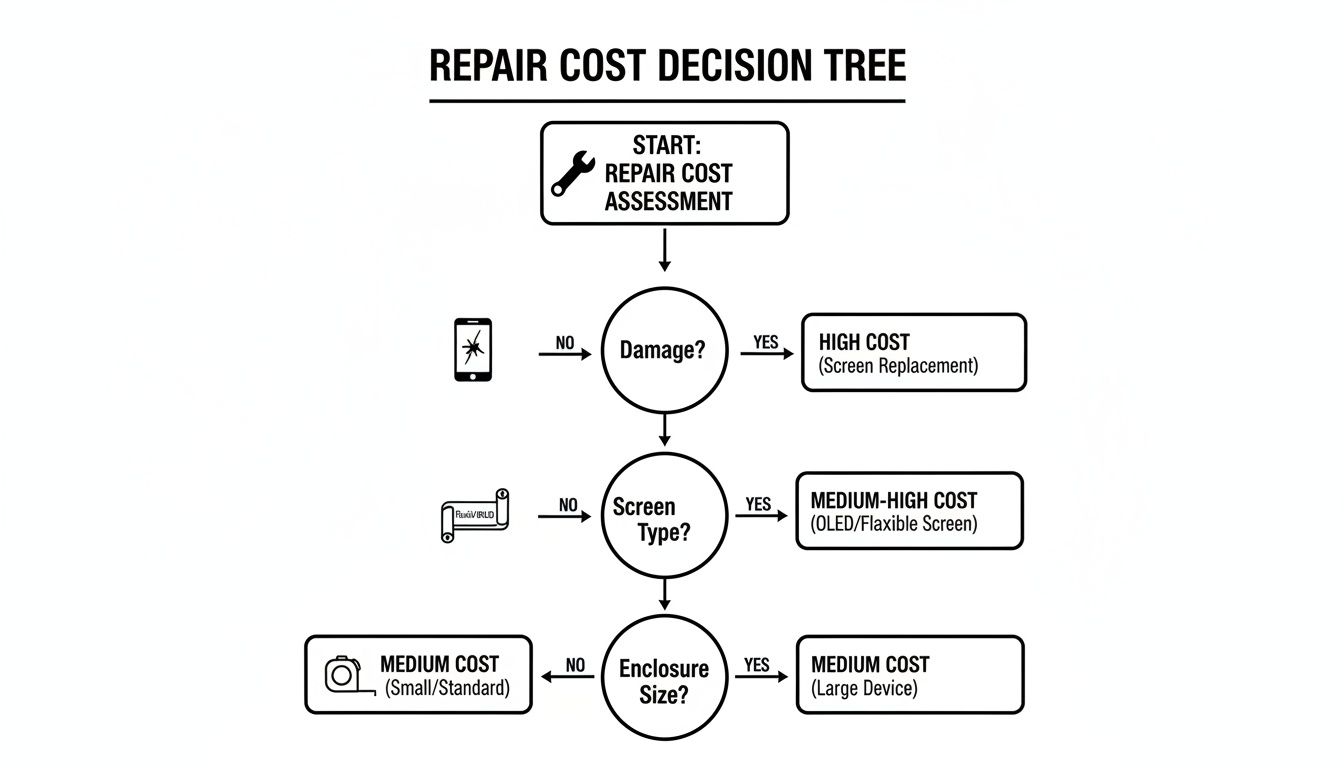
As you can see, how much damage you have, the type of screen you want, and the size of your enclosure are what really drive the final decision and cost.
Finding the Tipping Point
So, how do you know you've hit that tipping point where a full rescreen is the smarter financial move? Look for these signs:
- Multiple Damaged Panels: If you're looking at three or more torn panels, the total cost of patching them one by one is often neck-and-neck with a full rescreen.
- Age and Brittleness: Are your screens 7-10 years old? Years of Florida sun make them brittle. Patching one panel today often just means another one will tear tomorrow.
- Aesthetic Mismatch: A brand-new screen patch is going to look much darker and richer than your older, sun-faded screens. This creates an ugly checkerboard effect that can really hurt your home's curb appeal.
- Planning Other Upgrades: If you're already thinking about other work on your enclosure, like replacing rusted screws or repainting, bundling it all with a full rescreen can lead to big savings. To learn more about your options, check out our guide on whether to refurbish vs rebuild your pool cage.
Ultimately, this choice is a balancing act between short-term savings and long-term value. A single patch is a great band-aid, but a full rescreen is a true investment, restoring the beauty, function, and safety of your outdoor living space for years to come.
More Than Just the Screen: Restoring Your Entire Pool Cage
Let’s be honest—a perfect, brand-new screen just doesn’t look right when it’s attached to a faded, chalky frame covered in ugly rust streaks. To truly revitalize your outdoor space, you need to think beyond the mesh. A full pool cage restoration is about tackling the entire structure for a clean, cohesive, and long-lasting result.
Think of it like restoring a classic car. You wouldn't slap a brand-new paint job on a rusty frame, right? In the same way, a true restoration addresses the foundational elements of your pool cage—the hardware and the paint—to make sure the whole enclosure is as strong and beautiful as its new screens.
Upgrading Your Hardware: The Secret to Longevity
Those little metal fasteners holding your pool cage together are the unsung heroes of the structure. But in Florida’s humid, salty air, they’re also the first parts to fail. Standard steel screws are notorious for rusting, leaving those frustrating orange streaks running down your aluminum beams and slowly compromising the cage's integrity.
Swapping out corroded fasteners for high-quality, corrosion-resistant hardware is one of the single most impactful upgrades you can make. It might add a little to the upfront cost, but this small investment pays off big by dramatically extending your enclosure’s lifespan.
A hardware upgrade delivers some key benefits:
- No More Rust Stains: Stainless steel or ceramic-coated fasteners are built to handle our coastal climate, getting rid of rust for good.
- Real Structural Strength: New, sturdy hardware tightens up every connection point, reinforcing your cage against high winds and daily wear.
- Long-Term Savings: By preventing rust, you avoid much more expensive structural repairs down the road.
The Power of a Fresh Coat: Professional Painting
Year after year, the intense Florida sun bleaches and breaks down the original finish on your aluminum pool cage, leaving it looking chalky and dated. A professional paint job does more than just bring back the color; it adds a critical protective shield against the elements.
The cost for painting is typically priced per square foot of the cage's surface area—not the floor space underneath. The final price tag depends on the size of the cage, how much prep work is needed (like sanding and pressure washing), and the quality of the paint used.
For a typical 400 sq. ft. cage in Tampa, a full rescreen can run $2,800–$3,600. Adding a hardware upgrade will tack on another $500–$1,000 for rust-proof fasteners designed to last 20+ years. A fresh coat of paint usually costs $1.50–$2.50 per square foot, with jobs ranging from $450 for minor touch-ups to over $4,000 for a large 600 sq. ft. cage. It’s a worthwhile investment, especially since an estimated 55% of enclosures in the Bay area show signs of corrosion by their 12th year.
A full restoration is about bringing your entire outdoor living area back to life. It combines a full rescreen, new hardware, and a fresh paint job to create a unified, 'like-new' appearance that boosts both curb appeal and property value.
Cost Comparison: Repair vs. Restoration vs. Full Replacement
When your pool cage starts showing its age, you have a few options. Here’s a quick breakdown to help you decide which path makes the most sense for a typical 600 sq. ft. cage.
- Individual Panel Repair: Costs $100 – $300 per panel. This is best for minor, isolated damage like a few tears. It can extend the life of the repaired panel by 1-3 years.
- Full Restoration: The estimated cost is $6,000 – $11,000. This is the right choice for cages with widespread screen decay, faded paint, and rusty hardware but a structurally sound frame. This can extend the lifespan of your enclosure by 10-15 years.
- Full Cage Replacement: Expect to pay $12,000 – $25,000+. This is necessary for enclosures with severe structural damage, extensive corrosion, or outdated engineering. A new cage can last 20+ years.
For most Tampa Bay homeowners, a full restoration hits the sweet spot. It delivers that brand-new look and feel without the massive expense and disruption of a complete rebuild, making it a smart and popular choice.
Investing in a complete pool cage restoration in St. Petersburg, Clearwater, Tampa, or Bradenton is often the most cost-effective way to get a dramatic transformation. It tackles all the potential failure points at once, giving you peace of mind and an outdoor space that looks and performs its best for years to come.
The DIY vs. Professional Repair Decision
The idea of saving a few hundred bucks by repairing a screen panel yourself is tempting for any homeowner. But before you run off to the hardware store, it’s smart to weigh the real savings against the hidden costs and headaches. This isn't just a simple money decision; it’s about your time, your safety, and the final quality of the job.
Let's break down the real-world trade-offs between rolling up your sleeves and calling in a pro. We'll look at what a DIY project actually costs versus the guaranteed quality and peace of mind you get from an expert. This way, you can decide which route truly makes sense for your skills, budget, and sanity.
Breaking Down The DIY Approach
On the surface, doing it yourself looks like a clear win for your wallet. You skip the labor costs and just pay for parts, which can feel like a great deal for a couple of small, ripped panels.
Here’s a rough idea of what you’ll be spending on materials:
- Screen Material: A standard roll of fiberglass screen will set you back anywhere from $50 to $150, depending on the size and quality.
- Spline: This is the rubber cord that locks the screen into the frame. A roll is usually pretty cheap, around $10 to $20.
- Spline Roller Tool: You absolutely need this little gadget to press the spline in properly. It costs about $5 to $15.
While those numbers seem low, the hidden costs start creeping in. The biggest one? Your time. A project that takes a professional crew a few hours could easily eat up your entire weekend, full of frustration and multiple trips to the store.
The biggest challenge for any DIYer is getting the screen tension just right. Too loose, and the screen sags and flaps in the breeze like a sad flag. Too tight, and you can actually bend the aluminum frame or cause the screen to rip right next to the spline. This is where a pro's touch really makes all the difference.
The Hidden Costs And Risks Of DIY
Beyond the price of materials, a DIY screen repair comes with challenges that don't show up on a receipt. The most obvious is just how physically demanding the work is, especially on larger enclosures or anything on a second story.
Stretching a big panel of screen perfectly tight requires more muscle and technique than most people expect. And once you start working on upper panels, you're dealing with safety risks. Climbing up and down a ladder while wrestling with a bulky roll of screen and tools is a recipe for a bad fall, which would instantly wipe out any money you hoped to save.
For a simpler project, fixing small rips in a ground-floor porch screen is a good start. This can help you see if it’s a job you feel comfortable tackling.
Why Hiring A Professional Pays Off
Sure, hiring a professional adds to the initial pool screen repair cost, but the value you get in return often makes it the smarter investment. You’re not just paying for a fix; you’re buying expertise, efficiency, and a result that’s guaranteed to last.
A professional team brings a lot to the table:
- Flawless Workmanship: Experienced techs have the right tools and know-how to get that perfect, drum-tight finish that looks fantastic and holds up for years.
- Superior Materials: Pros have access to commercial-grade screen materials and hardware you won't find at the local big-box store, meaning a more durable repair.
- Safety and Insurance: A licensed and insured company removes all the personal risk of working at heights. If something goes wrong, you're protected.
- Efficiency: A pro crew can rescreen an entire enclosure in a fraction of the time it would take the average homeowner. You get your weekend back!
- Warranty Protection: Reputable companies back their work with a warranty, giving you peace of mind that your investment is protected against shoddy materials or installation.
In the end, the choice between DIY and hiring a pro comes down to your comfort level, the size of the damage, and what you want in the long run. For one small, easy-to-reach tear, a DIY patch kit might be the perfect fix. But for bigger jobs or a full rescreen, the quality, safety, and lasting value of professional work are tough to argue with.
Choosing The Right Company And Getting A Fair Quote
Picking the right screen repair company is just as critical as understanding the numbers on their estimate. That suspiciously low price might look like a steal, but it often hides a darker story—think flimsy materials, rookie installers, or a shocking lack of insurance. Knowing what questions to ask is your best defense in finding a contractor you can trust.
Navigating the sea of local contractors can be tricky, but a few key qualifications will quickly separate the pros from the fly-by-night operations. This simple vetting process ensures you get a fair pool screen repair cost and a high-quality result that protects your investment for years to come.
Your Contractor Vetting Checklist
Before you sign on the dotted line, take a moment to run through a few direct questions with any potential contractor. Their answers (or lack thereof) will tell you everything you need to know about their business and the quality you can expect. A reputable company will have these answers ready and waiting.
Here are the non-negotiables you should always ask:
- Are you licensed and insured? This is the most important question. A licensed contractor is operating legally, and proper insurance protects you from any liability if an accident happens on your property. Don't be afraid to ask for proof.
- What specific screen materials do you use? Ask for the brand and type. A real pro can walk you through the differences between standard fiberglass and tougher, premium options, helping you make a smart choice for your home.
- Do you offer a warranty? A warranty covering both labor and materials is a huge sign of confidence. It means the company stands behind its work and will be there to make things right if any issues pop up down the road.
Getting solid answers here helps you filter out the questionable candidates and zero in on companies that put quality and customer protection first.
"The cheapest bid is rarely the best value. A detailed, itemized quote that clearly outlines all materials, labor, and warranty terms is the hallmark of a transparent and trustworthy contractor."
Demanding A Detailed Written Quote
Let's be clear: a price scribbled on a business card or a number given over the phone is not a real quote. A professional estimate is a detailed, written document that breaks down every single part of the job. This transparency is crucial for comparing offers and making sure there are no surprise charges later.
Your quote should clearly itemize the following:
- Cost of Materials: It needs to specify the type of screen and spline being used, along with the price for each.
- Labor Charges: This section should detail the cost of the actual work, giving you a clear picture of what you're paying for their time and expertise.
- Hardware Specifications: If the job involves replacing rusty fasteners or old door kits, the quote must list the type and cost of the new hardware.
- Additional Services: Any extra work, like pressure washing the frame or touching up paint, should always be listed as separate line items.
- Payment Terms and Timeline: Finally, the document should lay out the payment schedule and give you an estimated start and completion date for the project.
By insisting on this level of detail, you empower yourself to make a true apples-to-apples comparison. It lets you confidently pick a partner who delivers lasting value and quality workmanship, ensuring your outdoor space looks its absolute best.
Common Questions About Pool Screen Repair Costs
When you start digging into a pool enclosure project, a lot of questions can pop up. You want to make smart decisions for your home and your wallet, and that means getting clear, straightforward answers.
Think of this section as your final checklist before making the call. We’re tackling the practical concerns that every Tampa Bay homeowner has, so you can move forward with confidence and no surprises.
How Often Should A Pool Enclosure Be Rescreened In Florida?
In Florida’s tough climate, a standard fiberglass screen usually lasts about 7 to 10 years. The non-stop trio of intense sun, heavy humidity, and seasonal storms works together to make the material brittle and easy to tear.
If you opt for a higher-quality, more durable screen, you can often push that timeframe to 10-15 years. Being proactive and rescreening your enclosure within these windows is just smart preventative maintenance. It saves you from the headache of constant patching and keeps your outdoor space secure and ready to enjoy.
Does Homeowners Insurance Cover Pool Screen Repair Costs?
This is a big one, and the honest answer is: it depends. The final word will always come down to your specific policy and what caused the damage. Generally, if the damage was caused by a covered event—like a named hurricane or a major windstorm—you might be eligible for coverage, minus your deductible.
Here's the critical part, though: damage from normal wear and tear, age, or a lack of maintenance is almost never covered by a standard policy. Before you assume anything, pull out your policy documents or, even better, call your insurance agent to get a clear "yes" or "no" on what your plan includes.
Are There Ways To Save Money On My Pool Screen Repair?
Absolutely. The single most effective way to save money is to tackle small problems before they become big ones. A tiny tear is a quick, inexpensive fix. A gaping hole that’s been ignored for months? That’s a much bigger, and pricier, project.
When you start getting quotes, don't be shy about asking for discounts. Many companies, including ours, offer special pricing for seniors, military personnel, and first responders. Another great strategy is to bundle services. If you need a full rescreen, ask about combining it with pressure washing or hardware replacement. You can often get a much better overall value than scheduling each job separately.
How Much Does Screen Material Affect The Total Cost?
The type of screen you pick is one of the biggest drivers of the final pool screen repair cost. Standard fiberglass screen is the go-to for most homeowners because it’s the most budget-friendly option and gets the job done well.
But upgrading to a specialty screen will raise the upfront price. For instance, pet-resistant screen is significantly tougher and can save you from repeat repairs if you have dogs or cats who love to climb. Solar screens that block UV rays cost more initially but offer long-term perks by protecting your patio furniture from fading and keeping your outdoor space cooler. While these premium options have a higher price tag, their longer lifespan and added benefits often deliver a much better return on your investment.
Ready to get a clear, no-obligation estimate for your screen repair project? The experienced team at Rescreen Rescue is here to help homeowners across the Tampa Bay area. Get your free quote today by visiting https://rescreenrescue.com.