

When a screen panel on your lanai rips, your first thought is probably, "Great… what's this going to cost me?" It's a fair question, and the answer depends entirely on the scope of the problem.
The average lanai screen repair cost for a single panel usually runs between $100 and $250. A full rescreening project, on the other hand, is a much bigger job, typically ranging from $1,500 to $3,500. Think of it like fixing a flat tire versus replacing all four tires—one is a quick patch to get you back on the road, while the other is a larger investment for long-term safety and performance.
Understanding The Price of Lanai Screen Repair
Figuring out the cost is the first step for any repair project. The final price tag really boils down to whether you need a minor patch-up or a complete overhaul. Most screen repair companies use two main pricing models: a flat fee for single-panel repairs and a cost-per-square-foot model for full rescreening jobs.
A single torn panel from a stray golf ball or an overly enthusiastic pet is a pretty straightforward fix. But if you're looking at multiple damaged panels, or if the entire screen system is old, brittle, and faded, a full rescreen becomes the smarter, more cost-effective choice in the long run. Going this route ensures a uniform look, consistent durability, and saves you from the headache of calling a repair service every few months as different panels fail one by one.
Breaking Down Repair Costs
To get a handle on what you might spend, it helps to see how different jobs are priced. A simple one-panel fix is a world away from a complete rescreen.
- Single Panel Repair: This covers the technician’s time, the new screen material for that specific panel, and the spline needed to secure it. It's the perfect solution for new or isolated damage.
- Multiple Panel Repairs: Got a few problem spots? Most companies will cut you a deal on a multi-panel job. They're already on-site with the tools and materials, so you'll get a better rate than paying the single-panel price for each one.
- Full Lanai Rescreening: This is the most comprehensive option and is priced per square foot. The job involves methodically removing all the old, worn-out screens and spline, then installing brand-new screening material across the entire enclosure. The goal is to make every single panel tight, secure, and look brand new again.
To give you a clearer picture, here’s a quick overview of what you can generally expect to pay for different types of lanai screen repairs.
Estimated Lanai Repair Costs at a Glance
Here is a breakdown of average costs and when each repair type is most suitable:
- Single Panel Patch
- Average Cost Range: $100 – $250
- Best For: Small, isolated tears or holes in an otherwise healthy screen.
- Multiple Panel Repair
- Average Cost Range: $250 – $600+
- Best For: Addressing damage in several sections at once, saving on trip charges.
- Door Screen Repair
- Average Cost Range: $150 – $300
- Best For: Fixing high-traffic areas that often wear out faster than other panels.
- Full Lanai Rescreen
- Average Cost Range: $1,500 – $3,500
- Best For: When screens are old, brittle, or have widespread damage.
Keep in mind, these are just starting points. The final cost will depend on the size of your lanai, the type of screen material you choose, and other factors we'll get into later.
National Averages and Local Realities
Looking at the bigger picture, the national average to rescreen a lanai or pool enclosure typically falls between $0.75 and $1.50 per square foot. This pricing puts most full projects squarely in that $1,500 to $3,500 range. The good news is that even a full rescreen is significantly more affordable than building a brand-new enclosure, which can cost anywhere from $6 to $10 per square foot.
The cost to fix up a lanai is very similar to what you'll find when looking into the average pool screen repair cost. Here in Florida, our intense sun and stormy weather are particularly tough on screens. Most homeowners find they need a full rescreen every 6 to 8 years just to keep their enclosure looking good and functioning properly.
Key Factors That Influence Your Final Repair Price
While the size of your lanai sets a baseline for your screen repair cost, a few other key factors can really move the needle on the final quote. Think of it like getting a car detailed versus just a basic wash—the specific services you need are what truly determine the price. A repair quote is much more than a number; it’s a breakdown of what your particular enclosure needs to be safe, functional, and long-lasting.
The complexity of your lanai's design is a big one. A standard, single-story enclosure is pretty straightforward work. But a towering two-story structure? That's a whole different ballgame, often requiring special ladders, scaffolding, and extra safety precautions. More height means more risk and time for our crew, which naturally adds to the labor costs.
This chart gives you a quick visual of how different project scopes stack up.
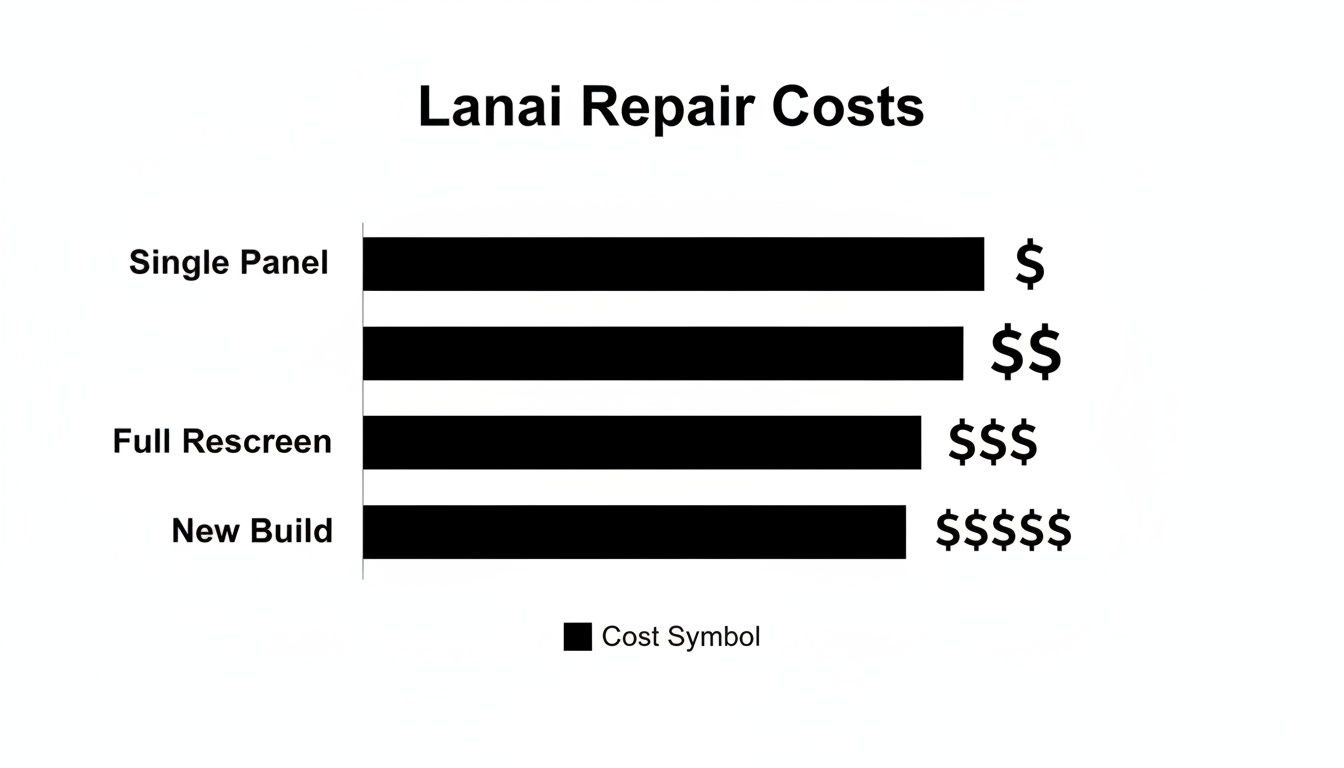
As you can see, a single panel repair is your most affordable fix. A full rescreen is a more significant investment, while a brand-new build is, by far, the most expensive project.
The Role of Screen Materials
The type of screen material you pick is one of the biggest drivers of your total cost. It’s a lot like choosing tires for your car. You can go with the standard all-season models or invest in high-performance ones built for specific conditions. Each screen type comes with its own set of benefits that line up with its price tag.
- Standard Fiberglass Screen: This is the go-to, budget-friendly choice for most lanais. It offers great visibility and airflow, making it a perfect all-around option for general use.
- Pet-Resistant Screen: If you've got dogs or cats who love to test boundaries, this heavy-duty polyester screen is a lifesaver. It’s about seven times stronger than standard fiberglass and built to withstand claws and paws.
- Solar Screen (Sunscreen): Designed to block a hefty portion of the sun's harsh UV rays, this screen helps keep your lanai noticeably cooler and stops your patio furniture from fading. It's a no-brainer for any south-facing enclosures.
Choosing a premium screen, like a pet-resistant or solar option, will bump up the initial price. However, you'll often make that money back in the long run through sheer durability and fewer repair calls.
To help you decide, here's a quick comparison of how different screen materials can impact your budget and what you get for your money.
How Different Screen Materials Affect Your Budget
- Standard Fiberglass
- Cost Factor: $ (Most Affordable)
- Primary Benefit: General use, budget-conscious projects.
- Pet-Resistant
- Cost Factor: $$ (High Durability)
- Primary Benefit: Homes with active pets or small children.
- Solar Screen
- Cost Factor: $$$ (UV & Heat Reduction)
- Primary Benefit: Sun-drenched lanais, energy savings.
- No-See-Um Screen
- Cost Factor: $$ (Tiny Pest Protection)
- Primary Benefit: Areas near water with gnats or midges.
Each option offers a trade-off between upfront cost and long-term benefits. Your lifestyle and the specific challenges your lanai faces should guide your choice.
Hidden Costs and Structural Issues
Sometimes, the biggest expenses have nothing to do with the screens themselves—it's the underlying structure that needs attention. During an inspection, a good technician might spot problems that have to be fixed before any new screens can go in.
A secure screen is only as good as the frame holding it. Ignoring issues like corroded fasteners or a damaged aluminum frame is like putting a new roof on a house with a crumbling foundation—it just doesn't make sense for long-term stability.
Common "hidden" costs include swapping out rusted, failing fasteners for new corrosion-resistant hardware, or repairing sections of the aluminum frame that have been bent or weakened by a storm. Taking care of these problems is non-negotiable for the longevity of your enclosure. You can get a deeper look at the whole process and learn what is involved with rescreening a pool cage in our detailed guide. These structural fixes are what ensure your new screens stay taut and secure for years to come.
Deciding Between DIY Repair and Hiring a Professional
Tackling a lanai screen repair yourself might feel like a smart way to save a few bucks, but is it really the best move for your home? Before you make a run to the hardware store, it's worth weighing the real lanai screen repair cost of a DIY project against the value of bringing in a seasoned professional.
The DIY path is definitely tempting, especially when you’re just looking at a single torn panel. The thing is, those initial savings on labor can evaporate pretty quickly once the hidden costs start piling up. You'll need to buy the screen and spline, of course, but also specialty tools like a spline roller that you might never touch again.
For tiny fixes, our guide on how to repair window screen holes can be a fantastic starting point for handy homeowners.
Calculating The True Cost Of DIY
The biggest hidden cost in any DIY project is your own time. A job that a pro can knock out in an hour could easily eat up your entire afternoon with trial and error.
Getting a screen perfectly taut and wrinkle-free is more of an art than a science, and it takes practice. A screen that’s too loose or creased doesn't just look sloppy; it's also far more likely to tear again, putting you right back where you started.
Think about these often-overlooked DIY expenses:
- Specialized Tools: A good spline roller, a sharp utility knife, and other necessary gear can add up.
- Material Waste: It’s easy to order the wrong size screen or make a bad cut. That means buying materials twice.
- Your Time: How much is your weekend worth to you? That time has real value.
- Safety Risks: Working on ladders, particularly for second-story lanais, comes with a genuine risk of injury.
The Professional Advantage
Hiring a professional service flips the script, turning a potential weekend headache into a completely hands-off solution. Pros show up with the right tools, high-quality materials, and the experience needed to get the job done right the first time.
A professional repair isn't just about swapping out a screen. It's about restoring the integrity and look of your entire outdoor living space with a flawless, durable finish that DIY attempts rarely achieve.
One of the biggest benefits is the quality of the finish. An expert knows exactly how to stretch and secure the screen to create that drum-tight surface that holds up against Florida's weather and resists sagging.
They also take on all the safety risks of working at heights, so you don't have to. When you add it all up, the higher upfront cost of hiring a pro often proves to be the more economical choice in the long run, thanks to the superior result and total peace of mind.
How To Get An Accurate Lanai Repair Quote
Getting a solid, reliable quote is the first step to a stress-free repair. It’s all about making sure the lanai screen repair cost you’re quoted is the price you actually pay. To make that happen, it helps to have a little info ready before you pick up the phone. Think of it like a visit to the doctor—the more specific you can be about the symptoms, the faster and more accurate the diagnosis.
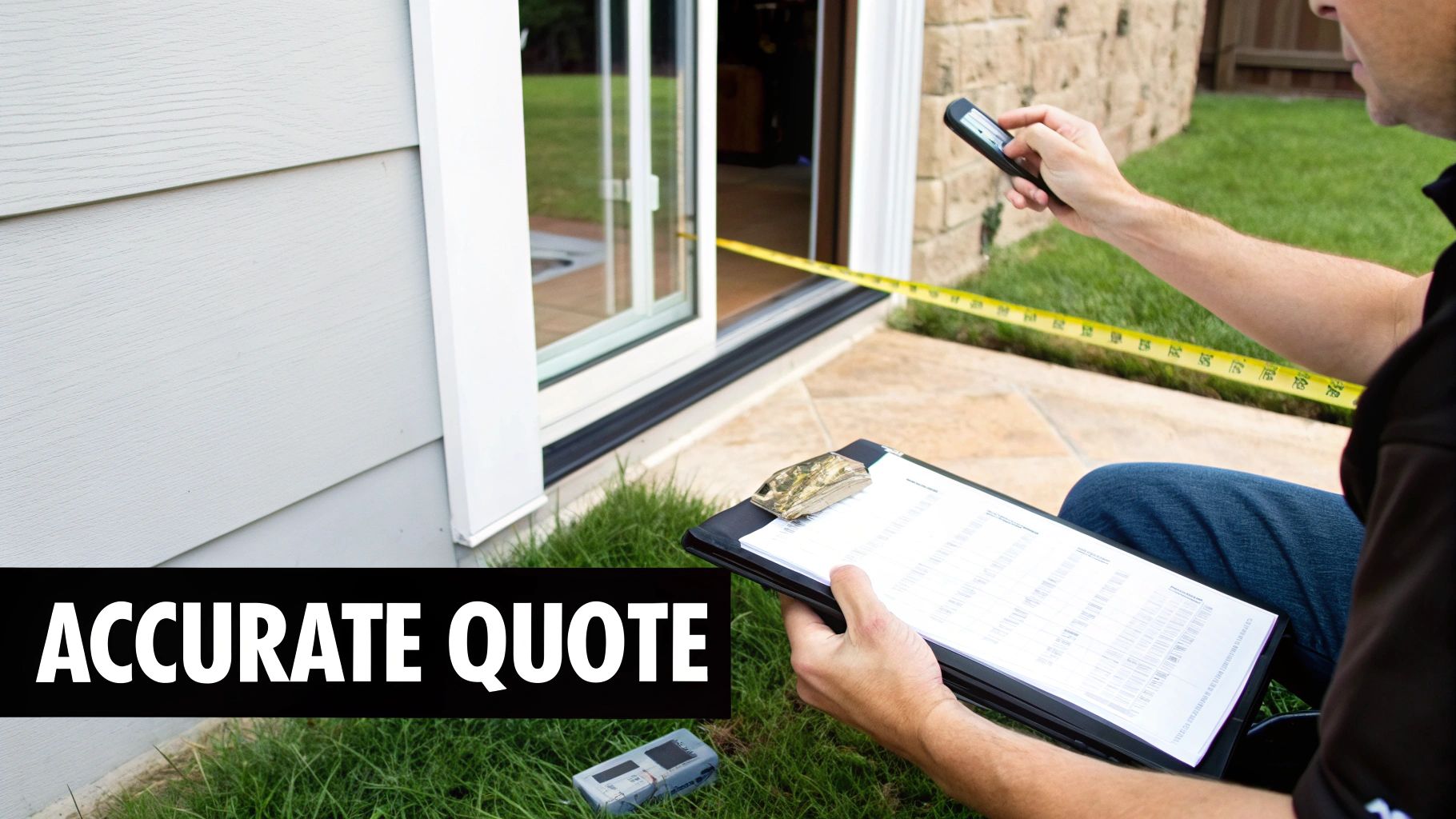
Start with the basics. Having a rough idea of your lanai’s dimensions is incredibly helpful. You don't need to be a professional surveyor; just approximate measurements of the length, width, and height give a contractor a solid starting point for estimating materials.
Next, just snap a few clear photos of the damage with your phone. A picture of a single ripped panel tells a completely different story than a shot of multiple torn screens or a busted door. These visuals let a company see the scope of the work from their office and give you a much sharper initial estimate.
Questions To Ask Before Hiring A Contractor
Once you have your info handy, it's time to start calling some local pros. But remember, not all companies are created equal. Asking the right questions upfront can save you from a world of headaches down the road.
Here’s a practical checklist to guide your conversations:
- Are you licensed and insured? This one is non-negotiable. A license means they’re operating legally, and insurance protects you from any liability if an accident happens on your property.
- Is this a complete, all-inclusive quote? You need to know if the estimate covers everything—all labor, materials, hardware, and even disposal fees. This is how you avoid nasty surprises on the final bill.
- What kind of warranty do you offer? A reputable company always stands behind its work. Ask about the warranty on both the screen materials they use and the labor itself.
- What type of screen material do you recommend for my situation? A good contractor won't just push the most expensive option. They’ll ask about your needs—do you have pets? Is the lanai in direct sun all day?—and suggest the best material for the job.
Getting multiple quotes is always a smart move. It's not just about comparing prices; it also gives you a feel for each company's professionalism and customer service. Sometimes, how they treat you on the phone tells you everything you need to know.
Understanding The Details Of A Full Rescreen
If you're staring down a bigger project, like a complete overhaul of an older enclosure, the quoting process gets a bit more involved. This isn’t just about swapping out a few screens; it's a full-blown restoration.
For a deeper look at what that entails, our guide on rescreening a pool enclosure has some great insights that apply to lanais, too. A truly thorough quote for a full rescreen should break down the replacement of all screens, spline, and door hardware, leaving no stone unturned.
Smart Ways to Save Money on Your Lanai Screen Repair
A quality repair is a solid investment in your home, but that doesn't mean you can't be smart about managing the lanai screen repair cost. With a few practical strategies, you can get the best possible value without cutting corners on durability or looks. The real key is thinking proactively about your enclosure’s health, not just reacting when something breaks.
One of the easiest ways to save money is to bundle your repairs. Sure, calling a pro for a single torn panel might seem cheaper at first glance, but those individual service fees can stack up fast if you have multiple problem areas. Tackling all the damaged panels in one visit dramatically lowers the labor cost per panel, saving you money and preventing another service call just a few weeks later.
Proactive Care for Long-Term Savings
Honestly, the simplest way to dodge a huge repair bill is with a little consistent, preventative maintenance. Think of it like regular oil changes for your car—a little bit of upkeep on your lanai can prevent major, expensive breakdowns down the road. This small investment of your time really pays off by extending the life of your screens.
You can make a huge difference with these easy steps:
- Gentle Cleaning: At least twice a year, give your screens a gentle wash with mild soap and water. This gets rid of the dirt, pollen, and corrosive salt buildup that wears them down.
- Regular Inspections: Do a quick walk-around of your lanai once a month. Look for small tears, loose splines, or wobbly door hardware. Catching these problems early turns a potential crisis into a minor, cheap fix.
- Trim Nearby Plants: Keep tree branches and shrubs trimmed well back from the enclosure. This stops them from rubbing against the screen or falling on it during the next big storm.
Making Smart Repair and Upgrade Decisions
When damage does happen, thinking about the big picture can lead to smarter financial choices. Let's say your screens are already eight or ten years old and getting brittle. Patching one panel might just be a temporary fix for a problem that's going to keep happening. In that scenario, a full rescreen is often the more economical choice in the long run, saving you from an endless cycle of patch jobs.
Investing in a full rescreen for an aging enclosure is like replacing all four worn-out tires at once. It costs more initially but provides uniform performance, enhanced safety, and saves you from repeated trips to the repair shop.
Along those same lines, when it's time for a major overhaul, think about upgrading your hardware. Choosing corrosion-resistant fasteners during a rescreen might add a small amount to the upfront cost, but it can save you hundreds in structural repairs later on. It helps to understand the difference between a simple fix and a full-blown upgrade; you can learn more by comparing the benefits of a lanai refurbish vs rebuild.
Your Top Questions About Lanai Screen Repair Costs, Answered
As you get ready to pull the trigger on a screen repair, a few last-minute questions always seem to pop up. It's totally normal. Nailing down the details can make a huge difference, both for your wallet and for how happy you are with the final result.
Let's clear the air and tackle the most common questions we hear from homeowners, so you can move forward with confidence.
How Often Do Lanai Screens Need to Be Replaced in Florida?
Living here in the Sunshine State is a trade-off. We get the beautiful weather, but our lanai screens take a constant beating from intense UV rays, thick humidity, and the occasional hurricane-force storm. Because of our unique climate, the average lifespan for a standard lanai screen in Florida is somewhere between 6 to 10 years.
After that, even the toughest screens start to give up the ghost. You’ll know it’s time when you see the tell-tale signs: the screen feels brittle when you touch it, it has a chalky, faded look, or you're constantly finding tiny new tears. At that point, patching is just throwing good money after bad. Those are all red flags that the material is shot, and a full rescreen is your smartest move.
Think of it this way: opting for a full rescreen on an aging enclosure stops the "domino effect." You know, where one old panel fails, then another, then another. It saves you from the headache of calling for repairs over and over again and makes sure your whole lanai looks uniform and strong.
Will My Homeowners Insurance Cover Lanai Screen Repair?
This is the big one for a lot of people, and the honest answer is… it depends on why the screen is damaged.
Most of the time, homeowners insurance might step in if the damage was caused by a specific, covered event like a hurricane, tornado, or another major named storm. If a big oak branch comes crashing through your enclosure during a tropical storm, there's a good chance your policy will help cover the repair costs.
However, policies almost never cover damage from normal wear and tear, old age, or a lack of maintenance. Things like sun-rotted screens, rusty fasteners, or tears from your dog are typically considered the homeowner's responsibility. The best advice? Pull out your policy documents or give your agent a call to see what’s covered before you make a claim.
Is It Cheaper to Fix One Panel or Rescreen the Whole Thing?
The right call here really comes down to the age and overall shape of your screens.
If you have just one or two tears in an enclosure that's otherwise in great condition, a single-panel repair is absolutely the cheaper, more practical choice. It’s a quick fix that solves the immediate problem without breaking the bank.
But if your screens are getting up there in years or you've got damage on multiple panels, a full rescreen is actually the better financial decision. Sure, the upfront cost is higher, but it saves you from the inevitable string of service calls as other old panels start to fail. You get a fresh start, restoring your lanai's look and function all at once, which delivers way more value in the long run.
How Does a Second-Story Lanai Change the Repair Cost?
Getting to the job is a huge part of the cost, and a second-story lanai is a whole different ballgame than a ground-floor one. Accessibility directly impacts the labor side of your lanai screen repair cost.
Working on a second-story enclosure brings a few challenges that just don't exist on the ground floor.
- Specialized Equipment: This isn't a job for a standard ladder. Technicians often need taller, more stable extension ladders or even scaffolding to work safely and effectively.
- More Labor Time: Just getting tools and materials up to the second level takes more effort and time. Working at that height also requires more caution and precision.
- Extra Safety Measures: Naturally, safety is the top priority. The extra protocols needed for elevated work add to the project's overall time.
Because of this added complexity, you can expect the labor charges for a second-story lanai repair to be higher than for a ground-floor job of the same size.
Ready to restore your outdoor oasis without the guesswork? For a fast, free, and accurate estimate on your lanai screen repair, trust the experts at Rescreen Rescue. We provide durable, high-quality screen solutions with fair, transparent pricing. Contact us today to schedule your free estimate!