

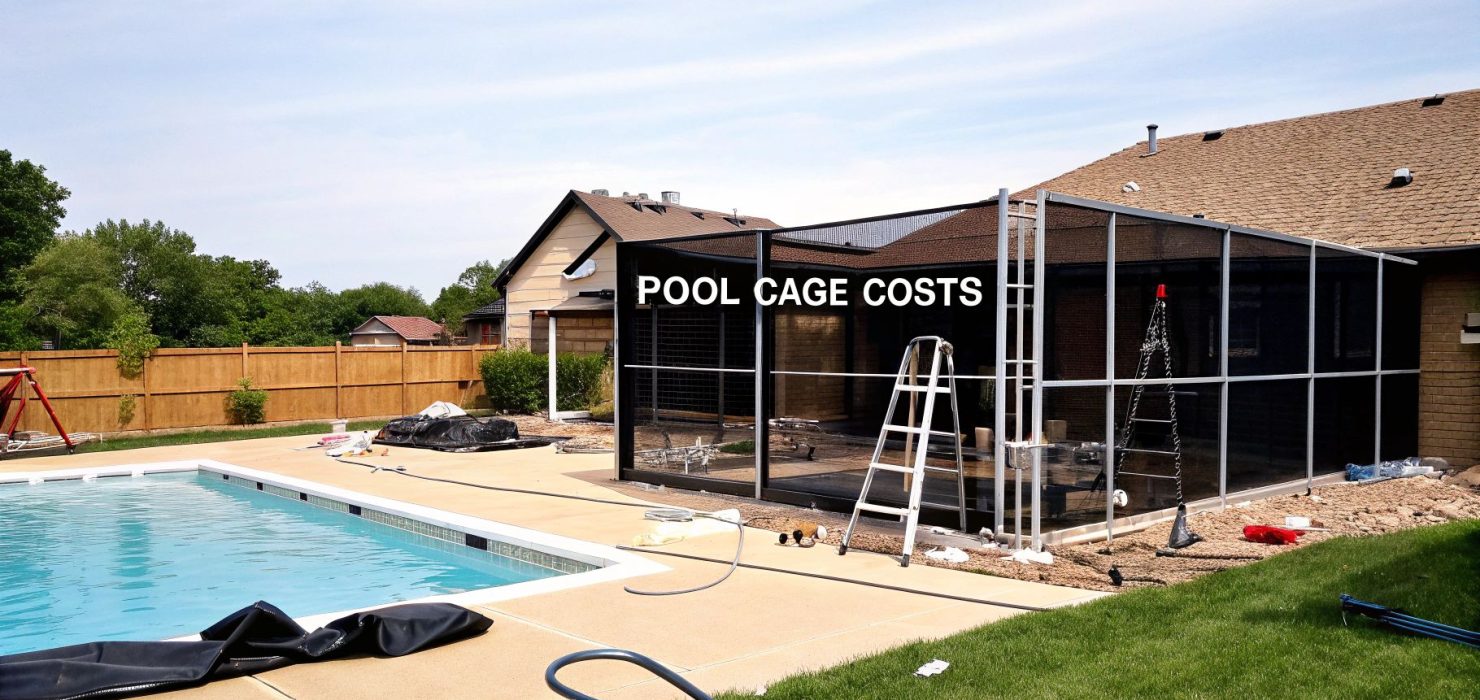
Before we get into the nitty-gritty, let's talk numbers. The truth is, there's no single, flat-rate price for a pool cage restoration here in Tampa Bay. A full-blown project can start from a few thousand dollars for a simple refresh and climb north of $10,000 for a massive enclosure needing extensive work. Most homeowners, however, find their projects land somewhere between $5,000 and $8,000.
What you'll ultimately pay comes down to the specific services your enclosure actually needs.
Your Guide To Pool Cage Restoration Costs
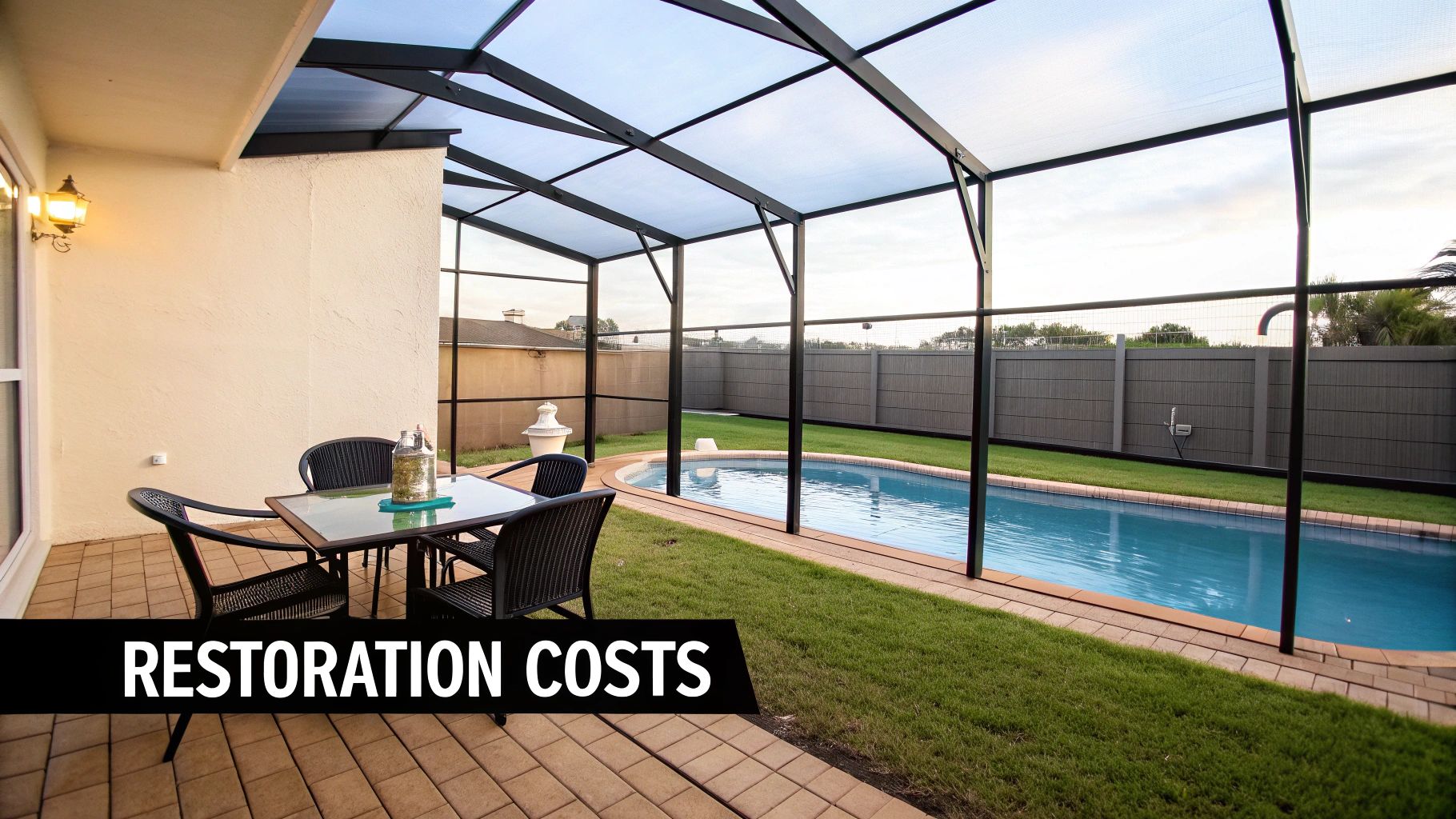
Think of it like renovating a kitchen. Are you just giving the cabinets a fresh coat of paint, or are you tearing everything out and starting from scratch? The final bill will look very different. A pool cage restoration works the same way—it’s a multi-step project designed to bring your outdoor living space back to its former glory.
The process bundles several key services, each with its own cost. Once you understand these components, you can get a much clearer picture of what's driving the total investment and what your enclosure needs to look and function at its best.
The Core Services in a Restoration Package
A complete restoration is more than a facelift; it’s about tackling the structure from top to bottom to ensure it's safe, long-lasting, and looks fantastic. The main services usually include:
- Complete Rescreening: This means stripping out every bit of the old, brittle, or torn screen and replacing it with brand-new, high-quality mesh.
- Professional Painting: We apply a specialized, durable coating to the aluminum frame. This isn't just for looks—it's crucial for protecting the metal from rust and corrosion.
- Hardware Replacement: Every single rusty, old fastener gets swapped out for new, corrosion-resistant screws. This is a non-negotiable step for structural integrity.
- Pressure Washing: Before anything else happens, the entire structure gets a deep clean to blast away dirt, chalky oxidation, and stubborn algae.
When you look at national averages, minor repairs or rescreening a few panels can run anywhere from $297 to $1,586. But for a full restoration, the costs scale up. Just the rescreening part often costs between $7 to $9 per square foot.
So, for a typical 600-square-foot enclosure, you could be looking at $4,200 to $5,400 for the screen replacement alone.
A well-done restoration isn't just about making things look pretty. It's about hitting the reset button on your enclosure's lifespan, giving you another 10-15 years of worry-free enjoyment.
Of course, hitting that 15-year mark depends on proper care after we're gone. Good maintenance habits go a long way in preventing premature wear and tear. If you're curious, you might find our expert tips for maintaining your pool enclosure in Tampa helpful. We'll break down the cost of each service in more detail soon, but this gives you a solid overview of what a full restoration really involves.
What Factors Influence Your Total Restoration Cost
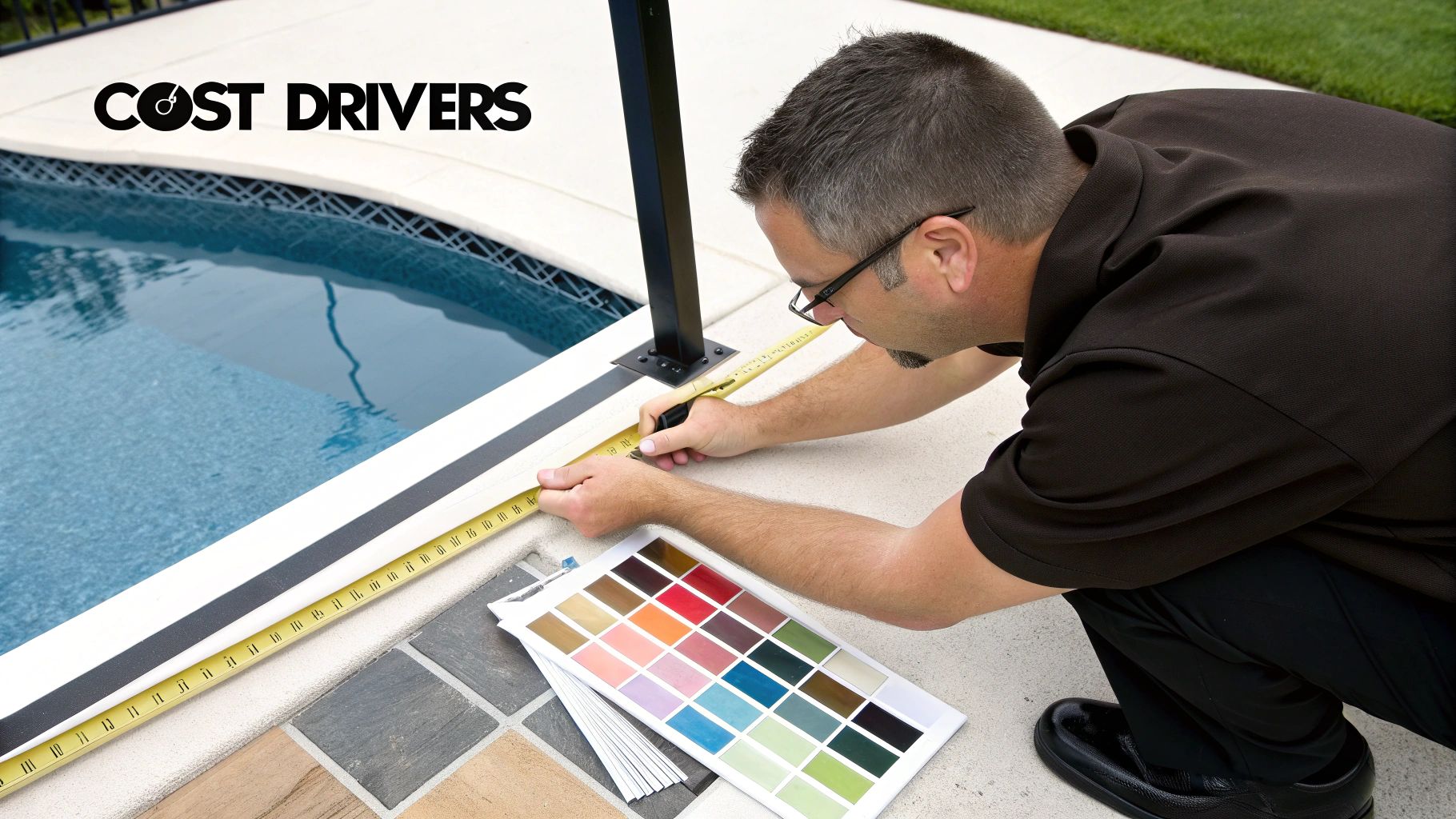
Trying to understand why one pool cage restoration quote looks so different from another is the first step to budgeting right. Think of it like taking your car to the shop; a simple oil change is a world away from a full engine rebuild. It’s the same with your pool cage—several key variables stack up to create that final price tag.
The biggest ticket item, without a doubt, is the size of your enclosure. A larger cage means more materials—more screen, more paint, more fasteners—and a whole lot more labor. Most restoration pricing boils down to a per-square-foot calculation, so size is what really sets the baseline for your cost. A cozy lanai will always be cheaper to restore than a massive, two-story cage spanning the entire pool deck.
But size is just where the math starts. The actual condition of your pool cage is just as important in shaping the final estimate.
Assessing The Current Condition Of Your Cage
The amount of prep work we have to do before any of the real restoration begins has a huge impact on labor costs, which can easily make up 60-70% of the total project price. A cage with just a little normal wear and tear needs far less attention than one that’s been battling the Florida elements for a decade without much help.
Here’s what we look for:
- Structural Damage: Got any bent aluminum beams from a fallen branch or last year's storm? Structural fixes are specialized work. They require extra materials and expertise, which will definitely add to the bill. This is where the big question comes in: is it better to refurbish what you have or just rebuild? For a deeper dive, check out our guide on the differences between refurbishing and rebuilding a pool enclosure.
- Corrosion and Oxidation: Florida's humidity is brutal on aluminum. That chalky white powder (oxidation) or the ugly rust-colored stains from old steel screws all have to go. This means intensive cleaning, sanding, and priming—a tedious but critical process to make sure the new paint actually sticks and lasts.
- Existing Paint Failure: If the paint that’s on there now is peeling, chipping, or bubbling, it has to be scraped and sanded off completely. There are no shortcuts here, and that detailed labor adds hours to the job.
A well-maintained cage might just need a light pressure wash and a quick scuff-sanding before painting. On the other hand, a cage with heavy corrosion is like trying to paint over rust on a car—if you don't fix the problem underneath, the new finish is doomed to fail.
Material Choices And Project Scope
After we figure out the condition, your choices on materials and what you want included in the project will also tweak the final cost. This is where you get to have some control over the budget. Sometimes, spending a bit more upfront on better materials pays off big time in the long run with better durability.
These are the variables you'll want to think about:
- Screen Type: Standard fiberglass screen is the go-to for most budgets. But if you have pets or want to block more of that intense Florida sun, upgrading to a pet-resistant screen or a solar screen will increase the material cost.
- Paint Quality: We use professional-grade, direct-to-metal (DTM) paint made specifically for aluminum. It costs more than the stuff you’d find at a big-box store, but it offers far superior adhesion and longevity. The quality of paint directly impacts how long your cage will look brand new.
- Hardware Replacement: Swapping out every single fastener is standard practice for a true restoration, but the type of hardware matters. Upgrading from standard screws to high-quality, ceramic-coated or stainless steel ones adds a small amount to the cost but gives you maximum protection against rust.
At the end of the day, every enclosure has its own quirks. Things like accessibility—a cage crammed into a tight spot or a two-story structure might require special lifts—and local permitting can also nudge the price. By understanding what drives these costs, you’ll be in a much better position to read any quote you get and make a smart choice for your home.
A Detailed Breakdown Of Restoration Service Costs
Trying to understand the cost of a pool cage restoration is a lot like looking at a menu at a good restaurant. You don't just see one final price; you see individual items that all come together to create the full experience. By breaking down the individual services, you get a crystal-clear picture of where your money is going and why each part of the job is so important.
Think of it less as a single expense and more as a series of crucial upgrades working in harmony. The screen keeps the bugs out, the paint protects the frame from our humid Florida air, and the hardware holds it all together. Let’s look at what goes into the main services.
The Cost Of Professional Rescreening
A full rescreen is the heart of any true restoration project. This isn't just patching a few holes; it's about systematically removing every single old, sun-baked panel and replacing it with brand new, high-quality screen mesh. The price for this is almost always calculated by the square footage of the enclosure, usually falling between $1.50 to $2.50 per square foot for both materials and labor.
For most standard-sized cages, this is the biggest line item on the invoice. If you're curious about how this breaks down for smaller jobs, our guide on lanai screen replacement costs takes a closer look at single-panel repairs and smaller patio enclosures.
The Value Behind Professional Painting
Painting your pool cage isn't just about making it look pretty again—it's a critical layer of defense. A professional paint job, which can run between $1.50 and $2.50 per square foot, is what stands between the aluminum frame and Florida’s relentless salt and humidity. It’s the best way to stop corrosion before it can weaken the entire structure.
This isn't a simple spray-and-go job, either. The prep work is intense and often makes up 60-70% of the total painting cost. A pro will:
- Pressure wash every inch to blast away chalky oxidation and grime.
- Sand and scuff the entire frame to create a surface the new paint can grab onto.
- Apply a premium direct-to-metal (DTM) coating specifically formulated for outdoor aluminum.
This meticulous process is what makes a professional finish last for 10-15 years, while a DIY attempt might start chipping and peeling in less than two. To get a better sense of how protective coatings are valued, you can check out a complete financial guide on coating costs that compares different options.
Hardware Replacement: A Critical Upgrade
This is one part of a restoration that is absolutely non-negotiable. Old, rusty steel screws are the number one cause of structural weak points and those ugly orange stains running down the frame. A proper hardware replacement involves painstakingly removing hundreds (sometimes thousands) of old fasteners and swapping them out for new, corrosion-proof options like ceramic-coated or stainless steel screws.
The cost for a full hardware replacement typically adds another $500 to $1,500+ to the project, depending on how big your cage is and how many screws need to be replaced. It might feel like a small detail, but this is one of the most important things you can do to ensure your cage stands strong for years to come.
Putting It All In Perspective
When you bundle these services—rescreening, painting, and new hardware—a full pool cage restoration becomes one of the smartest home improvement investments you can make. Just look at the bigger picture. A complete pool remodel, with resurfacing and new equipment, can average around $10,118. Building a brand-new screen enclosure from scratch can set you back anywhere from $7,051 to $18,831.
Compared to those figures, a full restoration delivers incredible value. You're breathing new life into your existing structure for a fraction of the cost of a total replacement, getting a like-new look and extending its life for another decade or more. Once you understand how the costs for each component work together, it's easy to see how a restoration protects your property and boosts its safety and curb appeal.
Putting The Costs Into Perspective With Real Scenarios
Numbers on a page can feel a bit abstract. To really wrap your head around the pool cage restoration cost, it helps to walk through a few common scenarios we see all the time here in the Tampa Bay area. Seeing how specific problems connect to real-world costs makes everything click into place.
This approach turns those general price ranges into something you can actually use for budgeting. You can find a situation that sounds a lot like yours and get a much clearer picture of what to expect. Let's break down a couple of typical projects, from a simple lanai refresh to a full-blown structural overhaul.
This chart gives you a quick visual breakdown of how the individual services—rescreening, painting, and hardware—stack up and contribute to the final budget.
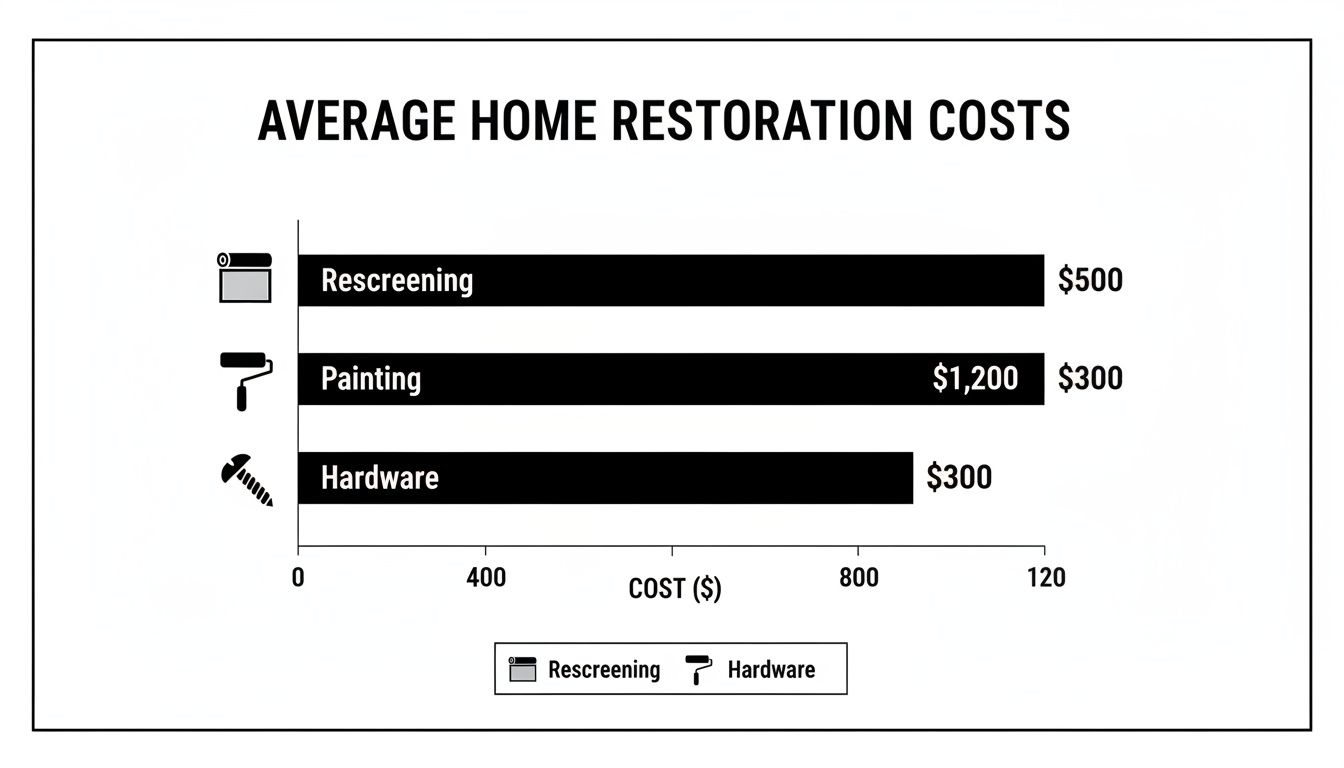
As you can see, a professional paint job is often the biggest piece of the pie, with a full rescreen coming in as a close second.
To give you an even clearer idea, here are a few common projects we handle, from minor touch-ups to major overhauls.
Sample Pool Cage Restoration Project Costs In Tampa Bay
Scenario: Minor Refresh
- Cage Size (Approx. Sq. Ft.): 500
- Required Services: Pressure Washing, Hardware Replacement, Full Rescreening
- Estimated Cost Range: $2,800 – $4,500
- Estimated Project Timeline: 1-2 Days
Scenario: Mid-Sized Overhaul
- Cage Size (Approx. Sq. Ft.): 1,500
- Required Services: Intensive Prep, Professional Painting, Full Rescreening, Full Hardware Replacement
- Estimated Cost Range: $7,000 – $9,500
- Estimated Project Timeline: 3-5 Days
Scenario: Large-Scale Restoration
- Cage Size (Approx. Sq. Ft.): 2,500+
- Required Services: Structural Repair, Heavy Prep, Premium Painting, Full Rescreening, Full Hardware Replacement
- Estimated Cost Range: $12,000 – $18,000+
- Estimated Project Timeline: 5-7+ Days
These examples show how quickly the scope can change based on the size of the cage and the level of work needed. Now, let’s dig into the details of a couple of these scenarios.
Scenario One: The St. Pete Lanai Refresh
Picture a standard 10' x 20' lanai in St. Petersburg, about 500 sq. ft. of surface area. It's 15 years old, and while the aluminum frame is still solid, the Florida sun has baked the original bronze paint into a chalky mess.
The screens are getting brittle with a few small tears, and all the original screws are rusting, leaving ugly orange streaks down the beams. The homeowner is getting ready to sell and wants the space looking sharp and modern for potential buyers.
For this kind of job, we’d focus on:
- Pressure Washing: To blast away that chalky oxidation and get the surface ready.
- Hardware Replacement: Every single rusty screw gets replaced with new, corrosion-resistant fasteners.
- Full Rescreening: Tearing out all the old, tired screen panels and installing fresh, standard fiberglass mesh.
Estimated Cost Range: $2,800 – $4,500
This is a classic refresh. There’s no major structural damage to fix, so the labor is focused on prepping for the new screen and fasteners. This keeps the project on the lower end of the restoration cost spectrum.
This type of project is a perfect example of how a targeted restoration can dramatically boost curb appeal and property value without requiring a complete structural rebuild. It’s an investment that pays for itself in a quicker sale and a better first impression.
Scenario Two: The Tampa Mid-Sized Overhaul
Now, let's head over to Tampa and look at a medium-sized pool cage, roughly 20' x 40' (around 1,500 sq. ft.). This enclosure is about 20 years old and has definitely seen better days. The white paint is peeling and flaking off in big patches, exposing the bare aluminum.
Algae has discolored the screens, and a few panels got shredded during the last tropical storm. More importantly, the original steel fasteners have caused some serious corrosion around the connection points, which is starting to compromise the structure. The goal here isn't just a touch-up; it's a full aesthetic and functional restoration.
This project is much more involved and requires:
- Intensive Prep Work: Scraping and sanding every last bit of peeling paint.
- Professional Painting: Applying a new coat of high-quality DTM paint for maximum durability.
- Complete Rescreening: Replacing every single old and damaged screen panel.
- Full Hardware Replacement: Swapping out every corroded screw with the good stuff.
Estimated Cost Range: $7,000 – $9,500
What drives the cost up here is the painstaking prep work. Sanding down all that peeling paint is a time-consuming job, but it’s absolutely critical to make sure the new paint sticks properly and lasts another decade. The larger size also means more materials for both the paint and the screen.
To see what this level of work looks like when it's all done, you can check out our gallery of pool cage restoration projects in the Tampa Bay area.
How To Get An Accurate And Trustworthy Quote
Getting a reliable estimate is the most important step in planning your project. It’s what keeps your final pool cage restoration cost from spiraling out of control. Think of an accurate quote not just as a price tag, but as a detailed project plan that prevents misunderstandings and surprise charges later on.
To get the ball rolling, you’ll need to do a little homework. The best way to help any contractor give you a precise quote is to hand them clear information right from the start. Taking a few minutes to gather some basic details about your enclosure before you even pick up the phone will make the whole process faster and smoother.
Preparing For Your Estimate
To make sure contractors have everything they need to give you a solid number, try to have this info ready:
- Approximate Dimensions: No need to be an architect here. Just grab a tape measure and get a rough length and width of your pool cage. This gives everyone a sense of the total square footage we're working with.
- Photos of Damage: A picture is worth a thousand words. Snap clear photos of any trouble spots—torn screens, peeling paint, rusty screws, and especially any aluminum beams that look bent or corroded.
- Your Project Goals: Know what you're aiming for. Are you just looking for a straightforward rescreen, or are you dreaming of a full-blown restoration with fresh paint and new hardware?
Having this information ready makes that first conversation incredibly productive. For a more detailed checklist, our guide on how to prepare your enclosure for rescreening is a huge help. This prep work puts you in the driver's seat, empowering you to ask the right questions and really understand the quotes you get back.
Critical Questions To Ask Every Contractor
Heads up: not all quotes are created equal. A trustworthy contractor will have no problem answering detailed questions about their work. Before you sign anything, make sure you ask these questions:
- Are You Licensed and Insured? This one is completely non-negotiable. It protects you from any liability if an accident happens on your property.
- Can I Get A Written, Itemized Quote? A verbal "ballpark" isn't good enough. Insist on a written quote that breaks down the costs for labor, materials, and each specific task.
- What Specific Materials Will You Be Using? Get the details. Ask about the brand of screen they use, the type of paint (it should be a DTM, or Direct-to-Metal paint), and the fasteners (look for ceramic-coated screws).
- What Is Your Process for Prep Work? Here’s a pro tip: a quality paint job is 70% preparation. Make sure their process includes thorough pressure washing, sanding, and cleaning before a single drop of paint is applied.
- What Kind of Warranty Do You Offer? A company that’s proud of its work will stand behind it. Ask for a warranty that covers both materials and craftsmanship.
A detailed, transparent quote is the foundation of a successful project. It shows that the contractor is professional, has thoroughly assessed the job, and is committed to clear communication, leaving no room for hidden fees.
If your cage damage might be covered by insurance, it’s worth exploring all your financial options. For example, some homeowners look into how public adjusters work with restoration companies to maximize settlements to help lower their out-of-pocket costs. By being prepared and asking the right questions, you can move forward with confidence and choose a great partner for your project.
Got Questions About Pool Cage Restoration Costs? We've Got Answers.
When you're looking at budgeting for a pool enclosure project, it's completely normal to have a few questions pop up. Getting a handle on the details behind the pool cage restoration cost is key to making a smart decision that works for your home and your wallet. Let's walk through some of the most common questions we hear from homeowners just like you.
A big one is always whether it's better to just repair a few problem panels or go all-in on a full restoration. Sure, fixing a single torn panel is cheaper right now. But if your cage is hitting that 10-15 year mark, the paint is chalky and faded, or you're seeing rusty screws everywhere, a full restoration is almost always the smarter long-term move. Think of it as hitting the reset button on your entire enclosure's lifespan.
Is A Full Restoration More Cost-Effective Than Replacing The Whole Cage?
Absolutely. A complete pool cage restoration is typically 40-60% less expensive than tearing it down and building a new one from scratch. Restoration breathes new life into your existing aluminum frame—which is usually still structurally sound—saving you a huge amount on new materials and heavy construction costs.
Unless your cage has suffered severe, unfixable structural damage from a storm or impact, restoration gives you that brand-new look and feel for a fraction of the price.
How Long Does A Pool Cage Restoration Take?
The timeline really depends on the size of your enclosure and what kind of shape it's in, but most full restoration projects are wrapped up within 3 to 7 days. This timeframe covers everything from the detailed prep work and painting to replacing every screw and rolling in every new screen.
A smaller, simpler job might only take a couple of days. On the other hand, a massive or heavily neglected cage could take a bit longer to get just right.
It's worth noting that trying to phase the project to spread out the cost usually isn't practical. Critical steps like painting require all the old screens to come out at once. It's far more efficient—and ultimately cheaper—to get it all done in one continuous process.
Finalizing your budget really just comes down to balancing these factors with what your enclosure needs.
Ready to get a clear, no-surprise quote for your project? The team at Rescreen Rescue provides detailed, free estimates to help you understand every aspect of your pool cage restoration cost. Get your free estimate today.