


When you start pricing out a new screened-in porch, the numbers can feel all over the map. You might see quotes from $2,000 for a simple screen-in of an existing patio all the way up to $35,000 or more for a brand-new structure built from the ground up. That huge gap isn’t a mistake—it all comes down to one crucial question: are you enclosing a space you already have, or are you building an entirely new addition?
Your Upfront Guide To Screened-In Porch Costs
Think of it this way: screening in an existing porch is like adding the finishing touches to a room. The foundation, walls, and roof are already there. You're just adding the final layer that transforms the space. Building from scratch, on the other hand, is a mini-construction project. It involves pouring a foundation, framing walls, and building a new roof before the first screen panel even goes up.
The best way to compare estimates is by looking at the cost per square foot. This common pricing model helps you understand how different choices in materials, size, and features will impact your total investment. The infographic below gives you a quick visual of what to expect for both project types.
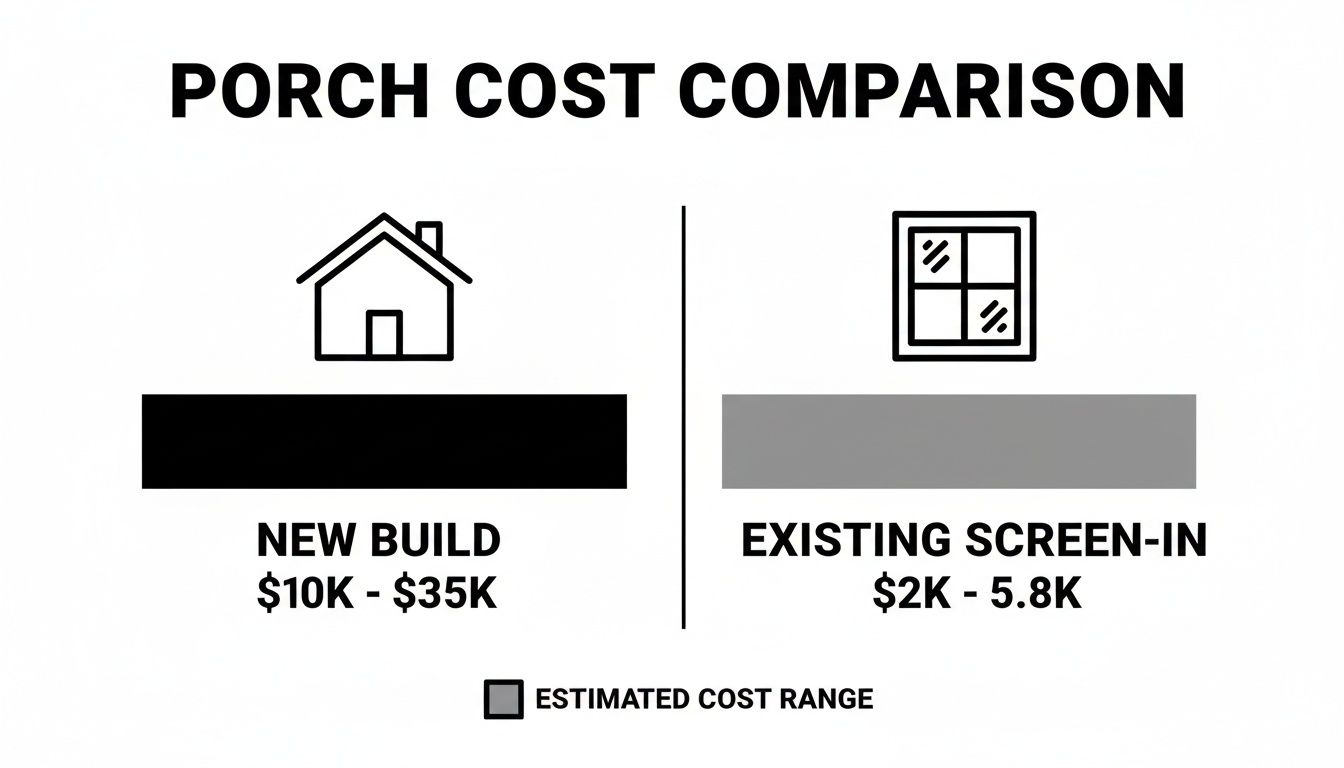
As you can see, building something new is a much bigger financial commitment than simply adding screens to a patio or deck that already has a roof.
National Averages And A Baseline Example
To give you a solid starting point for your budget, we can look at national data from contractor bids across the country. Building a completely new screened-in porch typically runs from $10,000 to $35,000. That breaks down to about $50 to $175 per square foot.
Screening an existing porch is a whole different ballgame. The cost is much lower, averaging between $2,000 and $5,800, or roughly $10 to $25 per square foot.
Let’s put that into perspective with a real-world example:
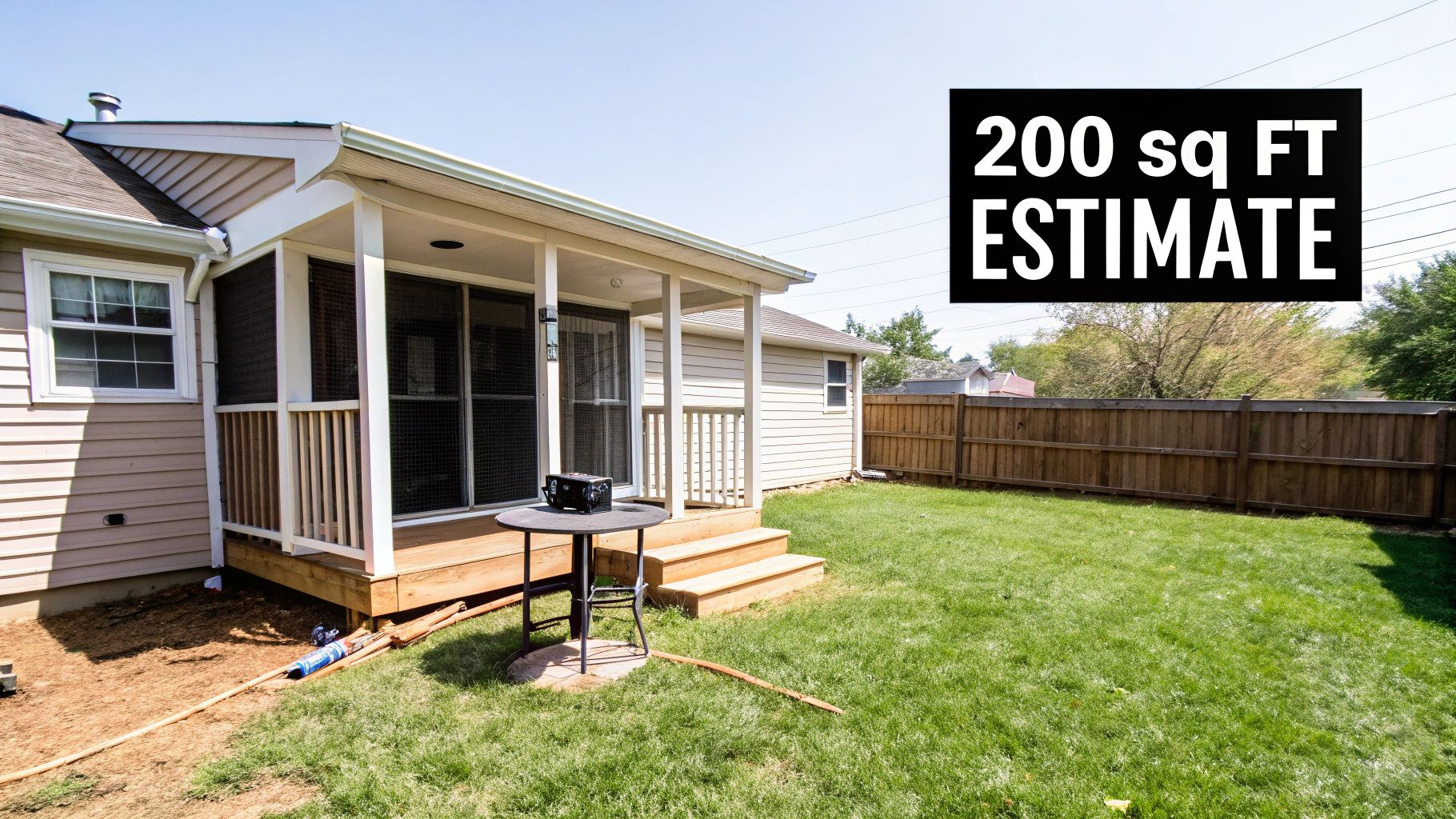
A typical 200-square-foot porch (think 10 ft. by 20 ft.) would cost anywhere from $10,000 to $35,000 if you're building it from the ground up. But if you’re just enclosing an existing slab and roof of that same size, you're looking at a much more manageable $2,000 to $5,000.
This 200 sq. ft. example is a great baseline to keep in mind. As you explore different materials and features, you can see how your choices will nudge that final price up or down.
Of course, these numbers are for construction. If your structure is fine but the screens are just old, torn, or faded, your project is even simpler. In that case, you'll want to explore the much lower cost to rescreen a porch.
Once you have a general idea of the scope and factors involved, the next logical step is to request a personalized quote from a local professional. That's the only way to get a truly accurate estimate for your specific home and vision.
The Key Factors Driving Your Final Porch Cost
Ever wonder why one screened porch can cost double what a similar-sized one does? The final price tag isn't just one number; it's a story told through a series of key decisions you and your contractor will make. Getting a handle on these variables is the best way to keep your budget in check and have a smart conversation about the real cost to build a screened-in porch.
The single biggest driver of your final cost is the project's scope. As we've mentioned, building a brand-new porch from the ground up is a completely different ballgame than simply screening in a patio that already has a roof. A new build means paying for a foundation, framing, and roofing before a single screen panel goes up.
Think of it like buying a car. The base model has one price, but adding the sunroof, leather seats, and a premium sound system will bump up that final number. Your porch works the same way—every choice you make, from the concrete to the roofline, shapes the budget.
Foundation And Framing Choices
For any new addition, the very ground your porch sits on is a major cost factor. A simple concrete slab is usually the most budget-friendly route. However, if you're building an elevated porch, you'll need a more complex and expensive post-and-pier or full perimeter foundation. These foundational costs can add thousands to your project before the first wall is even framed.
Next up is the structure itself. The two most common framing materials are pressure-treated wood and aluminum, and each has its pros and cons.
- Wood Framing: People often choose wood for its classic, traditional look. You can paint or stain it to perfectly match your home’s style. The trade-off? It needs regular maintenance—think sealing or painting every few years—to fend off rot and insects, especially here in Florida's humid climate.
- Aluminum Framing: This is the low-maintenance, high-durability option. Aluminum won't rot, warp, or become a meal for termites, making it an incredibly popular choice in coastal areas like Tampa Bay. It might cost a bit more upfront, but it can save you a ton on upkeep down the road.
The material you pick has a ripple effect on the total cost, not just in the initial purchase but also in the labor needed for installation and the long-term maintenance bills.
Screen Types And Design Complexity
Even the "screen" in "screened porch" comes with a whole menu of options and price points. Standard fiberglass mesh is the go-to budget-friendly choice. It does a great job, offering good visibility and airflow without breaking the bank.
But depending on your lifestyle, an upgrade might be worth it.
If you have pets or young kids running around, investing in a durable, tear-resistant "pet screen" is a no-brainer. It costs more initially, but it saves you the headache and expense of frequent repairs. Solar screens, which block a hefty amount of UV rays, are another great premium option to help keep your porch cooler on those hot Florida afternoons.
Beyond the materials, the complexity of your design plays a huge role. A simple rectangular porch is way more affordable to build than a custom multi-sided or wraparound design with tricky roof tie-ins. Every extra corner, angle, or level adds to both material and labor costs. Likewise, a simple shed roof is much more economical than a complex gable or hip roof that has to blend seamlessly with your home’s existing roofline.
Remember, these costs are for brand-new installations. If you already have a solid structure but just need new screens, the project gets a lot simpler. You can get a better idea of those costs in our guide to lanai screen replacement cost.
Overlooked Costs: Labor Rates And Permits
Finally, let's talk about two factors that often fly under the radar but can seriously impact your budget: local labor rates and building permits. The cost of labor can swing wildly depending on where you live, with skilled pros in urban areas often charging more. Labor is a major part of the investment, frequently making up 40-60% of the total on simpler screening jobs.
On top of that, any new structure will almost certainly require a building permit from your local city or county. Permit fees can run anywhere from $100 to over $300, depending on how big the project is. While it might feel like just another fee, it's a critical step. It ensures your porch is built safely and up to code, protecting your home's value and your family. Any good contractor will handle this process for you, but the fee will be part of your overall cost.
Breaking Down Material And Labor Expenses
Every quote you get for a screened-in porch boils down to two key things: the materials and the labor. Once you understand how these two pieces fit together, the final price makes a lot more sense. It helps you see exactly where your money is going and why hiring a pro is such a smart move.
Think of it like commissioning a custom piece of furniture. You have the cost of the raw wood, the stains, and the hardware—those are your materials. Then you have the skill of the master craftsman who cuts, assembles, and finishes it. Both parts are essential for a beautiful, long-lasting result.
Choosing Your Core Materials
The materials you pick are the literal building blocks of your porch, and they have a huge say in both the upfront cost and how well it holds up over time.
For the frame, your main choice is between wood and aluminum. Wood has that classic, timeless look, but it needs regular painting or sealing to fight off Florida's brutal humidity and pests. Aluminum, on the other hand, might cost a little more at the start but it’s a low-maintenance powerhouse. It won't rot, rust, or get eaten by insects, which is why it’s the go-to choice for our coastal climate.
Then, you've got the screens themselves. The options range from basic to high-performance, each with its own price tag:
- Standard Fiberglass Screen: This is the most common and budget-friendly choice. It gives you great visibility and airflow, making it a solid starting point for most homeowners.
- Pet-Resistant Screen: If you've got dogs, cats, or even just really active kids, this tougher, vinyl-coated polyester screen is worth every penny. It costs more but saves you from the constant patching and replacing that comes with standard screens.
- Solar Screen: This premium screen is designed to block a big chunk of the sun's UV rays. It helps keep your porch noticeably cooler and stops your outdoor furniture from fading. It’s a pricier option, but the functional benefits are huge.
The Value Of Professional Labor
While materials give your project its body, professional labor provides the backbone. For a straightforward screening project on an existing structure, the cost of labor and overhead can be a pretty significant part of the final bill.
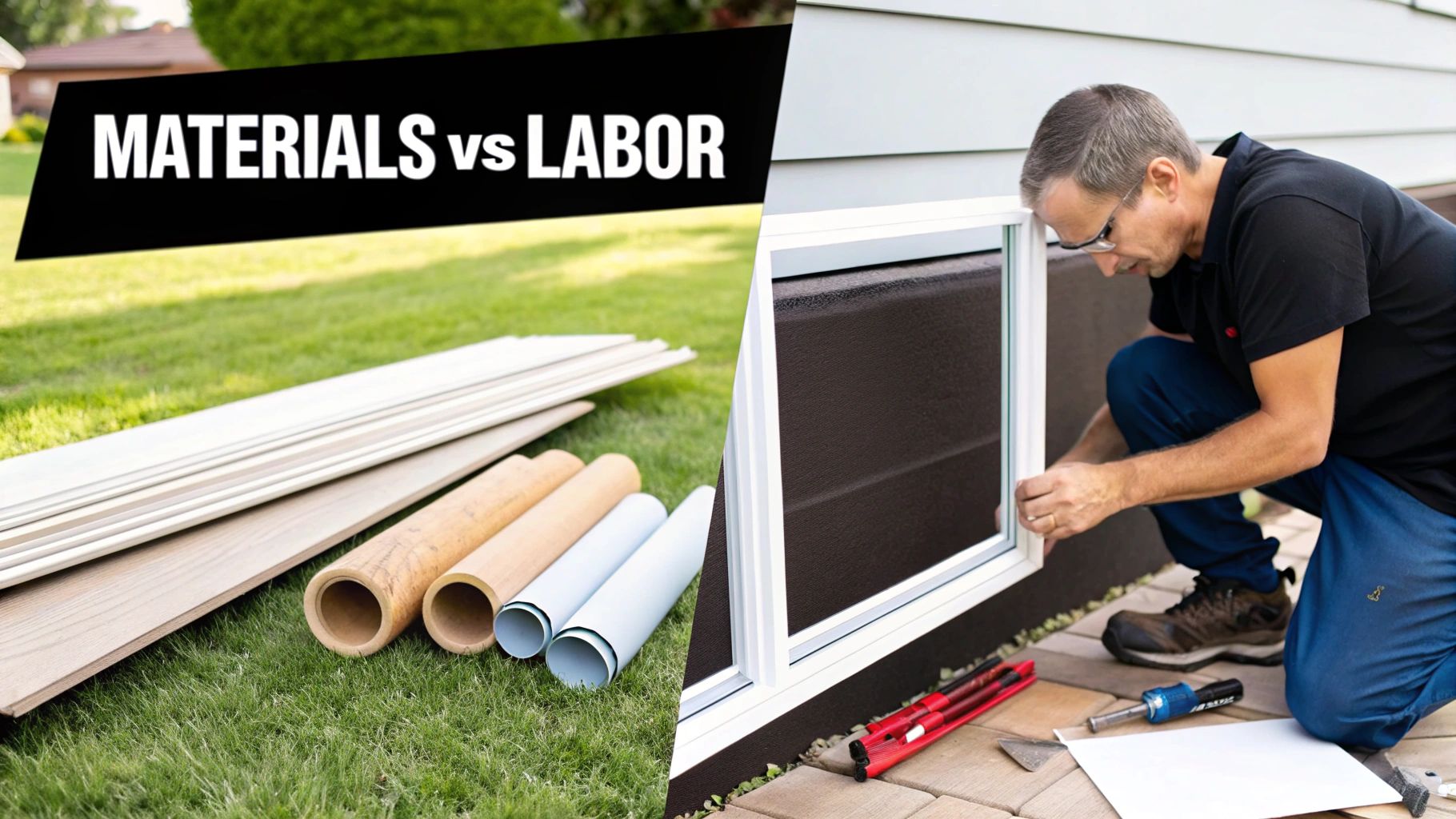
Generally, you can expect the materials to run somewhere between $3 to $5 per square foot. The professional installation will likely add another $5 to $7 per square foot. What does that mean in simple terms? Labor often makes up 40% to 60% of the total price.
To help visualize where your money goes, here’s a typical breakdown for screening an existing porch.
Sample Cost Breakdown For Screening An Existing Porch
- Screen Mesh & Spline (20% – 30%): This is the cost of the actual screen material, whether you choose standard fiberglass, pet-resistant, or a solar option.
- Frame Materials, if new (15% – 25%): This category includes aluminum or wood for the frame, plus fasteners and door hardware. It applies only when building new structures.
- Professional Labor (40% – 60%): This covers the full installation process, including site setup, precise screen tensioning, final cleanup, and all company overhead.
- Permits & Fees, if required (5% – 10%): This accounts for the cost of pulling necessary local building permits and arranging for any required inspections.
This breakdown shows that labor isn't just an add-on; it's the largest and most critical part of the investment.
You're not just paying someone to hang screens. You're paying for their expertise. A true professional ensures every single panel has the perfect tension so it doesn't sag or wrinkle down the road—a classic sign of a DIY job gone wrong. They use corrosion-resistant fasteners built to handle the salty, humid air we get here in the Tampa Bay area, which prevents ugly rust streaks and keeps the structure strong.
A professionally built screen enclosure is a complete system. Every part has to work together perfectly. Proper installation guarantees the frame is secure, the screens are drum-tight, and the doors are aligned just right, keeping pests out and making sure the whole thing can stand up to our notorious storms.
This attention to detail is what makes a porch last. The same principles of proper screen tension and durable hardware are critical for any enclosure, big or small. You can learn more about what is involved with rescreening a pool cage, where these expert techniques are absolutely essential for a long-lasting result.
Ultimately, paying for skilled labor is buying peace of mind. It’s the difference between a porch that looks good for one season and one that brings you years of bug-free enjoyment, saving you the headache and cost of fixing it later.
Calculating The Return On Your Screened Porch Investment
It’s easy to get tunnel vision and only see the initial expense when you’re figuring out the cost to build a screened-in porch. But a well-built outdoor living space is so much more than a line item in your budget. It’s a genuine asset that can seriously boost your home’s value and curb appeal.
When you shift your mindset from a short-term cost to a long-term investment, the true worth of a protected, bug-free outdoor room really comes into focus. This isn't just wishful thinking—it's backed up by solid real estate and remodeling data.
Homebuyers, especially in sunny spots like Tampa Bay, consistently put functional outdoor living areas at the top of their wish lists. A screened porch adds square footage that feels both practical and a little bit luxurious. It creates that perfect zone for relaxing, dining, and entertaining without swatting away mosquitoes, and that lifestyle perk translates directly into a stronger market position when you decide to sell.
The Financial Payoff At Resale
So, what kind of return can you actually expect? When real estate pros are asked if a screened porch pays off, national remodeling data gives a pretty clear answer: yes. Homeowners often get a huge chunk of their initial investment back in the form of a higher sale price.
One industry guide points out that homeowners typically see a return of about 75% of the cost of a new screened porch reflected in their home's value. Digging deeper, analyses show that even a basic screened patio can bump up a home’s selling price by 5% to 8% in warmer climates where the space is usable all year.
Let’s put that in perspective. For a $500,000 home here in Tampa, a 5% boost is an extra $25,000 in your pocket. An 8% increase? That’s a $40,000 gain. This kind of financial return makes the upfront cost to build a screened-in porch a strategic decision, not just a home improvement project.
More Than Just Money: The Lifestyle ROI
While the financial numbers are compelling, the immediate, day-to-day benefits are where the real magic happens. A screened enclosure completely changes how you experience your own home.
A screened porch is an investment in your quality of life. It creates a dedicated space for morning coffee, evening conversations, and weekend relaxation, all without the constant annoyance of mosquitoes and other pests.
This addition also gives your home’s curb appeal a major lift. A well-designed porch adds architectural character and gives the exterior a welcoming, polished look. It’s a feature that doesn’t just catch a buyer’s eye—it brings you a little bit of pride and joy every time you pull into the driveway. It perfectly bridges the gap between indoor comfort and the beauty of the outdoors.
Boosting Value With A Simple Refresh
Already have an older screen enclosure? You don’t need a full tear-down to reap these benefits. A worn-out, faded, or torn screen can be a huge eyesore and a red flag for potential buyers. During a home inspection, it can signal neglect and take away from an otherwise beautiful property.
The good news is that a simple rescreening is a high-impact, low-cost way to boost your home's marketability before you sell. Replacing old, tired screens with fresh, high-quality material makes the entire enclosure look brand new, instantly elevating the perceived value of your outdoor space. It’s one of the smartest pre-sale improvements you can make.
If you're thinking about this option, you can learn more about how rescreening can improve the value of your home in our detailed guide.
Smart Ways To Save Money On Your Porch Project
Building a beautiful screened-in porch doesn't have to drain your bank account. With a few smart strategies, you can manage the costs effectively without sacrificing the quality or enjoyment of your new outdoor space. The real key is knowing where you can save and where you absolutely shouldn't cut corners.
The single most impactful way to save money is to use an existing structure. If you already have a patio, deck, or lanai with a solid foundation and roof, you've already won half the battle. Enclosing this space can save you thousands of dollars compared to building a brand-new addition from the ground up, since you get to skip the major expenses of foundation work, heavy framing, and roofing.
This approach lets you focus your budget on the elements that actually create the enclosure: the screens and framework. Deciding between a full rebuild and a simple screen-in is a major financial decision. For a deeper look at this choice, you can explore the pros and cons of whether to refurbish an existing enclosure or completely rebuild.
Material And Design Choices
Your choice of materials directly influences the bottom line. While there are plenty of high-end options out there, standard materials often provide excellent durability and aesthetics at a much more wallet-friendly price point.
- Stick with Standard Framing: Aluminum framing is a cost-effective, low-maintenance, and incredibly durable choice for Florida's climate. It resists rust and rot, saving you a ton of money on future repairs compared to wood.
- Choose Fiberglass Screens: For most applications, standard fiberglass screen mesh is the perfect balance of affordability and performance. It offers great visibility and airflow without the premium price of specialty screens.
Plus, keeping the design simple can significantly reduce labor costs. A straightforward rectangular or square layout is much easier and faster for a crew to build than a complex, multi-angled design. Every extra corner and custom cut adds time and material, which adds to your final bill.
Where Not To Cut Corners
While saving money is important, some areas are absolutely worth the investment to avoid costly problems down the road. Skimping on these critical components can turn your smart savings into future headaches and repairs.
Never compromise on the quality of the installation or the hardware. Professional installers ensure proper screen tension to prevent sagging, use corrosion-resistant fasteners that won't rust in our humid climate, and build a structure that is safe and secure.
Think of it this way: paying for expert labor is an investment in longevity. A properly built porch will withstand storms and daily wear, providing years of bug-free enjoyment. On the other hand, a poorly executed job might look good for a season but will quickly lead to sagging screens, wobbly frames, and constant frustration. By focusing your savings on smart material choices and project scope, you can afford to invest in the professional craftsmanship that truly matters.
Why A Local Specialist Matters For Your Tampa Bay Enclosure
Let's be honest—understanding the costs and materials for a new screen enclosure is just one piece of the puzzle. Making sure that investment can actually stand up to the Tampa Bay climate is a whole different ball game.
Our region's intense sun, suffocating humidity, and salty air create a uniquely brutal environment for any outdoor structure. It's a set of challenges that a general contractor might not even think about, and that's exactly where a local screen enclosure specialist becomes your most valuable player.
It’s Not Just Construction, It’s Coastal Science
Building a durable outdoor structure here isn't just about putting up a frame and rolling on some screen. It's about understanding coastal science. A true local expert knows which fasteners won’t turn to rust from the salt spray and which screen materials can take a beating from UV rays without getting brittle and cracking.
This kind of specialized, on-the-ground knowledge is the difference between an enclosure that gives you years of enjoyment and one that becomes a constant source of repair headaches.
Navigating Local Codes And Hurricane Seasons
A specialist with deep roots in the Tampa Bay area lives and breathes the local building codes and wind load requirements that keep your family safe. They’ve seen firsthand what works—and what catastrophically fails—when a tropical storm rolls through.
This experience, built over years of working right here, ensures your project is not only beautiful but structurally sound and compliant from day one.
With over 20 years of experience serving communities from St. Petersburg to Clearwater, we’ve built our reputation on durability. We understand that a long-lasting enclosure is a system where every component—from the concrete anchors to the last screw—is chosen specifically for our coastal environment.
This hyper-local focus is a game-changer for any home project. For something as specialized as a screen enclosure, its importance can't be overstated. The same principles of local knowledge and accountability apply across the board, which is part of why choosing a local new home builder is important for any major project.
The Rescreen Rescue Promise
As a family-owned business, our commitment goes beyond just finishing the job. We’ve earned hundreds of 5-star reviews because we treat every project like it’s for our own home. Whether it's a minor screen repair or a complete restoration, we believe in fair pricing and always stand behind our work.
We provide:
- Free, No-Obligation Estimates: Get a clear and detailed quote so you understand your project costs upfront. No surprises.
- Available Warranties: We offer peace of mind with solid warranties on our craftsmanship and the materials we use.
- Special Discounts: We're proud to support our community by offering discounts for military personnel, first responders, and seniors.
Choosing a dedicated local pro for your screen enclosure isn't just another line item on your budget—it's an investment in quality, safety, and a structure built to last.
Questions Everyone Asks About Screened Porch Costs
As you get closer to a decision, the practical questions start popping up. Thinking about the timeline, permits, and the right materials for our Florida climate helps set clear expectations for your project. Here are some straightforward answers to the questions we hear most often.
How Long Does It Take To Screen In A Porch?
The timeline really boils down to the scope of your project. If you've already got a porch with a solid roof and foundation, just adding the screens is a quick job. A professional crew can usually wrap that up in just one to two days.
But if you're building a brand-new screened porch from the ground up, that's a different story. It’s a full-blown construction project that can take several weeks from start to finish. This includes time for pulling permits, pouring the foundation, framing, roofing, and finally, installing the screens and all the finishing touches.
Do I Need A Permit To Build A Screened Porch?
Whether you need a permit depends on what you're doing and your local rules. Simply adding screens to a structurally sound porch, lanai, or pool cage? You typically won't need a permit for that.
On the other hand, building a whole new addition with its own foundation and roof almost always requires one. It's crucial to check with your city or county building department. A reputable contractor will handle the entire permitting process for you, making sure your new space is safe, up to code, and built to last.
Remember, a permit isn't just a piece of paper or a fee—it's your safeguard. It ensures a professional inspector signs off on the work, protecting your home's structural integrity and its value.
What Is The Best Screen Material For Florida?
Down here in Florida, your screen choice has to be tough enough to handle intense sun, high humidity, and a whole lot of bugs.
For most projects, standard fiberglass screen is a fantastic, budget-friendly option. It gives you clear views and great airflow while keeping the pests out.
However, if you have pets, active kids, or the enclosure is in a high-traffic area, it's smart to upgrade. A stronger, tear-resistant pet screen or a durable super screen will hold up to a lot more wear and tear. This simple upgrade can save you from frequent repairs and keep your enclosure looking great for years to come.
Ready to turn your vision for the perfect outdoor space into a reality? For a durable, beautiful, and professionally installed screen enclosure built to withstand the Florida climate, trust the experts at Rescreen Rescue. Contact us today for your free, no-obligation estimate and discover the difference over 20 years of local experience makes. Visit us at https://rescreenrescue.com to get started.