


Picking the right screen for your Florida porch really boils down to your lifestyle and where you live. For most folks, a standard fiberglass screen hits that sweet spot between cost and performance. But if you've got a furry friend who loves to climb, a pet-resistant screen is a no-brainer. And for those of us lucky enough to live near the coast, corrosion-resistant aluminum is the way to go.
Choosing The Best Screen For Your Florida Porch
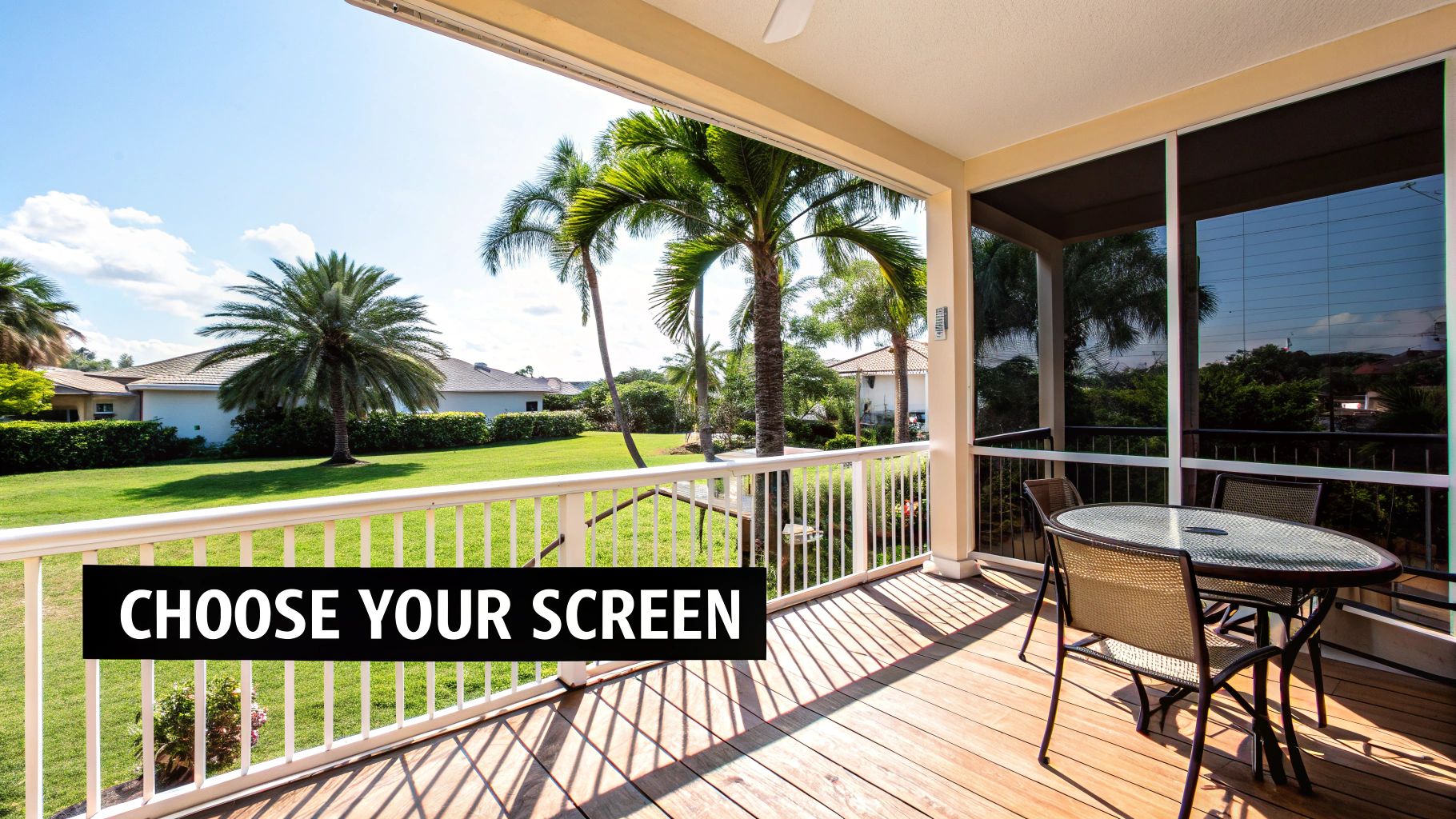
Here in Florida, a quality screen isn't just a nice-to-have; it's a critical investment in enjoying our outdoor lifestyle. It’s what transforms a simple lanai, patio, or pool cage into a comfortable, bug-free retreat. The right screen enclosure is more than just a barrier—it’s a true extension of your home.
This guide is designed to cut through the noise and help you make a smart choice for your home. We'll get into how things like salty coastal air, pets, and your desire for privacy should steer your decision.
Understanding Your Primary Options
To find the best screen for your porch, you first have to know the main players. Each material is built for a different purpose, perfect for the varied lifestyles and environments we see across St. Petersburg, Clearwater, and Tampa.
Here’s a quick rundown of what you’ll be choosing from:
- Fiberglass: This is the go-to for a reason. It's affordable, offers great visibility, and lets the breeze through. It's the workhorse of the screen world.
- Aluminum: A definite step up in durability. It gives you a much crisper, clearer view and holds its own against the elements far better than fiberglass.
- Pet-Resistant Screen: Made from a tough, vinyl-coated polyester, this stuff is about seven times stronger than standard fiberglass. It's built to handle claws and paws without tearing.
- Specialty Screens: This is where you get into custom solutions like solar screens that block UV rays or no-see-um screens with a super-tight mesh to keep out even the tiniest gnats.
The demand for these functional outdoor living areas is absolutely booming. The global screen enclosure market hit a staggering $2.5 billion in 2023, and a lot of that growth is happening right here in humid, buggy climates like Tampa Bay. Here, a quality screen is a necessity, not a luxury.
Choosing the right screen material from the get-go saves you from expensive replacements down the line and makes sure your outdoor space stays a beautiful, functional retreat for years.
To really get the most out of your home, think about how your screened porch fits in with broader outdoor living space ideas that can turn your entire backyard into a private oasis. You can also see how different materials look and perform in local homes by exploring our detailed overview of patio screen enclosures.
A Detailed Look at Porch Screen Materials
Choosing the right screen for your porch is about balancing durability, visibility, and cost against what you really need. While standard fiberglass is the go-to for many, Florida’s intense sun, humid salt air, and relentless bugs demand a smarter approach. Each material has its own personality and purpose, and understanding those nuances is the key to a lasting investment.
This isn't just a list of pros and cons. We’re going to break down exactly what each screen type does best, so you can pick the perfect fit for your lanai, pool cage, or patio enclosure.
Fiberglass: The Budget-Friendly Standard
Fiberglass screening is easily the most common choice for porch enclosures across Florida, and for good reason. It hits a sweet spot between affordability and performance, making it a practical pick for homeowners and property managers alike. It's also flexible and forgiving—it doesn't crease or dent the way metal screens can.
The trade-off? Durability. Under the brutal Florida sun, fiberglass is prone to sun rot. Over time, UV exposure makes it brittle and easy to tear. It’s perfectly fine for keeping out mosquitoes and flies, but it won’t hold up against a rambunctious pet or a stray baseball.
- Best For: Budget-conscious homeowners, low-traffic areas, and property managers who need a cost-effective solution for multiple units.
- Lifespan in Florida: You can expect 3-5 years before it starts showing signs of UV degradation.
- Key Consideration: While the upfront cost is low, you might find yourself rescreening more often compared to tougher options.
Aluminum: For Superior Durability and Crisp Views
If you’re after a sharper view and a noticeable upgrade in strength, aluminum screening is a fantastic choice. Unlike fiberglass, aluminum won't sag over time, giving you a tight, clean look that really opens up your view. Its rigid structure also makes it far more resistant to punctures from small debris.
The main thing to watch for with aluminum, especially in coastal spots like St. Pete and Clearwater, is corrosion. Salt air can be tough on standard aluminum, but quality coated versions are designed to resist oxidation. When you choose the right kind, you get a durable screen that stands up beautifully to the elements.
What really sets aluminum apart is the visual clarity. The thin, strong wires create a much crisper, more transparent view, almost making you forget the screen is even there.
Pet-Resistant Screens: A Must-Have for Animal Lovers
For anyone with four-legged family members, standard screens are a non-starter. Pet-resistant screening is engineered from the ground up to handle claws, paws, and the occasional attempt to climb. Made from a tough, vinyl-coated polyester, this stuff is about seven times stronger than traditional fiberglass.
That incredible tear resistance makes it the only real choice for a porch with active pets. Yes, the strands are thicker, which means slightly less airflow and visibility, but that’s a tiny price to pay for peace of mind. No more patching panels every time your dog spots a squirrel or your cat gets the zoomies.
For pet owners, this isn't just an upgrade—it's an essential investment to prevent constant damage and keep your furry friends safely contained.
Below is a quick-glance comparison of these popular materials. It helps simplify the decision by putting the key features side-by-side, so you can see what matters most for your home.
Porch Screen Material Feature Comparison
Fiberglass
- Best For: Budget-conscious projects, low-traffic areas.
- Durability: Low
- Visibility: Good
- Cost Level: $
Aluminum
- Best For: Crisp, clear views and improved strength.
- Durability: Medium
- Visibility: Excellent
- Cost Level: $$
Pet-Resistant
- Best For: Homes with dogs, cats, or active children.
- Durability: High
- Visibility: Fair
- Cost Level: $$$
Solar/Privacy
- Best For: Reducing heat, UV protection, and seclusion.
- Durability: High
- Visibility: Poor-Fair
- Cost Level: $$$$
No-See-Um
- Best For: Blocking tiny insects like gnats and sandflies.
- Durability: Low
- Visibility: Fair
- Cost Level: $$
This comparison shows there’s no single "best" screen—only the best screen for a specific situation. Whether you prioritize a crystal-clear view or bulletproof durability, there’s an option tailored to your needs.
Specialty Screens for Unique Florida Challenges
Beyond the big three, a few specialty screens are designed to solve very specific Florida problems, from micro-sized pests to oppressive heat. They generally cost more, but their targeted benefits can make a huge difference in how much you enjoy your outdoor space.
Here’s a look at the most common types:
- No-See-Um Screen (20×20 Mesh): This screen’s tight weave is your best defense against Florida's tiniest irritants, like gnats and sandflies. It's a game-changer for homes near the water, though the denser mesh does slightly reduce airflow and clarity.
- Solar Screen: This is your go-to for blocking heat and UV rays—often 80% or more. Not only does it keep your porch noticeably cooler, but it also protects your outdoor furniture from fading. As a bonus, it acts as a daytime privacy screen, making it tough for outsiders to see in.
- Privacy Screen: While solar screens offer some privacy, dedicated privacy screens take it a step further. These are ideal for enclosures facing a neighbor’s yard or a busy street, but they achieve that seclusion by sacrificing more light and airflow.
While this guide focuses on your porch or lanai, these materials and considerations often apply to other areas of your home. To learn more, check out our guide on the best window screens for your home to ensure every part of your house is perfectly protected.
How Mesh And Color Affect Your Porch View And Airflow
When you're picking out new screens, it's easy to get caught up in the material itself. But two details—mesh count and color—are what truly shape your day-to-day experience. These small factors have a huge impact on everything from the clarity of your backyard view to how much breeze you'll feel on a warm Florida evening.
Getting this combo right is the secret to creating the perfect atmosphere for your porch, lanai, or pool cage.
Finding The Right Mesh Density
The term "mesh count" simply refers to how many strands are in one square inch of screen. For example, a standard 18×14 mesh has 18 vertical strands and 14 horizontal ones. This is the go-to for most homeowners in the Tampa Bay area because it strikes a great balance—it keeps out common pests like mosquitoes and flies while letting in plenty of air and light.
Of course, Florida is also home to much tinier pests. If you live near the water or marshy areas, you know exactly what I'm talking about. This is where a tighter 20×20 mesh, often called a "no-see-um screen," becomes a lifesaver. Its dense weave is specifically designed to block gnats, sandflies, and other micro-pests that slip right through standard screens.
The trade-off? A 20×20 screen will slightly reduce airflow and dim the natural light. It's a small price to pay for a truly pest-free outdoor space, especially if no-see-ums are a constant battle at your property.
Here's the bottom line: The choice between an 18×14 and a 20×20 mesh really boils down to your local bug situation. If tiny insects aren't a big problem, stick with the standard mesh for better airflow. If they are, upgrading to a no-see-um screen will make your porch infinitely more comfortable.
Here’s a quick visual guide to help you compare the most common screen options at a glance.
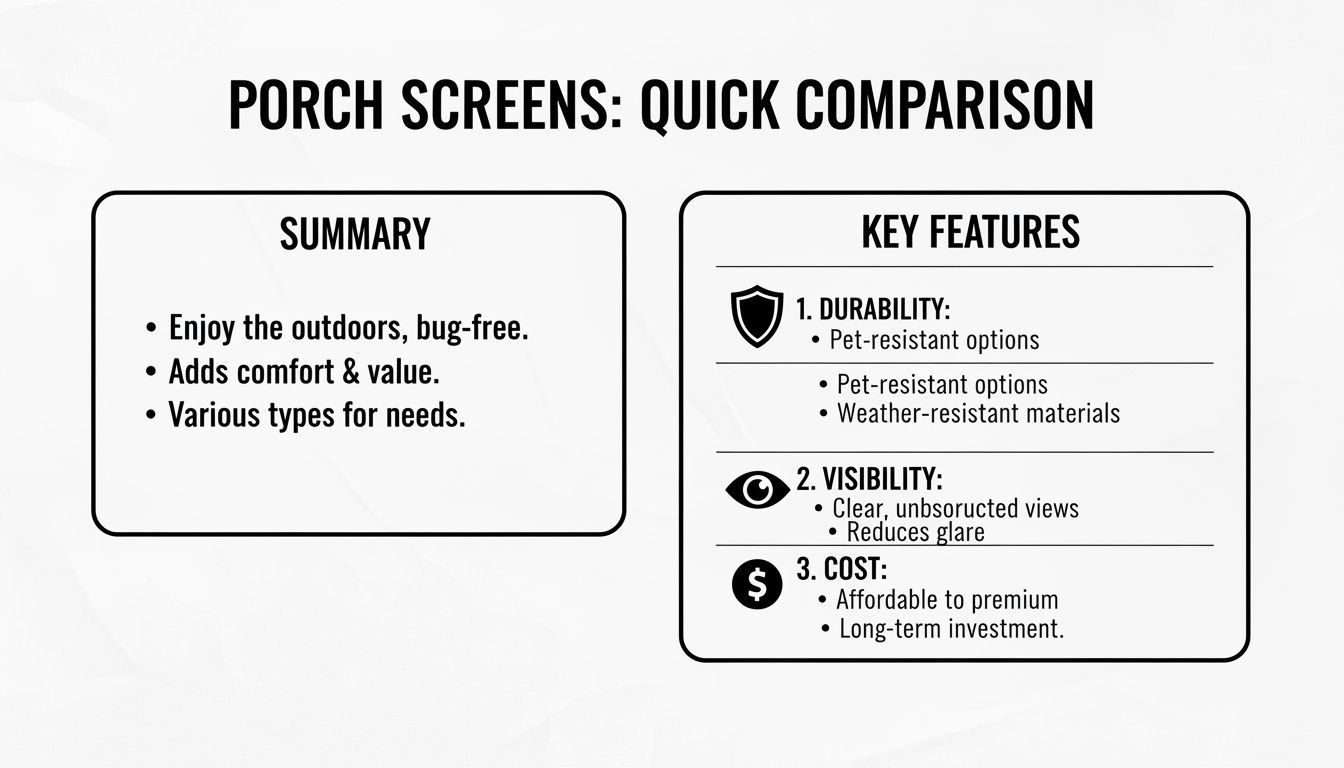
As you can see, tougher screens often come with a higher price tag and might slightly obstruct your view. It's all about finding the right balance for your home and budget.
The Surprising Impact Of Screen Color
Just as important as the mesh density is the color. The two main choices are charcoal and gray, and you'd be surprised at how differently they affect your view. It might sound backward, but darker screens actually give you a clearer view of the outside.
Let's break down why that is:
- Charcoal Screens: There’s a reason this is the industry standard. The dark, matte finish of a charcoal screen absorbs light, tricking your eyes into looking right past the mesh. The screen practically vanishes, leaving you with a crisp, high-definition view of your yard.
- Gray Screens: On the other hand, gray screens reflect more light. This reflection can create a bit of glare, making the screen itself more visible and sometimes giving your view a slightly hazy or washed-out look.
For homeowners in St. Petersburg and Clearwater with beautiful garden or water views, charcoal is almost always the better choice. It creates that open-air feeling while still giving you full protection from bugs. The difference is subtle but powerful—it connects you to the outdoors without compromise. After all, the best screen is one that does its job without you even noticing it's there.
Real-World Scenarios To Help You Choose Your Screen
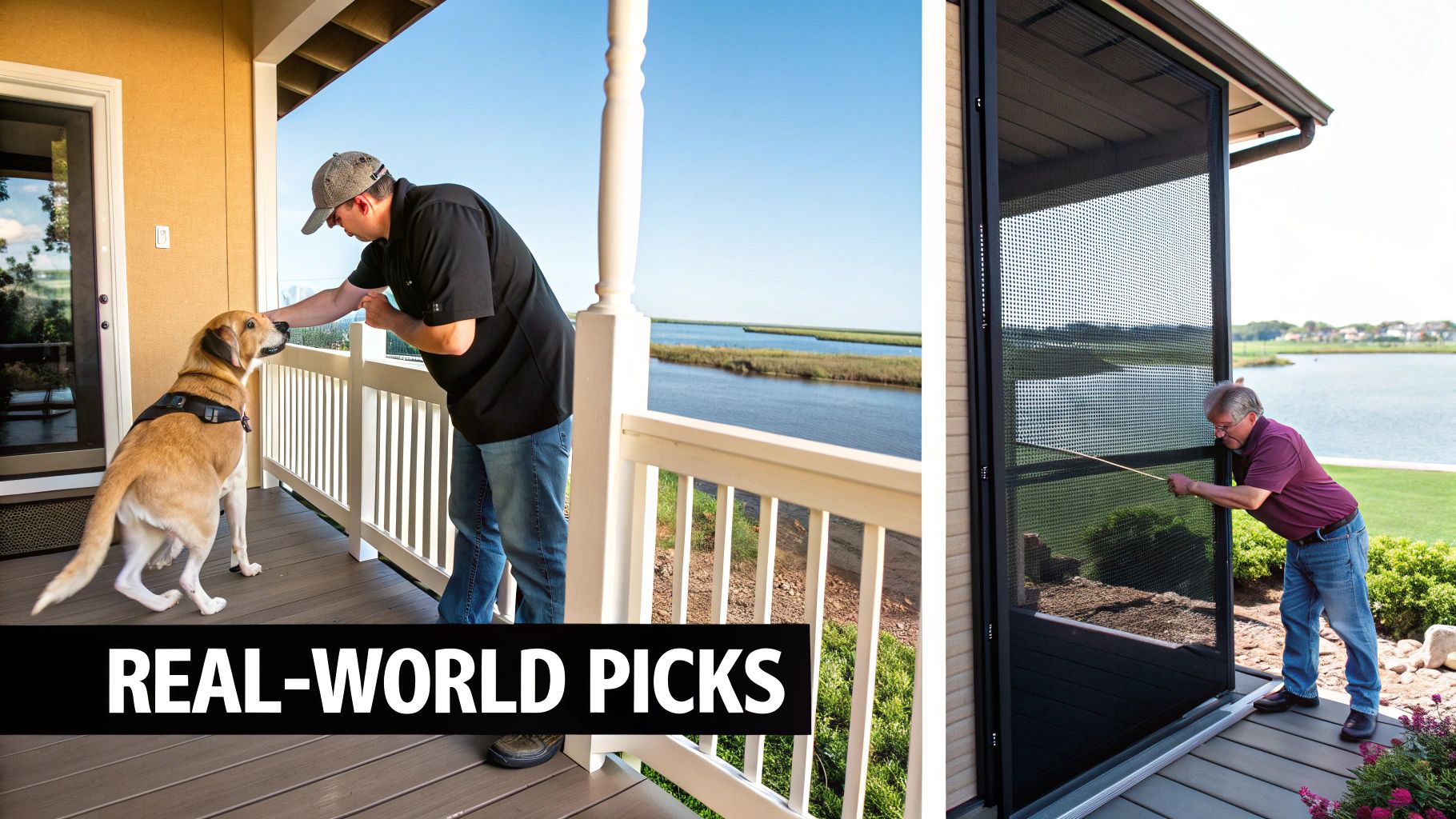
Knowing the specs of different screen materials is a good start, but what really matters is how they hold up in the real world. Your lifestyle, your home’s location, and what you’re trying to achieve all dictate which screen is the right fit. Let’s walk through a few common situations we see every day for Florida homeowners to help you connect the dots.
Each of these scenarios—from battling the salty air on the coast to getting a house ready for sale—comes with its own unique challenges. Seeing how the right screen solves a specific problem will make it much easier to figure out which one will give you the best long-term value.
The Pet-Loving Family in Tampa
If you have dogs or cats, standard fiberglass screen is just an accident waiting to happen. All it takes is one playful scratch or an excited jump, and you’ve got a tear. That compromises the whole enclosure and puts you on a never-ending cycle of repairs. For pet owners, durability isn't a luxury; it's the number one priority.
The only real answer here is pet-resistant screening. This stuff is built differently—it’s a vinyl-coated polyester mesh that’s about seven times stronger than the standard fiberglass screen. It’s made to handle claws, paws, and all the abuse your furry family members can dish out. Sure, it costs more upfront, but you’ll save a ton of money and frustration by avoiding constant patch-ups and replacements.
For a pet owner, choosing pet-resistant screening isn't an upgrade; it's a necessity. It provides peace of mind, keeps your beloved animals safely contained, and protects your investment from predictable damage.
The Waterfront Homeowner in St. Petersburg
Living on the water in St. Petersburg or Clearwater is amazing, but it comes with a major downside for your home: corrosive salt air. That humid, salty atmosphere is brutal on screen materials. It causes standard aluminum to pit and makes fiberglass brittle until it fails completely. Your choice of material is everything if you want it to last.
The best choices for coastal homeowners are either bronze or a high-quality, corrosion-resistant coated aluminum screen. Bronze is the premium option; it's exceptionally tough and develops a beautiful, protective patina over time that shields it from the salt. Coated aluminum offers a similar defense at a more moderate price. Both will give you a crisp, clear view and are built to survive years of coastal weather, making them a very smart investment.
The Savvy Property Manager in Clearwater
When you're managing rental properties or an HOA in Clearwater, you're thinking on a different scale. The game is all about balancing cost, reliability, and low maintenance across dozens of units. Premium screens are great, but the budget is king when you're outfitting an entire community.
For this job, standard 18×14 fiberglass screening is almost always the most practical way to go. The low initial cost makes it perfect for large-scale projects, and it does a perfectly good job of keeping common bugs out. It hits that sweet spot between function and affordability, ensuring every tenant gets a bug-free patio without blowing the maintenance budget. For an idea of what a large-scale job looks like, check out this poolside resort screening project.
The Home Seller Preparing for Market
When you're selling a home in the Tampa Bay market, first impressions are everything. A torn, faded, or droopy screen enclosure is a huge red flag for buyers—it screams "neglected." But a fresh, tight screen? That signals a well-maintained home.
The best screen for a porch in this case is a brand-new installation of charcoal-colored fiberglass screening. It’s cheap, but the visual return on investment is massive. The dark charcoal color nearly disappears, giving you the clearest, most unobstructed view and making your outdoor space feel bigger and more inviting. This one small upgrade can seriously boost your home’s perceived value, help you sail through inspections, and leave a great impression on buyers, leading to a faster, better sale.
Understanding The Cost And Value Of Rescreening Your Porch
Putting a high-quality new screen on your porch is one of the smartest upgrades for any Florida home, but the first step is always understanding the costs. A rescreening quote isn't just a random number; it's a direct reflection of the materials you pick, the size of your enclosure, and how complex the job is.
Choosing affordable fiberglass versus durable pet-resistant screen, for example, will make a big difference in the final price. A small lanai is a straightforward job, while a massive two-story pool cage requires a skilled crew, specialized equipment, and more hours on-site. Getting a professional estimate is the only way to really know what you’re looking at.
Breaking Down The Costs
The total price tag is always a mix of two things: materials and labor. While standard fiberglass is easy on the wallet, upgrading to specialty options like a solar screen or a fine no-see-um mesh will bump up the cost per square foot. Labor costs are driven by the height of the enclosure and the condition of the aluminum frame—if we need to replace old, rusted fasteners, that adds to the job.
Think of it like this: fixing a single torn panel is a quick repair. A complete rescreen of a large pool enclosure, on the other hand, is a full-blown restoration project. It takes a seasoned team to get the tension just right and ensure everything is secure.
Let's talk dollars and sense. Rescreening your porch is one of the best bangs for your buck, especially if you’re thinking of selling in the competitive Tampa Bay market. Nationally, the average cost to screen a 200-square-foot porch is around $2,085, with most projects falling between $1,680 and $2,490. Appraisers love this stuff—homeowners typically recoup 70-80% of the cost at resale, and in a warm climate like ours, it can add up to 8% to the home's value. For commercial properties or HOAs in Hillsborough County, a 20×20 enclosure could run up to $5,000, but it instantly turns an overlooked patio into a profitable event space.
Rescreening Is An Investment, Not Just An Expense
It's important to stop thinking of a rescreen as just another bill and start seeing it for what it is: a valuable investment in your property. A professionally screened porch doesn't just give you a bug-free oasis to enjoy your morning coffee; it directly boosts your home's curb appeal and marketability.
In Florida's fast-moving real estate scene, a pristine screen enclosure is a huge selling point. It tells potential buyers the home is well-cared-for and gives them a move-in-ready outdoor living space—something high on the wish list for people relocating here. That immediate appeal helps your property stand out, sell faster, and command a better price.
A freshly rescreened porch is more than just a repair—it's a powerful tool for boosting property value. It demonstrates pride of ownership and gives you a tangible return on investment, whether you plan to sell tomorrow or enjoy your home for years to come.
Ultimately, the goal is to find a screen that fits your lifestyle and your budget while adding real, measurable value to your home. To get a better idea of what your specific project might look like, our guide on the cost to rescreen a porch breaks it all down. When you understand the investment, you can make a smart decision that pays off for years.
Why Professional Installation Is A Smart Investment
When it comes to screening your porch, picking the right material is only half the battle. How it’s installed is just as critical, and while the DIY route might look like a way to cut costs, a professional installation is a smart investment that pays for itself. This is especially true here in Florida, where our climate puts every part of your home to the test.
A pro installation is all about precision. Technicians are trained to get the screen tension just right, which means no sags, wrinkles, or waves—the classic signs of an amateur job. If a screen is too loose, it will flap in the wind and look sloppy. But if it’s pulled too tight, it puts constant stress on the aluminum frame, which can lead to structural damage down the line.
The Details That Define Durability
Beyond getting the tension perfect, a professional handles all the small but crucial details that make an enclosure last. This means using the right spline size and type for your specific screen material and, just as importantly, replacing old, rusted fasteners with new, corrosion-resistant hardware. For homes in St. Petersburg and Clearwater, this is non-negotiable; the salt air will chew through inferior materials in no time.
Going it alone often leads to a frustrating cycle of problems:
- Premature Sagging and Tears: A screen without the right tension is just asking for trouble from wind and falling debris.
- Pest Intrusions: Tiny gaps from a poor fit completely defeat the purpose of having a screen in the first place.
- Shorter Lifespan: A flawed installation can easily cut the life of your new screens in half, forcing you to do the whole job over again way too soon.
Investing in professional rescreening means you're not just paying for new screens; you're paying for peace of mind. Experienced technicians deliver a durable, safe, and clean finish backed by a warranty, protecting your investment from the start.
Protecting And Enhancing Your Home Value
A professionally screened porch isn't just a lifestyle upgrade; it's a real asset. Industry data shows that screened porch additions can recover 70-80% of their cost when you sell. In a hot market like Tampa Bay, that can translate to a 5-8% boost in overall home value. Why? Because buyers love functional, move-in-ready outdoor living spaces.
Ultimately, hiring a professional ensures the job is done right the first time, preventing common headaches before they even start. If you're already dealing with damage, understanding what a pro can do is key. You can find more details in our guide to screen enclosure repair, where we break down how experts tackle damage to keep your enclosure structurally sound.
Common Questions About Porch Screens
Once you’ve landed on the right screen for your porch, you probably have a few practical questions. Thinking about the long-term care, lifespan, and repair options is smart—it ensures you get the most out of your investment and keep your outdoor space looking sharp for years.
After all, a well-maintained screen enclosure is one that lasts. With a little bit of care, it can stay a beautiful, functional part of your home.
How Long Should Porch Screens Last In Florida?
This is a big one, and the answer really depends on the material and its exposure to the elements. Standard fiberglass, which is what most enclosures have, typically holds up for 3 to 5 years. After that, the intense Florida sun makes it brittle and prone to tearing.
However, if you opt for tougher materials like pet-resistant screens or coated aluminum, you could easily see them last 10 years or more, even in salty coastal air. The two biggest enemies are direct sun and salt spray, which dramatically speed up wear and tear. A little regular cleaning and fixing small issues quickly will help any screen last as long as possible.
What Is The Best Way To Clean My Porch Screens?
Keeping your screens clean is the single best thing you can do for their appearance and integrity. The key is to be gentle—you don’t want to damage the mesh.
- Rinse it down: Start by using a garden hose on a light setting. Spray from the inside out to push dirt, pollen, and debris away from your porch.
- Use a soft touch: For any stubborn grime, mix a little mild dish soap in a bucket of warm water. Gently scrub the screens with a soft-bristled brush.
- Rinse it clean: Hose everything down one last time to get rid of any soap residue. If you leave soap behind, it can actually attract more dirt.
A simple cleaning routine a few times a year prevents grime from building up and really extends the life of your screens. For a more detailed guide, check out our post on how to clean lanai screens effectively.
Can You Replace Just One Damaged Screen Panel?
Yes, absolutely. In fact, it’s far more common and budget-friendly to replace a single damaged panel than to redo the entire enclosure. A professional can pop out the old, ripped screen and its spline from just one section and install a fresh piece that perfectly matches the rest.
This is the perfect solution for those one-off accidents—a stray baseball, a branch falling, or an accidental poke. A full rescreen really only makes sense when you have damage across multiple panels or when all the screens are getting old and brittle at the same time.
Ready to restore your view and protect your outdoor oasis? The experienced team at Rescreen Rescue provides fast, reliable, and professional rescreening services throughout the Tampa Bay area. Get your free, no-obligation estimate today by visiting us at https://rescreenrescue.com.