


That little rip in your lanai screen? It’s not just a small eyesore. Think of it as an open-door invitation for every bug, leaf, and bit of debris to crash your outdoor party. When you started searching for "screen repair near me," you took the first step to getting your sanctuary back.
This guide is all about fixing screens on your pool cage, lanai, or patio. Just to be clear, we're talking about your home's exterior screens, not your phone.
Why Finding The Right Local Screen Repair Matters
Let's be honest, the whole point of having a screen enclosure is to enjoy the gorgeous Florida weather without swatting away mosquitoes or constantly sweeping up leaves. But when your screen is damaged, it completely defeats the purpose.
A tiny tear doesn't stay tiny for long. It grows, weakens the whole structure, and makes your beautiful outdoor space look neglected. Ignoring it isn't just about your comfort—it can actually ding your home's value.
Finding a good local contractor is so much more than just slapping a patch on a hole. It’s about getting your peace of mind back and protecting your investment. A pro will use the right materials and techniques to make sure the fix lasts, saving you from bigger headaches down the line. This is especially true here in Florida, where our weather is relentless. You can learn more about how Florida weather affects your screens in our detailed guide.
The True Cost Of Delaying Repairs
Putting off a simple screen repair is a classic case of "pay me now or pay me later." Waiting almost always leads to bigger, more expensive problems. Here’s a look at what happens when you let a small issue slide:
- Pest Invasion: It only takes a tiny gap for mosquitoes, no-see-ums, and other uninvited guests to get in. Suddenly, your relaxing evening is a full-on battle with the bugs.
- Debris Overload: A torn panel is like a magnet for leaves, pine needles, and dirt, turning your patio or pool deck into a constant cleanup project.
- Snowballing Damage: Wind loves to catch a loose screen. It puts a ton of stress on the aluminum frame and the surrounding panels, and before you know it, a single torn panel has turned into a major structural problem.
Staying on top of screen maintenance is the absolute key to keeping your outdoor lifestyle intact. A quick repair today will always be cheaper than a full-blown overhaul caused by neglect tomorrow.
Choosing a reputable company means you get these problems solved right the first time. They’ll use the proper materials and methods to give you a fix that actually lasts. This guide will walk you through everything you need to know, from figuring out costs to spotting a great contractor, so you can make a decision you feel good about.
Repair A Panel Or Rescreen The Whole Thing?
When you spot a tear or a sag in your screen enclosure, the first question that probably pops into your head is, "Can I get away with a quick fix, or is this a bigger problem?" It's a great question. Knowing whether you need a simple panel repair versus a full-blown rescreen is the key to spending your money wisely.
Think of it like this: a small tear from your dog's enthusiastic greeting or a single panel that took a hit from an errant golf ball is usually a straightforward repair. No need to overhaul the whole thing for one isolated incident.
But what if the problems are more widespread? If you're seeing brittle, faded, or loose screens across several panels, that’s a sign of a deeper issue. Here in Florida, the relentless sun and humidity are constantly working against your screens. After about 8-10 years, the material itself just gives up the ghost—it loses its strength and elasticity, making it tear at the slightest provocation. In those cases, a full rescreen is the smarter long-term move, giving you a uniform look and consistent durability across the entire enclosure.
When To Repair Vs. When To Fully Rescreen Your Enclosure
Deciding between a targeted repair and a complete rescreen can feel tricky, but it often comes down to weighing a quick fix against long-term value. A single damaged panel is an easy call, but when the issues are more systemic—like multiple rips, loose splines everywhere, or that tell-tale chalky, faded look—you're likely at the end of your screen's functional life. A full rescreen doesn't just patch the problem; it resets the clock on your enclosure's lifespan. You can dive deeper into choosing the best screen for your porch in our detailed guide.
Here are some common scenarios to help you make the right call:
- Symptom: One or two small holes or tears.
- Solution: Panel Repair. This is a quick, cost-effective fix for isolated damage. No need to replace what isn't broken.
- Symptom: Multiple panels are faded, brittle, or torn.
- Solution: Full Rescreen. The screen material has reached the end of its life. Patching will just be a temporary, frustrating fix.
- Symptom: Screens are over 10 years old and showing wear.
- Solution: Full Rescreen. Proactively replacing old material prevents constant, annoying repairs down the line.
- Symptom: Spline is popping out in many areas.
- Solution: Full Rescreen. Widespread spline failure means the screen has lost its tension and the old spline has shrunk and hardened.
- Symptom: You want to upgrade to a better screen type.
- Solution: Full Rescreen. This is the perfect time to switch to pet-resistant, solar, or no-see-um screens for the whole enclosure.
- Symptom: The aluminum frame needs painting or restoration.
- Solution: Full Rescreen. It's most efficient to do both jobs at once. The old screen has to come out for painting anyway.
Ultimately, a full rescreen is an investment in peace of mind. You won't have to worry about another panel giving out next month, and your entire enclosure will look and perform like new.
The decision tree below can also help you visualize the process, especially for those little annoyances like pests getting in or minor debris damage.
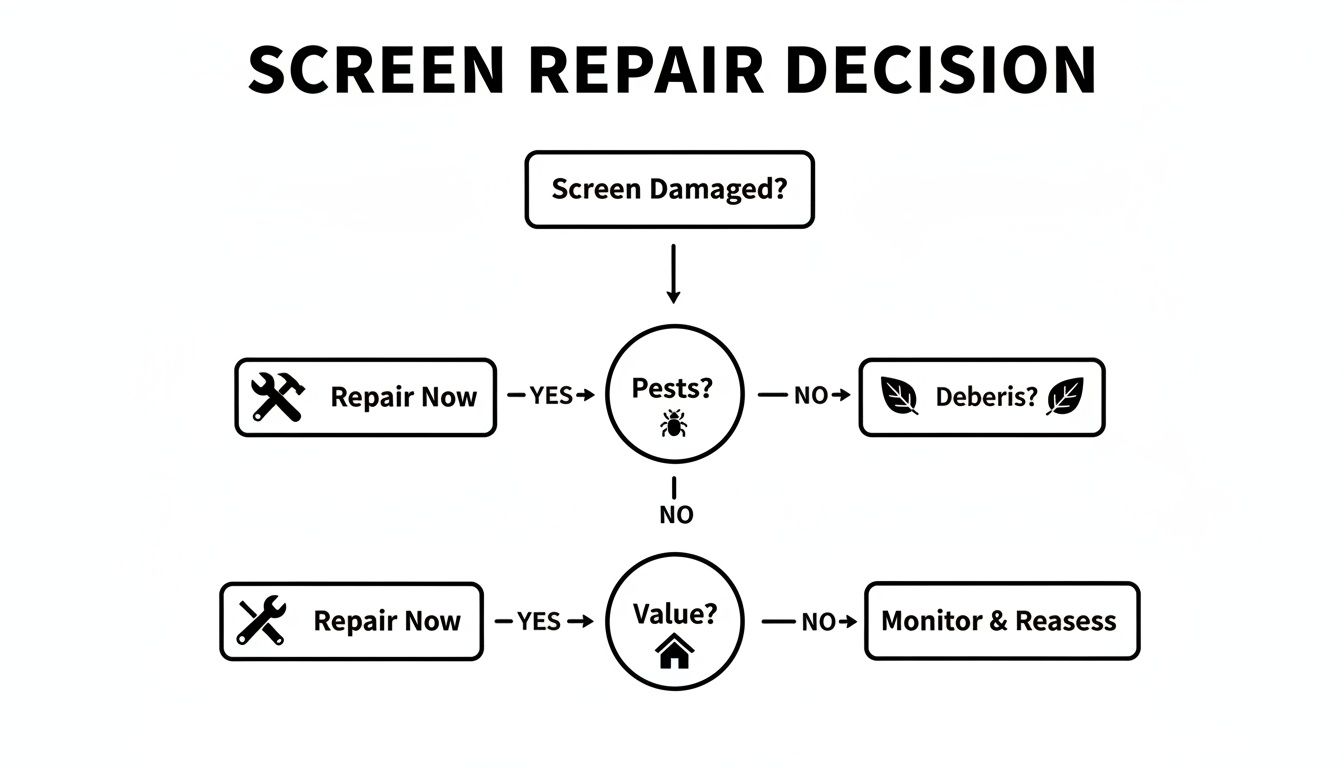
The bottom line? Acting on small problems quickly protects your comfort and your home’s value, stopping them before they snowball into bigger, more expensive headaches.
More Than Just Screens: Thinking About The Whole System
A top-notch "screen repair near me" service does more than just replace the fabric. A truly professional crew understands that the integrity of your enclosure depends on all its parts working together. Ignoring the other components during a repair is like putting brand-new tires on a car that desperately needs an alignment—you’ve solved one problem but completely missed the bigger picture.
Think of your screen enclosure as a complete system. The screen, the aluminum frame, and the fasteners all have a job to do. A quality repair or restoration project addresses the entire system, not just the most obvious symptom.
Here are a few essential services that can turn a basic fix into a full-on restoration:
- Rust-Proof Fasteners: So many enclosures are originally built with cheap steel screws. It doesn't take long for them to rust, leaving ugly stains on your frame and weakening the connections. Upgrading to high-quality, corrosion-resistant fasteners is one of the single best things you can do for long-term durability.
- Professional Pressure Washing: Before any new screen goes up, a thorough cleaning is a must. It blasts away all the built-up grime, algae, and mildew that accumulates in our humid climate. This not only preps the surface for new materials or paint but instantly makes your enclosure look ten times better.
- Pool Cage Painting and Restoration: Is your aluminum frame looking faded, chipped, or chalky? A fresh coat of specialized paint can make it look absolutely brand new. When you combine this with a full rescreen, you get a complete transformation for a fraction of what a new cage would cost.
What To Expect From The Professional Repair Process
Hiring a contractor can feel like a leap of faith, but a professional screen repair should be anything but uncertain. A top-tier company operates with transparency and respects your time and property from the very first call. Knowing what a great service looks like demystifies the whole thing and helps you choose the right team when you're searching for "screen repair near me."
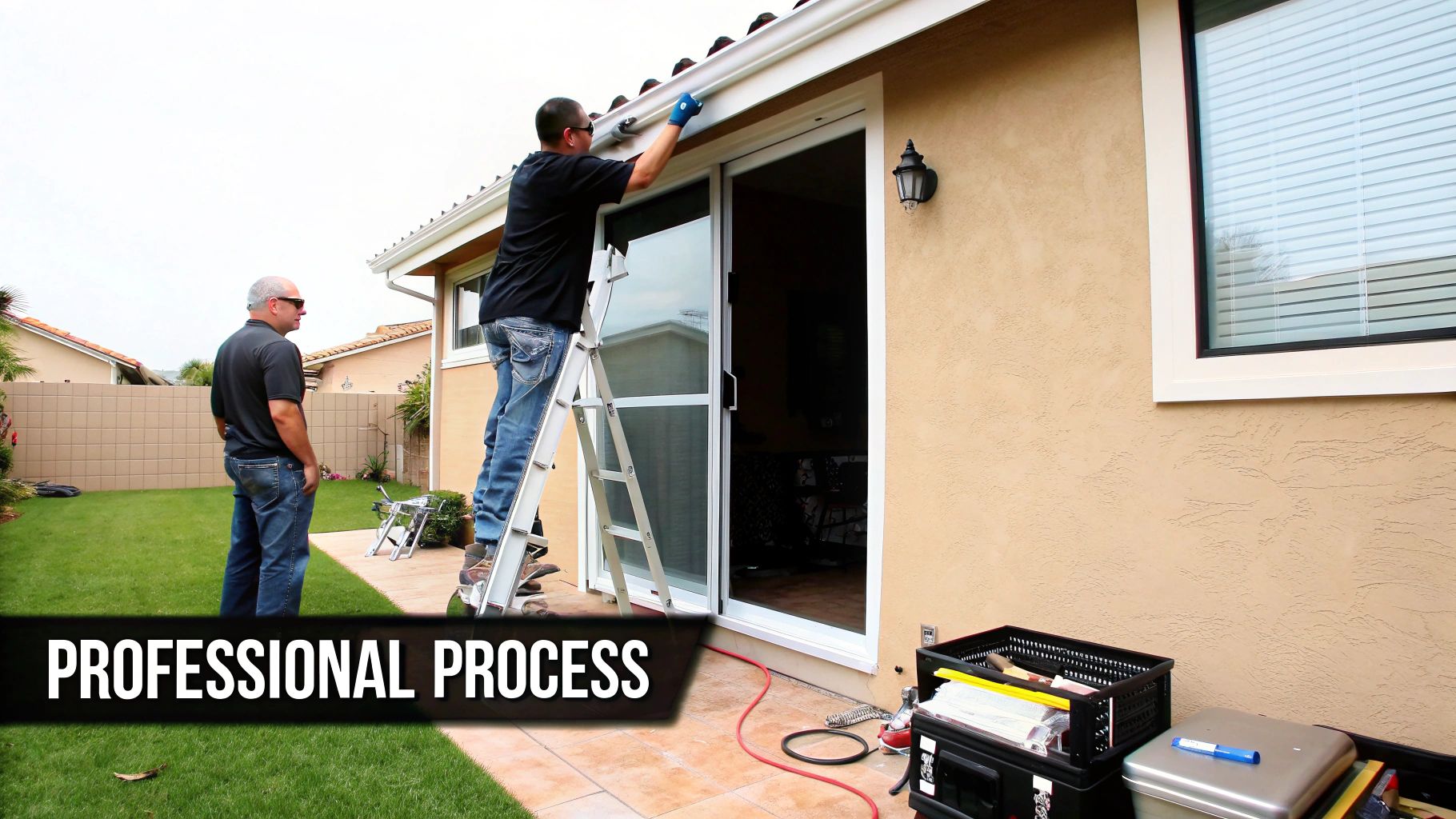
It all starts when you reach out for a free estimate. A professional coordinator will ask a few straightforward questions about your project, find a time that works for your schedule, and clearly explain what happens next. No guesswork involved.
The On-Site Assessment
When the technician arrives, they should be on time, professional, and ready to listen. This is where their expertise really shines.
A skilled technician will:
- Thoroughly inspect the damage: They won't just glance at the obvious tear. They'll check the surrounding panels, the condition of the spline holding the screen in, and the integrity of the aluminum frame itself.
- Discuss your options clearly: Based on what they find, they’ll walk you through whether a simple panel repair will do the trick or if a full rescreen would be a smarter long-term investment.
- Present material choices: They should have samples of different screen types—like standard fiberglass, tough pet screen, or sun-blocking solar screen—and explain the real-world benefits of each for your home.
- Provide a detailed, no-obligation quote: You should get a clear, written estimate that breaks down the costs for labor and materials, with no pressure to commit.
This detailed evaluation makes sure the solution actually fixes the root problem, rather than just slapping a bandage on it. For a deeper dive into the full scope of a bigger job, you might find our guide to rescreening a pool enclosure helpful.
The Repair And Final Walkthrough
On repair day, the crew should work efficiently and meticulously. They'll carefully remove the old screen and spline, making sure the frame channels are clean before installing the new screen.
A hallmark of a truly professional job is a "drum-tight" finish. The new screen should be perfectly tensioned with absolutely no sags or wrinkles. This gives you a crystal-clear view and ensures maximum durability.
Once the work is done, the team should clean up everything, leaving your property as clean as—or cleaner than—they found it. The final step is a walkthrough with you to make sure you are 100% satisfied with the result. This commitment to a job well done is what sets the pros apart.
How Much Does Lanai Screen Repair Cost In Tampa Bay?
When you’re searching for "screen repair near me," the first question on your mind is probably the same as everyone else's: "What's this going to cost me?" Let's cut right to the chase.
Here in the Tampa Bay area, you can generally expect to pay between $85 and $150 to have a single, standard-sized screen panel replaced on your lanai or pool cage.
But that's just the starting point. Think of it like ordering a pizza—the base price gets you a simple cheese pizza, but the final cost really depends on the size and all the toppings you add. Several key factors can shift that price, and knowing what they are will help you budget smarter and spot a fair quote when you see one.
Key Factors That Influence Your Final Price
The final bill for your screen repair job is shaped by more than just the size of that tear. A true professional's quote will account for a few important variables to make sure you're getting a quality, long-lasting fix.
These are the main drivers behind the cost:
- Panel Size and Location: It makes sense that bigger panels cost more—they use more material and take more time. But location matters, too. Those tricky second-story panels or the ones way up on the roof will add to the cost because they require extra safety gear and specialized equipment to reach.
- Type of Screen Material: Your standard fiberglass screen is the most common and budget-friendly choice. If you want to upgrade, though, you've got options. A pet-resistant screen is about 7 times stronger and great for homes with furry friends, while a solar screen helps block harsh UV rays. Both will increase the per-panel cost.
- Hardware and Fastener Condition: Take a look at the screws holding your enclosure together. If they're rusted and look like they’re about to give up, it’s a smart move to have them replaced with corrosion-resistant fasteners. While this adds to the upfront cost, it's a crucial investment in the long-term health of the whole structure. You can learn more in our detailed guide on lanai screen replacement costs.
Investing in quality repairs isn't just about patching a hole for today. It’s about preserving the value and enjoyment of your outdoor living space for years to come.
This idea of maintaining your home's infrastructure is part of a much bigger picture. The global consumer repair and maintenance market was valued at a staggering USD 18.23 billion in 2023 and is only expected to grow. For homeowners like you, this just underscores the value of choosing professionals who prioritize durable solutions over quick, temporary patches. You can read more about this growing market trend on grandviewresearch.com.
Ultimately, the only way to get a firm price is to have a professional take a look. A reputable company will always provide a clear, itemized, and free on-site estimate so you can see exactly where your money is going.
How To Choose The Right Screen Repair Contractor
When you search for "screen repair near me," you’ll get a flood of results. But here's the thing: not all of them are created equal. Far from it. Choosing the wrong company can leave you with saggy screens, surprise fees tacked onto the bill, and the sheer frustration of having to get it all redone in a year.
Making a confident hire comes down to knowing what to look for and which questions to ask.

Think of it like you're interviewing candidates for an important job—because you are. A little due diligence upfront is the best way to protect your investment and ensure you get the kind of quality workmanship your home deserves. This simple vetting process will help you spot a reliable, professional company that actually stands behind its work.
Your Contractor Vetting Checklist
Before you sign on the dotted line, run through this quick checklist. The way a contractor answers these questions will tell you everything you need to know about their professionalism and the quality you can expect. A trustworthy company will have zero issues giving you clear, direct answers.
- Are you licensed and insured? This one is an absolute must. A proper license proves they meet Florida's requirements, and insurance protects you from any liability if an accident happens on your property. Don't even consider a company without both.
- Do you offer a warranty on your work? A reputable contractor will always stand behind their workmanship with a solid warranty. Ask them exactly what it covers and for how long.
- What kind of materials do you use? Get specific and ask about the fasteners. Using cheap, rust-prone steel screws is a classic corner-cutting tactic that leads to ugly rust stains and weakens the structure over time. Insist on high-quality, corrosion-resistant fasteners.
- Can I see your recent reviews? Check their online reputation on sites like Google. A steady stream of positive feedback from recent customers is one of the strongest signs you're dealing with a reliable crew.
A contractor's hesitation to answer these basic questions is a major red flag. Transparency is a cornerstone of professionalism, and you should settle for nothing less when it comes to your home.
This focus on quality repairs isn't just a local trend. The global glass repair services market, a close cousin to our industry, was valued at a staggering USD 62.83 billion in 2025. This huge number just goes to show how much homeowners value maintaining and restoring their property rather than jumping straight to costly replacements. You can learn more about these industry insights at 360iresearch.com.
By asking the right questions, you can make sure your contractor shares this commitment to durable, long-lasting solutions. For a deeper dive, check out our guide on what to expect during a screen enclosure repair. Taking these simple steps will help you hire with confidence and get the job done right the first time.
Got Questions About Screen Enclosure Repair? We’ve Got Answers.
When you start searching for "screen repair near me," it's smart to have a few questions lined up before you commit to a contractor. Getting straight answers not only helps you feel confident about the process but also ensures there are no surprises down the line. We’ve pulled together the most common questions we hear from homeowners about their pool cages, lanais, and patios.
Many people have similar concerns when it comes to professional services, and a good Frequently Asked Questions page can clear things up fast. This section is designed to do just that—tackle those practical questions head-on so you have the info you need.
How Long Does A Typical Screen Panel Repair Take?
This is one of the first things people ask, and the answer is usually much faster than you’d expect. For a simple, ground-level repair of one or two standard-sized panels, an experienced technician can often get the job done in under an hour.
Of course, the timeline can shift. If you have multiple torn panels, especially ones on a second story or high up on a pool enclosure roof, the job will naturally take a bit longer. That’s because it requires specialized ladders and extra safety measures. Any reputable company will give you a solid time estimate during their on-site assessment.
Should I Repair Or Replace My Old Pool Cage?
Looking at a faded, chalky, or corroded pool cage might make you think it's time for a total teardown and replacement. But hold on—that can easily run you $10,000 or more. In most situations, a full replacement is completely unnecessary. As long as the main aluminum structure is still solid, you have some fantastic, much more affordable alternatives.
Professional restoration services can make that old enclosure look brand new for a fraction of the cost. The process usually looks something like this:
- Pressure Washing: We'll blast away all the built-up grime, mildew, and chalky oxidation.
- Hardware Replacement: All those old, rusty screws get swapped out for durable, corrosion-resistant fasteners that can handle the Florida humidity.
- Expert Painting: We apply a high-quality finish specifically designed for aluminum, which protects the frame and brings back its original color.
- Full Rescreening: Finally, we install brand-new screens across the entire enclosure for a clean, uniform look.
This route saves you thousands of dollars and breathes new life into your enclosure for many more years to come.
What Kind Of Warranty Should I Look For?
A warranty is more than just a piece of paper; it’s a company’s promise to stand behind their work and a huge indicator of quality. A trustworthy screen repair contractor should always offer a clear, straightforward warranty that covers both their materials and their workmanship.
Make sure you get the warranty details in writing. A solid guarantee will typically cover things like screens popping out of the frame or defects in the screen material itself for a specific period, usually at least one year.
This protects your investment and gives you the peace of mind that the job was done right the first time.
What Type Of Screen Is Best For Homes With Pets Or Kids?
Standard fiberglass screen is great for most situations, but let's be honest—it’s no match for the claws of an excited dog or the creative destruction of a curious toddler. If durability is your main concern, you should absolutely consider upgrading to a pet-resistant screen.
This specialty material is roughly seven times stronger than the standard stuff. It’s specifically engineered to resist tears and punctures from pets, kids, and even the occasional rogue golf ball. While it costs a bit more per panel upfront, it saves you from the headache and expense of constant repairs, making it a brilliant long-term investment for any busy household.
Ready to get those annoying screen problems solved for good? The team at Rescreen Rescue has over two decades of experience providing durable, high-quality screen repair and restoration across Tampa Bay. Schedule your free, no-obligation estimate today!