


When your pool enclosure starts to look a little worse for wear—maybe you've spotted a few tears, some sagging panels, or just general signs of aging—one of the first questions that pops into your head is, "How much is this going to cost me?" It's a fair question. Understanding the budget is the first step to getting your outdoor oasis back in shape.
In Florida, the cost to rescreen a pool cage usually falls somewhere between $1,200 and $3,500 for a complete overhaul. If you just need a quick fix for a single damaged panel, you're looking at a much smaller bill, typically between $25 and $65.
Your Quick Guide To Pool Cage Rescreening Costs
Think of a full rescreen as an investment in your home's comfort, safety, and curb appeal. It brings back that clean, sharp look and, more importantly, keeps your lanai or pool area a bug-free zone for you and your family to enjoy. The final price tag isn't just one number; it's a mix of materials, labor, and the unique needs of your specific enclosure.
To give you a clearer picture, here's a quick breakdown of what you can generally expect to pay for different types of screen work.
Estimated Pool Cage Rescreening Costs At A Glance
Here is a look at typical price ranges for various screen repair and replacement services:
- Single Panel Replacement: $25 – $65
- This is best for fixing isolated damage from a stray golf ball or a small tear.
- Multiple Panel Repairs: $200 – $600
- This is a good option for addressing a few problem areas without needing a full replacement.
- Full Rescreen (Standard Size): $1,200 – $3,500
- This is a complete refresh for enclosures with widespread wear and tear.
- Full Rescreen (Large/Custom): $3,500+
- This applies to multi-story homes or complex, oversized enclosures.
These estimates show that while a single panel fix is inexpensive, the costs can add up fast if you have several damaged sections. Sometimes, a full rescreen is actually the more economical choice in the long run.
Breaking Down The Numbers
The easiest way to get a ballpark estimate is to look at the total screen area. Most full pool cage rescreening projects land between $0.75 and $1.50 per square foot. So, if you have a pretty standard 600-square-foot enclosure, you might see quotes in the $4,200 to $5,400 range. Of course, things like two-story cages, common in areas like St. Petersburg and Clearwater, can bump up the price by as much as 30% due to the extra labor and equipment involved.
The infographic below gives a great visual of how a small repair stacks up against a full-blown project.
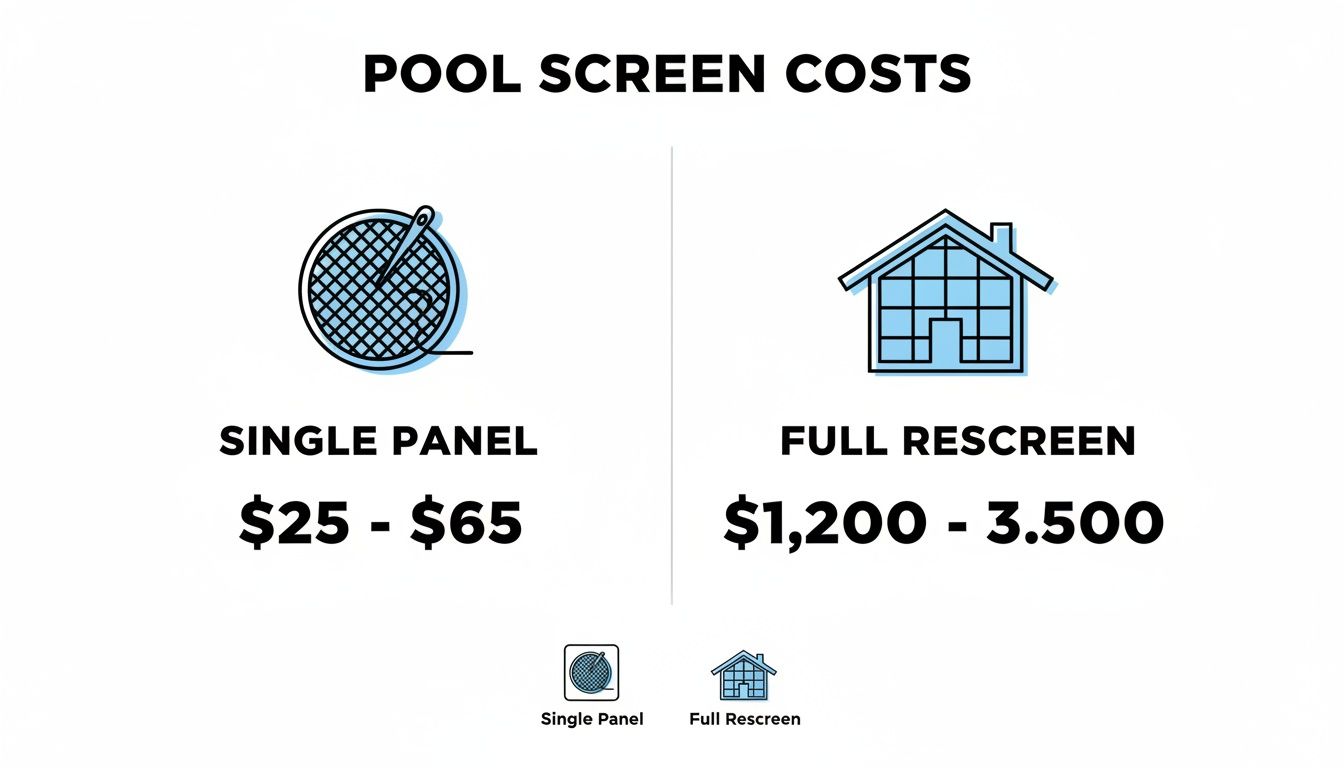
As you can see, patching up one or two panels is easy on the wallet. But if your screens are getting old and brittle, you might find yourself in a cycle of constant repairs. That's when a full rescreen becomes the smarter, more durable solution.
Why Do The Costs Vary?
So, what makes one quote higher than another? Several key things influence the final price. We'll get into the nitty-gritty later, but the main drivers are:
- Size and Complexity: Bigger cages and multi-story designs simply require more material and more time on the ladder. It's a straightforward equation.
- Screen Material: Standard fiberglass screen is the go-to for most, but if you need something tougher like a pet-resistant screen or a no-see-um mesh to keep tiny gnats out, expect the material cost to be higher.
- Frame Condition: If the aluminum frame itself is bent, corroded, or has loose bolts, those repairs will need to be handled during the rescreening process, adding to the overall cost.
Getting a handle on these variables is the key to getting an accurate estimate. To see what a professional rescreening job looks like from start to finish, you can learn more about what is involved with rescreening a pool cage in our detailed guide.
Key Factors That Drive Your Final Rescreening Price
That initial price range gives you a good ballpark figure, but why does one quote come in higher than another? The final number isn't just about the size of your pool enclosure. Several key variables come together to determine the cost to rescreen your pool cage, much like the ingredients in a recipe each change the final dish.
Breaking down these components helps you see exactly where your money is going and make smarter decisions about your project. From the sheer scale of the job to the specific materials you choose, each factor plays a huge role.
The Size And Complexity Of Your Enclosure
The most obvious cost driver is, of course, the size of your pool cage. A larger enclosure demands more screen material and more hours of labor, which naturally bumps up the price. But it's not just about square footage—the complexity of the structure is just as important.
Think of it this way: rescreening a simple, rectangular, single-story lanai is like painting one flat wall. It's straightforward. Now, imagine rescreening a two-story enclosure with multiple angles, soaring roof peaks, and custom sections. That’s like painting an entire house with intricate trim and vaulted ceilings. The second job requires more setup, specialized gear like scaffolding, and a whole lot more time and skill.
These complex designs often have dozens of individual screen panels, and every single one needs to be cut and installed with precision. That extra labor is a major factor in the final quote.
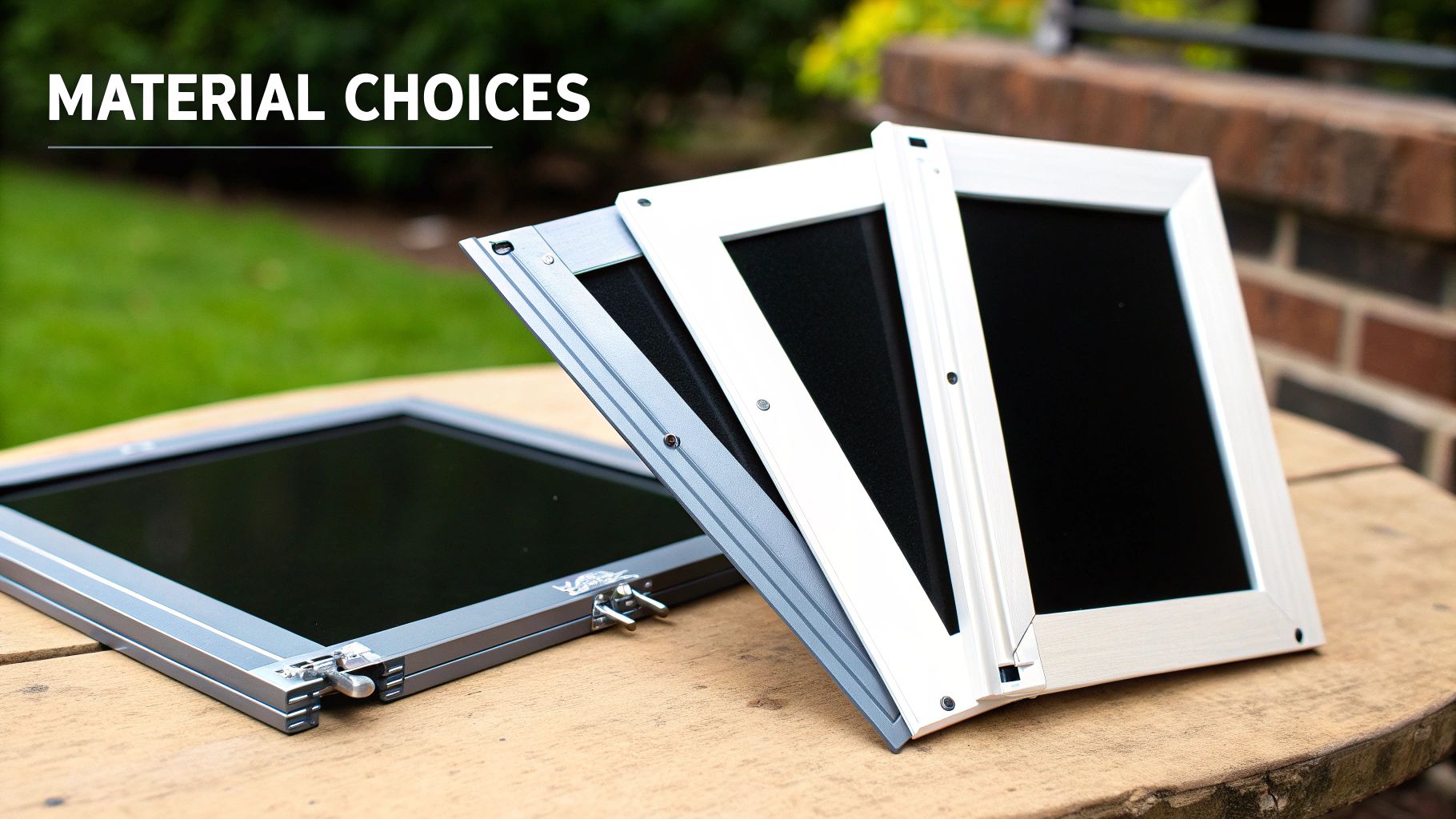
Your Choice Of Screen Material
Here’s a big one: not all screens are created equal. The type of mesh you pick is one of the most significant variables affecting your rescreening cost. Each material offers a different balance of durability, visibility, and price.
Here are the most common options homeowners in Florida consider:
- Standard Fiberglass Screen: This is the industry go-to and the most budget-friendly choice. It gives you good airflow and visibility and is perfect for keeping out most common insects.
- Polyester Screen: A solid step up in durability from fiberglass, polyester mesh is stronger and far less likely to tear. It's a fantastic mid-range option for anyone wanting a longer lifespan from their screen.
- Pet-Resistant Screen: If you have dogs or cats that love to climb or scratch, this heavy-duty, vinyl-coated screen is a non-negotiable. It’s significantly tougher than standard options and will save you from costly repeat repairs.
- No-See-Um Screen: This is a premium mesh with a much tighter weave. It’s specifically designed to block even the tiniest pests like gnats and no-see-ums, which are all too common near Florida's coastal or marshy areas.
Your screen choice directly shapes your outdoor experience. While a pet screen costs more upfront, it can easily save you hundreds in future panel replacements. A no-see-um screen can be the difference between a peaceful evening on the lanai and a swat-filled retreat back indoors.
For a deeper dive into these options, you can check out our guide on selecting the best screen for your porch to really understand the pros and cons of each type.
The Condition Of The Aluminum Frame And Hardware
A full rescreening project is the perfect time to give your entire enclosure a health check. The condition of the aluminum frame and the fasteners holding it all together can definitely add to the total cost if repairs are needed.
Over the years, constant exposure to Florida's humid, salty air takes its toll. The fasteners, in particular, are notorious for rusting, which can stain your frame and deck while weakening the cage's structural integrity. During a rescreen, our technicians will inspect for any bent frame members, corroded sections, or rusted-out screws.
Upgrading to high-quality, corrosion-resistant fasteners is a common and highly recommended add-on. While it adds a bit to the initial cost, it prevents those ugly rust streaks and ensures your enclosure stays strong and secure for years to come.
Based on past projects, a basic rescreen for a 500-800 sq ft cage might run $1,800-$3,500. However, upgrading materials and fixing frame issues can easily push that same project into the $3,500-$5,000 range or higher. To get a better handle on how different factors influence service prices in home maintenance, you can learn more about understanding the real cost of cleaning services as a helpful comparison.
Comparing Costs: DIY vs. Hiring A Professional
When your pool enclosure starts looking tired and torn, the classic debate begins: roll up your sleeves and do it yourself, or call in the pros? The DIY route can look tempting on paper, especially if you're trying to save a few bucks. But it's crucial to look beyond the initial material costs and consider the tools, time, and sheer frustration involved.
Deciding which path to take will shape not just your budget, but the final quality and lifespan of your investment. Let's break down what each option really entails.
The True Cost Of A DIY Rescreening Project
At first glance, the DIY cost to rescreen a pool cage seems like a clear winner. You're just buying rolls of screen and spline, right? Not so fast. The hidden expenses and challenges start piling up quickly.
To get the job done right, you need a specific set of tools that probably aren't in your weekend warrior toolkit. These include:
- A Spline Roller: This little gadget is non-negotiable. It's the only way to properly press the spline into the frame's channels to get a secure fit.
- A Utility Knife: A sharp, reliable knife is essential for trimming the excess screen. A dull blade will just snag and ruin your new panel.
- Ladders or Scaffolding: Here's the big one. Safely reaching those high-up panels on a pool cage is a major challenge and often requires more than your average stepladder.
Beyond the tools, the real hurdle is mastering the technique. Getting the screen tension just right is more of an art form than a simple task. Too loose, and your brand-new screen will sag and flap annoyingly in the wind. Too tight, and you could actually pull the spline right out or, even worse, bow the aluminum frame. This is a classic rookie mistake that leads to wasted material and starting all over again.
And let's not forget the safety risks. Working at heights is serious business. A fall from the top of a pool cage can lead to significant injury. Professionals are trained, equipped, and insured for this kind of work—a safety net you just don't have when you're up there on your own.
The Value Proposition Of Hiring A Professional
When you hire a professional service, you're not just paying for labor. You're making an investment in expertise, efficiency, and—most importantly—peace of mind. Sure, the upfront quote is higher, but it covers so much more than just a person showing up. It includes years of experience that guarantee every single panel is installed with perfect tension for a flawless, long-lasting finish.
Here’s what’s really included in professional labor costs:
- Expertise and Efficiency: What might take you several frustrating weekends, a seasoned team can often knock out in a single day.
- Safety and Insurance: Pros carry the right licenses and insurance, protecting you from any liability if an accident happens on your property.
- Proper Disposal: They'll haul away all the old, ripped screen and used spline, saving you the hassle of a trip to the dump.
- Workmanship Warranty: A reputable company will stand by its work with a warranty. If something isn't right, they'll come back and fix it, no questions asked.
A professional rescreen is a proactive move that helps you sidestep much bigger headaches later. Putting off repairs can lead to much more serious problems down the road. For more details on these figures, you can review professional pool enclosure repair costs on HomeAdvisor.com.
In the end, the choice comes down to your skills, your free time, and your tolerance for risk. If you're just dealing with a couple of small tears, our guide to common screen enclosure repairs might give you the confidence to tackle it. But for a full rescreening project, hiring a pro ensures the job is done right the first time, protecting your home and giving you back that beautiful, bug-free outdoor oasis without all the stress.
The Hidden Value Of A Full Cage Restoration
When you start thinking about the cost to rescreen your pool cage, it's easy to get tunnel vision and focus only on the screen itself. But what if I told you this is the perfect moment to think bigger? A full cage restoration isn't just a repair—it's a complete overhaul that adds serious long-term value and structural integrity to your entire outdoor living space.
Instead of just patching up one problem, a restoration addresses the whole structure from the frame out. It's about transforming a simple fix into a smart home investment, making sure your enclosure looks and performs like new for years to come.
More Than Just New Screens
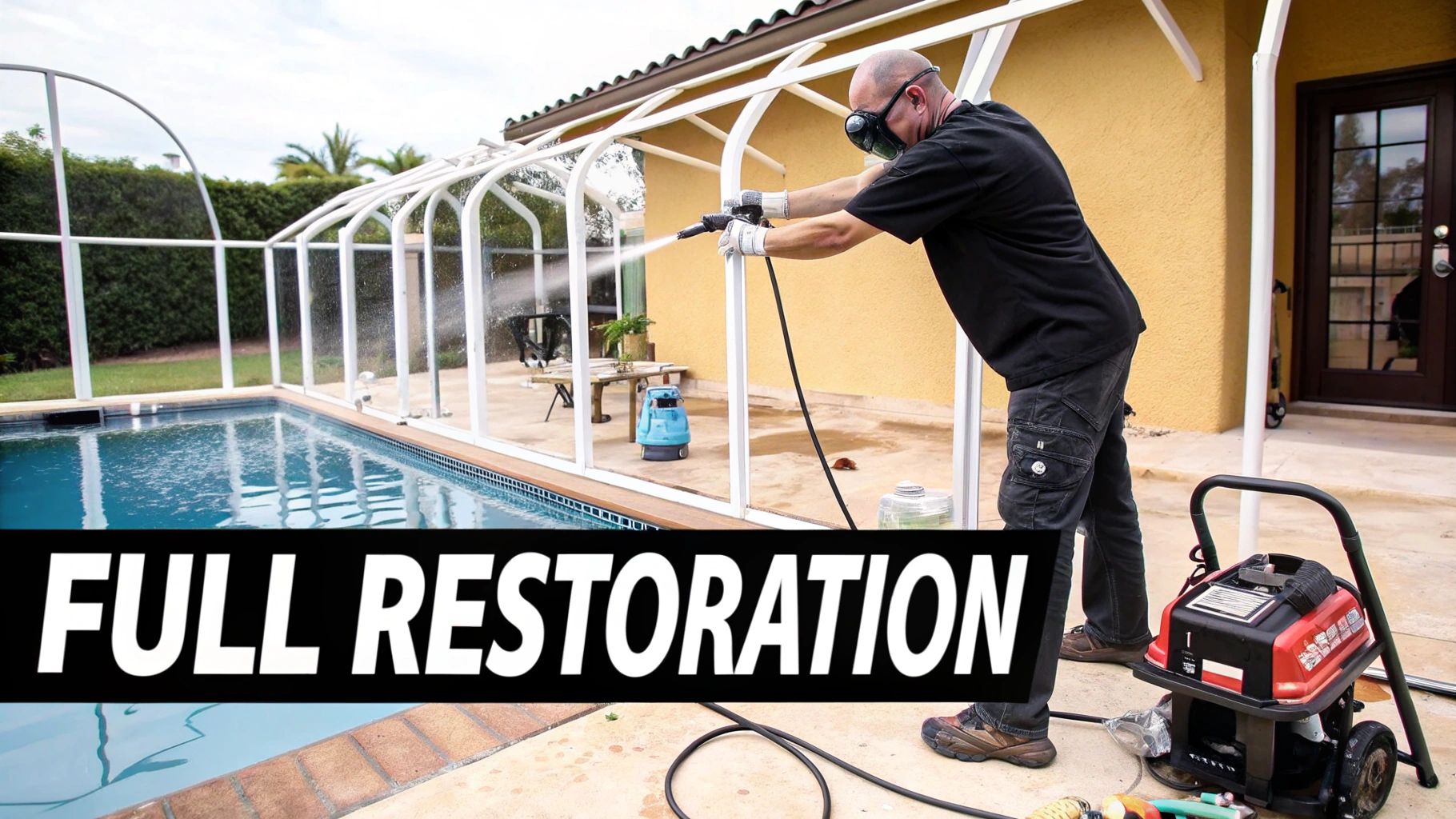
A full cage restoration bundles several key services together, making it way more cost-effective than tackling each job one by one. Sure, we replace every single screen panel, but we also get to the heart of what keeps your cage standing strong.
Here’s what a real restoration project involves:
- Professional Pressure Washing: We start by blasting away years of caked-on dirt, algae, and grime from the aluminum frame. This isn't just for looks; it preps the surface for a flawless new finish.
- Frame Painting: A fresh coat of high-quality DTM (Direct-to-Metal) paint does more than just revitalize your cage's appearance. It provides a crucial protective shield against Florida's relentless sun and corrosion.
- Hardware Replacement: Every single fastener gets pulled out and replaced with rust-resistant, high-grade hardware. This simple step is huge for preventing ugly rust stains and beefing up the structure's strength.
- Door Kit Upgrades: We swap out those worn-out door handles, flimsy hinges, and tired closures. The result is a secure enclosure that’s easy to get in and out of.
This all-in-one approach is, without a doubt, the most efficient way to get your entire pool cage back to pristine, like-new condition.
The Financial Sense Of Bundling Services
Let's be honest, opting for a full restoration while you're already rescreening is just a savvy financial move. The biggest savings come from labor efficiency. Our crew is already on-site with all the ladders, tools, and equipment needed to replace the screens. Adding services like painting and hardware replacement at that point takes very little extra setup time.
Think of it like this: having a painter come out separately just to paint your cage is a standalone expense. But when the painting is done after the old screens are removed and before the new ones go in, the process is streamlined, reducing labor hours and overall project costs.
This bundled strategy saves you a good chunk of change compared to scheduling these services individually over the next few years. Plus, it gives your home's curb appeal and market value a massive boost, making it an investment that truly pays for itself. You can dive deeper into the specific numbers in our detailed guide on pool cage restoration costs.
Protecting Your Investment From The Ground Up
A full restoration is also about future-proofing the structural health of your pool cage. The most overlooked—and often the first to fail—components are the fasteners holding the whole thing together and anchoring it to your concrete deck. Florida’s humid, salty air is notoriously brutal on standard steel screws, causing rust that dangerously weakens connections over time.
Upgrading to superior, corrosion-resistant hardware is one of the most critical parts of any restoration. After all, the foundation of any large outdoor structure is only as strong as its weakest link. For instance, knowing how to properly use powerful anchoring methods is what ensures a secure, lasting installation that can stand up to our weather.
By replacing every old, rusted fastener with new, durable ones, we fortify your cage against wind and storms, extending its lifespan considerably. This small upgrade prevents future rust stains from ruining your deck and protects the structural integrity of your entire enclosure, making sure it stays a safe and beautiful part of your home for a long, long time.
How To Get An Accurate Rescreening Quote In Florida
Getting a clear, detailed quote is the most critical part of any rescreening project. It’s not just about finding the lowest price—it's about understanding exactly what you're paying for so there are no nasty surprises down the road. Nailing this step empowers you to pick the right company and get the best possible cost to rescreen pool cage.
Think of it like getting your house painted. You wouldn't just ask, "How much to paint a house?" and expect a real number. You'd talk about the size, the prep work needed, and the kind of paint you want. The same logic applies here. The more details you can give a contractor upfront, the more accurate their initial estimate will be.
Preparing For Your Quote Request
Before you pick up the phone or fill out an online form, take five minutes to gather some basic info. Having these details ready makes the whole process smoother and helps companies give you a solid ballpark figure right away.
Here’s a quick checklist of what to have on hand:
- Approximate Dimensions: No need to break out the surveyor's tools. Just pace off the rough length and width of your enclosure. Knowing if you're working with a 20×30 cage versus a 40×60 one makes a massive difference in material and labor estimates.
- Structural Details: Is your cage a simple single-story structure, or is it a more complex two-story build? Be sure to mention any odd shapes, multiple roof angles, or custom designs.
- Visible Damage: Do a quick walk-around. Do you see any bent aluminum beams? Are there ugly rust stains on the frame or your pool deck? Are the doors hanging on by a thread? Make a note of it.
- Your Desired Screen Type: If you already have a preference, say so! Whether you need a tough, pet-resistant screen for your golden retriever or a no-see-um mesh to keep the gnats out, this is a major factor in the final cost.
Snapping a few photos or taking a short video on your phone is also a huge help. A picture is genuinely worth a thousand words and can help a pro spot potential issues you might have overlooked.
What To Look For In A Professional Quote
Once the estimates start rolling in, it's time to put on your detective hat. A trustworthy quote is more than just a number at the bottom of a page; it’s a transparent breakdown of the entire job. Remember, the cheapest offer isn't always the best one, especially if it's vague.
A professional, detailed quote should clearly itemize these five things:
- Labor Costs: This should cover everything from tearing out the old screen and spline to installing the new materials and cleaning up the site afterward.
- Material Costs: The estimate needs to specify the exact type and brand of screen being used, how much is needed, and the cost.
- Hardware Details: If you're upgrading your fasteners—which you should—the quote must list the type (like stainless steel Nylo-Tec) and the total replacement cost.
- Additional Repairs: Any frame repairs, door kit replacements, or other fixes should be listed as separate line items so you know exactly where your money is going.
- Proof of Licensing and Insurance: A reputable company will have no problem providing this. It’s your protection against liability if something goes wrong on your property.
A detailed quote is a sign of a professional, transparent company. If an estimate is just a single number with no explanation, it’s a red flag. You should know exactly what you are paying for, from the screen itself to the last screw being replaced.
By comparing these itemized breakdowns, you can make a smart decision based on true value, not just the lowest price. You can learn more about vetting local pros in our guide to searching for pool cage repair near me. Choosing a well-reviewed, insured, and licensed contractor gives you peace of mind that the job will be done right the first time.
Got a Few More Questions About Pool Screen Costs?
Alright, you've waded through the details on materials, compared the DIY route to calling in the pros, and even sized up what a full restoration entails. But there are probably still a few nagging questions bouncing around in your head.
Let's clear those up right now. This is where we tackle the most common questions homeowners ask about the cost to rescreen a pool cage. Think of it as the final piece of the puzzle, so you can move forward with total confidence.
How Long Should a New Screen Actually Last in Florida?
This is a big one, and the answer comes down to one thing: the screen material you pick. Florida's brutal combo of intense UV rays, constant humidity, and surprise storms puts any material to the test.
Here’s a realistic timeline for what you can expect:
- Standard Fiberglass Screen: This is the go-to, budget-friendly choice for many. In the Florida sun, you can expect it to last 5 to 7 years before it gets brittle and starts tearing if you look at it wrong.
- Polyester Screen: A serious upgrade in toughness. Polyester mesh is built to last 10 to 12 years, sometimes even longer. It holds up much better against tearing and doesn't get cooked by the sun nearly as fast.
- Pet-Resistant Screen: If you've got pets or kids who treat the pool cage like a playground, this is your answer. It's a vinyl-coated beast of a screen that can easily last well over a decade, making the higher upfront cost a no-brainer.
No matter which you choose, a professional installation and a quick rinse now and then will help you get the absolute most out of its lifespan.
Is It Better To Repair a Single Panel Or Just Rescreen the Whole Cage?
This really depends on the age and health of your other screens. Did a stray golf ball take out one panel? Or did a clumsy tree branch leave a single tear? If the rest of the enclosure is still in good shape, a one-panel replacement is a smart, wallet-friendly fix.
But if your screens are creeping past that seven-year mark and you're seeing brittleness, multiple tears, or sagging, a full rescreen is the way to go. Trust me, patching one panel on an old, sun-baked enclosure is like playing whack-a-mole. You fix one tear, and another one pops up next month. It’s a frustrating cycle.
A complete rescreen brings everything back to day one. You get uniform strength, a consistent look, and you stop throwing money away on endless patch-up jobs.
When you do the whole thing, you reset the clock. Everything is new, strong, and covered by the same warranty for years of worry-free enjoyment.
What Kind of Warranty Should I Expect From a Pro?
Any reputable company will stand by their work with a solid warranty—it's one of the biggest differences between hiring a pro and doing it yourself. While the details might differ slightly, you should always look for a workmanship warranty that covers the installation for at least one to three years.
This warranty is your protection against installation mistakes, like:
- Screens that start sagging way too soon because they weren't tensioned right.
- Spline that starts popping out of the frame.
- Any other issue caused directly by the technician's work.
It's crucial to remember that the warranty on the screen material itself is separate and comes directly from the manufacturer. Before you sign anything, ask your contractor for clear, written details on both their workmanship warranty and the material manufacturer's warranty. That transparency is how you protect your investment.
Does Rescreening Actually Add Value To My Home?
Without a doubt. A freshly rescreened pool cage is a huge plus for any Florida home on the market. It screams "well-maintained" and gives the entire outdoor space a clean, inviting look. For a potential buyer, seeing a brand-new screen means they can check a major maintenance project off their list before they even move in.
On a practical level, it brings your pool enclosure back to life, doing its job of creating a bug-free, comfortable space to relax. A sharp-looking, functional outdoor area boosts a home's curb appeal and can make it stand out, often leading to a faster sale at a better price. It's an upgrade you get to enjoy now that also pays you back later.
Ready to get a clear, no-nonsense quote for your pool cage? The team at Rescreen Rescue has over 20 years of experience providing reliable, high-quality screen solutions across the Tampa Bay area. We offer free estimates, fair pricing, and craftsmanship you can trust. Get your free estimate from Rescreen Rescue today!