


Imagine spending a perfect Florida evening by your pool, completely free from buzzing mosquitoes and falling leaves. A clean, intact pool enclosure is what makes that picture possible, but it only takes one small tear to break the spell. That’s where pool screen repair comes in—it’s the service that restores your peaceful barrier, keeping your outdoor living space the clean, safe, and relaxing oasis you love.
Protecting Your Florida Oasis From Pests And Debris
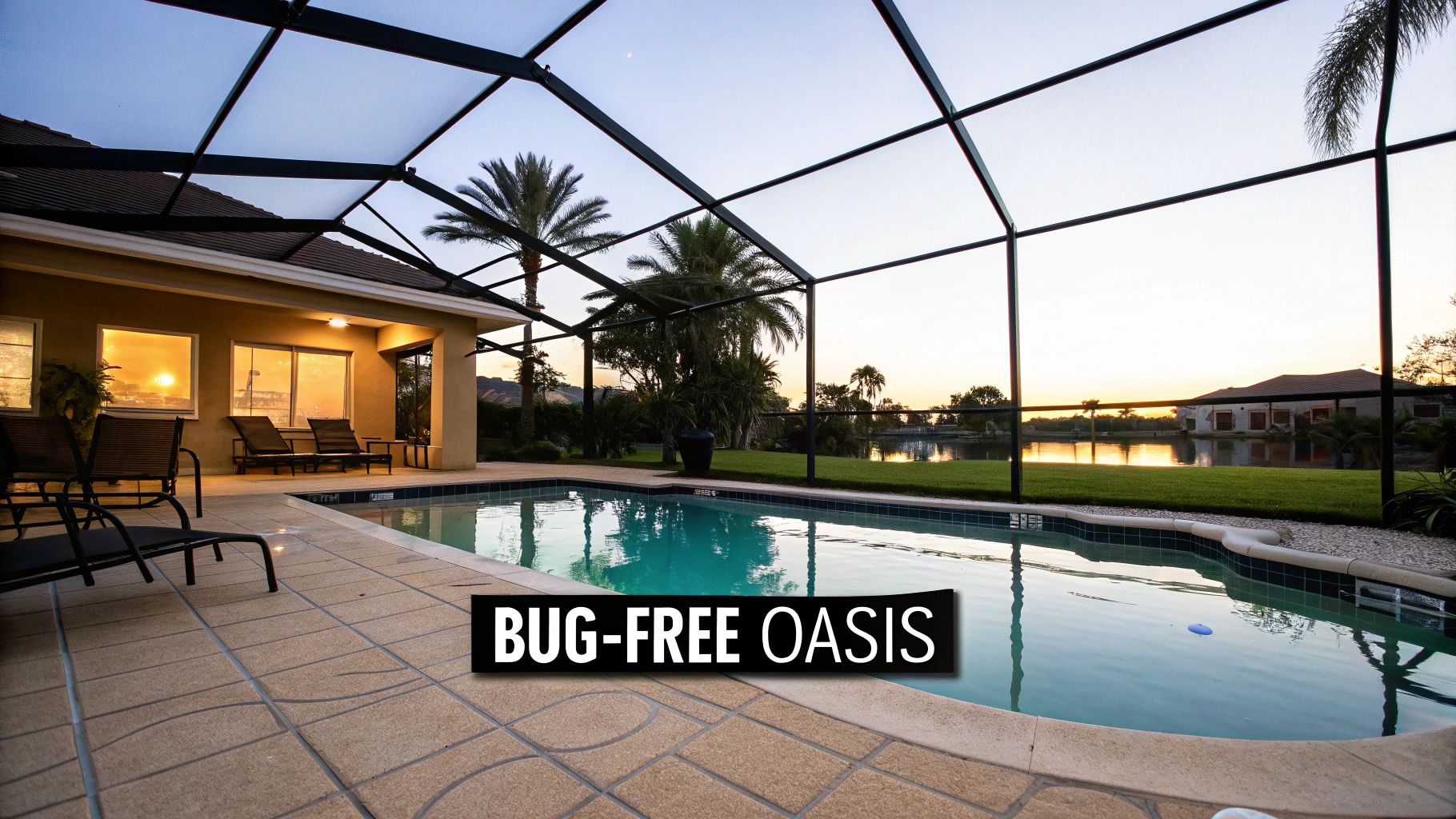
Think of your screen enclosure as the first line of defense for your pool area. It’s a silent guardian, working 24/7 to maintain the comfort and cleanliness of your favorite spot to unwind. When every panel is tight and tear-free, it does its job perfectly.
But a sagging panel or a tiny rip isn't just a cosmetic flaw—it's an open invitation for all sorts of trouble. A compromised screen lets leaves, twigs, and pollen straight into your pool water and onto your deck, which just means more cleanup work for you.
Keeping Unwanted Guests Out
More importantly, damaged screens are a welcome mat for insects and wildlife. Florida is crawling with critters, from annoying no-see-ums and mosquitoes to bigger visitors like frogs and snakes. A secure screen enclosure is non-negotiable for keeping them out of your swimming and relaxation zones.
A well-maintained pool screen is an essential investment in your property's value, your family's comfort, and your overall enjoyment of the Florida lifestyle. It transforms your outdoor space from a simple backyard into a true bug-free retreat.
While a solid screen is your best defense, sometimes you need a little extra help. For a comprehensive approach, many homeowners pair their enclosure with professional pest control services.
Ultimately, timely pool screen repair restores your enclosure's main purpose: letting you enjoy your oasis without constantly swatting away unwanted guests. Of course, regular upkeep helps, too—you can learn how to clean lanai screens to keep them in top shape and extend their life.
How To Spot A Failing Pool Screen Before It's Too Late
For most Tampa Bay homeowners, the pool enclosure is a sanctuary. But all too often, people don't notice their screen is failing until pests and debris have already crashed the party. Learning to spot the early warning signs is the key to stopping a minor fix from snowballing into a major, costly restoration.
Think of it like this: your enclosure is constantly sending you subtle hints that something’s wrong. The trick is knowing what to look for. While a big rip is impossible to miss, the quieter signs of trouble can compromise your entire pool cage long before a panel gives out completely. A few minutes of proactive inspection can save you a world of headaches down the road.
Subtle Signs Of Screen Distress
Here in Florida, the sun is relentless, and it’s public enemy number one for your screen mesh. Over time, those powerful UV rays break down the material, leaving behind some tell-tale clues.
- Brittle or Faded Mesh: Go ahead and touch your screen. Does it feel flexible, or is it stiff and crunchy? A brittle texture is a dead giveaway that the material is on its last legs. Another obvious sign is the color—if that deep black has faded to a chalky gray, you're looking at advanced UV damage. The screen is getting weaker by the day.
- Sagging Panels: Take a step back and look at your panels. Do any of them droop in the middle, creating a "smile" effect? That sag means the screen has lost its tension. It's not just an eyesore; it's a clear signal that a tear is coming and a pool screen repair is in your near future.
Your enclosure's screen mesh is designed to be drum-tight. When a panel starts to sag, it puts a ton of extra stress on the spline and the aluminum frame, making it far more likely to get ripped out during the next big gust of wind.
The screen itself is only half the battle. The spline—that rubber cord holding the mesh in the frame's groove—is just as critical. If you see it popping out of the channel, looking cracked and dry, or flapping in the breeze, your screen isn't secure anymore. It's only a matter of time before a strong wind blows the whole panel out.
Structural Red Flags To Watch For
Beyond the mesh, the bones of your pool cage can also signal big problems on the horizon. With our humidity, trapped moisture can create a perfect breeding ground for green or black gunk, especially along the bottom beams. That mildew and algae isn't just ugly; it can point to poor drainage and long-term moisture issues that can compromise the enclosure.
Another huge red flag is rust. See those rusty streaks running down from the screws? That's not just a cosmetic stain. It means the fasteners holding your cage together are corroding and losing their strength. This is a serious issue that weakens the entire structure, making it much more vulnerable in a storm. You can find more details on these problems in our guide to common screen issues and solutions.
It’s no surprise that pool enclosures are a fixture here in Tampa Bay, especially when you consider there are over 1.2 million residential pools nationwide. But the reality is that up to 40% of these enclosures need repairs within the first 5-7 years, thanks to UV damage and storms—and that number shoots way up after hurricane season. For more industry data, you can check out the swimming pool cover market on Technavio.com.
Should You Repair A Panel Or Rescreen The Entire Cage?
When you spot a tear in your pool enclosure, you’re at a crossroads: is this a quick patch job for one panel, or a sign that it’s time to redo the whole thing? Getting this right is the difference between a smart, lasting fix and a temporary band-aid that ends up costing you more down the road.
The answer really boils down to the age and overall health of your screens.
Think of it this way: a single panel repair is perfect for an isolated incident. Maybe a heavy branch from a recent Tampa storm punched a hole in a roof panel, or a stray golf ball from the neighbor's yard tore through a side section. In these cases, where the rest of your enclosure is still in great shape, a targeted pool screen repair is easily the most efficient and budget-friendly move.
When A Single Panel Repair Makes Sense
A panel replacement is your best bet for what I call "acute" damage—a sudden problem—rather than "chronic" failure from old age. If a specific event caused the tear and the surrounding screens are still strong, flexible, and dark in color, there’s no reason to overspend on a full rescreen.
You're in the clear for a simple repair if you're dealing with:
- Accidental Damage: A classic example is a rip from moving patio furniture or a kid’s toy hitting the screen a little too hard.
- Isolated Weather Impact: If intense winds blew out just one panel but the others held up perfectly, just replacing that single section is the logical choice.
But here's a word of caution: if you find yourself calling a repair guy every few months for a new panel, you’re not saving money. You're just delaying the inevitable.
This flowchart can help you make a quick initial assessment of your screen's condition.
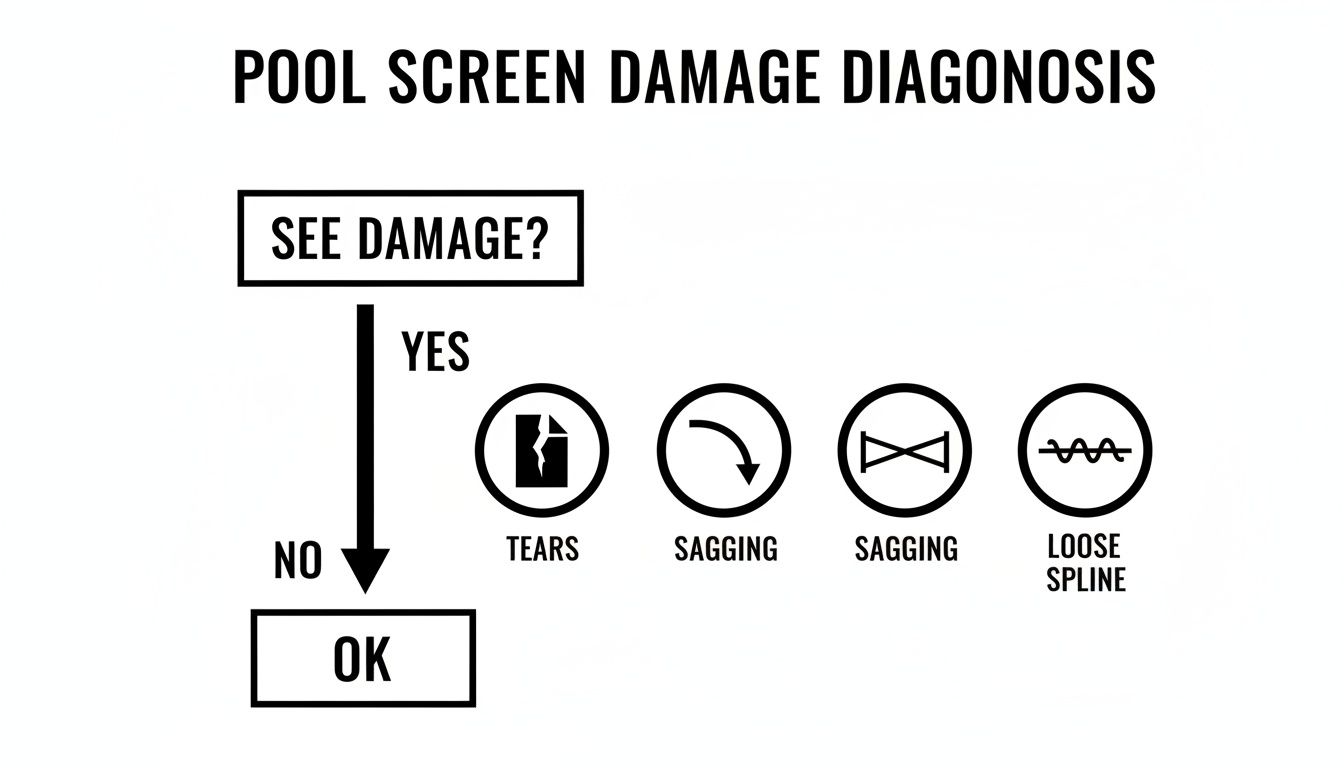
It helps you spot those first tell-tale signs of wear and tear, like sagging and small tears, that point toward bigger problems.
Knowing When A Full Rescreen Is Necessary
A full rescreen becomes the smarter, more economical choice when the problems are widespread. If your screens are pushing 8-10 years old, they’ve likely reached the end of their life thanks to relentless Florida sun exposure.
Replacing just one brittle, faded panel on an old enclosure is like putting a brand-new tire on a car with three bald ones. It doesn't solve the underlying problem, and you're just waiting for the next one to fail.
Look for system-wide signs of aging. Are multiple panels sagging like tired old clothes? Does the mesh feel stiff and crunchy when you touch it? Has that original deep black color faded to a chalky gray? These are all glaring signs that the screen material is giving up across the entire structure.
To make the decision even clearer, here’s a quick guide to help you choose the right path.
Repair Or Rescreen: A Quick Comparison Guide
- Scenario: One small hole from a bird or branch
- Recommended Action: Repair
- Why: The damage is isolated. A single panel replacement is fast, affordable, and restores protection immediately.
- Scenario: Multiple panels are faded to gray
- Recommended Action: Rescreen
- Why: Fading is a sign of widespread UV damage. The material is brittle and other panels will likely tear soon.
- Scenario: Screens are over 10 years old
- Recommended Action: Rescreen
- Why: The screen material has reached the end of its expected lifespan. A full replacement is a proactive, long-term investment.
- Scenario: A single panel is sagging badly
- Recommended Action: Repair
- Why: Often caused by a failed spline. It's a localized fix and doesn't always mean the whole enclosure is failing.
- Scenario: Several panels feel brittle or "crunchy"
- Recommended Action: Rescreen
- Why: This indicates the screen has lost its flexibility and strength. It's a system-wide failure waiting to happen.
Ultimately, a full rescreen addresses all these issues at once. It completely restores your enclosure's integrity and appearance with fresh, durable material that will stand up to the elements.
If you want to learn more about what a full overhaul involves, you can get the details in our complete guide on rescreening a pool enclosure. This approach not only ensures a uniform, clean look but also gives you peace of mind for years to come.
Understanding Pool Screen Repair Costs in Tampa Bay
Let's talk numbers. Budgeting for any home project is key, and pool screen repair is no different. Here in Tampa Bay, there’s no single price tag for a screen repair job—it really comes down to a few specific factors that shape the final quote. Knowing what they are ahead of time helps you set a realistic budget and avoid any surprises.
The biggest driver of your cost is simply the extent of the damage. Swapping out one small, torn panel at ground level? That’s a pretty straightforward and affordable fix. But if you’ve got several damaged panels, or if the tear is on a hard-to-reach roof section, the job gets more complex. That kind of work requires special equipment and safety gear, so the cost will naturally be higher to account for the extra labor and risk involved.
Key Factors That Shape Your Repair Quote
The type of screen you choose also plays a big part in the final bill. Standard fiberglass mesh is a solid, budget-friendly choice for most, but it’s not the only option. If you have a dog that loves to claw at the door or live next to a golf course, you might want to look into a tougher, tear-resistant screen.
Here’s a quick breakdown of what a contractor will consider:
- Screen Material: Upgrading from the standard stuff to a heavy-duty pet screen or a solar screen that blocks UV rays will change the material cost. Each one offers a different benefit that can be a smart long-term investment.
- Location of Damage: A panel on the side of your lanai is a quick swap. A top panel two stories up? That's a whole different ballgame. Accessibility is a huge factor in labor costs.
- Hardware Condition: Sometimes, it's more than just the screen. If the fasteners are all rusted out or the aluminum frame itself needs some attention, that will add to the scope and price of the project.
A professional estimate should be completely transparent. A good quote will break down every one of these variables, so you know exactly what you’re paying for—from the specific screen being used to the labor needed to get to those tricky spots.
This approach ensures you’re getting a fair, competitive price for quality work. If you're looking at a much bigger job, you can get a more in-depth look at budgeting in our guide on the cost to rescreen a pool cage.
The need for reliable screen work is huge, with the global pool maintenance market expected to hit $36.09 billion by 2029. Right here in Tampa Bay, where there are over 200,000 enclosures, a staggering 60% of service calls are for screen damage from wind, falling debris, and just plain old age. In fact, after one major hurricane, FEMA logged over 30,000 screen-related insurance claims in Florida alone. It just goes to show how important a sturdy, well-maintained enclosure really is. You can learn more about the pool maintenance market on ResearchAndMarkets.com.
Why Professional Screen Repair Is A Smart Investment
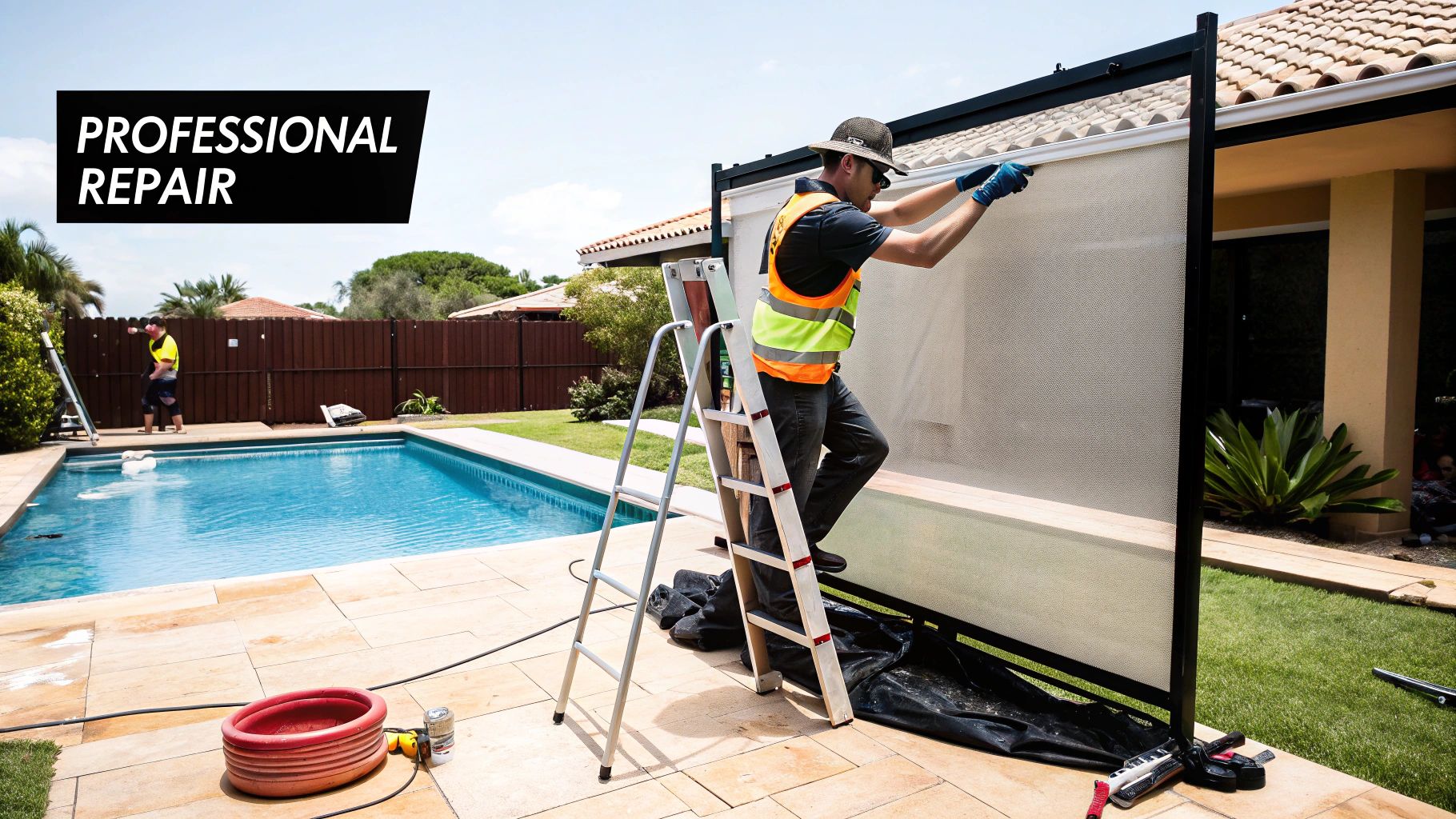
We all love the satisfaction of a good DIY project, but when it comes to pool screen repair, calling in a professional is one of the smartest investments you can make for your home. Hiring a licensed and insured company isn't just about convenience—it directly impacts the safety, quality, and lifespan of your entire enclosure.
Let's start with the most important factor: safety. Repairing those upper-level panels means climbing tall ladders, often on a slippery or uneven pool deck. One wrong move could lead to a serious fall. Professionals show up with the right safety gear and years of experience working at heights, completely removing that risk for you and your family.
Achieving A Flawless And Durable Finish
Beyond keeping you safe, the quality of a professional job is something DIY just can't match. Experienced technicians have the specialized tools to stretch screen mesh to the perfect tension. What you get is a drum-tight, wrinkle-free finish that not only looks fantastic but is also built to handle Florida's punishing winds and torrential downpours.
A DIY attempt often leaves you with saggy panels or loose spline, which is a recipe for the screen popping right out in the next big storm. A pro gets it done right the first time, so your repair lasts for years, not just a few months.
A professional also acts as a diagnostician for your entire enclosure. While you might only see a single tear, they can spot hidden issues like corroded fasteners, bent frame components, or signs of structural stress that a homeowner might easily miss.
This expert eye prevents you from patching up one small problem while a much bigger one—one that could compromise the whole cage—goes unnoticed.
The Professional Advantage For Property Value
For property managers and real estate agents, a pristine screen enclosure isn't just a feature; it's a non-negotiable asset. Professional work delivers a flawless result that protects and boosts property value, all backed by a warranty that a weekend project simply can't offer. This is more important than ever as North America’s pool enclosure market continues to grow.
Here in Florida, we're home to 25% of all pools in the U.S., and 55% of Tampa Bay homes have lanais or cages. But the reality is that 70% of these enclosures show significant screen wear within ten years, thanks to our salty air and constant pollen. Bringing in a team with over two decades of experience in services like frame-ins can reduce the recurrence of repairs by as much as 40%—a huge selling point for homeowners looking for a faster sale. You can find more insights on the swimming pool construction industry on Ibisworld.com.
At the end of the day, hiring a pro for your pool screen repair gives you something invaluable: peace of mind. It guarantees the job is done safely, correctly, and to a standard that protects your investment for the long haul.
How To Choose The Right Screen Repair Contractor
Picking the right contractor for your pool screen repair is hands-down the most important decision you'll make. A great company leaves you with a durable, professional-looking enclosure. The wrong one can mean shoddy work, future headaches, and money down the drain.
Your search should start with the basics that separate a real pro from a weekend handyman. Any reputable contractor in the Tampa Bay area must be fully licensed and insured. Don't be shy about asking for proof, either. This is what protects you from liability if someone gets hurt on your property and guarantees the company is held to state standards. If a contractor gets cagey about showing you their documents, that's a massive red flag.
Questions To Ask Before You Hire
Once you’ve confirmed their credentials, it’s time to get into the nitty-gritty of their work. The quality of a screen repair job hinges on the materials they use, especially here in our humid, coastal climate where rust and mildew are constant battles.
Here are the critical questions every homeowner should ask:
- What type of screen mesh do you use? Find out what their standard option is and ask about any specialty screens they carry, like tough pet-resistant mesh or solar screens that block UV rays.
- What kind of fasteners will you install? In Florida, corrosion-resistant hardware isn't a luxury—it's a necessity. Make sure they use high-quality, rust-proof screws to avoid those ugly orange stains and prevent the frame from weakening over time.
- Can I see some of your recent work? A contractor who’s proud of their work will be happy to show you photos or point you to a few jobs they’ve recently completed in the area.
- What does your warranty cover? You need a crystal-clear answer on this. What’s covered—labor, materials, or both? And for how long? A solid warranty is a sign that a company truly stands behind its craftsmanship.
A contractor’s willingness to answer your questions thoroughly and transparently says a lot about their professionalism. Vague answers or a reluctance to get into the details should make you pause.
Finally, look for social proof. Hop on Google and see what other local homeowners are saying in recent reviews. Honest feedback about their communication, punctuality, and how well they cleaned up is just as telling as the quality of the repair itself.
Taking these steps will help you confidently choose a reliable partner for your pool screen repair. You can learn more about finding a trusted expert by checking out our guide on locating the best screen repair near me.
Common Questions About Pool Screen Repair
Even after you've spotted the signs of damage and weighed your options, it's natural to have a few more questions. Getting straight answers is the best way to feel confident about moving forward with your pool screen repair. We hear a lot of the same questions from homeowners across Tampa Bay, so let's tackle them head-on.
One of the first things people want to know is, "How long will my new screen actually last?" That's a great question. With a professional installation using quality materials, you can expect a brand-new screen to hold up for 8 to 12 years here in Florida. Keep in mind, factors like constant, direct sun exposure or being close to saltwater can shorten that lifespan a bit.
Other Frequent Inquiries
Another common one is about the weather. Can a repair happen if it's raining? While a light drizzle might not stop a job, our technicians will always reschedule during heavy rain, high winds, or lightning. Your safety and theirs is always the number one priority—no exceptions.
We also get asked if homeowners need to be present for the repair. In most situations, as long as the technician has safe and clear access to the entire enclosure, you don't need to be there. This gives you the flexibility to go about your day without having to schedule around the appointment.
It's also smart to ask a potential contractor about their online reviews and how easy they are to find. A company's digital presence often says a lot about its professionalism and how much they value customer feedback. If you want to know what to look for, this guide to local SEO for home service companies is a great resource.
Finally, a really important question is, "Will the new panel match my old ones?" A professional will do their best to match the material and color, but it’s good to have realistic expectations. A brand-new screen panel will almost always look darker and cleaner than your existing, weathered screens. This is a big reason why a full rescreen is often the best choice for older enclosures—it guarantees a clean, uniform look across the entire structure.
Ready to get your outdoor oasis back in shape? The team at Rescreen Rescue has been providing fast, reliable, and top-quality screen repair services across the Tampa Bay area for over two decades. Reach out today for a free, no-obligation estimate at https://rescreenrescue.com.