


That sinking feeling you get when you spot a ripped screen on your lanai or notice your pool cage is starting to sag? The first instinct is usually to grab your phone and search for "screen enclosure repair near me."
But hold on for a minute. Before you make that call, taking a few moments to play detective yourself can save you a surprising amount of time and money. It helps you get a much more accurate quote right from the start.
What To Check Before You Call For Screen Repair
A quick walk-around can turn a vague, urgent headache into a clear, manageable project. Knowing the real scope of the damage helps you communicate exactly what you need, which makes the whole repair process run smoother.
It’s the difference between saying, "My screen is broken," and, "I've got three torn panels on the west side of my pool cage, plus the spline looks pretty brittle." The second one gets you a real answer.
Pinpoint The Exact Damage Location
First things first, do a full lap around your enclosure. Don't just stare at the one tear that caught your eye. Look high and low. It's really easy to miss damage on the roof panels from falling branches or storm debris when you're just standing on the ground.
Make a mental note (or a real one) of every single panel that has a hole, a tear, or is pulling away from the frame. Count them up. That number is the first thing any repair company is going to ask for.
Before calling a pro, it's helpful to have a clear idea of what you're dealing with. This simple checklist can help you translate what you're seeing into what a technician needs to know.
Quick Damage Assessment Checklist
- 1-3 Small Tears: If you see a few small tears on different panels, it likely indicates isolated impact from debris or pests. This usually requires individual panel replacement.
- Silver, Shiny, or Brittle Screen: When the screen material itself looks faded and fragile, it's a sign that it is old and sun-damaged. A full rescreening is likely the best solution.
- Sagging or Wavy Screen Panels: Screens that have lost their tension due to age or stress will appear saggy. This typically calls for panel replacement or a full rescreening.
- Cracking or Popping Spline: The rubber gasket holding the screen in the frame is failing. This requires rescreening with new spline.
- Rusted Screws or Fasteners: If you spot corrosion on the hardware, it means moisture has taken its toll. These will need fastener replacement to prevent structural failure.
- Bent Aluminum Beams: A clear sign of structural impact from a falling object, this will require structural repair or beam replacement.
Using this checklist will give you the confidence to describe the problem clearly, ensuring you get the right help without any surprises.
Assess The Overall Screen Condition
Now, take a closer look at the panels that aren't torn. Do they look faded, discolored, or brittle? Gently press on a section that seems okay. A healthy screen will have a bit of give, but an old, sun-baked screen might feel stiff and could even crack under a little pressure.
Here's a good rule of thumb: if more than 25-30% of your panels are damaged or showing serious signs of aging (like turning silver or feeling like they could snap), you're probably looking at a full rescreening, not just a patch job. That's a crucial distinction.
For those tiny, one-off holes, you might be able to tackle it yourself. You can learn more in our guide on how to repair window screen holes.
Inspect The Structural Components
The screen mesh is just one part of the equation. Your inspection needs to include the aluminum frame and all the little hardware pieces holding it together.
Keep an eye out for these common issues:
- Corroded Fasteners: Check the screws and bolts, especially at the base and corners. Are they covered in rust? Rusted hardware is weak hardware, and it can compromise the entire structure.
- Bent Framing: Scan the aluminum beams for any dents, dings, or obvious bends from impacts.
- Loose Spline: That rubber strip holding the screen in the frame is called spline. See if it’s cracked, shrinking, or popping out of the channels.
By gathering these details—the number of bad panels, the overall health of the screen, and the condition of the frame and hardware—you're fully prepared. You can give a contractor the exact information they need for a solid preliminary quote and avoid any surprises down the line.
How To Find And Vet The Best Local Screen Companies
Once you have a good idea of what repairs your lanai or pool cage needs, it’s time to find the right crew for the job. Kicking off with a Google search for "screen enclosure repair near me" is a great start, but the best companies aren't always the ones paying to be at the top of the page. A little smart vetting is crucial to make sure you hire a skilled and trustworthy team.
I always tell homeowners to start by tapping into their local network. Before you even click on an ad, check out your neighborhood Facebook group or other community forums. People are incredibly honest about their experiences—good and bad—and you’ll get a real-world feel for a company's reliability long before you pick up the phone.
Dig Deeper Than Surface-Level Reviews
Online reviews are a goldmine of information, but you have to know how to read them. Don't just glance at the star rating; look for the story behind it.
Are multiple people mentioning how punctual and clean a certain company was? Or are there recurring complaints about surprise fees and missed appointments? Those details paint a much clearer picture than a simple five-star average. A few bad reviews aren't always a dealbreaker, especially if the company jumped in to fix the problem. But if you see the same negative feedback over and over, that's a huge red flag.
Verifying The Essentials: License And Insurance
This part is non-negotiable. Before you even think about getting a quote, you need to confirm that any contractor you're considering is properly licensed and insured in Florida. A license shows they meet state and local standards, and insurance protects you from any liability if a worker gets hurt on your property.
A reputable company will have no problem showing you proof of both. If a contractor gets weird or dismissive when you ask for their license number or a certificate of insurance, that’s your cue to walk away. This simple check can save you from a world of legal and financial trouble.
This whole process can feel a bit overwhelming, but it really boils down to a simple flow: figure out the problem, then find the right person to fix it.

When you take the time to diagnose the issue first, you're in a much better position to ask smart questions and weed out the wrong companies from the start.
Building Your Shortlist
With this research done, you can start putting together a shortlist of three to four solid companies to call for an estimate. Learning how to vet local contractors is a skill that applies to any home project, not just screen repair. The same principles of checking licenses, reading reviews, and asking good questions will serve you well every time.
Think about whether you'd prefer a big franchise or a smaller, local business. A family-owned company often lives and dies by its local reputation, which usually means more personal service and greater accountability. They're also often the experts you want for bigger jobs, like a full pool cage restoration near me, because you can easily check out their past work right in your own community.
Once you have your list, you’re ready for the next phase: getting them out to your house for an inspection and a quote.
Making Sense Of The On-Site Inspection And Quote
When a technician shows up at your door, their visit should be more than just a quick glance and a price scribbled on a notepad. A truly professional on-site inspection is a complete health check for your entire screen enclosure. This is where their expertise really comes into play, as they can spot underlying issues you might have completely missed during your own walk-around.
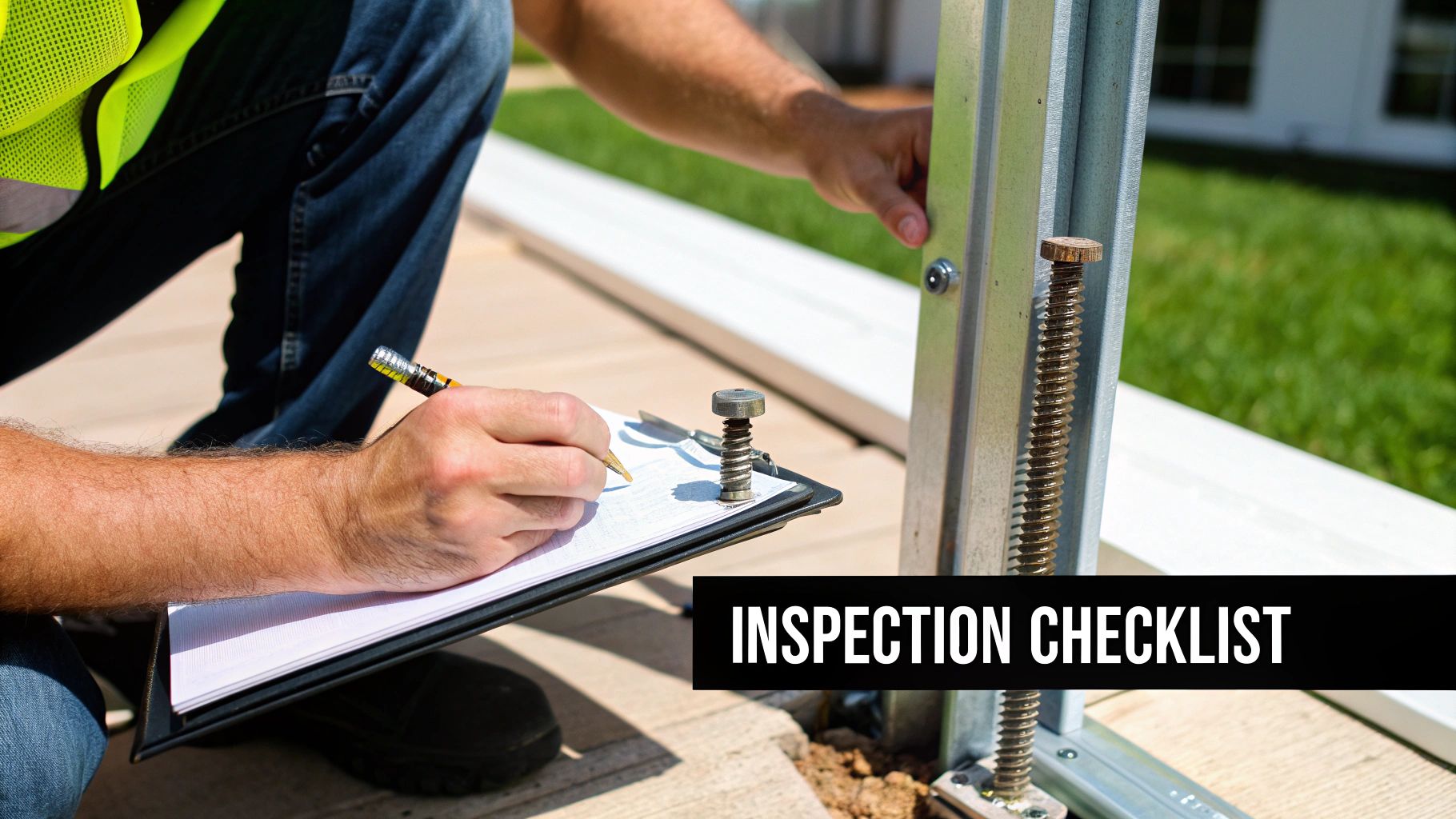
A thorough contractor won’t just count the ripped panels. They’ll actively hunt for the root causes of the damage and look for signs of future trouble. It's a critical step that ensures you get an accurate, fair, and comprehensive quote for your screen enclosure repair.
What A Professional Inspection Should Cover
The best technicians are methodical. They'll examine the entire structure from the roof down to the concrete, paying close attention to the little details that often signal much bigger problems.
Here’s what they should be looking for during the inspection:
- Corroded Fasteners: They'll check for rusted screws, especially at the base of the pool cage where moisture and chemicals tend to collect. Weak hardware is one of the first things to fail during a storm.
- Structural Integrity: An expert will actually sight down the aluminum beams to check for bending or warping. They'll also inspect connection points for any signs of stress or separation.
- Foundation and Drainage: They should assess how water flows around the base of the enclosure. Poor drainage is a silent killer, leading to corrosion and instability over time.
- Screen and Spline Condition: They will confirm your own assessment of the screen’s age and brittleness and check if the spline is still holding the screen securely in the grooves.
A detailed quote is born from a detailed inspection. If a contractor just throws a single price at you without explaining what they found, that’s a major red flag. You should always get a breakdown that clearly explains what needs fixing and, more importantly, why.
Understanding Your Material And Hardware Options
A great contractor also acts as a consultant, walking you through your options. They should discuss different screen types with you, not just try to upsell you on the most expensive one. For example, while standard fiberglass screen is perfectly fine for many lanais, they might recommend a more durable, vinyl-coated polyester screen if you have pets or live near a golf course.
This conversation should also cover the hardware. Upgrading to high-quality, corrosion-resistant fasteners can add years to the life of your repair. It’s a small investment upfront that pays off big time down the road. Knowing what is involved with rescreening a pool cage helps you appreciate the true value of these kinds of upgrades.
Finally, the quote itself needs to be transparent and all-inclusive. While every job is different, it helps to know the typical price range. The average cost to repair a pool screen enclosure hovers around $922, but this can swing from $297 for minor patches to over $1,586 for more extensive damage. If you're looking at a full rescreening, homeowners can expect to pay somewhere between $7 to $9 per square foot. This clarity ensures there are no hidden fees or surprise charges once the work starts.
Comparing Costs, Timelines, And Project Scope
Once you have a few quotes in hand, it’s time to look past the bottom-line number. Be wary of the cheapest bid—it’s often a red flag for cut corners, flimsy materials, or an inexperienced crew that could cause more problems down the road. A smart comparison is all about understanding what you’re actually getting for your money.
Choosing the right "screen enclosure repair near me" isn't about finding the lowest price. It’s about making the best long-term investment for your home.
Deconstructing The Cost Of Screen Repair
Several factors drive the final price, and a good, transparent quote will break them down for you. The size of your lanai or pool cage is the most obvious, of course. But the type of screen you select plays a huge part, too. Standard fiberglass is easy on the wallet, while tougher options like pet-resistant or high-visibility screens come at a premium but deliver serious durability and better views.
The complexity of the job is another big piece of the puzzle. Popping in a few new panels at ground level is pretty straightforward. But replacing roof panels on a two-story enclosure? That’s a different beast entirely, requiring more labor, safety gear, and a higher price tag.
Plus, a good technician might spot issues you didn't see, like corroded fasteners or structural damage. Replacing that hardware will add to the final invoice, but it’s absolutely critical for keeping your enclosure stable and safe.
Realistic Timelines For Different Projects
Knowing how long the work will take helps you plan your life around it. Timelines can shift depending on how busy the company is and the specifics of your job, but here’s a general guide to set your expectations:
- Minor Panel Repair (1-5 panels): This is usually a quick fix. A pro can typically knock this out in just a few hours during a single visit.
- Full Enclosure Rescreen: Rescreening an entire average-sized pool cage is a much bigger undertaking. This process generally takes 1 to 2 full days, since it involves stripping out every bit of old screen and spline before carefully installing the new material.
- Structural Work and Rescreen: If your project goes beyond just screens—like replacing aluminum beams or swapping out all the fasteners—plan on the job extending to 2 to 3 days or possibly more.
Always get an estimated timeline in writing. While a sudden Florida thunderstorm can throw a wrench in the schedule, a professional company will give you a reliable timeframe and keep you in the loop if anything changes.
If a full rescreen is on your radar, it pays to understand all the moving parts. For a much deeper dive, check out our detailed guide on the cost to rescreen a pool enclosure. Having this knowledge will help you compare quotes like a pro, ask the right questions, and ultimately pick the contractor who delivers the best mix of quality, efficiency, and lasting value.
What a High-Quality Screen Repair Job Looks Like
Once you’ve done your homework, vetted the companies, and shaken hands on a quote, the real test begins. The final product is where the rubber meets the road, and knowing the difference between a rushed job and true craftsmanship is what ensures your investment was worthwhile.
A top-notch screen repair isn't just about patching a few holes. It’s a detailed process that brings back the function, look, and strength of your outdoor living space.
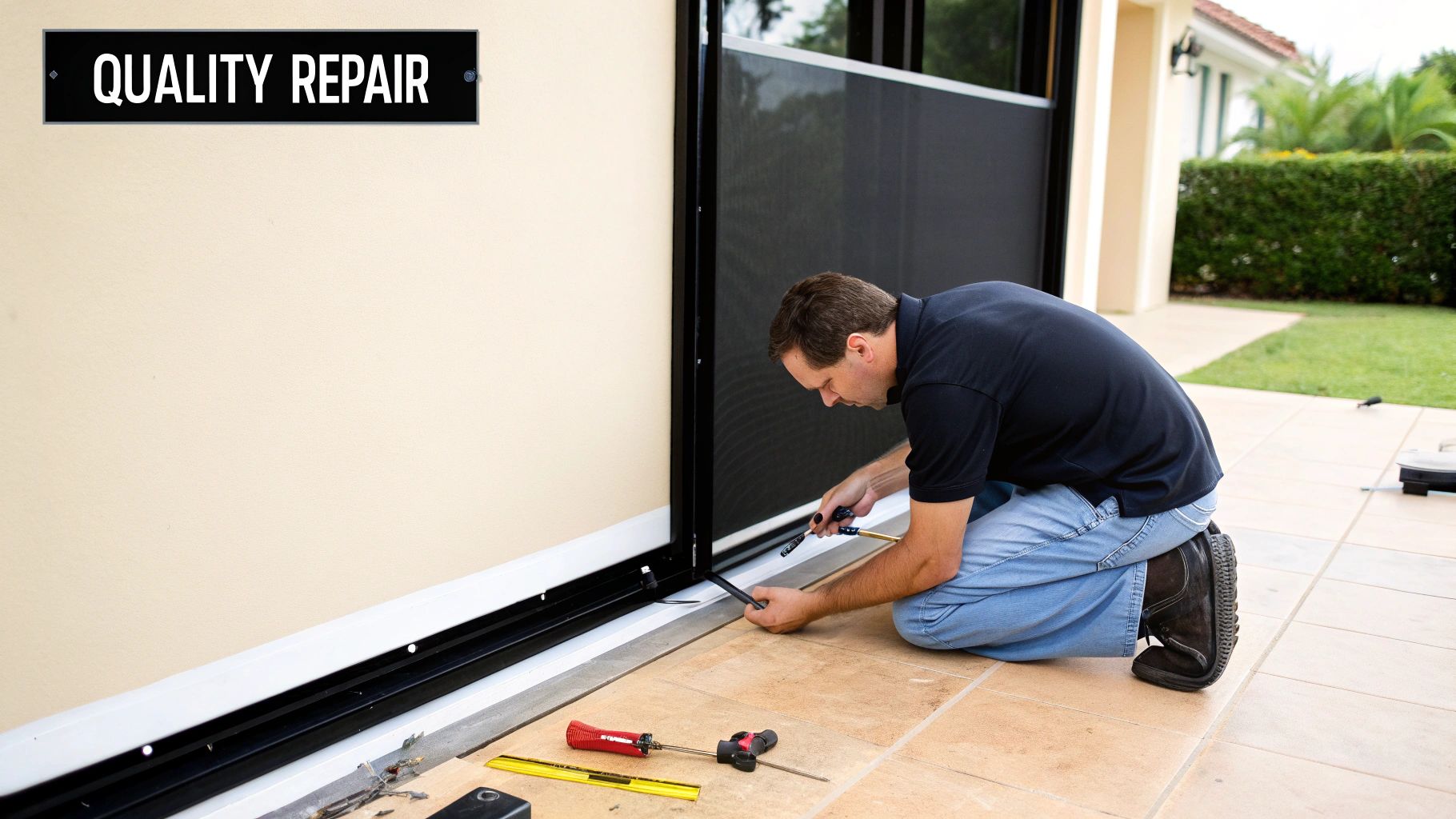
From the moment the crew shows up, you should get a sense of their professionalism. Are they careful with your property? Do they work efficiently, with all the right tools and materials ready to go? The real signs of quality, however, are found in the small details of the installation itself.
The Anatomy of a Perfect Screen Panel
Take a close look at a newly installed screen panel. The first thing you'll notice—or should notice—is the tension. A perfectly installed screen should be taut, like a drum. There should be no wrinkles, waves, or saggy spots whatsoever. This isn't just an aesthetic thing; a taut screen is a strong screen, better prepared to stand up to wind and the occasional bump.
Next, get a good look at the spline. That’s the rubber gasket tucked into the frame's channel that holds the screen tight.
Here’s what you want to see in excellent spline work:
- Clean Lines: The spline should be tucked neatly into its groove, with no frayed screen material poking out.
- Uniform Fit: It needs to be seated flush and evenly all the way around. No bumps, and definitely no sections trying to pop out.
- Seamless Corners: This is a big one. A real pro will cut the spline at precise angles in the corners, creating a clean, professional finish. Amateurs just jam it in there, and it shows.
The spline work is a dead giveaway of a contractor's experience level. Rushed jobs almost always have sloppy corners and uneven tension, which is a recipe for the screen popping out down the road.
Beyond the Screen: Add-Ons That Revitalize
A comprehensive "screen enclosure repair near me" can be about much more than just the screen. The best companies offer services that can completely restore your entire pool cage or lanai. Think of it less as a patch job and more as a full-on revitalization project.
Services like professional pressure washing can blast away years of grime, mildew, and algae from the aluminum frame, making the whole structure look brighter instantly. And if your enclosure’s paint is looking faded, chalky, or chipped, a fresh coat of specialized paint won't just make it look new—it will protect the metal from corrosion and seriously boost your home's curb appeal.
These outdoor spaces are a huge draw for homeowners. The global screen enclosure market hit $2.5 billion in 2023 and is only expected to get bigger, especially in sunny climates. For homeowners and real estate agents alike, investing in these repairs can make a big difference in a home's perceived value. You can explore more about the screen enclosure market growth and see just how big this industry has become.
Questions Homeowners Often Ask About Screen Repair
Even after you've done your homework, picked a company, and looked over the quotes, there are always a few lingering questions. It's completely normal. Getting these details ironed out beforehand gives you peace of mind and helps you protect your investment down the road.
We get these questions all the time from homeowners, so let's tackle the most common ones.
How Long Should a Screen Enclosure Really Last?
A professionally installed, high-quality screen enclosure should give you a solid 10 to 15 years of service. But—and this is a big but—that number can swing quite a bit depending on Florida's weather and how well you keep up with maintenance.
Giving your enclosure a quick inspection once a year, especially after storm season, is a smart move. You're looking for signs of aging like screens that feel brittle to the touch, noticeable fading from the sun, or a bunch of tiny tears starting to appear.
Here in the Tampa Bay area, with our intense sun and humidity, planning for a full rescreen every 10-12 years is proactive. It stops you from being caught off guard by a sudden failure and helps prevent loose, flapping panels from damaging the aluminum frame itself.
Should I Just Repair One Panel or Redo the Whole Thing?
This is probably the number one question we hear. The right answer really comes down to the overall health of your existing screens.
- Repair a single panel if: The damage is a one-off incident. Think a stray golf ball, a fallen branch, or a single tear. If the rest of the screens are still flexible and in good shape, a simple panel replacement is fast and budget-friendly.
- Rescreen the whole enclosure if: You're seeing widespread aging. Are multiple panels turning a chalky, silvery color? Do they feel brittle when you touch them? A full rescreen is the way to go. It gives you a clean, uniform look and, more importantly, ensures every panel has the same strength and lifespan.
Here’s a good way to think about it: If you get a nail in one tire, you patch it. But if the tread is worn out on all four, you replace the whole set for safety. It's the exact same logic with your screens.
What's the Best Type of Screen for My Home?
The "best" screen isn't one-size-fits-all; it’s about what fits your life. For most homeowners, standard fiberglass screen is a fantastic choice. It does a great job keeping bugs out and is very cost-effective.
But if you have pets who love to climb or scratch, or if your home backs up to a golf course, it’s worth upgrading. A vinyl-coated polyester screen, which you'll often hear called 'pet screen' or 'tuff screen,' is about seven times stronger than standard fiberglass. It stands up to a whole lot more abuse.
A good contractor won't just sell you the most expensive option. They'll walk you through the pros and cons of each type so you can make a choice that makes sense for your family. If you want to get into the weeds, we break down common screen issues and their solutions in another one of our guides.
Does a Well-Maintained Screen Enclosure Actually Add to My Home's Value?
Absolutely. Here in Florida, a pristine screen enclosure is a huge selling point. It instantly creates that bug-free outdoor living space that so many buyers are looking for. It's not just a feature; it's a lifestyle upgrade.
If you're thinking about selling your home, a fresh rescreen can do wonders for your curb appeal. It sends a clear signal to potential buyers that the property has been cared for. It’s a relatively small investment that can significantly boost your home’s perceived value and help it stand out on the market.
Ready to get your screen enclosure looking brand new? The team at Rescreen Rescue brings over 20 years of hands-on experience to every job, delivering fast and reliable screen repairs across the Tampa Bay area. Contact us today for a free, no-hassle estimate. https://rescreenrescue.com