


If you've spent any time in Florida, you've seen them everywhere: those screened-in patios, pools, and porches that let the breeze in but keep the bugs out. That's a screen lanai enclosure in a nutshell. It’s basically an outdoor living room, built with a sturdy aluminum frame and tough screen panels, that wraps around your existing patio or deck.
Think of it as the perfect way to claim more usable space for your home. You get to enjoy our gorgeous weather year-round without constantly swatting away mosquitoes or fishing leaves out of your drink.
Understanding Your Outdoor Living Upgrade
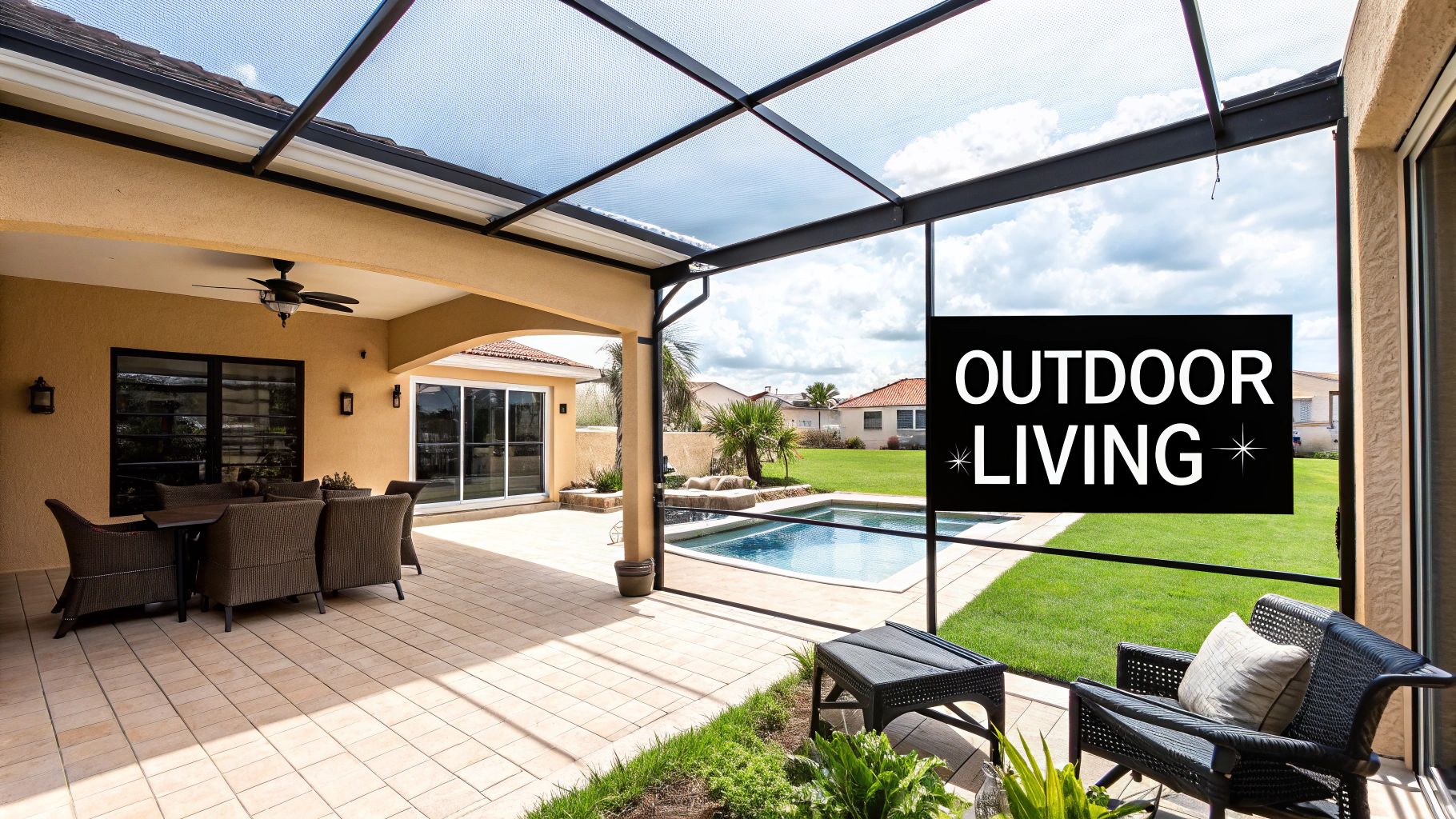
A screen lanai enclosure does more than just keep bugs away—it completely changes how you use your backyard. It stops being just a slab of concrete and becomes a genuine extension of your indoor living area. It's the bridge that connects the comfort of your home to the fresh air outside.
Suddenly, your patio is usable day or night, whether it's sunny or drizzling. This isn't just a simple screen; it's a real architectural addition that adds valuable square footage. In a place like Tampa Bay, where we live outside most of the year, that extra space is gold. It gives you a dedicated spot for family dinners, morning coffee, or just relaxing without the typical Florida outdoor annoyances.
The Core Purpose of a Screened Lanai
At its heart, a screen lanai enclosure is all about improving your quality of life. By closing off your patio or pool deck, you immediately get a handful of benefits that make life easier and more enjoyable. You can finally enjoy a meal outside without fighting off flies or let the kids play in a contained, safer space.
It’s about taking back your yard. You’re creating a personal oasis where you’re in control of the environment. Whether you have a small porch or a sprawling pool area, an enclosure makes it a far more versatile and pleasant place to be. It's also good to know the different options available; you can learn more about screen room enclosures to see what might fit your home's layout.
More Than Just a Bug Blocker
While blocking pests is the number one reason people get an enclosure, a quality installation delivers so much more. It's a multi-tasking home improvement that boosts your comfort and your home's bottom line.
A well-designed enclosure is a lifestyle investment. It protects your family, cuts down on maintenance chores, and ultimately adds real value to your property by making it that much more appealing to future buyers.
These structures also offer a solid buffer against the elements. They can:
- Filter Harsh Sunlight: The screen mesh provides just enough shade to take the edge off the intense Florida sun. This helps keep your lanai cooler and offers a break from direct UV rays.
- Keep Debris Out: It's a game-changer for cleanup. The screen acts as a barrier against falling leaves, pine needles, and other yard gunk, meaning less time sweeping the patio or skimming the pool.
- Enhance Privacy: Depending on the type of screen you choose, an enclosure can create a more secluded feel, giving you an intimate outdoor retreat away from the neighbors' view.
Choosing Your Enclosure Materials and Construction
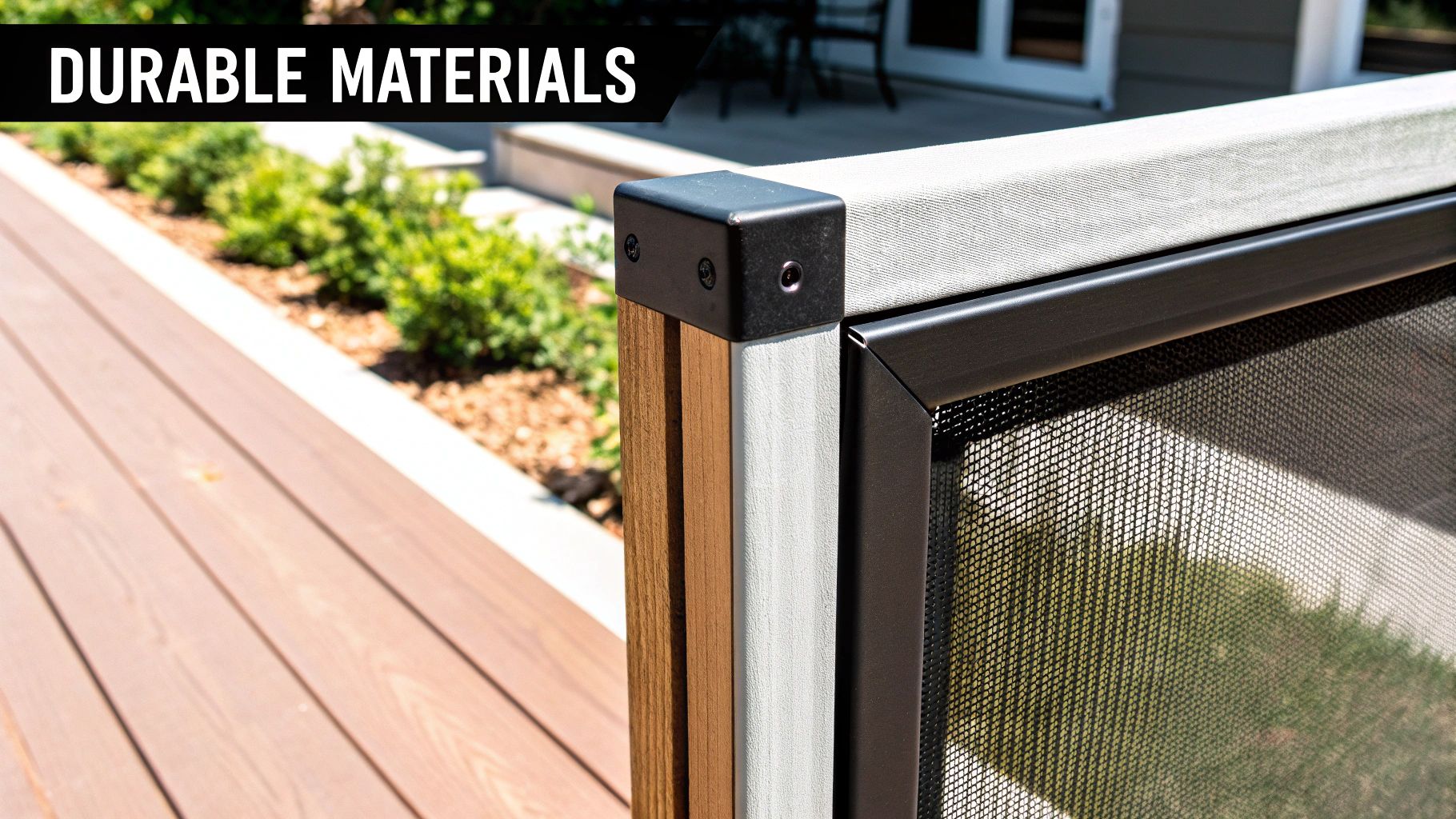
A screen lanai enclosure might seem simple, but its strength and longevity boil down to the quality of its parts. Think of it like building a house—if the foundation and framing are weak, nothing else matters. Choosing the right materials from the start is the single most important step you can take to make sure your investment holds up against Florida’s trifecta of intense sun, crushing humidity, and hurricane-force winds.
Get these choices right, and you’ll sidestep a world of costly repairs and premature replacements down the road.
The whole structure really comes down to three key players working in perfect harmony: the structural frame, the screen mesh, and the fasteners holding it all together. Let’s break down the best options for each.
The Gold Standard For Framing: Aluminum
When you’re building a screen enclosure in Tampa Bay, there’s really only one conversation to have about framing: rust-resistant aluminum. It's the undisputed champion, and for good reason. Our humid, salty air is a death sentence for materials like steel or untreated wood, which will corrode and rot in no time.
Aluminum, on the other hand, is naturally resistant to corrosion. It’s also lightweight enough to work with easily but engineered to be incredibly strong, giving it the structural integrity to stand firm against powerful winds.
Plus, unlike wood, aluminum won’t warp, rot, or become a buffet for termites. That means you get a low-maintenance frame that keeps its strength and good looks for decades.
While no single company dominates the screen enclosure industry on a global scale, the real magic happens at the local level. Here in Florida, the market is filled with experienced regional specialists who know exactly what our climate demands. They’ve seen what works and what doesn’t. You can dig deeper into these market dynamics in this screen enclosure industry report.
Selecting The Right Screen Mesh
The screen itself is the heart of your enclosure, and this is where you can really customize things to fit your lifestyle. The mesh you choose affects everything—visibility, durability, airflow, and even how hot your lanai gets. It's like picking the right tires for a car; what works for a daily commute isn't what you'd want for off-roading.
To help you decide, here is a quick comparison of the most common screen types you'll find.
- Fiberglass: Offers great visibility and airflow, making it ideal for general use on lanais and patios. It is the most affordable option.
- Pet-Resistant: This mesh is seven times stronger than standard fiberglass, making it perfect for homes with pets or active kids. It is a mid-range cost option.
- Solar Screen: This premium screen blocks UV rays and heat, which is excellent for west-facing lanais or homeowners focused on energy savings.
- No-See-Um: With its tiny weave, this screen stops even the smallest insects like gnats, making it ideal for properties near water. Its cost is mid-range.
Each of these options serves a unique purpose. Standard fiberglass is a great all-around choice, but if you have a dog that loves to lean on the screen, upgrading to a pet-resistant mesh is a no-brainer. If your lanai bakes in the afternoon sun, a solar screen can make a huge difference in comfort.
Choosing the right screen is a big deal. For a more detailed walkthrough, check out our guide on selecting the best screen for your porch to find the perfect match for your home.
Why Corrosion-Resistant Fasteners Matter
Now for the unsung heroes of your screen enclosure: the fasteners. These are the screws and bolts that hold the entire structure together, and they're often overlooked. In Florida's coastal air, using standard steel fasteners is a recipe for disaster. They will rust and fail, sometimes in just a couple of years, compromising the safety and stability of your entire enclosure.
Insisting on corrosion-resistant fasteners is completely non-negotiable.
These are typically made of stainless steel or have a special coating designed to handle constant exposure to salt and moisture. High-quality fasteners ensure every connection point stays tight and strong, which is critical for preventing panels from rattling loose or the frame from weakening during a major storm.
The True Lifestyle Benefits Of A Screen Enclosure
Sure, keeping mosquitoes and no-see-ums out is a huge win, but the real value of a screen lanai enclosure runs so much deeper than just bug protection. It’s a genuine lifestyle upgrade that completely changes how you use your outdoor space. Think of it as adding a whole new room to your home—one with a perfect breeze and the sounds of nature, just without all the classic Florida annoyances.
This one addition can take an often-ignored patio and turn it into the most popular spot in the house. It becomes a clean, comfortable, and protected retreat for everything from morning coffee and family dinners to just kicking back with a good book. This shift from "outside" to "outdoor living room" is so powerful that it's fueling a massive trend in home improvement.
The global screen enclosure market has exploded, hitting an estimated $2.5 billion in 2023. That boom is all about homeowners wanting functional outdoor living spaces that look great and feel comfortable. Experts expect this trend to keep climbing, with the industry projected to expand even more by 2028. You can get more insights on these market trends and how they affect your choices from our guide on the best screen for your porch.
A Sanctuary For Your Family
One of the biggest payoffs is creating a safer, more controlled environment for your loved ones. If you have young children or pets, a screen enclosure delivers priceless peace of mind.
It acts as a protective bubble, letting kids play freely without you constantly worrying about them wandering off or coming face-to-face with unwanted wildlife. Pets get to enjoy the fresh air and sunshine without the risk of bolting from the yard or getting into a scrap with a neighborhood animal. It instantly transforms your lanai into a true outdoor playroom.
An enclosure is more than just a structure; it's a boundary of safety. It allows the most vulnerable members of your family to experience the joys of the outdoors with an added layer of security, protecting them from pests, excessive sun, and other hazards.
That protected space also serves as a welcome shield from the sun’s punishing rays. The screen mesh filters out a good portion of the harsh UV radiation, which makes the area cooler and more comfortable while reducing the risk of sunburn. That means more time enjoying the Florida weather, safely.
Less Cleaning, More Relaxing
Imagine a pool and patio that stay clean with barely any effort. A screen lanai enclosure makes that happen by acting as a giant filter for your entire backyard.
It blocks the constant barrage of outdoor debris, which means you spend way less time on annoying chores and a lot more time actually enjoying your home. Here’s a quick rundown of what it keeps out:
- Leaves And Pine Needles: Your enclosure stops leaves, pine needles, and other yard gunk from cluttering up the patio and turning your pool into a swamp.
- Pollen And Dust: It dramatically cuts down on the amount of pollen and dust that settles on your outdoor furniture, a huge relief during allergy season.
- Wind-Blown Trash: The screen is your first line of defense against stray garbage and small debris blowing into your personal oasis.
For pool owners, this benefit is a game-changer. By keeping all that organic matter out of the water, an enclosure helps maintain a better chemical balance and reduces the strain on your pool filter. You'll save both time and money on upkeep. It’s a simple addition that delivers a cleaner, more pristine outdoor experience, day in and day out.
When To Repair Vs Rescreen Your Enclosure
Sooner or later, even the toughest screen lanai enclosure is going to show its age. The real question is whether you need a quick patch-up or a complete overhaul. Making that call between a simple repair and a full rescreen can feel tricky, but learning to spot the right signs will save you a ton of money and frustration down the road.
Getting it wrong is a recipe for headaches. For instance, fixing a single small hole from a stray golf ball is a no-brainer—it’s a smart, affordable fix. But trying to patch up old, brittle screening that’s already got a few tears? That’s just kicking the can down the road. You’re practically guaranteeing another rip will show up a few inches away next week.
When A Simple Repair Is The Best Option
A targeted panel repair is perfect for those one-off accidents. Maybe the dog got a little too excited, a tree branch fell, or the kids got careless with a toy. If you're looking at a clean tear in just one or two panels, a simple repair is all you need.
The key here is that the surrounding screen panels are still in great shape—they should feel flexible, look clear, and have no other damage.
Think of it like having a single cracked tile on an otherwise pristine floor. You wouldn’t rip up the whole room for one minor flaw, and the same logic applies here. A pro can swap out the damaged panel and make your enclosure look good as new without the cost of a full rescreen. You can learn more about how we handle this kind of targeted damage in our guide to screen enclosure repair.
This decision tree helps visualize why an enclosure is such a valuable part of your home in the first place.
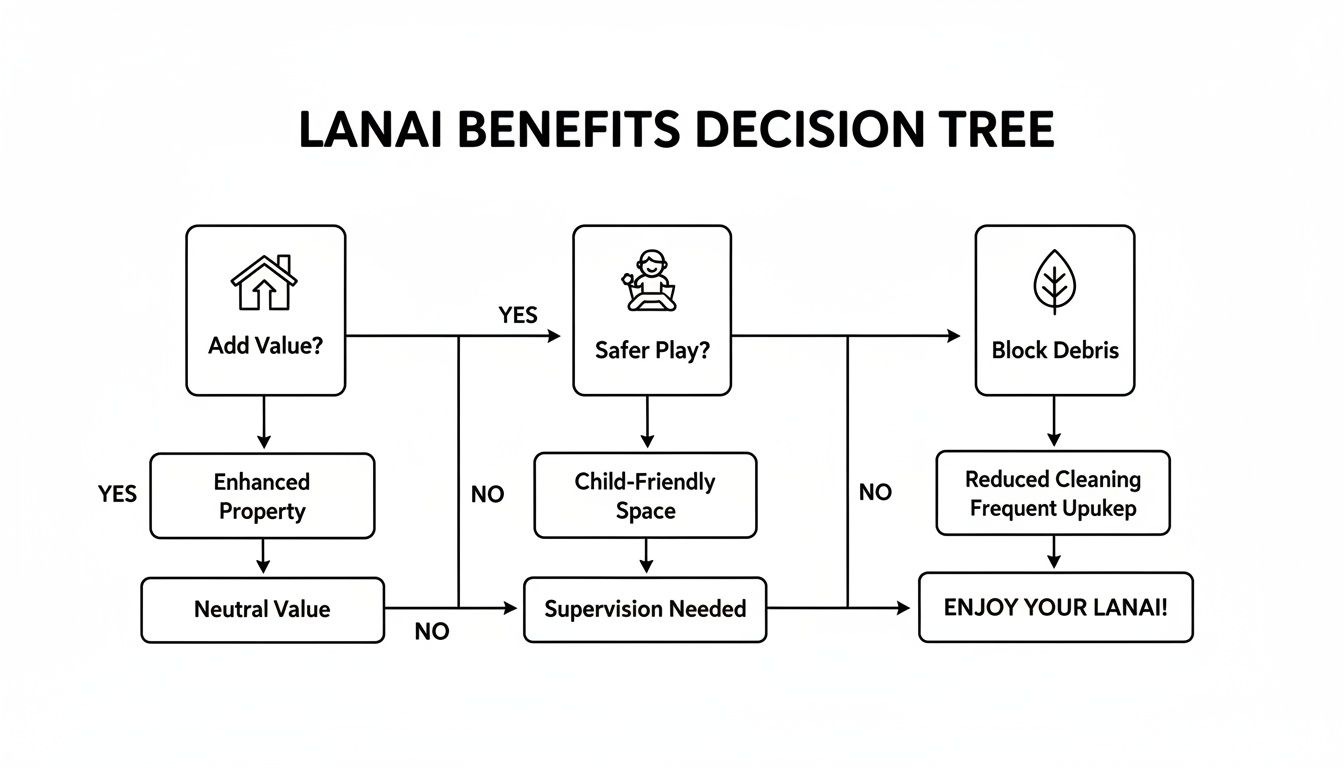
As you can see, it's about more than just keeping bugs out; it's about adding value, creating a safer space, and cutting down on yard work.
Why A Full Rescreen Is A Smarter Long-Term Investment
On the flip side, there are very clear signs that it’s time to stop patching and start over with a full rescreen. You’re not dealing with isolated accidents anymore; you’re seeing widespread, systemic failure. This happens when the screen material has simply reached the end of its life after years of battling Florida's sun and storms.
A complete rescreen is a restorative investment. It not only addresses all existing issues at once but also resets the clock on your enclosure's lifespan, ensuring consistent protection and appearance for years to come.
It's time to call for a full rescreen if you notice any of these red flags:
- Widespread Brittleness: The screen feels stiff, almost crunchy, and cracks when you press on it gently. It's lost its flex and is ready to tear.
- Multiple Tears Or Holes: If you're counting more than a handful of damaged panels, the material is failing everywhere.
- Fading And Discoloration: A chalky, gray, or faded appearance is the classic sign of UV damage, which means the fibers are weak and compromised.
Knowing when to fix your enclosure is half the battle, but good maintenance habits are what prevent these big decisions from sneaking up on you. These essential maintenance tips for rental properties offer some great general advice on upkeep that can stop small problems from turning into massive expenses.
Understanding Screen Enclosure Costs In Florida
Figuring out the cost of a new screen lanai enclosure is a big step, and it helps to think of it as a home investment, not just a purchase. The final price tag is a direct reflection of the quality, durability, and specific features you’re getting. Several key pieces come together to shape that final number, so it’s worth knowing what’s driving the cost.
The price isn’t just about the raw materials. It’s about the craftsmanship that goes into it, the complexity of the design, and the long-term value you get back. A simple patio screen-in is one thing; a complex, multi-story pool cage is another animal entirely. The scope of the project is always the biggest factor.
Major Factors That Influence The Price
Your final quote is really a blend of several moving parts. The most obvious one is the overall size of the structure—bigger areas naturally mean more materials and more labor, which bumps up the cost. But size is just the starting point.
The complexity of your home's architecture plays a huge role, too. A simple rectangular patio is far easier and quicker to enclose than a space with multiple angles, different roof heights, or custom cutouts. Those unique designs demand more intricate engineering and specialized work on-site.
A well-built screen lanai enclosure is an investment that pays dividends in both lifestyle and property value. Opting for higher-quality materials and professional installation from the start prevents costly repairs and ensures your outdoor space remains a beautiful, functional retreat for years to come.
The Impact Of Material Choices
The materials you choose are another critical piece of the puzzle. While aluminum is the go-to standard for the frame, the type of screen mesh you pick can really swing the price.
- Screen Mesh: Standard fiberglass mesh is the most budget-friendly option out there. But if you upgrade to specialty screens—like tough, pet-resistant mesh or heat-blocking solar screens—you'll see the cost per square foot go up.
- Hardware Quality: The little things holding it all together, the fasteners, are incredibly important. Standard fasteners are cheaper upfront, but here in our coastal climate, investing in premium, corrosion-resistant stainless steel hardware is a must. It’s what stops rust in its tracks and keeps the whole structure sound.
These choices directly affect both the initial bill and how long your enclosure will last. Getting familiar with the lanai screen replacement cost can also give you a good idea of what future maintenance might look like.
Realistic Cost Expectations For Tampa Bay
Here in Florida, the cost for a professional installation can vary quite a bit. Looking at the 2026 market, homeowners can generally expect to pay somewhere between $12 to $25 per square foot.
So, what does that look like in practice? For a standard, mid-sized project like a 1,500-square-foot pool cage, the investment often lands around $23,000. On the other hand, smaller patio enclosures might start closer to $8,000, while large, custom-designed structures can easily top $90,000. It’s also an investment that pays off, as screened lanais can recover 70-80% of their cost at resale and add serious value to your home. You can dig into more detailed numbers in this 2026 Florida market analysis.
How To Choose The Right Tampa Bay Contractor
Let’s be honest: the quality of your screen lanai enclosure comes down to one thing—the skill and integrity of the contractor you hire. This is the single most important decision you'll make in the whole process. A great contractor leaves you with a structure that stands strong for years, while a bad one can trap you in a cycle of endless repairs, safety issues, and financial headaches.
Trying to find a trustworthy pro in the Tampa Bay market can feel like a huge task, but a little homework goes a long way. If you know what to look for and what questions to ask before signing a contract, you can confidently find a partner who will protect your investment and deliver results you’ll love.
Verify Licensing And Insurance
This is your first move, and it's completely non-negotiable. Any legitimate contractor operating in Florida must be properly licensed and insured. Don't just take their word for it—ask for proof and take a minute to verify it yourself. Proper licensing proves they meet state and local standards for competency.
Just as important is confirming they have both general liability insurance and workers' compensation. Liability insurance protects your property if something gets damaged during the project. Workers' compensation covers their crew if someone gets hurt on your property, shielding you from any legal or financial fallout.
Hiring an unlicensed or uninsured contractor is a massive gamble with your home and your money. Any money you think you're saving upfront isn't worth the risk of shoddy work or being held liable for accidents.
Scrutinize Reviews And References
Online reviews give you a peek into a company’s track record. Look for a contractor with a steady history of positive feedback across different websites. Pay extra attention to comments about communication, punctuality, and how they handled any problems that popped up during a job.
But don't stop there. Ask the contractor for a list of recent, local references—and actually give them a call. Talking directly with past clients gives you invaluable insight into what it’s really like to work with them. This helps you understand not just the quality of their screen work but their professionalism from start to finish. A quick search for "screen repair near me" is a good way to find highly-rated pros in your area to start your list.
Demand A Detailed Written Estimate
Never, ever accept a vague quote or a handshake deal. A true professional will provide a detailed, itemized estimate in writing that spells out every part of the project. Think of this document as your project's roadmap; it should leave no room for surprise costs down the line.
A proper estimate should always include:
- Scope of Work: A clear description of the project, including dimensions and design details.
- Material Breakdown: The specific type and grade of aluminum, screen mesh, and fasteners they'll use.
- Labor Costs: The total cost for the installation team's time and skill.
- Payment Schedule: A breakdown of when payments are due.
- Project Timeline: An estimated start date and completion date for your screen lanai enclosure.
Inquire About Warranties And Materials
A reputable contractor will always stand behind their work. Ask them directly about the warranties they offer, both on their labor and on the materials they install. A solid warranty is a clear sign of their confidence in their craftsmanship and the products they use.
This is also the perfect time to confirm they use high-quality, corrosion-resistant materials built for the Tampa Bay climate. Ask if they use stainless steel or other coated fasteners designed to prevent rust. The principles for vetting a contractor are universal across home improvement projects. For example, learning how to choose a roofing contractor you can trust offers great insights that apply here, too—verifying credentials and insisting on quality materials is always the right move.
Picking the right contractor requires you to ask pointed questions. Here’s a quick checklist to help you cover all the important bases when you're interviewing potential companies.
- Licensing & Insurance: "Can you provide a copy of your state license and certificates of insurance for liability and workers' comp?" This is a non-negotiable first step to verify they are legitimate and that you are protected from liability.
- Experience & Portfolio: "How many years have you been installing screen enclosures specifically in the Tampa Bay area?" and "Can I see photos of your recent projects?" Local experience means they understand coastal weather and building codes.
- Materials & Sourcing: "What grade of aluminum do you use?" and "What kind of fasteners do you use to prevent rust?" This ensures they use high-quality, corrosion-resistant materials suitable for Florida’s climate.
- Estimates & Contracts: "Can you provide a detailed, itemized written estimate?" A detailed contract prevents surprise costs and protects both you and the contractor by setting clear expectations.
- Timeline & Process: "What is the estimated start and completion date?" and "Who will be my main point of contact?" A clear timeline and communication plan helps the project run smoothly.
- Warranty & Guarantees: "What kind of warranty do you offer on your labor and the materials used?" A strong warranty shows the contractor stands behind their workmanship.
- References: "Could you provide me with 3-4 recent, local references I can contact?" Speaking with past customers is the best way to get an unbiased opinion on their professionalism and quality.
By asking these questions, you empower yourself to make an informed decision, ensuring you partner with a contractor who will build a beautiful and durable screen lanai enclosure that you and your family will enjoy for years.
Got Questions? We've Got Answers
Thinking about a new screen lanai enclosure? It’s a great investment, but it’s natural to have a few questions bubble up. From how long it takes to build to whether you need a permit, we hear the same great questions from homeowners all the time. Here are some clear, straight-up answers to help you plan your project with confidence.
How Long Does Installation Take?
You might be surprised at how fast a new enclosure can come together. For a standard-sized lanai or patio, our crew is typically on-site and working for about two to five days.
Of course, the whole process is a bit longer than just the construction. We also need to factor in the initial consultation where we nail down the design, plus ordering your materials and pulling the permit. All told, a little planning on the front end adds about a week or so before the real magic starts.
Will I Need A Permit For My Enclosure?
In the Tampa Bay area, the answer is almost always yes. Because a screen enclosure is a structural addition to your home, local municipalities require a building permit. This isn't just red tape—it's to make sure your new structure is built to code and can handle Florida's intense wind and weather.
Don't worry, a professional and licensed contractor will handle the entire permitting process for you. They’ll submit all the required engineering plans and paperwork to your local building department, making sure everything is 100% compliant. Trying to skip this step can cause major headaches later, including big fines and problems when you go to sell your house.
Think of a building permit as your project's quality assurance. It guarantees that your enclosure is being built to withstand Florida's unique weather challenges, protecting both your investment and your family's safety. This step is a critical part of a professional installation.
How Do I Clean My Screen Enclosure?
Keeping your enclosure looking great is pretty simple. For a quick, routine cleanup, a gentle rinse with a garden hose is usually all it takes to wash off everyday dust, pollen, and leaves.
If you're dealing with more stubborn grime or a bit of mildew (it happens here in Florida!), you can use a soft-bristle brush with a mild mix of soap and water. The key is to avoid harsh chemicals or a high-pressure power washer, as both can strip the protective coating off the screen and damage the material. A little gentle cleaning now and then will keep your views crystal clear and help your screens last for years.
Can An Enclosure Withstand A Hurricane?
This is the big one, and for good reason. Modern screen enclosures built to Florida's current building codes are engineered to be incredibly resilient against high winds. While nothing is truly "hurricane-proof," a professionally installed enclosure is designed to hold its own. The secret lies in proper engineering, high-quality aluminum framing, and using corrosion-resistant fasteners that won't give up under pressure.
Interestingly, the screen panels themselves are designed to be a point of release. In a major storm, it's actually better for a few screen panels to tear. This allows extreme winds to pass through the structure instead of pushing against it like a giant sail, which helps protect the main aluminum frame from collapsing.
Ready to transform your outdoor space into a bug-free, comfortable retreat? The team at Rescreen Rescue has over 20 years of experience building and repairing beautiful, durable screen enclosures across the Tampa Bay area. Contact us today for a free, no-obligation estimate and see how easy it is to upgrade your home. Get Your Free Estimate from Rescreen Rescue