


Your screened-in lanai or pool cage is your personal slice of the Florida lifestyle. It’s where you relax, entertain, and enjoy the outdoors without the bugs. But even a tiny tear in a screen panel can ruin that vibe fast.
Treating screened enclosure repair as a priority isn't just about fixing an eyesore—it's a crucial investment in your home and your peace of mind. When you ignore a small hole, you're essentially inviting bigger, more expensive problems to move in.
Why Timely Screened Enclosure Repair Is a Must
Think of your enclosure's screen as the gatekeeper for your outdoor sanctuary. Its one job is to keep pests, leaves, and debris out while letting that perfect Florida breeze roll in. The moment a panel gets torn, loose, or damaged, that protective barrier is gone. Suddenly, you're sharing your patio with mosquitos, lovebugs, and whatever else the wind blows in.
Putting off that repair creates a nasty domino effect. A small rip catches the wind and transforms into a gaping hole, putting serious strain on the entire panel. That tension then starts pulling on the aluminum frame and fasteners, which can lead to structural damage over time. What could have been a quick, simple patch job mushrooms into a full-panel replacement or even a complete rescreening project.
It's All About Protecting Your Property Value
In the Tampa Bay housing market, a pristine screen enclosure is a huge selling point. It boosts your curb appeal and adds real, tangible value to your home. On the flip side, an enclosure with sagging screens, obvious tears, or rusty hardware can drag down your property's appeal and might even get called out during a home inspection.
Don't think of it as an expense. Proactive maintenance is an investment in one of your home's most-used and most-loved features. By handling repairs right away, you keep your enclosure a major asset, not a liability.
This obsession with perfect outdoor living spaces has created a massive industry. The global market for screen enclosures hit about $2.5 billion in 2023, driven by homeowners in sunny spots like ours who want a bug-free way to enjoy their homes. And with experts predicting that market will grow to $3.5 billion by 2028, it's crystal clear these structures are highly valued. You can find more insights into the screen enclosure market's growth here.
Keeping Your Family Safe and Your Space Enjoyable
Beyond looks and value, a secure enclosure is just plain safer. A torn screen is an open invitation for unwanted wildlife, from curious raccoons to slithering snakes, to wander into your pool or patio area. It also means your pets aren't safely contained anymore, which is a hazard you can't afford.
Ultimately, prompt screened enclosure repair makes sure your outdoor space stays exactly what you built it for: a beautiful, safe, and relaxing retreat for you and your family to enjoy all year long.
Diagnosing Common Screen Enclosure Damage
Think of your screen enclosure like a finely tuned machine—every part works together. When one component starts to fail, it puts extra stress on everything else. That’s why getting the diagnosis right is the single most important step in any screened enclosure repair. It’s the difference between a quick patch and a solution that actually lasts.
Spotting damage is about more than just finding an obvious tear in the mesh. Here in Tampa Bay, with our humid, salty air, problems often creep in quietly and get worse over time. If you can learn to spot these early warning signs, you can tackle issues before they spiral into major structural headaches.
This simple flowchart lays out the basic decision-making process when you discover damage.
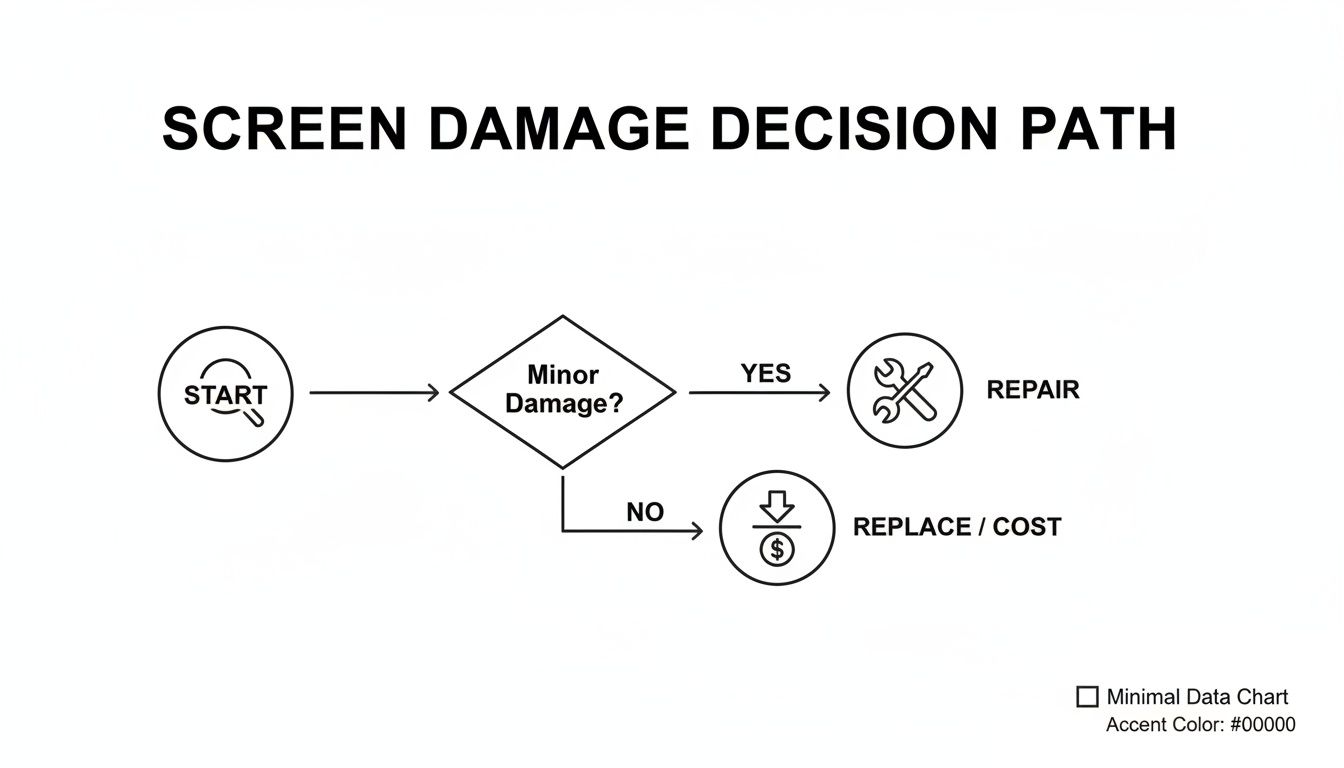
As you can see, the first thing to do is figure out how bad the damage really is. That will tell you whether a simple repair will do the trick or if you need to think about a more serious replacement.
Screen-Related Issues From Rips To Brittleness
The most obvious problems you’ll see are with the screen mesh itself. While a rogue golf ball or an overly enthusiastic dog can cause a sudden rip, it’s usually the relentless Florida sun that’s the silent killer of screen panels. Year after year, those UV rays break down the screen material, leaving it brittle, weak, and ready to tear.
You might notice the screen feels stiff to the touch or even cracks when you press on it. That brittleness is a dead giveaway that the panel is past its prime, and a simple patch just isn't going to hold. Sagging is another common problem, where the screen loses its tension and gets that droopy, wavy look. It's not just an eyesore; it puts a ton of strain on the spline holding the screen in place.
Here's a quick rundown of the most common screen issues we see:
- Small Punctures and Tears: Usually caused by an impact. These little holes can sometimes be patched if the screen around them is still in decent shape.
- "Running" Screens: Just like a run in a stocking, a tiny hole can quickly stretch into a long, vertical tear, especially on older, sun-beaten screens.
- Faded and Brittle Panels: If your once-black screens now look like a chalky gray, they've got significant sun damage. They're basically ticking time bombs, ready to rip at the slightest touch.
- Sagging or Loose Screens: This points to a loss of tension. It could be from a failed spline, stretched-out material, or even a shoddy installation from the start.
If you’re noticing several panels with these problems, it’s almost always more cost-effective to go for a full rescreen. You can learn more about spotting these issues in our guide on common screen issues and their solutions.
Structural and Hardware Problems
While the screen gets all the attention, the aluminum frame and the hardware holding it all together are the true backbone of your enclosure. If there's damage here, the safety and integrity of the entire structure are at risk. And in our coastal climate, corrosion is public enemy number one.
Many builders cut corners by using standard steel screws, which are guaranteed to rust when exposed to salt and moisture. That rust then expands, staining your aluminum frame and weakening the connection points. Eventually, those fasteners can fail completely, especially during a heavy storm.
A tell-tale sign of hardware failure is the appearance of reddish-brown streaks running down the aluminum frame from the screw heads. This is a clear signal that the fasteners are corroding and need to be replaced with high-quality, corrosion-resistant options.
Faulty doors are another constant source of frustration. A screen door that won't close right, drags on the ground, or has a broken latch is more than just an annoyance. It’s a safety hazard that defeats the whole purpose of the enclosure—keeping pests out and keeping pets and little ones in.
When you're dealing with extensive damage, proper documentation is key, especially if you plan to file an insurance claim after a storm. A guide to a thorough property damage assessment can be a huge help here. Paying close attention to these structural details ensures your repair gets to the root cause, not just the symptom.
Understanding The Cost Of Screen Enclosure Repair
Budgeting for any home repair can feel like you're trying to hit a moving target, and screen enclosure work is no exception. The final invoice isn’t just a flat rate pulled out of thin air; it’s a combination of several key factors. Once you understand these variables, the quoting process becomes much clearer, and you'll see why a cheap, quick fix today often leads to a much bigger—and more expensive—headache tomorrow.
Think of a repair quote like a recipe. The final cost depends entirely on the ingredients you choose and how complex the job is. The biggest factors are always the size of the repair, the quality of the materials, and the amount of skilled labor needed to get it done right.
Key Factors That Influence Your Final Cost
No two screen repair jobs are exactly the same. Fixing a single torn panel on a ground-floor lanai is a completely different ballgame than a full rescreen of a two-story pool cage that requires specialized equipment.
Here are the main elements that will shape your estimate:
- Scope and Size of the Damage: A few small holes from a weed whacker might just need some minor attention. But replacing multiple large, brittle panels is a much more involved project. The total square footage of screen needing replacement is a primary driver of cost.
- Accessibility of the Damaged Area: A panel that’s easy to reach from the ground will always cost less to repair than one way up on the roof. High-up repairs require special ladders, safety gear, and more time, which naturally affects the price.
- Choice of Screen Material: Standard fiberglass screen is the most budget-friendly option, and it works fine for many situations. However, investing in premium materials like tough, pet-resistant screens or high-visibility "super screens" will increase the initial price but pays off with far superior durability and longevity.
- Structural and Hardware Condition: Sometimes the job is more than just screen. If we need to replace rusted, failing fasteners with new corrosion-resistant ones or fix a bent frame member, those structural repairs will add to the overall cost.
It's crucial to see this not just as an expense, but as an investment in your enclosure's long-term health. Opting for the cheapest materials and fasteners, especially in our salty Tampa Bay air, is a recipe for rust, premature failure, and having to do this all over again in just a few years.
Realistic Cost Ranges For Common Repairs
Having a ballpark idea of what to expect makes the budgeting process a whole lot smoother. While every project has its own unique quirks, we can look at some industry averages to set realistic expectations.
Data shows that repairing a pool screen enclosure typically costs an average of $922, with prices ranging anywhere from $297 for minor tears to over $1,586 for more extensive damage. This really highlights the benefit of tackling small issues right away before they escalate. A full rescreen can run $7-$9 per square foot. Here in a high-demand area like Tampa Bay, a complete rescreen for a standard 500-square-foot enclosure might range from $3,500 to $4,500. You can find more details about these costs and how they're calculated by exploring average repair pricing on Angi.com.
Why Professional Labor Is A Smart Investment
The cost of labor is another critical piece of the puzzle. While it can be tempting to just find the cheapest hourly rate out there, skilled labor is what guarantees a lasting, high-quality result. Professional technicians bring efficiency, safety, and expertise that a general handyman or a DIY attempt just can't match.
Getting the screen tension right, for example, is an art form. A screen that’s too loose will sag and look sloppy within weeks. One that's too tight puts constant strain on the frame and the spline, leading to premature rips and tears. An experienced professional knows exactly how to achieve that perfect, drum-tight finish that not only looks great but also stands up to Florida’s wind and weather. You're paying for a durable, clean, and worry-free result that protects your investment for years to come.
To get a better sense of what a full rescreening project involves, check out our detailed guide on the cost to rescreen a pool enclosure.
DIY Repair Versus Hiring A Professional
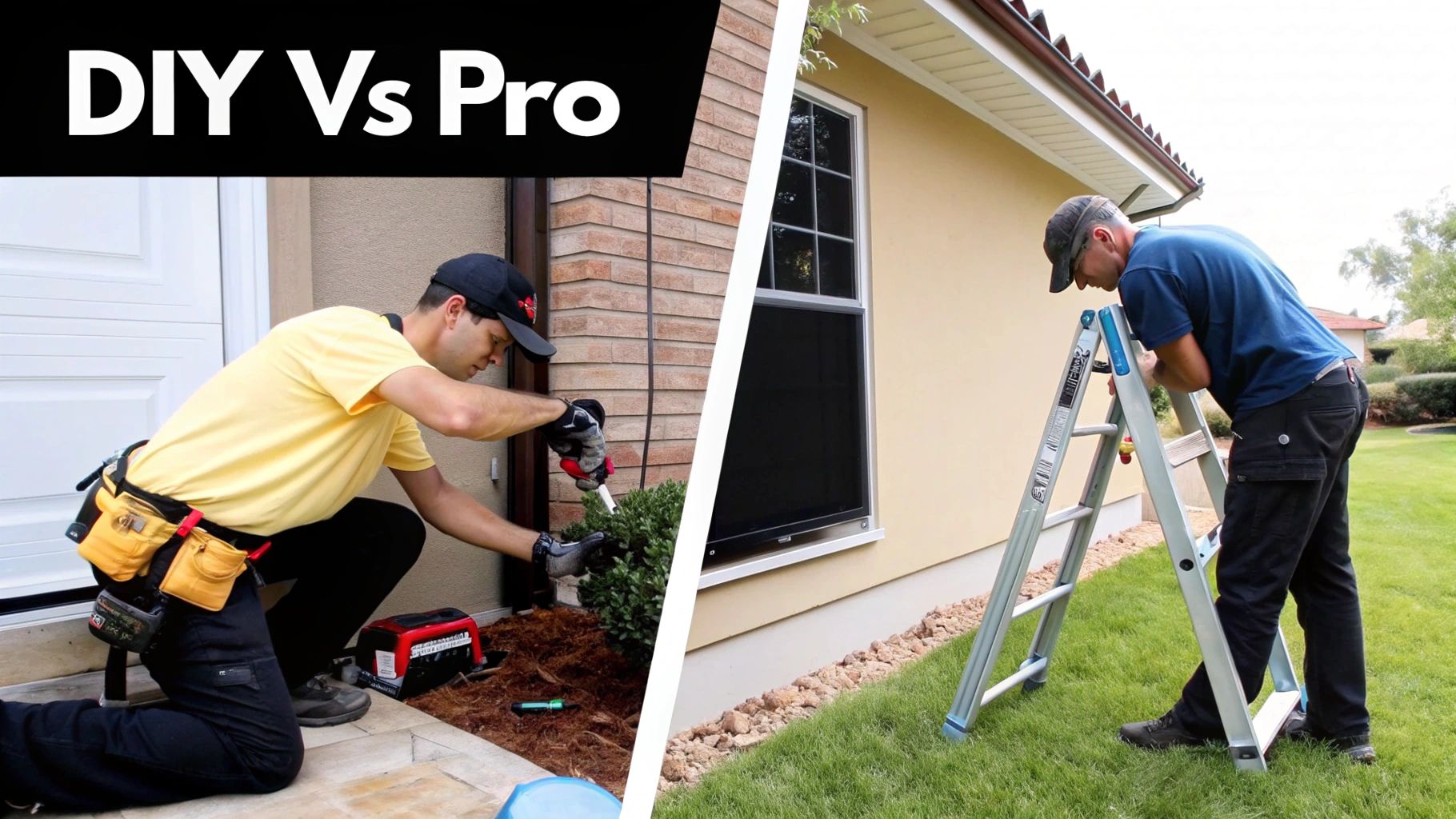
The do-it-yourself spirit is strong in Florida, especially when a repair looks simple enough to save a few bucks. And when it comes to screened enclosure repair, tackling a tiny tear yourself can feel like a satisfying weekend project. But the line between a quick patch and a complicated, potentially dangerous job is much finer than most homeowners think.
As you weigh "DIY Repair Versus Hiring A Professional," it's tempting to try your hand at minor fixes. For a small hole in an easy-to-reach lanai screen, some DIY resources can be a great starting point. The problem is, restoring a large panel on a two-story pool cage is a completely different ballgame.
What starts as a simple screen replacement can quickly turn into a frustrating lesson in physics and material science. One of the biggest hurdles? Getting the screen tension just right—a skill that even seasoned pros spend years perfecting.
The Art And Risk Of DIY Screen Repair
Think of a DIY enclosure repair like this: topping off your car's washer fluid is easy and low-risk. Trying to rebuild the engine, on the other hand, requires specialized tools, deep knowledge, and a precise touch to avoid making things worse. A botched screen repair often creates more problems than it solves.
Here are a few common pitfalls we see from DIY attempts:
- Improper Tension: This is the big one. Screens installed without the perfect amount of tension will sag, ripple, and look unprofessional almost immediately. It doesn't just ruin your view; it also puts uneven stress on the frame and spline, causing them to fail sooner.
- Wrong Materials: Our Florida climate is absolutely brutal on outdoor materials. Using a generic, low-grade screen or the wrong size spline from a big-box store often means it will turn brittle and fail within a year or two under the relentless UV exposure.
- Serious Safety Hazards: The most critical risk is your own safety. Teetering on a tall ladder while trying to stretch and secure a huge screen panel is incredibly dangerous. One slip can turn a money-saving project into a costly medical emergency.
The real cost of a failed DIY repair isn't just the wasted materials. It's the lost weekend, the frustration, and often, paying a professional to fix the original problem plus the new one you accidentally created.
The Value Of Professional Craftsmanship
Hiring a seasoned professional is about more than just getting the job done right. It's an investment in your peace of mind, your safety, and a final result that actually lasts. A pro technician shows up with the right tools, high-quality materials built for our local climate, and the experience to handle any curveballs that pop up.
They understand the nuances of working with aluminum frames and different screen types, guaranteeing a flawless, drum-tight finish that boosts your property's value. Plus, professionals carry the proper licensing and insurance, protecting you from any liability. That's a crucial safeguard a DIY approach simply can't offer.
Ultimately, the goal is a beautiful, durable, and secure outdoor space. A professional screened enclosure repair ensures that outcome, saving you stress and the risk of a costly do-over. If you're dealing with a tiny tear on a porch or patio screen, you can learn more about how to repair small holes in our guide. For anything more substantial, let an expert handle it so your enclosure remains a perfect, worry-free retreat.
Preparing Your Enclosure For Hurricane Season
Here in Florida, getting ready for hurricane season is just a part of life. If you have a lanai, porch, or pool cage, that yearly ritual absolutely has to include checking on your screened enclosure. Think of your enclosure as a giant sail—in high winds, it can catch an incredible amount of force. A little proactive screened enclosure repair now can be the difference between a few minor fixes and a total structural failure later.
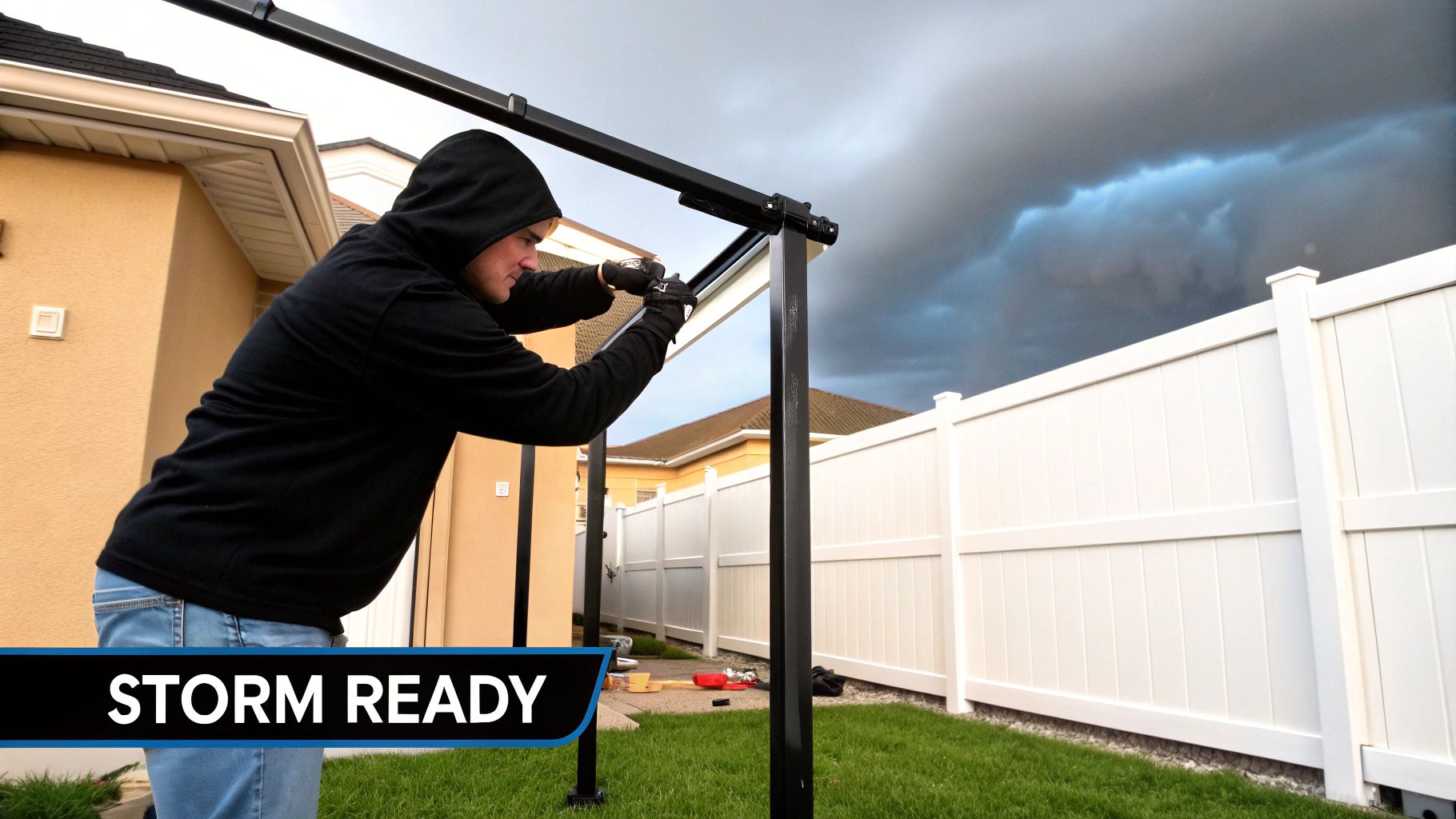
Before the season really gets going, a pre-storm inspection is your single best defense. The idea is to find and fix any weak spots before Mother Nature does it for you, turning a small problem into a very expensive disaster.
Your Pre-Hurricane Season Checklist
Take a slow walk around and inside your enclosure, and really look closely for any signs of trouble. Even a tiny vulnerability can compromise the whole structure when it's up against hurricane-force winds.
- Check Screen Tension and Integrity: Look for any screen panels that are loose, sagging, or feel brittle to the touch. A small hole can get ripped wide open by a strong gust, which puts a massive strain on the frame.
- Inspect All Fasteners: Get up close and examine every screw and bolt holding the frame together. See any rust or corrosion? Those reddish-brown streaks are a huge red flag that your fasteners are failing and need to be replaced ASAP.
- Examine the Frame: Scan the aluminum for any bent or damaged sections. Pay special attention to where the enclosure is anchored to your house or concrete slab—you want to make sure those connections are rock-solid.
- Clear the Surrounding Area: Trim back any tree branches hanging over the enclosure that could snap and fall. Make a plan to secure your outdoor furniture, grill, and potted plants so they don't become dangerous projectiles.
Taking these steps isn't just about preventing damage—it's about protecting your investment. A well-maintained enclosure is far more likely to ride out a storm, saving you from the headache and cost of major repairs after the fact.
Navigating Post-Storm Damage And Repairs
Once a storm has passed and it's safe to head outside, the next job is to assess the damage. This is where you need to be meticulous, because documenting everything is key, especially if you plan on filing an insurance claim.
Hurricanes can be brutal on these structures. It's no surprise that in Florida's high-risk areas, the demand for screened enclosure repair goes through the roof after a big storm, with an estimated 40-50% of pool cages needing some kind of fix. Hurricane Ian in 2022, for example, damaged over 100,000 enclosures across the state. While an average post-storm repair in Tampa might run you $400 to $1,500, that’s a whole lot better than the $20,000 or more for a full replacement.
After you've taken plenty of photos and videos, your next call should be to a professional. A trained eye can spot hidden problems like structural stress or weakened connections that are easy for a homeowner to miss. This makes sure all the damage is found and fixed, getting your enclosure back to being safe and sound. For more great advice, check out our guide on how to protect your screens during natural disasters and hurricanes.
How To Choose The Right Screen Repair Contractor
Picking the right partner for your screened enclosure repair is probably the single most important decision you'll make in this whole process. It's the difference between a durable, professional-looking job and a frustrating cycle of recurring problems and wasted money. Think of it like hiring a mechanic for a classic car; you want a specialist who knows the machine inside and out, not just a generalist with a basic toolkit.
Your goal is to find a trustworthy expert who stands behind their work. This simple vetting process will help you filter out the unqualified providers and hire someone with total confidence, knowing your outdoor space is in capable hands.
Verifying Credentials And Reputation
First things first, you need to confirm the company is legitimate and accountable. Whatever you do, don't skip this step—it’s what protects you from fly-by-night operations and potential liability headaches down the road.
- Licensing and Insurance: A reputable contractor must be fully licensed and insured, no exceptions. A license proves they meet Florida's requirements, while insurance protects you from any responsibility if an accident happens on your property. Always ask for a copy of both.
- Local Reputation: Look for a company with deep roots in the Tampa Bay community. A long-standing local presence is a great sign of stability and tells you they have a history of satisfied customers keeping them in business.
- Customer Reviews: Check recent, verifiable reviews on platforms like Google. You're looking for consistent themes about their punctuality, the quality of their workmanship, and their overall professionalism. One or two bad reviews happen, but a clear pattern of complaints is a major red flag.
A contractor’s willingness to provide their license and insurance info right away is a huge sign of transparency and professionalism. If they hesitate or give you excuses, it’s best to walk away and keep looking.
Asking The Right Questions
Once you have a shortlist, it’s time to dig into the nitty-gritty of their work. How they answer these questions will reveal a lot about their commitment to quality and whether their repairs will actually last.
- What materials do you use? Get specific. Ask about the screen mesh they recommend and, most importantly, the hardware. In our coastal climate, using standard steel screws is a recipe for rust and failure. A quality contractor will insist on using corrosion-resistant fasteners.
- What warranty do you offer? A professional company will always stand behind its work. Ask what kind of warranty they offer on both their labor and the materials they install. This gives you peace of mind and shows they have confidence in their own craftsmanship.
By using this checklist, you can confidently find a contractor who will get your enclosure restored correctly the first time. For more tips on finding a local expert, check out our guide on searching for a screened enclosure repair near me.
Questions We Hear All the Time About Screen Repair
When it comes to taking care of your outdoor living space, a few questions always pop up. Getting clear, straightforward answers helps you make the right call for your screened enclosure repair, so you can feel confident from start to finish. We’ve pulled together the most common questions we get from Tampa Bay homeowners about their lanais and pool cages.
How Long Does A Typical Screen Repair Take?
The timeline for any screen job really depends on what you need done. If it’s just a single, easy-to-reach screen panel that needs replacing, a technician could be in and out in less than an hour. A full rescreen on a standard-sized lanai is usually a one-day job.
But if you’re looking at a bigger project, like a full pool enclosure restoration that includes structural work, a fresh paint job, and a complete rescreen, that could easily take several days. Any reputable company will give you a clear, realistic timeline with your estimate so there are no surprises.
What Is The Best Screen Material For Florida?
For most homes here in sunny Florida, a standard 18/14 fiberglass mesh hits the sweet spot. It offers a great balance of durability, visibility, and protection from bugs. It's the go-to for a reason and holds up well for years.
Of course, your lifestyle might call for something a bit more specialized.
- Pet-Resistant Screens: Got dogs or cats? A tougher, tear-resistant "super screen" is a fantastic upgrade that can handle claws and paws without shredding.
- Golf Course Homes: This heavy-duty screen is also perfect if you live near a golf course—it's your best defense against those stray balls.
- Enhanced Views: If you want to make the most of that beautiful Florida view, there are specialty "better view" screens that are much finer and almost disappear from sight.
A good contractor will walk you through the pros and cons to help you pick the perfect material for your home and budget.
Is It Necessary For A Screen Repair Company To Be Licensed And Insured?
Absolutely, 100%. Hiring a licensed and insured contractor is non-negotiable—it’s all about protecting yourself. A license proves the company meets state and local standards for their work. The insurance protects you, the homeowner, from any liability if there’s an accident on your property. Always ask to see proof of both before you agree to anything.
Should I Expect A Warranty On Screen Repair Work?
You bet. A professional screening company should always stand behind its work with a solid warranty. Warranties can differ based on the type of service and the materials used, so it's smart to ask for the details upfront. A strong warranty gives you peace of mind and is a great sign that the company uses quality materials and trusts the skill of its team.
Ready to get your outdoor oasis back in shape? The experienced team at Rescreen Rescue is here to help with all your screened enclosure repair needs. We deliver fast, reliable service with top-quality materials to make sure your lanai or pool cage looks great and lasts for years to come. Get your free estimate today!