


That little tear in your screen enclosure? It’s easy to ignore. It feels a lot like that tiny chip in your car's windshield—no big deal, right? But here in the Tampa Bay area, with our intense sun, surprise downpour, and salty coastal winds, that minor issue has a bad habit of escalating into a major headache. Thinking ahead with screen enclosure repairs isn't just about appearances; it's a critical move to protect your home and your Florida lifestyle.
Why Screen Enclosure Repairs Are A Smart Investment
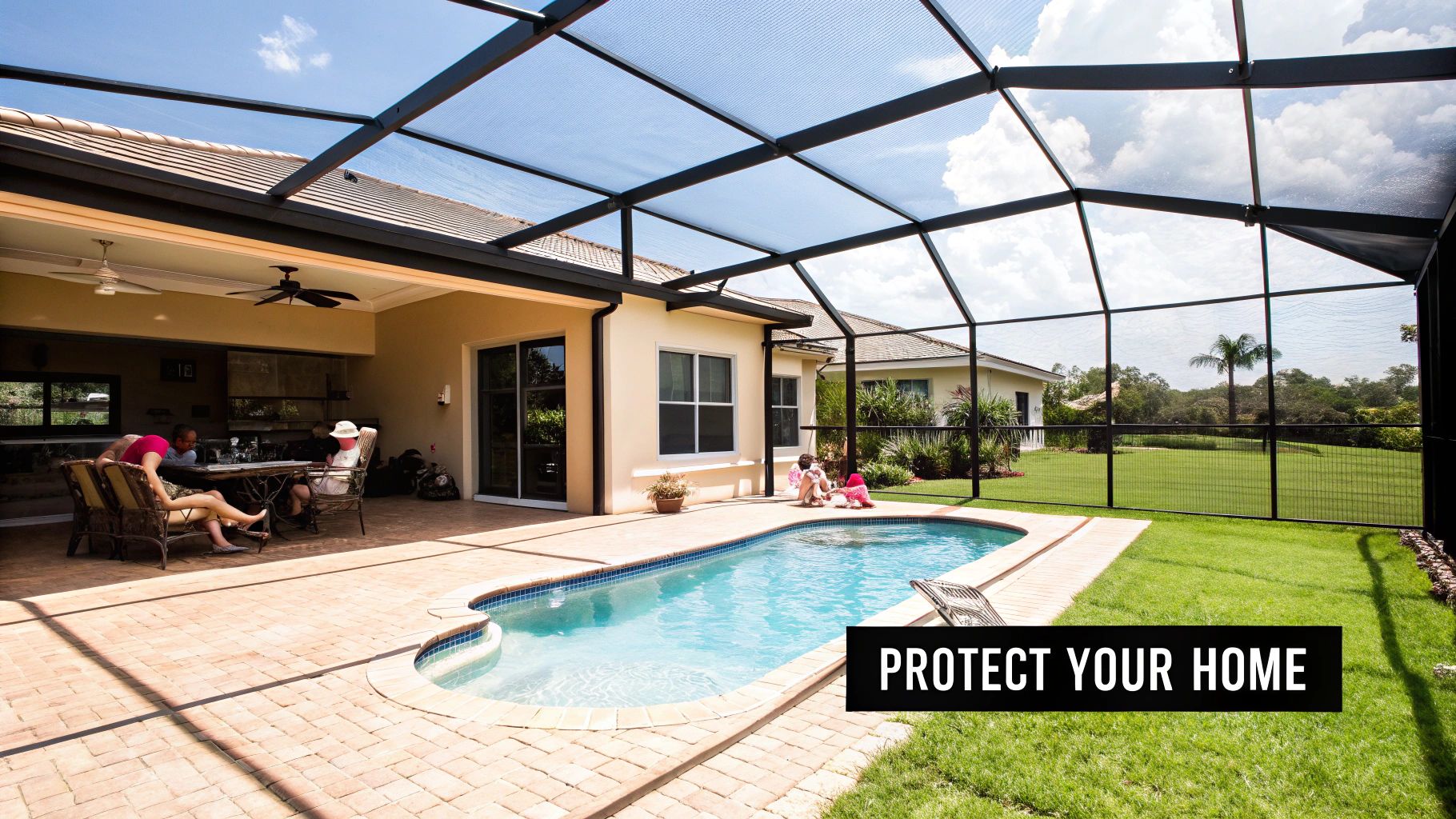
Your lanai, porch, or pool cage is your personal gateway to the outdoors—a bug-free, comfortable spot to soak up the best of Florida. The moment that screen is compromised, your sanctuary is at risk. Fixing damage right away isn't just another expense; it’s a direct investment in your property's health, safety, and long-term value.
Think of it as your first line of defense. A well-maintained enclosure does more than just stop annoyances; it's a protective barrier that keeps your outdoor living space exactly how you want it.
Protecting Your Home And Family
The most immediate win from timely screen repairs is pest control. Even a tiny hole is an open invitation for mosquitoes, no-see-ums, and other critters to crash your party. These pests aren't just irritating—they can carry diseases, putting your family and pets at risk.
And it’s not just about insects. A secure screen keeps out bigger unwelcome guests like snakes, frogs, and raccoons. It also stops leaves and pine needles from cluttering your patio or getting into your pool, which means less time cleaning and less strain on your pool’s filtration system.
Your enclosure is a complete system. When one part fails—like a single torn panel—it puts stress on the entire structure. Before you know it, you’re looking at more widespread and expensive damage down the road.
Preserving Your Property Value
A pristine screen enclosure gives your home a major boost in curb appeal and overall value. For homeowners in competitive markets like St. Petersburg and Clearwater, a beautiful, functional outdoor space is a huge selling point. On the flip side, a torn, sagging, or faded enclosure can scream neglect to potential buyers.
Investing in professional repairs shows you take pride in your home and assures buyers it’s been well cared for. As we’ve covered before, a full rescreen can directly improve the value of your home. Taking care of your enclosure is a simple step that can make a real difference during a home inspection and help you get a better return on your investment.
Preventing Costly Future Replacements
Putting off small screen repairs is a recipe for a much bigger bill later on. That one torn panel starts flapping in the wind, putting constant strain on the surrounding aluminum and the spline holding it in place. Over time, this can lead to bent frames or cause the panels next to it to loosen and sag.
What starts as a simple, cheap panel fix can quickly escalate into a full rescreen or even structural damage. By tackling repairs as they pop up, you seriously extend the lifespan of your entire enclosure. This proactive approach can save you thousands of dollars by preventing a premature and complete replacement, making sure your outdoor oasis remains a favorite part of your home for years.
How To Spot Common Screen Enclosure Damage
Think of your screen enclosure as the silent guardian of your outdoor living space. Like any good guardian, it takes a beating from Florida’s elements year-round. Learning to spot the early warning signs of wear and tear is the absolute best way to keep small issues from snowballing into major, expensive problems.
A simple visual inspection is your best friend here. At least once a season—and always after a big storm—take a slow walk around and inside your enclosure. Look at it from different angles and at different times of day. Something that seems invisible in the harsh midday sun might be glaringly obvious in the softer light of the morning or evening.
This quick check-up doesn't require any special tools, just your eyes and a bit of attention. It’s all about noticing the subtle shifts that signal your enclosure needs a little help.
Obvious Signs Of Screen Damage
Let’s start with the easy stuff. These are the problems you’ll likely spot without even trying, but it’s still important to understand what they mean for the health of your enclosure. Ignoring them is just rolling out the welcome mat for pests and waving goodbye to your enclosure's structural integrity.
Some of the most common and visible types of damage include:
- Punctures and Small Holes: Often the handiwork of playful pets, curious wildlife, or flying debris from a lawnmower. These tiny openings are basically an open invitation for mosquitoes and other annoying insects.
- Large Rips and Tears: This is classic storm damage. Strong winds can hurl branches or other objects right into your screen, creating significant tears that compromise entire panels.
- Sagging or Loose Panels: A screen panel should be taut, almost like a drum skin. If you see it bowing or rippling, it means the spline has lost its grip or the screen was never tensioned properly, putting extra stress on the aluminum frame.
A sagging screen panel is more than just an eyesore. It’s a sign of weakness. With each gust of wind, that loose panel acts like a sail, putting immense strain on the aluminum frame and fasteners, which can lead to more widespread damage over time.
The Sneaky Problems You Might Miss
While a giant tear is impossible to ignore, some of the most destructive issues are way less dramatic. These subtle signs of decay can silently undermine your enclosure's strength and longevity. Catching them early is absolutely key to getting the most life out of your structure.
Keep an eye out for these less obvious indicators of trouble:
- Faded and Brittle Screens: Florida’s intense UV rays are relentless. Over the years, screen mesh loses its flexibility and color, turning from a deep black to a chalky gray. A brittle screen is a weak screen, ready to tear with the slightest pressure.
- Corroded Screws and Fasteners: The salt air in our coastal communities is extremely corrosive. Look for rust-colored stains running down the aluminum frame from the screw heads. This is a dead giveaway that the fasteners are failing and losing their grip.
- Chalky or Peeling Paint: The factory finish on your aluminum frame is its main defense against the elements. If you run your hand along it and come away with a chalky residue, or if you see paint flaking off, the bare aluminum is exposed and vulnerable to corrosion.
Recognizing these issues is the first step toward smart maintenance. To dig a little deeper into these and other problems, you can learn more about common screen issues and their solutions. Taking action now will ensure your enclosure remains a beautiful, functional part of your home for years to come.
Understanding The Real Cost Of Screen Enclosure Repairs
Budgeting for home maintenance can feel like you're trying to hit a moving target. But when it comes to screen enclosure repairs, figuring out the financial side of things doesn't have to be a guessing game. The final price tag isn't just some random number; it's a direct reflection of a few key factors that shape the size and complexity of the job.
The biggest driver of your final cost is, without a doubt, the size of the damaged area. Fixing a single, small panel on your lanai is a world away from rescreening an entire two-story pool cage. It really just comes down to materials and time on the job—more space simply requires more screen and more hands-on work.
Key Factors That Influence Your Quote
Beyond just the square footage, the type of screen you choose makes a huge difference. While a standard fiberglass screen is a great, budget-friendly option for many Tampa Bay homes, you might want to upgrade to a specialty material that fits your lifestyle better.
- Pet-Resistant Screens: If you've got furry friends, this is a game-changer. These screens are much thicker and more durable, built to handle claws and paws. They cost a bit more upfront, but they'll save you a ton on frequent repairs down the road.
- Solar Screens: Designed to block a good chunk of the sun's intense UV rays, these screens can help keep your patio cooler and stop your outdoor furniture from fading. That extra protection comes with a higher initial investment, but the benefits are well worth it.
Another crucial piece of the puzzle is the state of your enclosure's hardware. It’s incredibly common for us to find that the original steel screws have completely rusted through. This not only leaves ugly rust stains on the aluminum but also weakens the entire structure. Swapping them out for corrosion-resistant fasteners is a non-negotiable part of a quality, long-lasting repair, and we'll always factor that into the quote.
For a deeper dive into the numbers, check out our guide on pool screen repair costs.
Estimated Screen Repair Costs Versus Full Replacement
To give you a clearer picture, let's look at what you can expect to pay for common repair jobs versus a full-blown replacement. As you'll see, being proactive with repairs makes a massive financial difference.
- Single Panel Repair: This is best for small, isolated tears from debris or accidents. You can typically expect a cost range of $150 – $350.
- Partial Rescreen (Multiple Panels): Ideal for addressing damage in a specific section, like the roof area. The cost usually falls between $500 – $2,500.
- Hardware & Fastener Replacement: Essential for fixing rust issues and reinforcing the structure's integrity. This service can range from $300 – $1,200.
- Full Enclosure Replacement: This is the solution for severe, widespread damage or when an enclosure reaches the end of its life. Costs often range from $10,000 – $30,000+.
The takeaway here is pretty clear: staying on top of smaller issues is the smartest way to protect your wallet and your property value.
The High Price Of Procrastination
Putting off a small repair might feel like you're saving a few bucks now, but trust me, it almost always bites you back with a much bigger bill later. A single torn panel isn't just a cosmetic issue; it throws off the tension across the entire structure, which leads to more sagging and can even damage the aluminum frame itself.
Delaying a minor repair is like ignoring a small leak under your sink. Eventually, you’re not just fixing a pipe—you're replacing the cabinet, the flooring, and dealing with potential mold. The initial problem is always the cheapest one to solve.
Let's talk numbers for a second. The global market for screen enclosures has ballooned into a $2.5 billion industry, which tells you just how vital these structures are to homeowners. Here in storm-prone Florida, repairs are a huge piece of that pie. A typical pool screen enclosure repair might run anywhere from $1,500 to $5,000. That's a lot more manageable than a full replacement, which often lands somewhere between $10,000 and $30,000. These figures really highlight why proactive maintenance is a no-brainer.
This chart breaks down the most common culprits we see causing that damage.
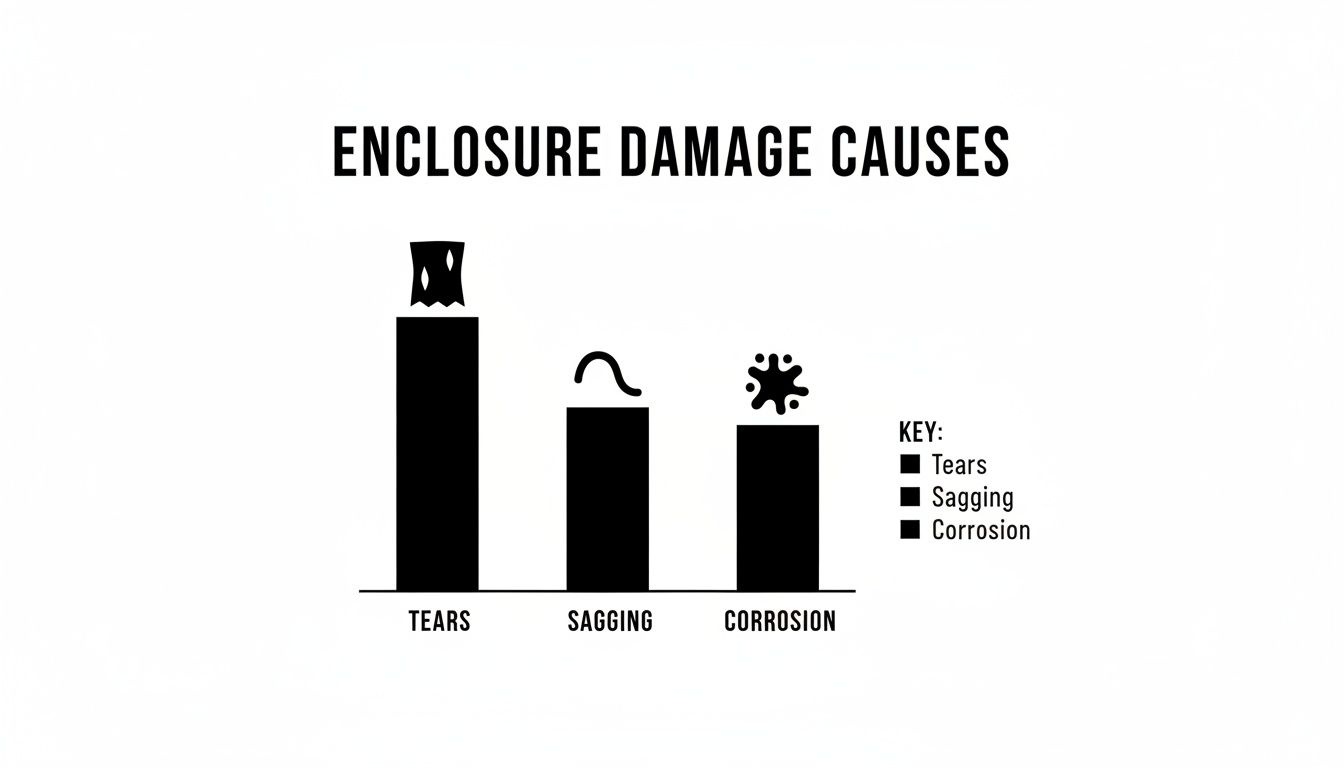
As you can see, tears, sagging, and corrosion are behind most of our repair calls. Each one needs a different game plan and comes with a different cost. For those of us living in hurricane alley, the "real cost" can also be tied to how well you handle your hurricane insurance claim. At the end of the day, making timely repairs doesn't just save you money—it ensures your enclosure is strong, secure, and ready for whatever the Florida skies throw its way.
The DIY Versus Professional Repair Decision
When you spot a small tear in your pool cage or lanai screen, the first thought is often, "I can fix that." A quick trip to the hardware store for a patch kit seems like a simple and cheap solution. And honestly, for a single tiny puncture, a DIY kit can sometimes work as a temporary fix.
But proper screen enclosure repair is a different beast altogether. Think of it like fixing your car—you wouldn’t rebuild the transmission just because you know how to top off the washer fluid. Too often, a well-intentioned DIY project ends up creating bigger, more expensive problems than the one you started with.
The Common Pitfalls of DIY Screen Repair
The single biggest hurdle in any screen replacement is getting the tension right. Professionals use specialized tools to stretch the screen until it’s perfectly taut, like a drum. Without that equipment and experience, you almost always end up with a loose, sagging panel.
A floppy screen doesn't just look sloppy. It acts like a sail in the wind, putting a ton of stress on the aluminum frame and leading to premature failure.
Beyond the sag, other common issues can turn your weekend project into a frustrating headache:
- Wrong Materials: Picking the right screen mesh and spline size is crucial. The wrong type will either not fit, tear easily, or have the spline pop right out after a few weeks in the Florida sun.
- Safety Risks: Many screen panels, especially on a two-story pool cage, are high off the ground. Juggling a heavy roll of screen, tools, and your balance on a ladder is a recipe for a dangerous fall.
- Hidden Damage: A pro will spot underlying issues you’d likely miss, like corroded fasteners or a bent frame section. Slapping a new screen on a compromised frame is like putting a band-aid on a broken bone.
A professional repair isn’t just about replacing a screen panel. It’s about restoring the entire structure to its original strength and function so it lasts for years. A DIY job, on the other hand, often just resets the clock on the next repair.
The Clear Advantages of Hiring a Professional
Bringing in an experienced team is an investment in getting the job done right the first time. It's about buying back your weekend and your peace of mind. For a simple fix on a ground-floor window, you might be fine—in fact, you can learn how to repair window screen holes yourself. But for large exterior enclosures, the pro touch is invaluable.
The advantages are pretty clear:
- Expertise and Efficiency: A professional crew has the muscle memory and tools to get that perfect, wrinkle-free tension every single time—and they do it fast.
- High-Quality Materials: We source commercial-grade screens and hardware built to handle the Tampa Bay climate. These materials consistently outlast the options you'll find at big-box retail stores.
- Guaranteed Workmanship: A reputable company stands behind its work with a solid warranty. If something isn't right with the repair, you're covered.
When weighing your options, don't forget that part of professional service is reliable communication. Many top companies use tools like contractor answering services just to make sure they never miss a client's call. Ultimately, going with a pro ensures your enclosure is safe, secure, and looks great, protecting your investment for the long haul.
A Look Inside Our Professional Repair Process
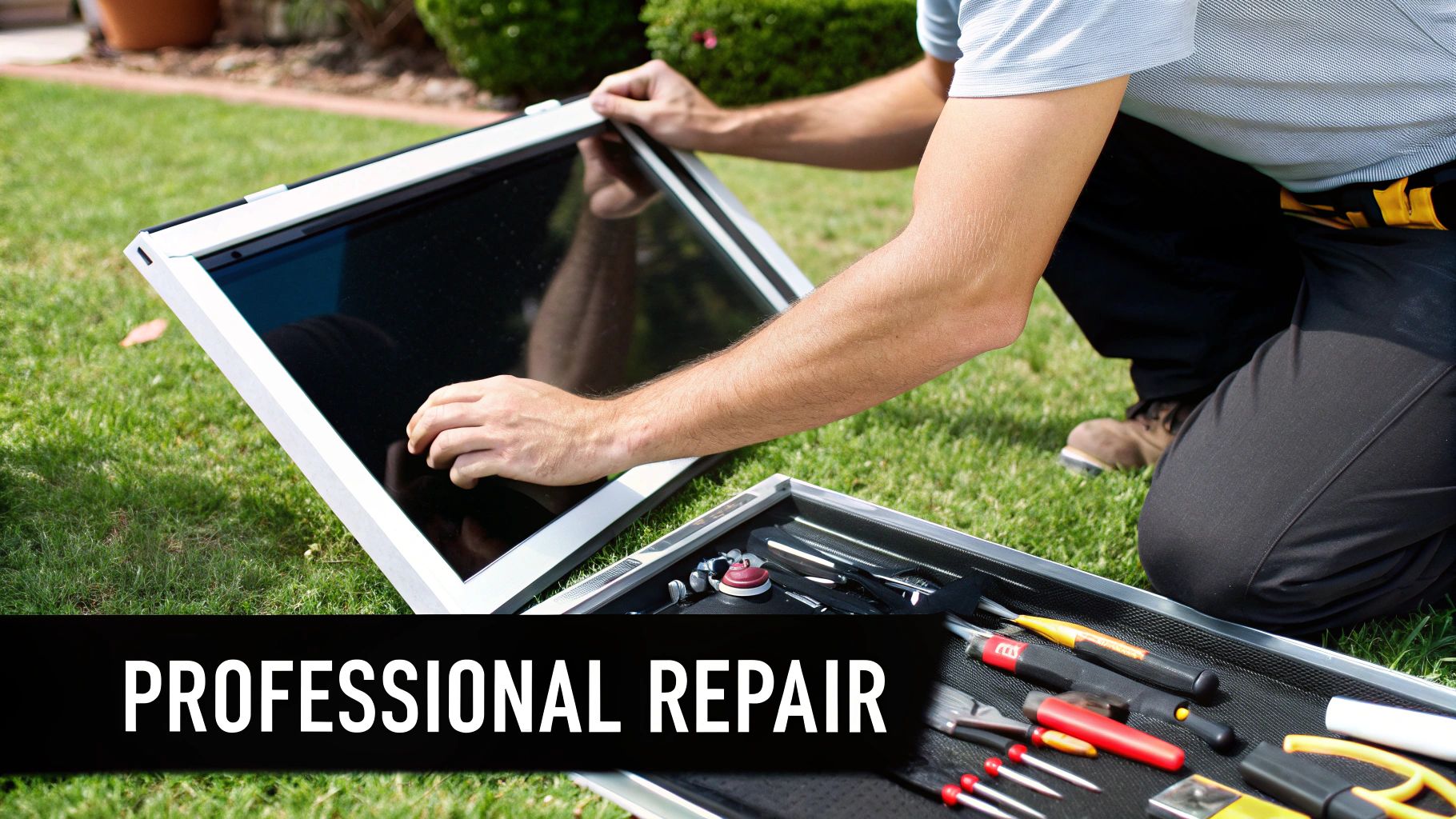
So, you’ve decided to bring in the pros for your screen enclosure repairs. What really happens next? It’s a lot more than just slapping a new piece of screen on a frame. A true professional repair is a detailed process meant to restore your enclosure’s strength, safety, and look for the long haul.
We believe you should know exactly what you’re paying for, so we’re happy to pull back the curtain on our entire process. Think of it as a well-choreographed dance, where every step builds on the last to give you a flawless result. It all starts with a simple conversation and a good, hard look at your enclosure.
Initial Consultation and Damage Assessment
First things first, we do a thorough inspection. When our technicians arrive, they’re not just looking at the obvious tear you called about. They’re evaluating the entire structure, hunting for those sneaky little signs of wear and tear that homeowners often miss—like rusty fasteners, screen mesh that’s gone brittle, or even tiny cracks in the aluminum frame.
This isn’t just a quick glance; it’s a full diagnostic. We want to find the root cause of the problem so our repair is a real solution, not just a band-aid. We’ll walk you through everything we find, explain your options in plain English, and give you a detailed, no-pressure quote right on the spot.
Selecting the Right Materials for Your Home
Once we know what needs to be done, we’ll help you pick the perfect materials for your home and lifestyle. Every Tampa Bay homeowner is different, and the right screen can make all the difference in the world.
We’ll break down the benefits of each screen type so you can make a smart choice:
- Standard Fiberglass Screen: This is the industry workhorse. It offers great visibility and solid durability for most lanais and pool cages.
- Pet-Resistant Screen: If you’ve got four-legged family members, this one’s for you. It’s a much thicker, vinyl-coated polyester screen that can handle claws, paws, and the occasional zoomie collision.
- Solar Screen: This specialized mesh blocks a huge chunk of UV rays. It’s perfect for keeping your patio cooler and stopping your outdoor furniture from fading in the Florida sun.
Choosing the right screen material is like picking the right tires for your car. You wouldn't use racing slicks for off-roading. Similarly, a family with a playful Labrador needs a different screen than a household seeking maximum sun protection. Our job is to match the material to your lifestyle.
The need for these specialized solutions is exactly why the screen repair industry is growing. Here in the U.S., the demand for professional screening services keeps climbing, especially in outdoor-living hotspots like Tampa Bay. In fact, Florida accounts for a huge piece of the national market—roughly 15-20% of all screen companies—thanks to how common pool cages and lanais are. That trend is even stronger in places like St. Petersburg and Clearwater, where storm damage can account for up to 60% of all repair jobs in a given year. You can read more about the growing screen repair market and its trends.
Precision On-Site Installation and Cleanup
With a plan in place and materials selected, our technicians get down to business. The actual on-site work is done with precision and an eye for safety. We start by carefully removing the old, damaged screen and the worn-out spline that holds it in the frame.
Next comes the new screen. We use professional-grade tools to get that signature drum-tight tension. Honestly, this part is an art form. If it’s too loose, the screen sags and flaps in the wind. Too tight, and you risk putting too much stress on the aluminum frame. While we’re at it, we also replace any corroded screws with high-quality, corrosion-resistant fasteners to lock in the structural integrity for years to come.
And we’re not done when the last panel is in. We do a full cleanup of the entire work area, hauling away all the old materials and debris. Our goal is simple: leave your property looking even better than when we arrived, with a beautifully restored enclosure ready for you to enjoy.
Simple Maintenance To Extend Your Enclosure’s Life
The best screen enclosure repair is the one you never have to make. While Florida’s sun and storms are tough on any outdoor structure, a simple and consistent maintenance routine can dramatically extend the life of your lanai or pool cage, pushing major repairs far into the future.
Think of it like caring for your car—small, proactive steps like regular washes and oil changes prevent huge, costly breakdowns. The same principle applies right here to your enclosure. A few easy habits will save you a ton of money and keep your outdoor retreat looking great.
Conduct Regular Visual Inspections
Your first and most powerful tool is your own two eyes. Make it a habit to walk around and inside your enclosure at least once a season, and always after a significant storm passes through. Look for small tears, panels that seem loose, or any rust stains starting to form around the screws.
Catching a small issue early is the key. A tiny puncture is a quick, easy fix. But if you leave it alone, the wind will eventually turn it into a gaping hole, compromising the entire panel and putting unnecessary stress on the frame.
Keep It Clean And Clear
Dirt, pollen, and especially the salt buildup from our coastal air are incredibly corrosive. Over time, these elements will eat away at both the screen mesh and the aluminum finish. A gentle cleaning twice a year can work wonders.
- Gentle Washing: Use a soft-bristle brush and a mild solution of soap and water to scrub down the screens and frame.
- Thorough Rinsing: Always rinse everything completely with a garden hose. You want to remove all the soap residue, which can actually attract more dirt if left behind.
- Avoid Pressure Washers: High-pressure water can easily tear screen mesh or force water deep inside the aluminum frame. It’s best to skip it entirely.
For a more detailed, step-by-step walkthrough, check out our guide on how to clean lanai screens for a safe and effective approach.
Manage Surrounding Landscaping
One of the biggest threats to your enclosure comes from right above your head. Overhanging tree branches can scrape against the roof panels in high winds or, even worse, snap off during a storm and cause significant damage.
Proactive landscaping is your best defense against nature. Trimming back any branches that are within ten feet of your enclosure is a simple weekend task that can prevent thousands of dollars in potential storm damage repairs.
This is a big one, especially when you consider that storm-related incidents account for nearly 75% of all screen enclosure repairs we see. Following recent hurricane seasons in Florida, over 100,000 enclosures required professional attention, which really drives home the importance of these preventative measures. As the global market for these structures grows, homeowners are getting smarter about protecting their investment. You can discover more insights about the swimming pool enclosure market to see the trends for yourself. Taking these simple maintenance steps ensures your enclosure stands strong, season after season.
Frequently Asked Questions About Screen Repairs
When it comes to screen enclosure repairs, we've found that homeowners across Tampa Bay often have the same questions on their minds. To help you feel confident about your decision, we've put together answers to the questions we hear the most. Think of this as your quick guide to getting the job done right.
How Long Does A Typical Screen Enclosure Repair Take?
The timeline really comes down to the extent of the damage we're looking at. For smaller jobs, like swapping out a few torn panels on a lanai or porch, our crew can usually wrap things up in just a couple of hours. We get in, get it done, and get you back to enjoying your bug-free space with minimal fuss.
Now, a full rescreen of an average-sized pool cage is a different story—that’s a more involved task and typically takes a full day. We'll always give you a precise and reliable timeline during your free estimate, so you know exactly what to expect before we even start.
What Kind Of Screen Material Is Best For My Enclosure?
Choosing the right material is probably the most important part of ensuring a long-lasting repair, and the "best" option truly depends on your lifestyle. Our standard fiberglass screen is a fantastic all-around choice, offering great visibility and solid durability for most homes. It's the go-to for a reason.
If you have pets, we'll almost always recommend a tougher, pet-resistant screen. It’s designed to stand up to claws and the occasional playful bump. On the other hand, if your enclosure gets blasted by the Florida sun all day, a solar screen is a smart investment to cut down on heat and stop your patio furniture from fading. We’ll walk you through the pros and cons of each when we meet.
What Areas In Tampa Bay Do You Serve?
Our team is proud to serve communities all across the greater Tampa Bay region. We cover all of Pinellas, Hillsborough, and Manatee counties. That includes the major hubs like St. Petersburg, Clearwater, Tampa, and Bradenton, plus all the great towns and neighborhoods in between.
We are a local, family-owned business completely dedicated to serving our neighbors. If you're not sure whether your home is in our service area, just give us a call—we're always happy to help figure it out.
Do You Offer Any Discounts For Your Services?
Yes, we absolutely do! We have deep roots in this community and believe in giving back to those who have served all of us. We are proud to offer special discounts to military members (both active and retired), first responders, and senior citizens.
Just be sure to mention your eligibility when you schedule your free estimate with us. That way, we can apply the discount directly to your quote and make sure you're getting the best possible value for your repair.
Ready to get your outdoor sanctuary back in perfect shape? The expert team at Rescreen Rescue is here with fast, reliable, and high-quality screen enclosure repairs. Contact us today for your free, no-obligation estimate!