


It's easy to dismiss a small tear in your pool enclosure screen, but that little rip is often the first sign of a much bigger problem brewing. A full rescreen pool enclosure project isn't just a repair; it's a proactive upgrade that safeguards your property value, keeps pesky bugs out for good, and genuinely improves your entire outdoor living space. Think of it as investing in your comfort and safety before a minor issue turns into a major headache.
Knowing When To Rescreen Your Pool Enclosure
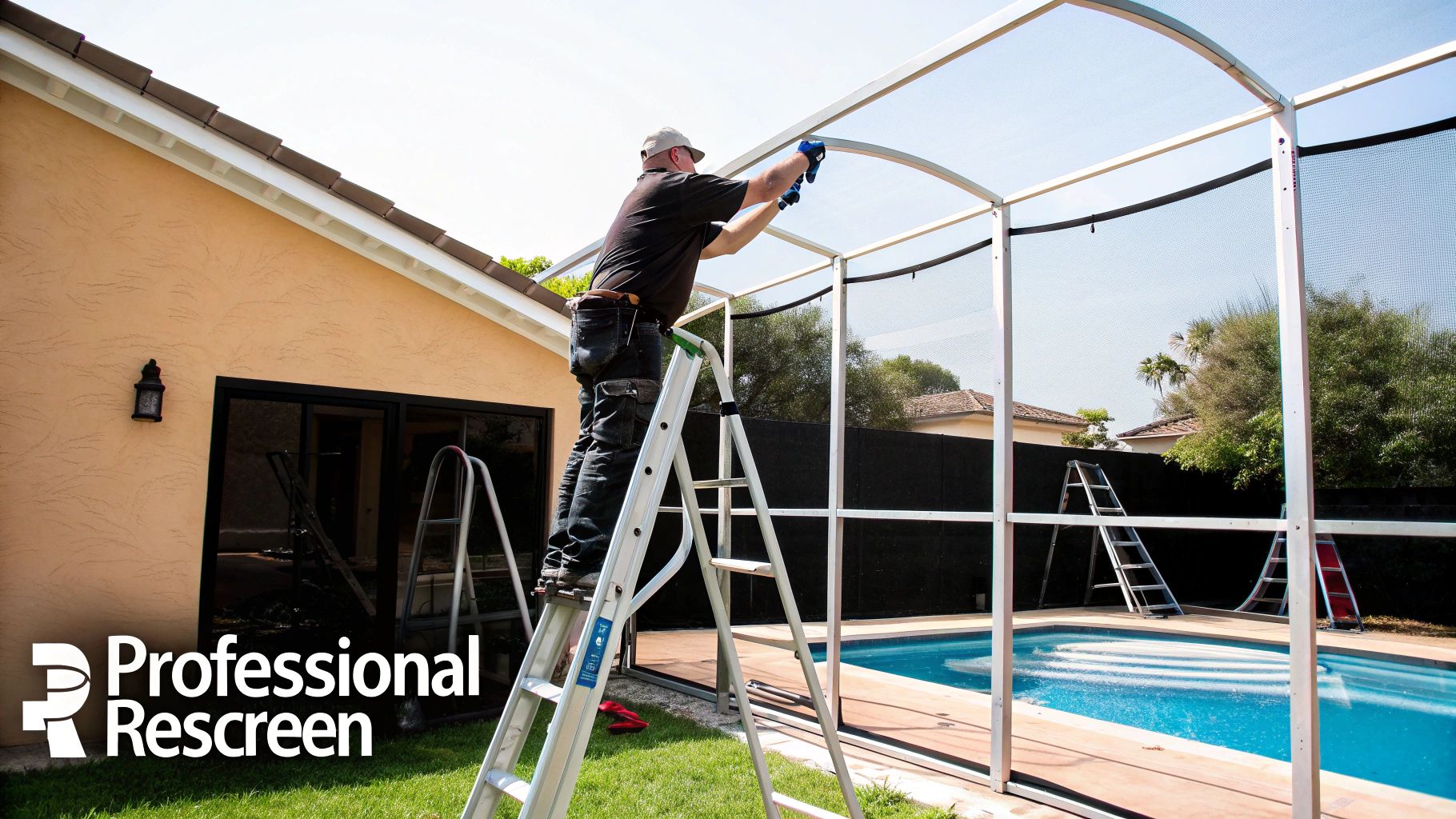
Most people assume a rescreen is only needed when there are gaping holes you could throw a football through. And while big tears are definitely a red flag, it’s the sneakier, more subtle signs of wear that you really need to watch for. Spotting these early can save you a ton of money on more extensive repairs down the line.
Ignoring the first signs of screen decay is a bit like ignoring a tiny leak in your roof. At first, it’s just a nuisance. But give it time, and that small drip can lead to serious structural damage. Your pool enclosure works the same way.
Signs of Aging and Sun Damage
Here in Florida, the relentless sun is public enemy number one for screen enclosures. The constant UV exposure slowly but surely breaks down the screen's material, leaving behind some obvious clues that it’s time for a full rescreen.
Keep an eye out for these tell-tale signs:
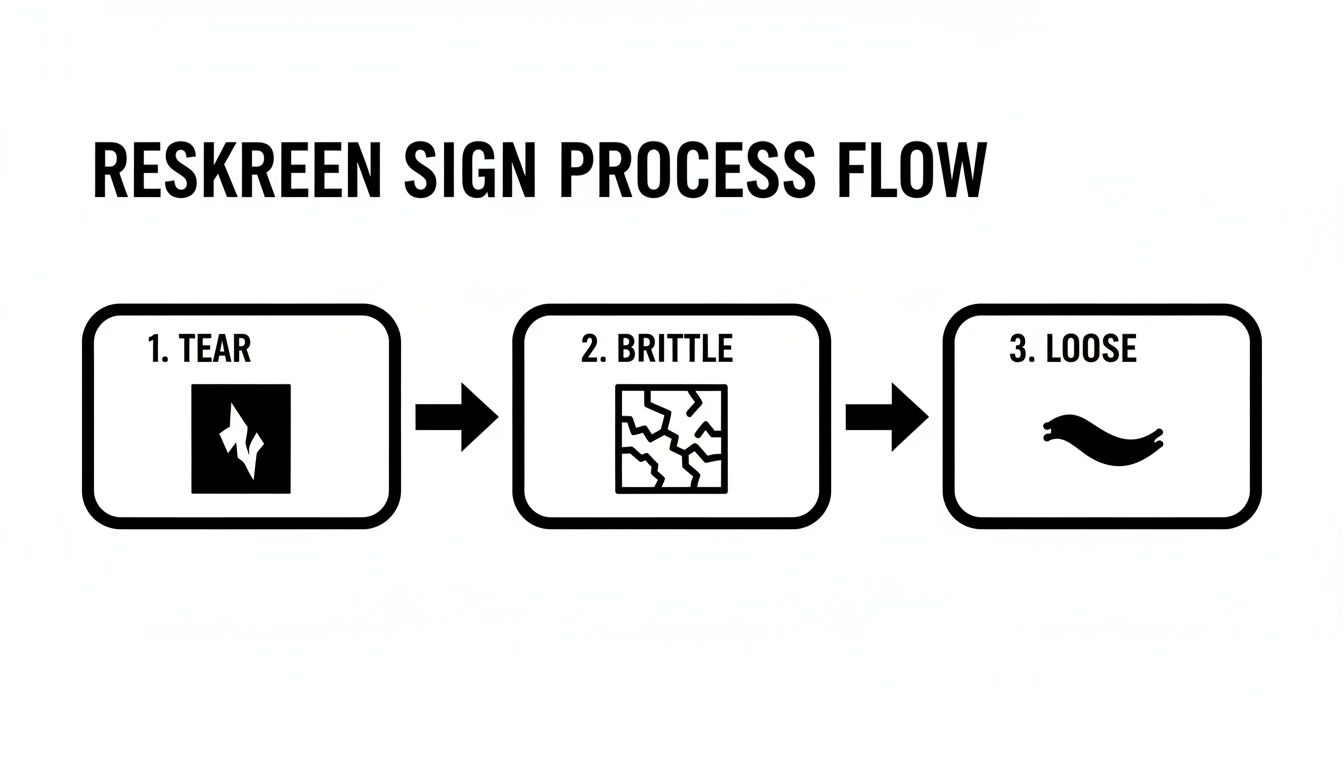
- Brittleness: Go ahead, gently press on your screen. Does it feel stiff or make a faint cracking sound? That's a bad sign. Healthy screen mesh should be flexible. Sun-damaged screens become brittle and can tear from something as simple as a strong gust of wind.
- Discoloration: A chalky, faded appearance is another dead giveaway of UV damage. Screens that were once a rich, deep black have likely turned a dull gray or even silver. This isn't just about looks—it means the screen's protective coating has worn off, leaving it exposed and vulnerable.
Looseness and Structural Integrity
It's not just about the screen mesh. You also need to look at how it's attached to the aluminum frame. The spline—that rubber cord holding the screen in the channel—is also susceptible to sun damage.
If you see your screens starting to sag or flap around in the breeze, it's usually because the spline has dried out, shrunk, and hardened. Once the spline loses its tight grip, the screen can pop right out of its track, compromising the whole structure. While you're at it, it's a good idea to understand general pool safety fence requirements to ensure your enclosure's condition doesn't create any compliance or safety issues.
A complete rescreen tackles both the screen mesh and the spline at the same time. This ensures a drum-tight finish that not only looks a hundred times better but also stands up to strong winds and keeps every last bug out.
Ultimately, you'll be better off thinking of a rescreen as regular maintenance, not an emergency fix. This proactive mindset is the best way to protect your investment and keep your outdoor space the safe, clean, and enjoyable retreat it was meant to be.
What A Professional Rescreening Process Really Involves
You might think a rescreening project is just about pulling out the old screen and stretching in some new stuff. But a true professional job goes so much deeper than that. It’s a detailed, step-by-step restoration that brings back the safety, function, and look of your entire pool enclosure. Knowing what’s involved helps you spot the difference between a quick patch-up and a real, long-lasting investment.
From the moment we give you a quote to the final walkthrough, every action is designed to fix underlying problems, not just the torn panel you can see. This thorough approach is what makes the final result not only look fantastic but also tough enough to handle Florida’s wild weather.
Careful Removal of Old Materials
The first hands-on step is to completely and carefully strip away all the old, failing materials. This isn't a job for brute force; it's a methodical process. Our technicians remove every single panel of the old screen mesh from the aluminum cage.
Just as important is removing the old spline—that’s the rubbery cord holding the screen in the aluminum grooves. After years baking in the sun, spline gets brittle, shrinks, and loses its grip, which is why screens start to sag. Every last inch has to come out to guarantee the new screen stays tight.
The signs leading to a full rescreen often start small before becoming obvious. A single tear might be the final straw, but it's usually a symptom of screen that has already become brittle and loose over the years.
Deep Cleaning the Enclosure Frame
Once the old screen and spline are gone, your pool cage’s aluminum skeleton is totally exposed. This is the absolute best time for a serious deep clean. Any reputable company will power wash the entire frame to blast away years of caked-on dirt, mildew, algae, and grime.
This isn't just for looks. Cleaning is critical for two big reasons:
- A Solid Foundation: A clean surface is non-negotiable for new hardware or paint to bond correctly. Skipping this can lead to premature failure.
- A Flawless Finish: It gets rid of all those ugly green and black stains, making the whole enclosure look brand new once the fresh screens go in.
Trying to wash a cage through old screens just doesn't work. This method lets us get into every nook and cranny, setting the stage for a perfect job.
Upgrading Essential Hardware
Here’s a detail that separates the pros from the amateurs: replacing old, rusty hardware. The screws, bolts, and tapcons holding your enclosure together are in a constant battle with moisture, especially in coastal spots like St. Petersburg and Clearwater.
A top-tier rescreening job always includes replacing failing, rusted fasteners with high-quality, corrosion-resistant options. This simple upgrade can add years to the structural integrity of your enclosure, preventing rust stains and potential weak points during a storm.
The fasteners used by builders are often basic steel, and they start rusting within just a few years. A professional service swaps them for superior options, like stainless steel or specially coated screws designed to fight off corrosion. It's this focus on the small things that makes the difference between a temporary fix and a solution built to last.
Precise Installation of New Screens
With a clean frame and secure hardware, it’s time for the main event: installing the new screen. This is where experience and craftsmanship really make a difference. Every panel is custom-cut and installed with just the right amount of tension.
We aim for a "drum-tight" finish on every single panel. That means no sags, no wrinkles, and no loose spots—just a perfectly taut screen. Proper tension doesn't just look better; it helps the screen stand up to wind and shrug off impacts. Our technicians use specialized tools, like spline rollers, to carefully lock the new spline and screen into the frame for a secure fit.
Final Touches and Meticulous Cleanup
The job isn't done when the last panel is in. A true professional team prides themselves on leaving your property even cleaner than they found it. This final phase is all about meticulous cleanup.
We gather up all the old screen, used spline, and discarded hardware and haul it away. Your pool deck is then swept or blown clean of any debris left over from our work. The very last step is a final walkthrough with you, the homeowner, to make sure every detail is perfect and answer any questions you have about maintaining your beautiful new enclosure. That commitment to a clean finish is the hallmark of a job well done.
Choosing The Right Materials For A Lasting Result
Any rescreen pool enclosure project is only as good as the materials you use. Here in Florida, the combination of intense sun, high humidity, and salty air is a recipe for disaster for subpar screens and hardware. I've seen it countless times—a beautiful new enclosure turns into a sagging, rusty mess in just a few years because corners were cut on materials.
Making smart choices upfront is the secret to an investment that truly lasts. Think of it like buying tires for your car. You wouldn't put standard highway tires on a truck you plan to take off-roading, right? The same logic applies here. Your screen choice should match your lifestyle, local environment, and biggest priorities, whether that's fending off pet claws or getting some relief from the brutal afternoon sun.
A Breakdown of Common Screen Types
There are several types of screen mesh on the market, each engineered for a specific job. Getting to know the pros and cons of each will help you land on the perfect fit for your home.
Here's a look at the most popular options we work with:
-
Standard Fiberglass Screen: This is the workhorse of the industry, offering a fantastic balance of performance and affordability. It gives you excellent visibility and airflow, keeping your pool area feeling bright and open. While it's easy on the wallet, you can typically expect a lifespan of around five to seven years under the direct Florida sun.
-
Pet-Resistant Screen: If you have dogs or cats, this screen is an absolute must. Made from a heavy-duty, vinyl-coated polyester, it’s about seven times stronger than standard fiberglass. It's specifically designed to stand up to scratches, tears, and punctures from claws and paws. If you have furry family members, it's worth looking into specialized pet-resistant mesh options to avoid constant repairs.
-
Solar Screen: Does your pool enclosure get hammered by the sun all day? A solar screen is your best friend. This high-performance mesh blocks a huge percentage of harmful UV rays. Not only does this keep your patio noticeably cooler, but it also stops your outdoor furniture from fading. As a bonus, it adds a bit of daytime privacy.
For a deeper dive, check out our guide on finding the best screen for your porch.
Choosing the right material is a big decision. Here is a breakdown of the key benefits to help you match a screen type to your specific needs.
Comparing Pool Enclosure Screen Types
- Standard Fiberglass: Its key benefit is being the most affordable option with good airflow and visibility. It is ideal for budget-conscious projects and areas with low wear and tear.
- Pet-Resistant: Its key benefit is being extremely durable and resistant to tears from claws and paws. It is ideal for homeowners with dogs, cats, or young children.
- Solar Screen: Its key benefits are blocking UV rays, reducing heat, and providing daytime privacy. It is ideal for enclosures with heavy sun exposure or those seeking energy savings.
Ultimately, the best screen is the one that solves your biggest problems, whether it's durability, sun protection, or just keeping the bugs out.
The Overlooked Hero: Hardware That Lasts
Everyone focuses on the screen mesh, but the hardware holding it all together is just as important. All those little fasteners, screws, and bolts are the structural glue for your pool cage. Sadly, it's common for builders to use standard steel fasteners that start rusting within just a few years.
Once corrosion sets in, you’ll see those ugly orange stains running down the aluminum frame. Worse, those rusty spots become critical weak points. All it takes is one powerful storm to exploit that weakness, and you could be looking at a catastrophic failure.
Insisting on corrosion-resistant hardware is one of the single most important upgrades you can make. High-quality stainless steel or ceramic-coated fasteners are engineered to handle our humid, salty air, ensuring your enclosure stays strong and stable for the long haul.
This is a non-negotiable for any quality rescreening job. Any reputable company will recommend or include a hardware upgrade as part of the process. It’s a small detail that pays massive dividends in the safety, appearance, and longevity of your enclosure.
DIY Rescreening Vs. Hiring a Professional
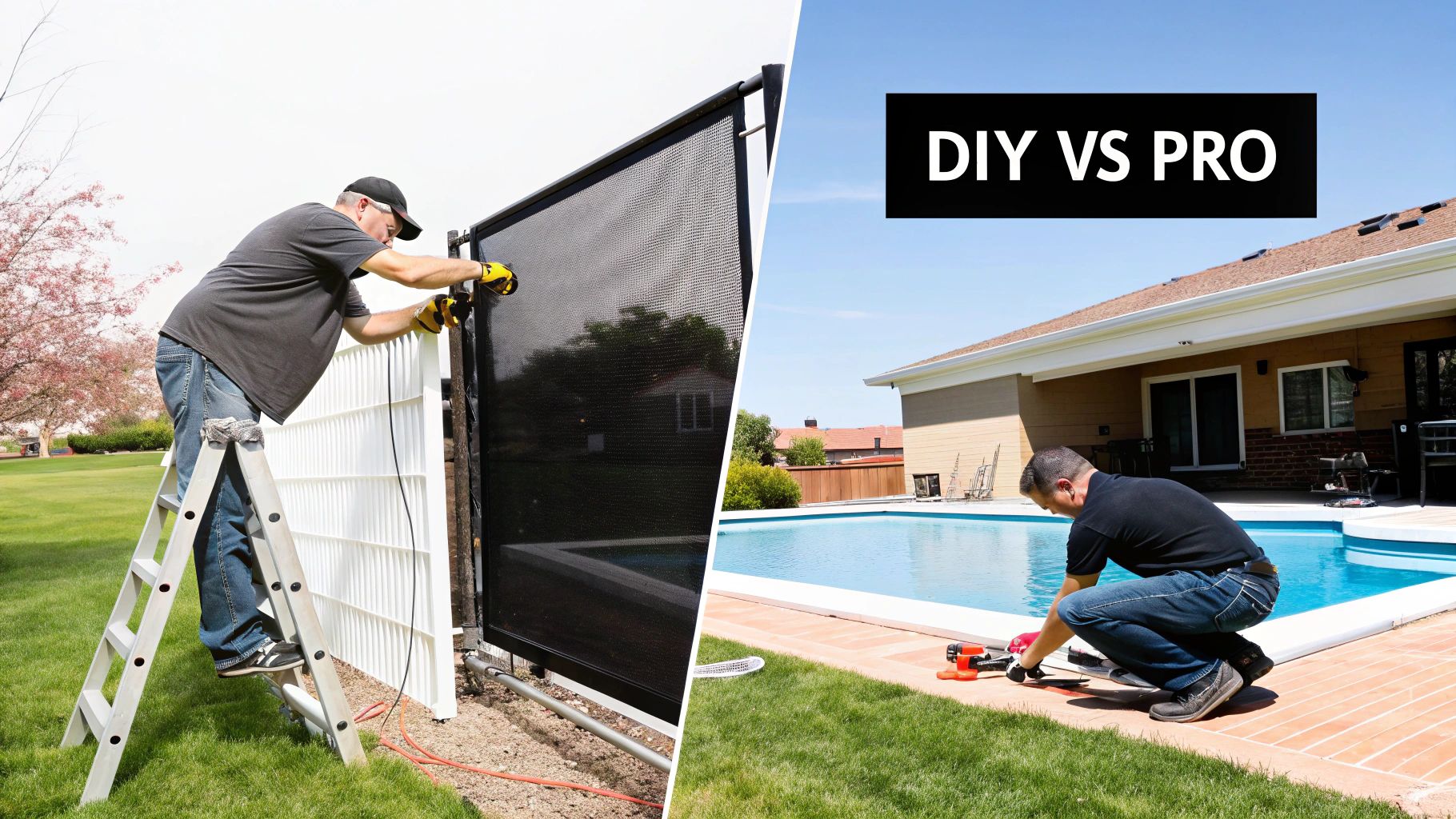
The thought of tackling a rescreen pool enclosure project yourself can be tempting, especially if you're looking to save a few bucks. On the surface, it seems simple enough—pop out the old screen, put in the new one. But the reality is often a lot more complex and frustrating than those online tutorials make it look.
It’s really important to weigh the whole picture. You need to consider the hidden costs, the steep learning curve, and the potential for things to go wrong versus the value and pure peace of mind that comes from hiring an experienced pro. This isn't just about replacing a few small panels; a full rescreen is a massive job that demands specialized tools, specific techniques, and a ton of patience.
The Hidden Costs and Common Pitfalls of a DIY Job
Many homeowners are caught off guard by the true cost of a DIY rescreening project. The money you think you're saving on labor can disappear fast once you start buying all the necessary gear. You’ll need a lot more than just a roll of screen and a utility knife from the hardware store.
Some of the essential tools you probably don't have lying around include:
- Spline Rollers: You need both convex and concave rollers to properly seat the spline into the channel without ripping your brand-new screen.
- Ladders and Scaffolding: Safely reaching the top panels of a pool cage is a huge challenge. A simple stepladder isn't going to cut it, and working at those heights is risky.
- Specialized Tools: Things like spline pullers and screen tensioning tools are what the pros use to get that perfect, tight finish.
Beyond the tools, just getting your hands on high-quality materials can be tough. The screen and spline you find at big-box stores are often a lower grade than what professionals use, which means your hard work might not even last that long.
This is a big deal in a growing industry. The global swimming pool enclosure market was valued at around USD 1.5 billion in 2023 and is expected to hit USD 2.5 billion by 2032. Rescreening is a huge part of that, making up about 40% of the market as enclosures age. That makes the choice between DIY and pro a critical one for many homeowners. You can find more details in the full research about the swimming pool enclosure market.
The number one mistake we see with DIY jobs is improper screen tension. If it's too loose, the screen will sag and flap annoyingly in the wind. But if it's too tight, you can actually warp the aluminum frame or cause the screen to pop right out of the channel under pressure.
The Unmistakable Value of a Professional Service
When you hire a professional team, you're not just paying for their time. You're investing in efficiency, deep expertise, and a guaranteed result. A seasoned crew can knock out a full rescreening in just a day or two—a job that could easily eat up several weekends for a DIYer.
Professionals also have access to superior, commercial-grade materials that are built to withstand Florida's punishing climate. More importantly, they have the experience to handle the unexpected curveballs that can derail a DIY project, like dealing with a corroded frame or stubborn, rusted-out hardware.
The end result is a flawless, drum-tight finish that not only looks incredible but also performs exactly as it should.
Plus, a professional company carries the right licensing and insurance, which protects you from any liability if an accident happens on your property. Considering the risks of working at heights, that peace of mind alone is invaluable. If you're dealing with just a few damaged spots instead of a full tear-out, you might want to look into other options. You can learn more about screen enclosure repair in our dedicated guide.
Ultimately, hiring a professional ensures your rescreen pool enclosure investment is done right the first time, saving you time, frustration, and the potential for costly redos down the line.
Why Experience And Quality Matter In Rescreening
When you decide to rescreen your pool enclosure, the company you hire is just as important as the screen you pick. You can choose the best, most durable material on the market, but if it isn't installed with precision and care, it's just not going to last. The difference between a quick fix and a long-term solution really boils down to the experience and quality standards of the team doing the work.
This is especially true when a beautiful, functional pool enclosure can directly boost your home's value. Here in Florida's Tampa Bay area, where pool ownership is north of 25%, a well-maintained enclosure is a huge selling point. In fact, studies show that a high-quality enclosure can increase a home's resale value by 7-10%. You can discover more insights about the swimming pool enclosure market and see just how big an impact it has. That makes your choice of contractor a pretty significant financial decision.
The Value Of A Proven Local Expert
There’s a world of difference between a new crew trying to make a name for themselves and a company with decades of hands-on experience right here in our community. An established, family-owned business with deep local roots brings an accountability that others just can't replicate. They’ve seen it all—from the aftermath of a hurricane to the slow, steady wear caused by years of intense Florida sun.
That long-term perspective translates directly into better results for you. An experienced team knows which materials truly stand up to our climate, the right way to tension a screen to handle high winds, and why using corrosion-resistant hardware in our humid, salty air is non-negotiable. They aren't just there to finish a job; they're upholding a reputation they've spent years building.
Choosing a company with a proven track record means you're not just a number on an invoice. You're a neighbor, and your satisfaction is directly tied to their continued success in the community.
A Non-Negotiable Commitment To Quality
You can tell a lot about a company by the standards they set for every project. One of the clearest signs is their approach to hardware. A quality-focused company will insist on replacing old, builder-grade fasteners with superior, corrosion-resistant ones as a standard part of their process. They understand that this small detail is absolutely critical for the long-term integrity of your enclosure.
Here’s what that commitment to quality looks like in practice:
- Superior Materials: Using only commercial-grade screens and spline designed for longevity.
- Available Warranties: Standing behind their work with solid guarantees on both the materials and their craftsmanship.
- Transparent Communication: Keeping you in the loop from the initial estimate all the way through the final walkthrough.
These elements give you peace of mind, ensuring your investment is protected. A full restoration project goes way beyond just new screens; it brings the entire structure back to life. Check out our detailed guide on pool cage restoration near me to see exactly what a comprehensive project should include.
What Really Sets A Company Apart
In the end, what truly separates a great rescreening company from an average one is a relentless focus on customer satisfaction. This is something you can easily check before you even pick up the phone. Look for a business with hundreds of positive online reviews where people consistently mention their punctuality, professionalism, and the meticulous cleanup after the job is done.
A reliable expert will always be fully licensed and insured, protecting you from any liability. They make the entire process easy with clear communication and convenient scheduling. When you partner with a company that truly values its reputation, you're not just buying new screens—you're investing in a beautiful, durable, and worry-free outdoor space for years to come.
Frequently Asked Questions About Pool Enclosure Rescreening
Even after digging into the process and materials, you probably still have a few questions. That’s perfectly normal. A full pool enclosure rescreening is a big job, and it’s smart to get all the details straight before you move forward. We’ve put together the most common questions we hear from homeowners to give you clear, straightforward answers.
Our goal is to pull back the curtain on the entire process, from the first phone call to the final walkthrough, so you can feel confident about your project.
How Much Does It Cost To Rescreen A Pool Enclosure?
This is usually the first question people ask, but there’s no single, one-size-fits-all answer. The final price tag depends on a few key things: the total size of your enclosure (in square feet), the type of screen you choose, and the current condition of the aluminum frame.
For example, a standard fiberglass screen is the most budget-friendly option, while premium solar or pet-resistant screens will cost more. If we find that your hardware—like the screws and bolts—is rusted out and needs to be completely replaced, that will also factor into the cost.
The best way to get a solid number is to have us come out for a free on-site estimate. That way, we can see everything firsthand and give you an exact quote. You can also get a deeper dive into the numbers by reading our guide on the cost to rescreen a pool enclosure.
How Long Does A Professional Rescreening Take?
One of the biggest perks of hiring an experienced crew is speed. For most average-sized pool enclosures, we can get the entire rescreening job done in just one to two full days.
That timeframe includes everything from start to finish:
- Carefully removing every old screen panel and all the old spline.
- Pressure washing the aluminum frame to get rid of dirt, algae, and grime.
- Replacing any corroded or failing hardware.
- Installing all the new screen panels, making sure each one is drum-tight.
- A complete cleanup and haul-away of all the old materials and debris.
We work efficiently to keep the disruption to your daily life at a minimum and get you back to enjoying your pool as quickly as possible—without ever cutting corners on quality.
What Kind Of Warranty Do You Offer On Your Work?
We stand behind our work, period. We use high-quality materials and trust our installation process, so we offer warranties that cover both our craftsmanship and the screen materials themselves against defects.
The exact warranty details can vary depending on the screen you select. Some of the premium materials we offer come with their own extended manufacturer guarantees, which we pass directly on to you. We'll go over all the specific warranty options during your free estimate so you have total transparency and peace of mind.
Do I Need A Permit To Rescreen My Pool Enclosure?
For a standard rescreening job, the answer is typically no. If all we're doing is replacing the screen fabric, spline, and fasteners without touching the actual structure, you usually don't need to get the local building department involved.
However, the game changes if your project involves any structural work. If we need to replace damaged aluminum beams, change the enclosure's footprint, or make other major structural repairs, a permit will absolutely be required. As a fully licensed and insured contractor, we handle that entire permitting process for you, ensuring your project is 100% compliant with local codes.
Did you know that a well-maintained pool enclosure can cut your pool heating costs by 50-70% in the cooler months? It's a huge driver for rescreening projects here in Tampa Bay, where the number of rescreens jumped by 40% between 2020 and 2025. Using corrosion-resistant fasteners is also critical in our coastal environment; they reduce hardware failure rates by 50% compared to standard hardware that can rust out in under 5 years. You can learn more about these market findings.
Ready to restore your outdoor oasis? The experienced, family-owned team at Rescreen Rescue provides fast, reliable, and high-quality rescreening services across the Tampa Bay area. Contact us today for your free, no-obligation estimate and see the difference that true craftsmanship makes. Visit us at https://rescreenrescue.com to get started.