


So, you're thinking about adding a screened-in porch. It's a fantastic idea, especially here in Tampa Bay where we live outdoors practically year-round. It's more than just a home improvement—it’s an investment in your lifestyle, creating that perfect bug-free zone to enjoy the Florida weather.
But what's it going to cost? The short answer is, it depends. The cost to build a screened porch can run anywhere from $5,000 to over $30,000. The biggest factor is whether you're enclosing an existing patio or building a brand-new structure from the ground up.
If you already have a roof and a slab, you're in luck. Screening a pre-existing patio is a much more straightforward job and often lands under that $5,000 mark.
Understanding Your Potential Investment
The final price tag on your project is going to swing wildly based on your vision and what you're starting with. Think of it this way: are you just putting up walls in a room that's already built, or are you pouring a foundation and building a whole new addition? That’s the core difference that drives the budget.
To get a clearer picture of where your project might land, we've put together a quick overview of typical costs.
Screened Porch Project Cost At A Glance
Here are some common scenarios to help you ballpark your investment. Keep in mind these are averages, and your final quote will depend on materials, size, and local labor rates.
- Screening an Existing Covered Patio (12' x 16'): Typical Cost Range: $2,000 – $5,000
- Building a New Basic Screened Porch (10' x 10'): Typical Cost Range: $5,000 – $12,000
- Building a New Mid-Range Screened Porch (12' x 16'): Typical Cost Range: $10,000 – $22,000
- Building a New High-End Screened Porch (16' x 20'): Typical Cost Range: $20,000 – $35,000+
As you can see, the scope of the project makes all the difference. A simple screening job is a world away from a custom new build with all the bells and whistles.
Starting From Scratch vs. Screening an Existing Porch
Let's break down the two main paths you can take.
Building a brand-new screened porch is a full-blown construction project. We're talking about digging for a foundation, framing the structure, putting on a roof, and then installing the screens. It's a big job with significant labor and material costs, which is why it's the more expensive option.
On the other hand, if you already have a covered porch or lanai, you've done most of the heavy lifting. The "bones" are there. Your main costs will be the screen materials and the labor to get them installed, making it a much friendlier project for your wallet.
National averages show that screening an existing 200 sq. ft. porch can cost as little as $2,000, while a new build of the same size can easily top $20,000. You can see more cost examples on Angi.com to get a feel for the national market.
Think of it like finishing a basement versus building a brand-new wing on your house. One uses an existing structure, while the other starts from scratch. The cost difference is huge, and the same logic applies to your porch.
Key Variables That Influence Price
Beyond the starting point, a few other key elements will move the needle on your final cost. Getting a handle on these will help you set a realistic budget.
- Size: This one's simple—a bigger porch means more materials and more labor. The cost per square foot might go down slightly on a larger project, but the total will always be higher.
- Materials: Your choice of framing (wood or aluminum) and screen type (standard fiberglass, tough pet screen, or solar screen) will absolutely affect the price. You can dive deeper into these choices in our guide on the differences between lanais and other enclosures.
- Local Codes: Don't forget the paperwork. Permitting and making sure everything is up to local building codes—especially hurricane-readiness standards here in Florida—will add to the project cost but are non-negotiable for safety and compliance.
Nailing down these details is the first real step to planning an outdoor space that works for your home, your lifestyle, and your bank account.
Breaking Down the Key Cost Factors
Ever wonder why one screened porch quote comes in at $5,000 while another soars past $25,000? The answer is always in the details. It’s a lot like buying a car—the base model gets you from A to B, but the final sticker price climbs when you add leather seats, a sunroof, and a premium sound system. Your new porch works the same way.
From the foundation under your feet to the type of screen you choose, every decision shapes the final cost. Getting a handle on these variables is the key to balancing your dream design with a realistic budget.
This flowchart gives you a quick visual on the fundamental difference between building from scratch versus screening an existing structure.
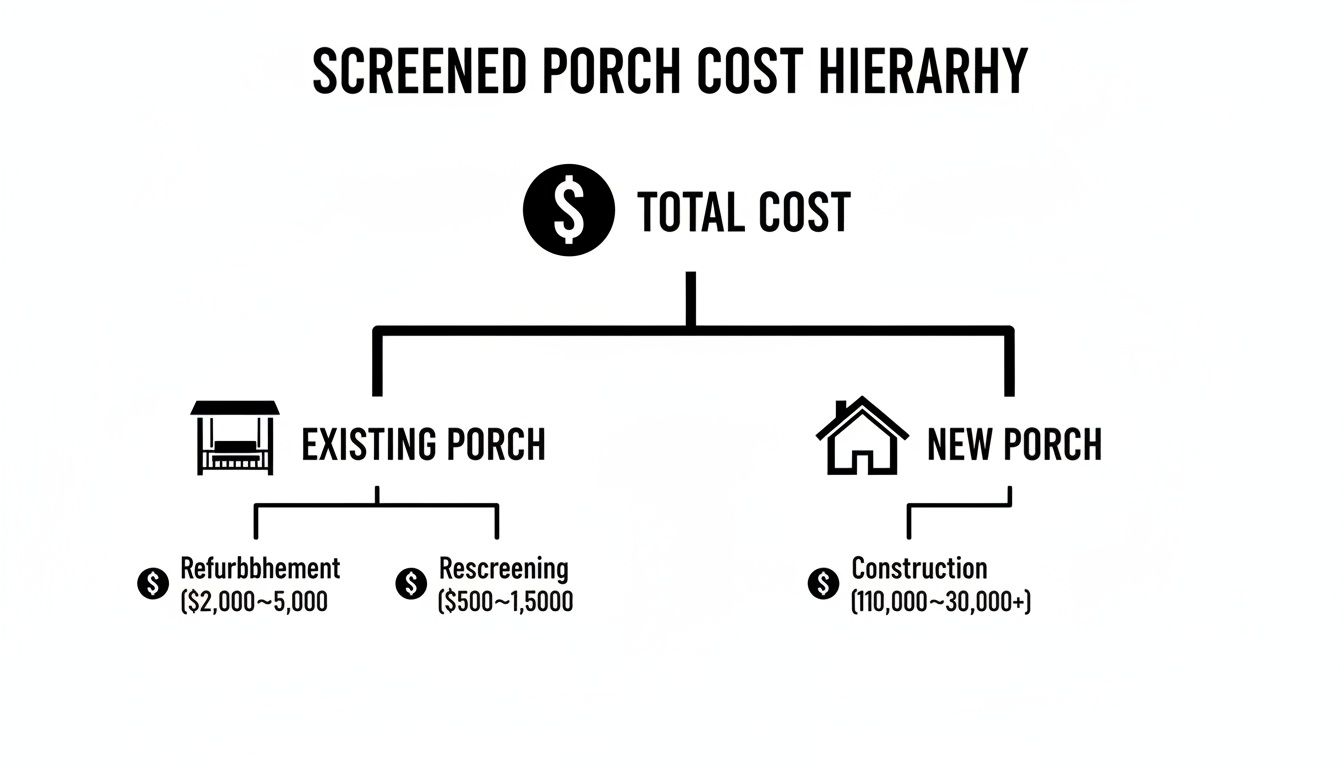
As you can see, a new build involves a whole lot more foundational and structural work, and that's where the biggest chunk of the budget goes.
Project Scope and Size
The biggest factor, hands down, is your starting point. Are you screening a patio or porch that’s already there and structurally sound? Or are you building a brand-new addition from the ground up?
Enclosing an existing space is by far the more affordable route because the expensive parts—the foundation and roof—are already in place. A new build is a different beast entirely. It requires excavation, pouring a foundation, framing walls, and building a roof before a single piece of screen is installed.
Size is directly tied to this. A bigger porch means more materials, plain and simple. More concrete, more lumber, more screws, and more screen. It also means more labor hours. While the cost per square foot might dip a little on larger projects, the total investment always goes up with the square footage. A cozy 10' x 10' porch is going to be worlds cheaper than a sprawling 16' x 20' outdoor living room.
Foundation and Flooring Choices
If you're starting from scratch, the foundation is your first major expense. A simple, ground-level concrete slab is the most straightforward and budget-friendly option. But if your home's design calls for an elevated porch, you'll need a pier-and-beam foundation with a framed floor system, which is a far more complex—and costly—job.
Your flooring choice makes a big impact, too.
- Pressure-Treated Wood: This is the go-to for a budget-friendly deck. Just be prepared for regular maintenance like staining and sealing to keep it from rotting.
- Composite Decking: It costs more upfront, no question. But composite materials are incredibly tough, low-maintenance, and won't fade or rot. You'll save money and headaches in the long run.
- Pavers or Tile: For a ground-level porch, pavers or outdoor-rated tile can create a beautiful, high-end look, but both the materials and the specialized labor will add to the bottom line.
Framing and Roofing Materials
The "bones" of your porch—the frame and roof—are critical. For framing, you're usually choosing between pressure-treated wood and aluminum. Wood is often cheaper to start, but it needs ongoing upkeep. Aluminum costs more but is lightweight, strong, and won't rot, rust, or get eaten by bugs, making it a no-brainer for Florida's humid climate.
The roof style also plays a role in the price. A simple shed-style roof that slopes away from the house is the most economical choice. If you want something more dramatic, like a gable roof that creates a vaulted ceiling, expect the cost to rise. The framing is more complex, and seamlessly tying that new roofline into your existing home is skilled work that adds to the labor bill.
Screen Material and Doors
Believe it or not, not all screens are the same. The mesh you pick will directly affect the final price. Standard fiberglass mesh is the most common and affordable option, but upgrading can bring some serious perks.
- Pet-Resistant Screen: This is a thicker, vinyl-coated mesh that can handle claws and paws without tearing, saving you from constant patch jobs.
- Solar Screen: This specialized screen blocks a huge chunk of the sun's UV rays. It keeps your porch noticeably cooler and stops your patio furniture from fading.
- High-Visibility Screen: If you don't want anything getting in the way of your view, this finer mesh offers amazing clarity.
Even the door is a line item. A basic screen door is cheap, but a sturdier door with better hardware or a built-in pet door will add to the total. If you have other screened areas like a pool cage, you might find some useful info in our guide to pool cage restoration costs.
Finally, don't forget about labor and permitting. Labor can easily make up 40-50% of your total project cost. On top of that, any new structure in the Tampa Bay area requires permits to make sure it's up to local building and hurricane codes. It's a necessary administrative cost that ensures your porch is built safely and correctly.
How Materials Shape Your Porch Budget
Think of building a screened porch like cooking a favorite meal. Your materials are the main ingredients, and the quality you choose directly impacts the final result—and the final bill. When you're budgeting, the two biggest line items are almost always the structural frame and the screens themselves. These choices will ultimately decide whether your project is simple and functional or a premium, long-lasting retreat.
Picking the right materials is all about balancing upfront cost against long-term durability and the look you're going for. Some options are easy on the wallet at first but might mean more maintenance later. Others require a bigger investment from the get-go but reward you with years of hassle-free enjoyment. Getting this trade-off right is the secret to building a porch that fits your lifestyle and your finances.
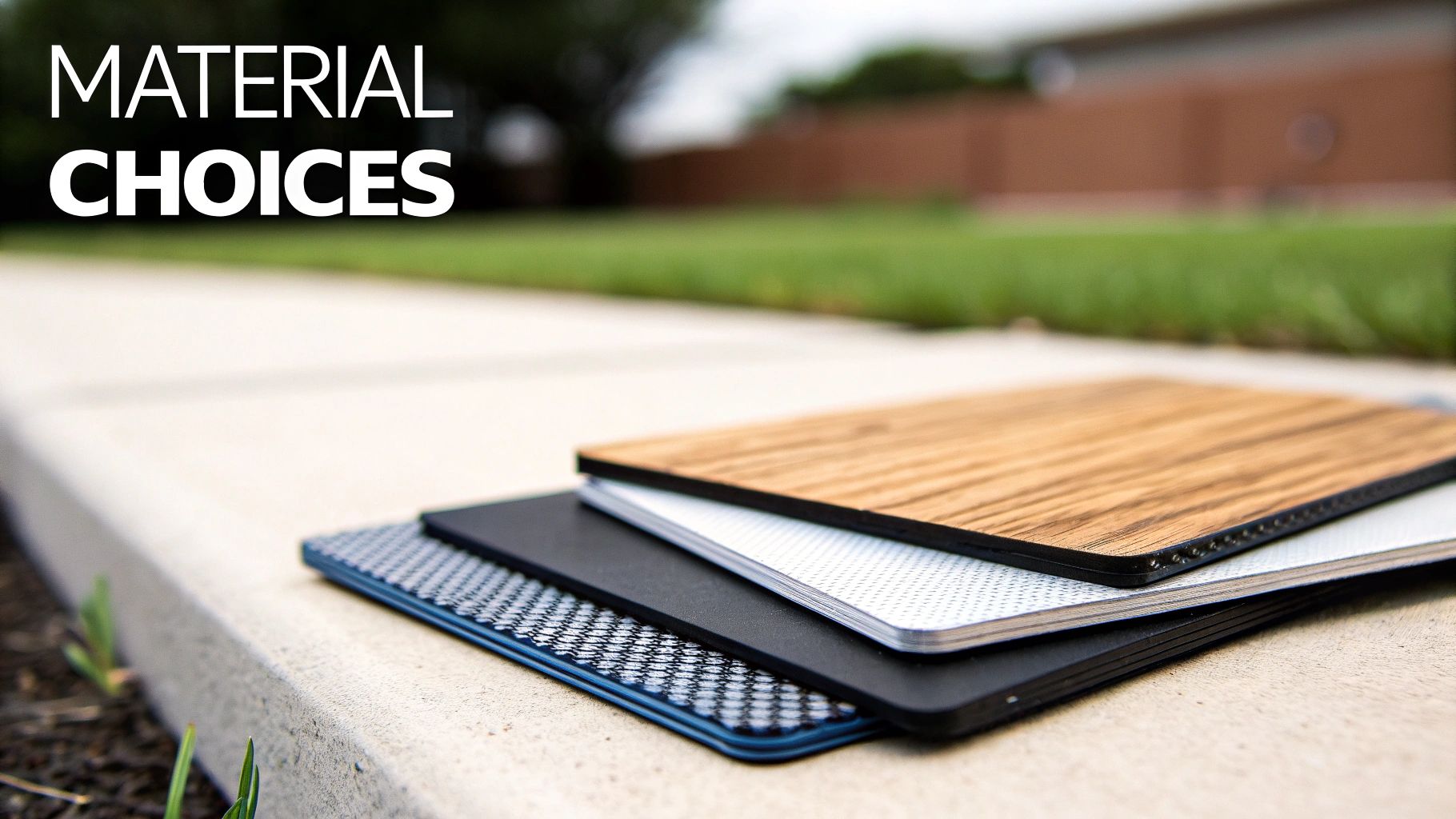
Choosing Your Structural Frame: Wood vs. Aluminum
The frame is the skeleton of your porch. It holds everything up, from the roof to the screens, so it’s a decision you want to get right. Your two main options are pressure-treated wood and aluminum, and they each bring something different to the table in terms of cost and performance.
Pressure-treated wood is the classic choice and often the more affordable one. It gives you that natural, traditional look that so many homeowners love, and you can stain or paint it to match your home perfectly. The catch? Wood demands upkeep. Here in Florida, our humidity is a constant threat, meaning you'll need to seal and repaint every few years to fight off moisture, rot, and insects.
Then there’s aluminum—a modern, low-maintenance workhorse. It might cost a bit more initially, but for many, the long-term benefits are a no-brainer.
- Exceptional Durability: Aluminum laughs at rust, corrosion, and pests, making it an ideal material for the coastal Tampa Bay climate.
- Minimal Upkeep: Forget about painting or staining. Aluminum framing saves you a ton of time and money on future maintenance.
- Structural Strength: It's surprisingly lightweight but incredibly strong, so it won’t warp or crack under the Florida sun.
For most homeowners around here, aluminum just makes more sense. It delivers peace of mind and better long-term value, even with the slightly higher upfront cost. Of course, the foundation and flooring are also big budget items; exploring different timber decking options can help you find the right balance of durability and style.
Selecting The Right Screen For Your Needs
The screen might seem like a small detail, but it’s what turns a porch into a screened porch. The mesh you choose has a huge effect on your porch's function, cost, and overall vibe. For example, standard fiberglass screening is the most budget-friendly starting at around $0.15 per square foot, while a step up to aluminum screening will run you about $0.30 per square foot.
If you're looking for premium performance, the costs climb. Stainless steel screening can range from $1.00 to $1.25 per square foot, and high-tech solar screens that block heat go for $0.75 to $1.50 per square foot. At the very top end, brass screening can reach $6.00 per square foot—a massive 40-fold jump from basic fiberglass.
To help visualize the trade-offs, here’s a quick breakdown of common screen choices.
Screen Material Cost Comparison
- Fiberglass: Average Cost Per Sq. Ft. of $0.15 – $0.25 | Primary Benefit: Most affordable & flexible
- Aluminum: Average Cost Per Sq. Ft. of $0.30 – $0.50 | Primary Benefit: Better durability & visibility
- Solar Screen: Average Cost Per Sq. Ft. of $0.75 – $1.50 | Primary Benefit: Blocks UV rays & reduces heat
- Pet-Resistant Screen: Average Cost Per Sq. Ft. of $0.50 – $0.75 | Primary Benefit: Resists tears from claws & paws
- Stainless Steel: Average Cost Per Sq. Ft. of $1.00 – $1.25 | Primary Benefit: Superior strength & corrosion resistance
- Brass/Bronze: Average Cost Per Sq. Ft. of $4.00 – $6.00 | Primary Benefit: High-end aesthetic & extreme durability
As you can see, the right choice really depends on what you value most—be it budget, durability, or special features like heat reduction.
Beyond the standard options, there are specialty screens designed to solve specific problems.
Choosing a screen isn't just about keeping bugs out; it's about customizing your outdoor experience. Think of it as choosing the right kind of window glass—some offer clear views, while others provide privacy or thermal protection. Your screen choice does the same for your porch.
If you want to really dig into all the possibilities, check out our guide on selecting the best screen for your porch. Here are a few of the most popular upgrades:
- Pet-Resistant Screen: Made from a tough, vinyl-coated polyester, this mesh is about seven times stronger than standard fiberglass. It’s built to handle claws and paws without ripping, saving you from constant patch jobs.
- Solar Screen (or No-See-Um Screen): A true game-changer in Florida. This screen blocks a huge percentage of the sun’s heat and UV rays, which keeps your porch cooler and stops your furniture from fading. Its tight weave also blocks tiny pests like no-see-ums.
- High-Visibility Screen: If your view is the main event, this is the screen for you. It uses a finer thread to create a nearly invisible barrier, making it feel like there’s nothing between you and your beautiful backyard.
DIY vs Professional Who Should Build Your Porch
So, you’ve reached one of the biggest forks in the road for your screened porch project: should you roll up your sleeves and build it yourself, or is it time to call in a professional contractor? On the surface, going the DIY route looks like a surefire way to save a chunk of change.
But the real math is more complicated than just comparing the cost of lumber to a final invoice. It's a mix of your time, your actual skill level, all the little hidden costs, and how much risk you're willing to take. Choosing is like deciding between assembling a flat-pack bookcase from IKEA and having a custom built-in handcrafted by a master carpenter. You might get a functional result either way, but the process, final quality, and your stress levels will be worlds apart.
Let's unpack what each path really looks like.
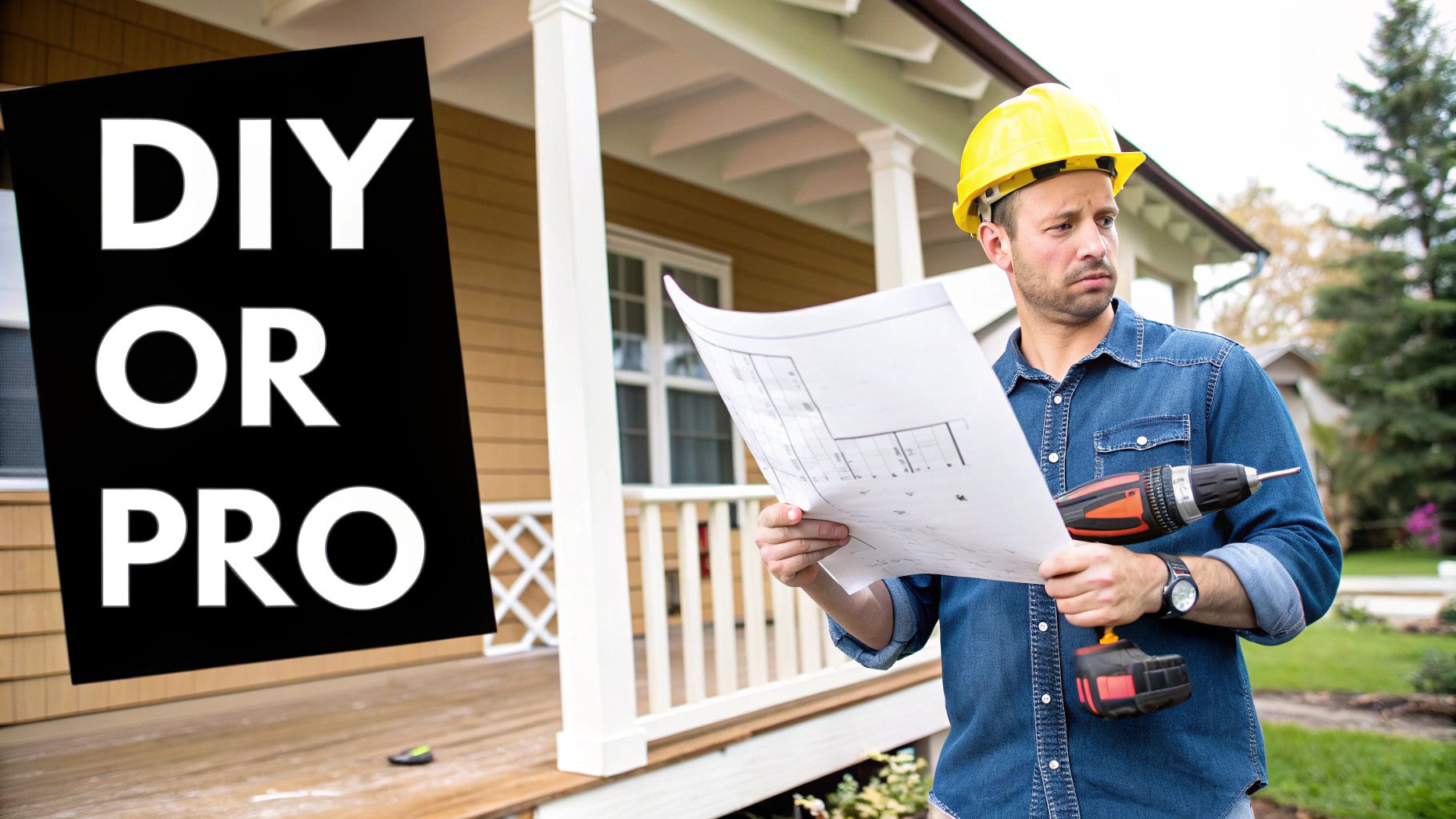
The Realities Of A DIY Screened Porch
The pull of a DIY project is strong, mostly because you could potentially cut out labor costs, which often make up 40-50% of the total project price. If you genuinely have solid construction experience, own the right tools, and have a ton of free weekends ahead of you, building your own screened porch could be an incredibly rewarding experience.
But be warned: those initial savings can vanish in a hurry once the hidden costs—the ones pros just build into their quotes—start popping up.
- Tool and Equipment Costs: Do you actually own a miter saw, a framing nailer, a commercial-grade level, or scaffolding? Renting or buying the specialized gear you need can easily add hundreds, if not thousands, of dollars to your budget.
- Material Miscalculations: A pro knows exactly how much lumber and screening to order, factoring in a precise amount for waste. DIYers often get it wrong—either overbuying and wasting money or underbuying and creating frustrating delays.
- Costly Mistakes: That framing that’s slightly off-level or a screen panel installed without the right tension isn't just a minor oops. It can mess with the porch's structural integrity, leading to expensive tear-outs and do-overs.
- Permitting Headaches: Trying to navigate the local building codes and permitting process in counties like Pinellas or Hillsborough can feel like a full-time job for a homeowner. One wrong move on the paperwork can bring your entire project to a screeching halt.
The Value Of Hiring A Professional
Hiring a professional contractor isn't just an expense; it's an investment in skill, efficiency, and—most importantly—peace of mind. Yes, the upfront cost is higher, but what you’re really paying for is a smooth process and a guaranteed, high-quality result. They bring so much more to the table than just physical labor.
Think of a professional contractor as your project manager, skilled laborer, and quality control inspector all rolled into one. They manage every detail, from sourcing materials to passing final inspections, ensuring the job is done right, on time, and on budget.
The value a pro brings is something a DIY approach just can't replicate. An experienced crew knows how to spot potential problems before they even start, keeping the project on track. They also have access to trade pricing on materials, which can help offset some of their labor costs.
Best of all, reputable contractors are licensed and insured. This is huge—it protects you from being liable if an accident happens on your property. They also back their work with warranties, giving you a safety net if any issues pop up down the road. You can't put a price on that kind of security. For perspective on the kind of complexity professionals manage, see what it takes to rescreen a full pool enclosure, a much larger but related project.
Sample Budgets For Three Common Porch Sizes
Abstract numbers and cost ranges can be hard to wrap your head around. To make the cost to build a screened porch more concrete, let's walk through three common project sizes. We'll look at each one through the lens of a Basic, Mid-Range, and Premium budget to show you exactly how different choices in materials and features shape your final investment.
This approach helps you see where your own project might land. Think of it like buying a car—the basic sedan, the family SUV, and the luxury sports car all get you where you need to go, but the experience, features, and price tag are worlds apart.
Small Porch Budget (10' x 12' or 120 Sq. Ft.)
This is the perfect size for a cozy little seating area or a quiet spot to sip your morning coffee. Even at this scale, your choices can create a surprisingly wide range of costs.
- Basic Tier ($6,000 – $9,000): This budget typically gets you a new build with a simple concrete slab, a pressure-treated wood frame, and a straightforward shed-style roof. It would also include standard fiberglass screens and a basic screen door.
- Mid-Range Tier ($10,000 – $16,000): Here, you can start making some meaningful upgrades. Think a more durable aluminum frame and an elevated wood deck foundation. This budget also allows for better screens, like pet-resistant or solar mesh, and includes a simple electrical package for a ceiling fan and an outlet.
- Premium Tier ($18,000+): At the high end, this small porch feels anything but. It would likely feature premium composite decking, a gable-style roof that ties into your home’s existing architecture, and high-visibility screens for a nearly invisible look. You'd also see extras like recessed lighting and higher-end fixtures.
Medium Porch Budget (12' x 16' or 192 Sq. Ft.)
This is a really popular size, and for good reason. It offers enough room for both a small dining table and a comfy seating area, making it a truly versatile outdoor living space.
- Basic Tier ($9,000 – $14,000): Just like the small porch, this involves a pressure-treated wood frame and standard fiberglass screens on a concrete slab. The higher price simply reflects the increased material and labor costs for the larger footprint.
- Mid-Range Tier ($15,000 – $24,000): An investment in this range gets you into low-maintenance materials like an aluminum structure and composite decking—a smart move for long-term value. You could also include a more robust electrical setup and upgraded solar screens to help keep the space cool.
- Premium Tier ($26,000+): Now we're talking. A premium medium porch becomes a true extension of your home. This budget can accommodate features like a vaulted ceiling with a beautiful tongue-and-groove finish, high-end lighting fixtures, and maybe even floor-to-ceiling screen panels for a clean, modern aesthetic.
A key takeaway here is that the foundation and frame materials create the biggest price jumps. Upgrading from pressure-treated wood to low-maintenance aluminum and composite decking is a significant investment upfront, but it pays off by eliminating the headaches and costs of future maintenance.
Large Porch Budget (16' x 20' or 320 Sq. Ft.)
A large screened porch is basically an outdoor great room, capable of hosting family dinners, parties, and larger gatherings with ease. The costs reflect what is a significant construction project. For more ideas on transforming a space, our guide on enclosing a porch for living space has some great insights.
- Basic Tier ($15,000 – $22,000): Even a "basic" large porch is a substantial build. This price point typically covers a wood-framed structure with standard screens and a simple roof design, all built on a concrete foundation.
- Mid-Range Tier ($25,000 – $35,000): This is the sweet spot where most large porch projects land. It usually includes a durable aluminum frame, composite decking, solar screens, and a full electrical package. The roof might be a more aesthetically pleasing gable style that complements your house.
- Premium Tier ($40,000+): No compromises. This is where you can get custom architectural details, premium flooring like tile or pavers, and specialty screens. You might even add luxury features like built-in infrared heaters or a dedicated entertainment wall for an outdoor movie night.
Getting An Accurate Quote In Tampa Bay
Trying to figure out the cost of a screened porch from national averages is a bit like guessing the weather in Clearwater based on a forecast for Chicago. It just doesn't work. Here in Tampa Bay, our local environment—from St. Pete’s salty air to Tampa’s summer storms—plays a massive role in what your final quote will look like.
Getting a handle on these regional details is the key to a transparent, accurate estimate. A quote that seems too good to be true probably is. It's likely cutting corners on things that are non-negotiable for a porch that can actually stand up to Florida's climate.
What Makes Tampa Bay Porch Costs Different
Building a porch here isn't the same as building one inland. The constant salt spray and the very real threat of severe weather demand tougher materials and smarter construction. Any professional quote worth its salt will factor in these local must-haves.
- Hurricane Code Compliance: This is the big one. Any new structure in Pinellas or Hillsborough counties has to be engineered to handle serious wind loads. This isn't a suggestion; it's the law. It impacts the foundation, the framing, and even the screws holding it all together, which naturally adds to the cost.
- Corrosion-Resistant Hardware: That lovely coastal air we enjoy is incredibly corrosive. Reputable contractors will only use stainless steel or specially coated fasteners to stop rust from weakening your porch over time. It’s a small detail that adds a bit to the upfront cost but saves you thousands in future repairs.
- Local Permitting: Each city, from Clearwater to St. Pete to Tampa, has its own permitting maze. An experienced local contractor knows the ins and outs of each municipality's process and fees, ensuring your project moves forward without frustrating and costly delays.
Preparing For Your Estimate
To get the most precise quote possible, it helps to do a little homework before you pick up the phone. The more information you can give a contractor upfront, the less guesswork they have to do, leading to a much more accurate initial number.
Think of it like a doctor's visit. The more specific you are about your symptoms and goals, the better the diagnosis and treatment plan will be. Providing detailed information to your contractor leads to a healthier, more accurate quote with no surprises.
Before you schedule a consultation, try to have these details ready:
- Project Scope: Is this a simple job of screening an existing covered porch, or are you building a brand-new room from the ground up?
- Approximate Dimensions: Grab a tape measure and get a rough length and width of the area. Even a ballpark figure helps a contractor start calculating material needs.
- Material Preferences: Have you thought about what you want it to look like? Do you lean toward a modern, low-maintenance aluminum frame or the classic look of wood? What about screen types, like a tough pet-resistant screen or a solar screen to cut down on the heat?
- Desired Features: Jot down a list of your "wants." Things like a ceiling fan, extra electrical outlets for charging devices, or a specific style of door all affect the final price.
Essential Questions To Ask Every Contractor
Finally, don't be shy about interviewing the contractors you're considering. A true professional will be happy to answer your questions and will have clear, confident answers. This is your chance to vet their experience and make sure they’re the right fit for your home.
Be sure to ask these questions:
- Are you licensed and insured to work in my specific county?
- Will you be handling the entire permitting process from start to finish?
- What kind of hardware and fasteners do you use? (You want to hear "stainless steel" or "corrosion-resistant.")
- Does your quote include tearing down any old structures and hauling away the debris?
- What kind of warranty do you offer on your work and the materials you use?
Asking these questions helps you compare quotes on an apples-to-apples basis and ultimately choose a contractor who truly understands the demands of building a lasting structure in Tampa Bay.
Your Top Questions About Porch Costs, Answered
Even with a detailed budget in hand, it’s natural to have a few lingering questions. Let’s tackle some of the most common ones we hear from homeowners, so you can move forward with total confidence.
How Much Value Does A Screened Porch Add To A Home?
A well-built screened porch is a huge plus, especially here in Florida where outdoor living is part of our lifestyle. While the exact return on investment can fluctuate, most homeowners can expect to get back around 75% of what they spent when they sell their home.
But the real value isn't just in the numbers. It adds functional, bug-free living space that buyers absolutely love. A great porch can make your home sell faster and for a higher price than a similar house down the street that doesn't have one.
How Long Does It Take To Build A Screened Porch?
This really depends on the scope of the project. If you already have a covered porch and just need it screened in, a professional crew can often knock that out in just a day or two.
Building a brand new porch from scratch is a whole different ballgame. Since it's a full construction project—involving a foundation, roofing, and inspections—it can take anywhere from one to four weeks. Things like weather delays or waiting for permits can also affect the timeline.
Think of it like this: screening an existing porch is like painting a room, but building a new one is like adding an entire addition to your house. One is a quick upgrade, the other is a multi-step construction process.
Do I Need A Permit To Build A Screened Porch In Florida?
Almost always, yes. In counties like Pinellas and Hillsborough, putting up any new structure with a roof requires a building permit, and that includes screened porches. This isn't just red tape; it's a crucial step to make sure your porch is built to code and can safely handle Florida's storms and high winds.
Now, if you're just adding screens to an existing, roofed-in patio, you might not need a permit. But you should always check with your local city or county building department first. A reputable contractor will handle the entire permitting process for you, ensuring everything is done by the book.
Ready to get a clear, accurate quote for your screened porch project in the Tampa Bay area? The team at Rescreen Rescue has over 20 years of experience building and repairing beautiful, durable screen enclosures. We provide fast, reliable service with transparent pricing. Contact us today for your free estimate.