


It’s easy to look at a small tear in your screen or a door that won’t quite latch and think, "I'll get to that later." But putting off screen enclosure repairs is more than just an inconvenience—it's a missed opportunity. Timely screen enclosure repair is a proactive investment that protects your property's value, keeps your home’s first line of defense against pests strong, and makes sure your outdoor living space stays the safe, enjoyable retreat it’s meant to be.
Why Screen Enclosure Repair Is A Smart Investment
Think of your screen enclosure as more than just an add-on; it's an essential part of your home's structure. It’s the barrier that turns your lanai, patio, or pool area into a comfortable extension of your indoor living space. When that barrier is broken, it affects a lot more than just your view.
Delaying repairs can kick off a domino effect of problems. A tiny hole can easily become a large, gaping rip, basically rolling out the welcome mat for insects, lizards, and other critters. A loose panel flapping in the wind puts constant stress on the entire aluminum frame, which can lead to much more serious structural damage down the road.
Protecting Your Property And Lifestyle
A well-maintained screen enclosure does more than keep the bugs out—it actively boosts your quality of life and safeguards your home’s value. Letting damage slide can cause a whole host of issues that are easily avoided with a little professional attention.
Let's break down the key reasons to stay on top of screen enclosure repairs:
- Pest Prevention: Even a tiny tear is an open invitation for mosquitoes, no-see-ums, and other unwanted guests to crash your outdoor sanctuary.
- Curb Appeal and Value: A sagging, torn enclosure just looks bad. To potential buyers, it can be a red flag that suggests bigger maintenance problems are being ignored.
- Safety and Security: Damaged screens and busted door hardware can be a real safety risk, especially for families with young children and pets around the pool.
- Preventing Costlier Damage: Taking care of a small issue now stops it from turning into a massive headache, like a panel catching the wind during a storm and damaging the frame.
Your screen enclosure is the frontline defense against Florida's relentless elements. Proactive repairs ensure that defense stays strong, protecting not just your comfort but the structural integrity of the entire enclosure.
An Investment In Longevity
At the end of the day, regular screen enclosure repair is really about extending the life of your entire structure. You’d fix a leaky roof to stop water from damaging your home's interior, right? Fixing a torn screen protects the much larger investment of the enclosure itself.
When you take care of the small things, the whole system just works better for longer. The benefits of rescreening your patio go far beyond simple fixes, adding valuable shade and privacy. This forward-thinking approach saves you a ton of money by helping you avoid a premature—and very expensive—full replacement. It’s a smart, simple way to make sure you can enjoy your beautiful outdoor space for years to come.
Diagnosing Common Screen Enclosure Damage
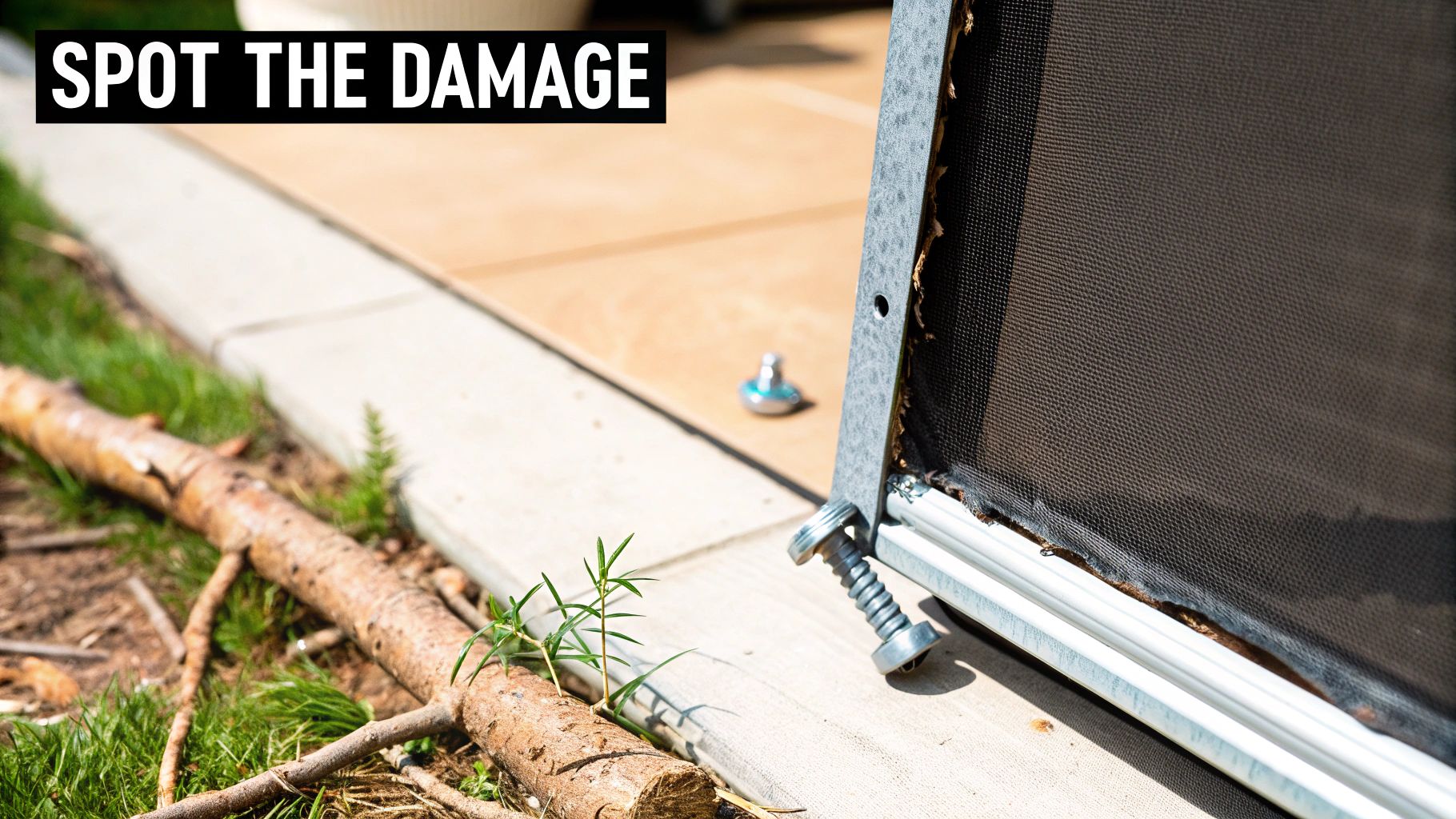
Before you can figure out the right fix, you have to play detective for a bit. Learning to spot the specific signs of wear and tear on your screen enclosure helps you know exactly what to tell a pro—and helps you catch small problems before they turn into major headaches. After all, your enclosure is out there battling the elements 24/7.
Think of it like being a doctor for your outdoor space. A tiny rip in the screen is like a minor cut, easy to patch up. But a rusty screw or a wobbly door? That could be a sign of a deeper issue that needs attention before it gets worse. Each problem tells a story about what your enclosure has been through and what it needs to stay strong.
Identifying Problems With The Screen Mesh
The easiest issues to spot usually involve the screen material itself. Over time, constant exposure to Florida’s intense sun, driving rain, and whipping winds takes a toll on even the toughest mesh.
Here are the most common screen-related problems you'll run into:
- Rips, Tears, and Holes: The classic signs of damage. These are often caused by falling branches, a curious pet’s claws, or an accidental bump from the lawnmower. Even a small hole is an open invitation for pests.
- Sagging or Loose Screens: If your screen looks wavy or droops like a sad old curtain, it’s lost its tension. This usually happens with age, as years of sun exposure cause the material to stretch and weaken.
- Brittle or Fading Material: A screen that feels stiff, flakes away when you touch it, or has faded to a chalky gray is at the end of its life. That brittleness means it’s just one bad storm away from shredding completely.
Inspecting The Aluminum Structure And Hardware
While the screen mesh gets all the attention, the aluminum frame and the hardware holding it all together are the enclosure’s skeleton. Problems here can be much more serious and often need a professional to ensure the structure remains safe and sound. These issues are often subtle but can lead to total failure if you ignore them.
A wobbly door or a rust-colored stain might seem like a small cosmetic flaw, but they're often the first warning signs of underlying structural decay. Taking care of them early prevents a much bigger, more expensive repair down the road.
Keep an eye out for these critical warning signs during your inspection:
- Corroded Fasteners: Older enclosures were often built with steel screws that eventually rust, leaving those ugly orange streaks on the aluminum. Rusted-out screws weaken the joints and can fail without warning.
- Bubbling or Chipping Paint: The paint isn’t just for looks; it’s a protective barrier for the aluminum. When it starts to bubble or flake off, it exposes the raw metal to moisture, leading to oxidation and a weaker frame.
- Loose or Wobbly Doors: A screen door that sticks, won't close right, or feels unstable is more than just an annoyance. It often points to failing hinges, a warped frame, or even a settled foundation—all things that compromise your enclosure’s security.
By learning to spot these different types of damage, you’re in a much better position to maintain your outdoor living space. For a deeper dive into specific fixes, check out our guide covering common screen issues and their solutions. A good diagnosis is always the first step toward a lasting repair.
Navigating Your Repair And Restoration Options
When your screen enclosure starts looking a little worse for wear, it doesn’t automatically mean you need a total teardown. Just like any other part of your home, you’ve got a whole range of repair and restoration options, each designed to tackle a specific problem. Knowing what’s available helps you make the best call for your enclosure’s condition, your budget, and how long you want the fix to last.
Think of it this way: fixing a single torn screen panel is like changing a burnt-out lightbulb. It’s a quick, focused solution that solves an immediate, isolated issue. But if you’re dealing with brittle, faded, or sagging screens across the board, a full rescreen is more like repainting your entire house. It’s a complete overhaul that gives you a fresh, uniform look and protects the whole structure for years to come.
Targeted Fixes: Panel Replacement
Sometimes, the damage is isolated. A fallen branch, an errant golf ball, or even an overly excited pet can leave you with one or two ripped panels while the rest of the enclosure is perfectly fine. In these cases, a panel replacement is the smartest and most budget-friendly solution.
A technician will come out, carefully remove the old, damaged screen and the rubber spline holding it in, and then install a brand-new section of screen. They’ll pull it perfectly taut to match the tension of the surrounding panels, making the repair seamless. This is the perfect approach for newer enclosures with just a small area of damage.
Comprehensive Overhauls: The Full Rescreen
When the damage is widespread, a full rescreen is the way to go. If more than 30% of your panels are damaged, or if the screen material everywhere is getting brittle and faded from years of sun, patching individual spots just isn't worth it—you'll be chasing repairs forever. A full rescreen means replacing every single screen panel on your lanai, patio, or pool cage.
This process doesn’t just make your enclosure look new again; it also gives technicians a chance to inspect the entire structure up close. It's a great opportunity to catch any hidden issues before they turn into bigger problems. If this sounds like what you need, you can learn more about how to properly rescreen a pool enclosure to get a better sense of the project.
Structural Integrity: Hardware And Frame Restoration
A truly solid screen enclosure repair is about more than just the mesh. The aluminum frame and the fasteners holding it all together are the enclosure’s skeleton. Over time, the cheap steel screws used in many older structures start to rust, leaving ugly stains and, more importantly, weakening the critical connection points.
Restoring the structural components of your enclosure is just as important as replacing the screen. Upgrading to corrosion-resistant fasteners and addressing frame damage ensures your investment is built to last against Florida’s humid, salt-heavy air.
This is where professional restoration really shines. Key structural services include:
- Hardware Replacement: Technicians swap out all the old, corroded steel screws for high-quality, corrosion-resistant fasteners built to handle the elements.
- Frame Restoration: If your frame’s paint is bubbling or chipping, a full restoration might be in order. This can involve sanding down the bad spots and applying a fresh coat of durable paint to protect the aluminum from oxidation.
Investing in these repairs is about more than just looks; it's a smart financial move. Screen enclosure repairs are sound investments, with national job averages hitting around $922 for various fixes. While a full rescreen for a 300-square-foot patio might run between $2,100 and $2,700, it’s a cost-effective solution for Tampa Bay homeowners battling constant sun and salt air. It's a growing market, expected to hit $2.3 billion by 2033, largely because Florida homeowners see these enclosures as vital parts of their living space. You can find more insights on screen enclosure repair costs on HomeAdvisor.
Understanding The Cost Of Screen Enclosure Repair
Trying to budget for a home repair can feel like you're trying to hit a moving target. But when it comes to screen enclosure repair, figuring out the cost is actually more straightforward than you might think. A few key factors come together to determine the final price, and once you know what they are, you're in the driver's seat.
Think of it like ordering a custom pizza—the final cost depends on the size you get, the quality of the ingredients, and how many toppings you pile on. In the same way, the price for your repair is shaped by the size of your enclosure, the type of screen you choose, and just how much structural work needs to be done. A simple panel patch is like a single slice, while a full rescreen with brand-new hardware is the extra-large with everything. Breaking it down this way helps you see exactly where your money is going.
Key Factors That Influence Repair Costs
No two screen enclosures are exactly alike, and neither are their repair needs. When a professional gives you an estimate, it’s not a random number; it's a careful calculation based on the specifics of your project. Knowing what goes into that calculation helps you understand your quote and spot a fair price.
Here are the main things that will shape the final cost:
- Size of the Enclosure: This is the big one. Larger pool cages or lanais naturally require more material and more hours of labor, which directly drives up the price.
- Type of Screen Material: Your standard fiberglass screen is the most budget-friendly choice. If you upgrade to tougher materials like a pet-resistant screen or a finer "no-see-um" mesh to keep out the tiniest pests, the cost per square foot will be higher.
- Scope of the Damage: Popping in a new screen on a single, easy-to-reach panel is a quick and low-cost job. A full rescreen of an entire enclosure, on the other hand, is a much bigger project, and the price will reflect that.
- Structural Repairs: Sometimes the problem is more than just the screen. If the aluminum frame itself needs work—like swapping out rusted screws for corrosion-resistant fasteners or straightening bent sections—that will add to the total cost.
Labor and Accessibility Considerations
Beyond the materials and the size of the job, labor is a huge part of any screen repair quote. How complex the work is and how difficult it is for technicians to get to the damaged areas play a massive role in the final labor costs.
A standard, single-story lanai, for example, is pretty simple to work on. But a two-story enclosure? That requires special equipment like scaffolding or tall ladders, which adds to the time and risk for the crew. Spots that are tough to reach because of landscaping, pools, or other obstacles can also tack on more labor hours. A good, professional estimate will always account for these logistical challenges to make sure the job is done safely and correctly.
Our goal is to demystify the pricing process. A transparent quote should clearly break down material costs, labor, and any extra services. This protects you from hidden fees and shows you the full value of investing in a licensed, insured professional.
Breaking Down the Numbers
Let's get down to brass tacks. The average pool screen enclosure repair costs around $922, but that can range anywhere from $297 for minor fixes to $1,586 for more extensive jobs. This flexibility makes repairs an accessible option, whether you're a homeowner on a budget or a real estate agent getting a home ready for the market.
Labor usually makes up a good chunk of the cost, typically running between $35-$50 per hour. However, savvy contractors often bundle individual repairs into a full rescreening job, which is priced at around $7-$9 per square foot. This can actually save you up to 30% compared to paying for small, piecemeal repairs over time.
For a really deep dive into the specific expenses you might encounter, check out our guide on the typical lanai screen repair cost. It will give you an even clearer picture of what to expect when you get an estimate.
Repair It Or Replace It? Making The Right Call For Your Screen Enclosure
It’s the big question every homeowner faces when they see a sagging screen or a rip in their lanai: do I just get it patched, or is it time to start over? This can feel like a tough call, but it really boils down to a simple trade-off between a quick fix and a long-term solution.
Think of it like deciding what to do with an old car. A single flat tire is an easy fix—you just replace the tire, not the whole car. In the same way, if a stray golf ball or an overly enthusiastic pet leaves you with a couple of torn panels, a simple repair is all you need. It's fast, affordable, and gets your space back to normal without a major project.
When A Simple Repair Is The Way To Go
Opting for a targeted screen enclosures repair makes perfect sense when the damage is isolated and the rest of your structure is still holding up strong. If your enclosure is still relatively new and the screen mesh feels flexible and looks good, patching things up is your best bet.
A repair is probably the right move if you're seeing:
- Isolated Damage: You've got one or two panels with clear rips or holes, but the screens right next to them are still taut and in great shape.
- Minor Hardware Glitches: A door handle is wobbly, a hinge is squeaking, or a latch isn't catching right. These are small fixes that don't signal a bigger problem.
- A Newer Enclosure: If your enclosure is less than ten years old, the aluminum frame and most of the screen mesh should still have plenty of life left in them.
Red Flags That Point To A Full Replacement
On the flip side, there comes a time when patching up an old enclosure feels like putting one band-aid after another on a much bigger issue. It gets frustrating and, honestly, it stops being cost-effective. A full rescreen becomes a much smarter investment when the whole system is showing its age. A lot of homeowners get stuck here, but getting a fresh perspective by understanding the repair vs replacement dilemma can really help clarify the decision.
Keep an eye out for these tell-tale signs that it’s time for a complete overhaul:
- Widespread Brittleness: Go touch the screen. If it feels stiff, crackles, or flakes away when you press on it in multiple spots, its time is up.
- Serious Corrosion: Look for those ugly rust-colored streaks running down from old steel screws. Or maybe you see bubbling paint on the aluminum frame. Both are signs that the structure itself is weakening.
- More Than 30% Damage: If a third or more of your panels are torn, sagging, or just look terrible, you'll spend less money in the long run with a full rescreen instead of paying for panel after panel.
This flowchart gives you a good idea of how costs scale with the amount of damage, from tiny tears to a full-blown rescreening project.
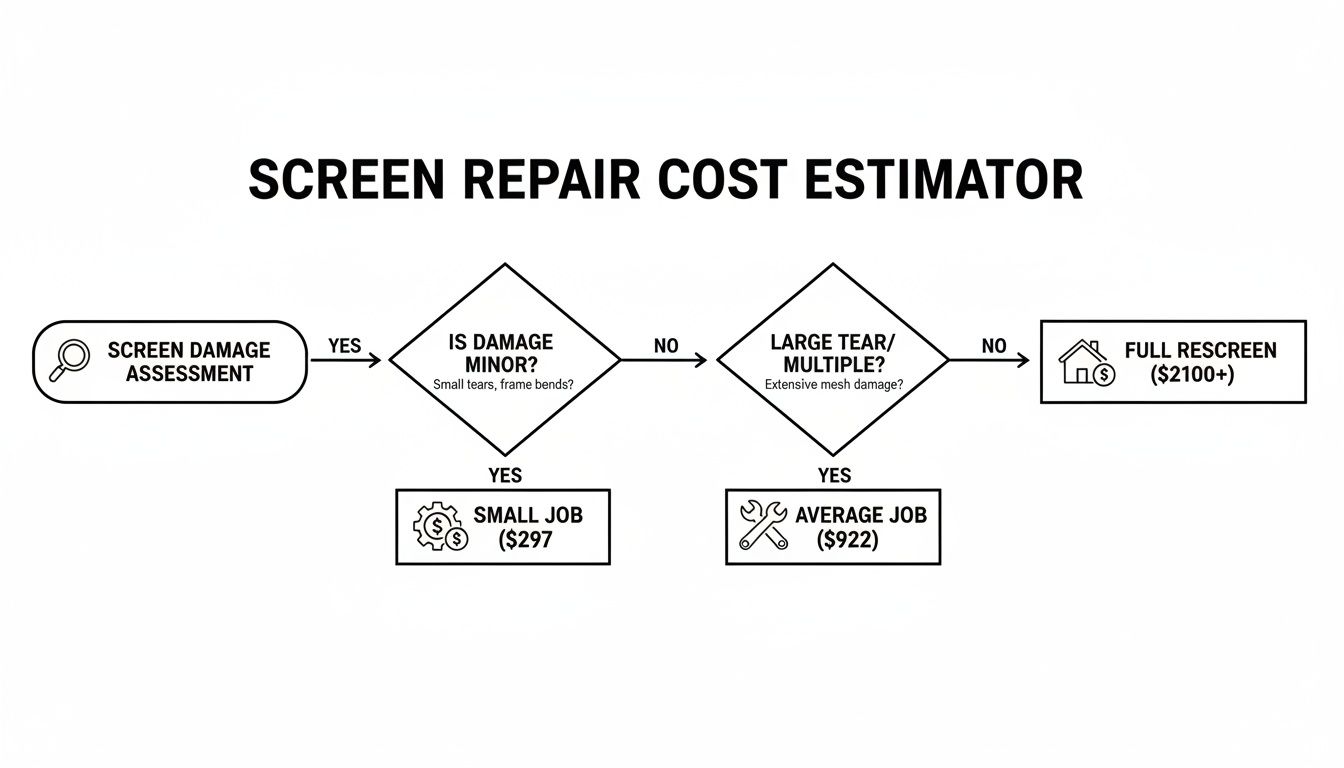
As you can see, once the damage starts adding up, the value shifts pretty quickly toward a complete restoration.
The choice between repair and replace really comes down to value. A quick patch restores function for today, but a full rescreen restores the integrity, beauty, and long-term durability of your entire outdoor living space.
This isn't just a minor issue for a few homeowners, either. Florida's screen enclosure repair industry saw demand jump by 40% after the last few hurricane seasons. A storm like 2022's Hurricane Ian damaged over 50,000 pool cages across the state, showing just how vulnerable older structures are.
The data doesn't lie: about 80% of enclosures over 15 years old are prime candidates for rescreening. Making that investment isn't just about looks—it can boost your home's value by as much as 7% in our sunny climate. If you're weighing your options, our guide on whether to refurbish or rebuild your enclosure can give you even more clarity.
How To Choose The Right Screen Repair Contractor
So you've figured out what your screen enclosure needs. Now comes the most important part: picking the right professional to do the job. You can find some great advice on how to spot the best repair companies, which is key to getting quality work. Finding a trustworthy partner is the single best way to protect your investment and make sure the job gets done right the first time.
Think of it this way: hiring a contractor is like finding a guardian for your outdoor living space. You wouldn't hand over your house keys to just anyone, right? The same logic applies here. A great contractor brings the skills, but they also operate with honesty and professionalism, turning what could be a headache into a smooth, satisfying project.
Non-Negotiable Contractor Credentials
Before you get into the weeds of screen types and project timelines, there are a few must-haves that every legitimate contractor should have on hand. These are the absolute basics for your safety and their accountability. Skipping this check can leave you open to some serious financial and legal trouble if an accident happens on your property.
Make sure any company you’re considering can show you proof of:
- Proper Licensing: In Florida, contractors need to be licensed for the work they do. This is your guarantee that they’ve met the state’s standards for skill and knowledge.
- Comprehensive Insurance: Always confirm they have both general liability and worker's compensation insurance. This is what protects you from being on the hook for accidents or property damage during the repair.
These credentials are your first line of defense against shoddy work and ugly surprises.
A contractor who has their license and insurance info ready to go is showing you they’re a pro who takes their business—and your safety—seriously. Never feel weird about asking to see these documents.
Evaluating Quality And Craftsmanship
Once you’ve confirmed the essentials, it’s time to dig a little deeper. The quality of the materials and the company's reputation will tell you a lot about the final product you can expect. Don't be shy about asking specific questions about what they plan to use for your screen enclosure repair.
A good contractor will be happy to walk you through their material choices. You’ll also want to see what past customers have to say about them.
Here’s what to look for:
- Material Quality: Ask if they use American-made screen, which usually meets higher quality standards. For the hardware, insist on corrosion-resistant fasteners to avoid those ugly rust stains and future weak spots.
- Online Reviews: Check out their reviews on sites like Google. Look for a consistent pattern of happy customers, and pay close attention to comments about them being on time, communicating well, and cleaning up after themselves.
- Warranty Protection: A contractor who is confident in their work will stand behind it. Ask for a clear warranty that covers both the screen material and the labor.
Taking these extra steps helps ensure you end up with a professional who’s committed to delivering a solid, high-quality repair. It gives you peace of mind knowing your enclosure is in good hands and that your investment is built to last.
Your Top Screen Repair Questions Answered
When it comes to screen enclosure repairs, it's natural to have a few questions. Homeowners often wonder about timelines, materials, and whether a repair is even the right move. To give you some clarity, we've put together answers to the questions we hear most often.
Think of this as your go-to guide. Our goal is to arm you with the information you need to feel confident about taking care of your outdoor living space.
How Long Does A Typical Screen Enclosure Repair Take?
The time it takes really boils down to the scope of the job. For a simple, single-panel replacement, we can often be in and out in under an hour. It's a quick fix—we just remove the old screen and spline, then pop in a new panel with perfect tension.
Now, if we're talking about a full rescreen of an average-sized pool cage, that's a bigger project. You can usually expect that to take one to two full days. If we're also tackling structural repairs, swapping out old hardware, or painting the aluminum frame, that will naturally add a bit more time. We always lay out a clear, realistic timeline with your free estimate so there are no surprises.
What Type Of Screen Material Is Best For My Florida Home?
There's no single "best" screen for every home—it's all about finding the right balance for your lifestyle, budget, and how you use your space. The perfect choice really depends on your priorities.
- Standard Fiberglass: This is the go-to for a reason. It's a great, cost-effective option that does a solid job of keeping insects out and is the most common material you'll see.
- Pet-Resistant Screen: If you've got four-legged family members or active kids, this tougher screen is a fantastic upgrade. It’s designed to resist the tears and punctures that pets can cause.
- "No-See-Um" or "Better View" Screen: For homeowners who want to keep out even the tiniest gnats or those who have a stunning view they don't want to obstruct, these finer mesh screens are the way to go. They offer incredible visibility and protection.
When we meet for a consultation, we’ll walk you through these options and help you find the perfect match for your home's needs and your wallet.
Is It Worth Repairing An Old Pool Cage?
Absolutely, provided the main aluminum structure is still in good shape. If the frame itself isn't suffering from major corrosion or structural damage, a full restoration can make it look and function like it’s brand new again.
Pairing a full rescreen with new, rust-proof hardware is an incredibly effective way to add years to your enclosure's life for a fraction of what a total replacement would cost. However, if our inspection reveals that the structure itself is compromised, then replacing it becomes the safer, more durable long-term solution. A professional assessment is the only way to get a straight answer you can trust.
Ready to bring your outdoor oasis back to life? The expert team at Rescreen Rescue has the experience and top-tier materials to handle any screen enclosure repair, big or small. Contact us today for a free, no-obligation estimate!