


A torn or brittle screen on your pool enclosure is way more than just a cosmetic issue—it’s a major weak spot in your backyard oasis. Getting it fixed isn't just a repair; it's an investment in your home's safety, value, and your family's ability to actually enjoy your outdoor space without a bunch of nagging problems.
Why Your Pool Enclosure Screen Needs Attention
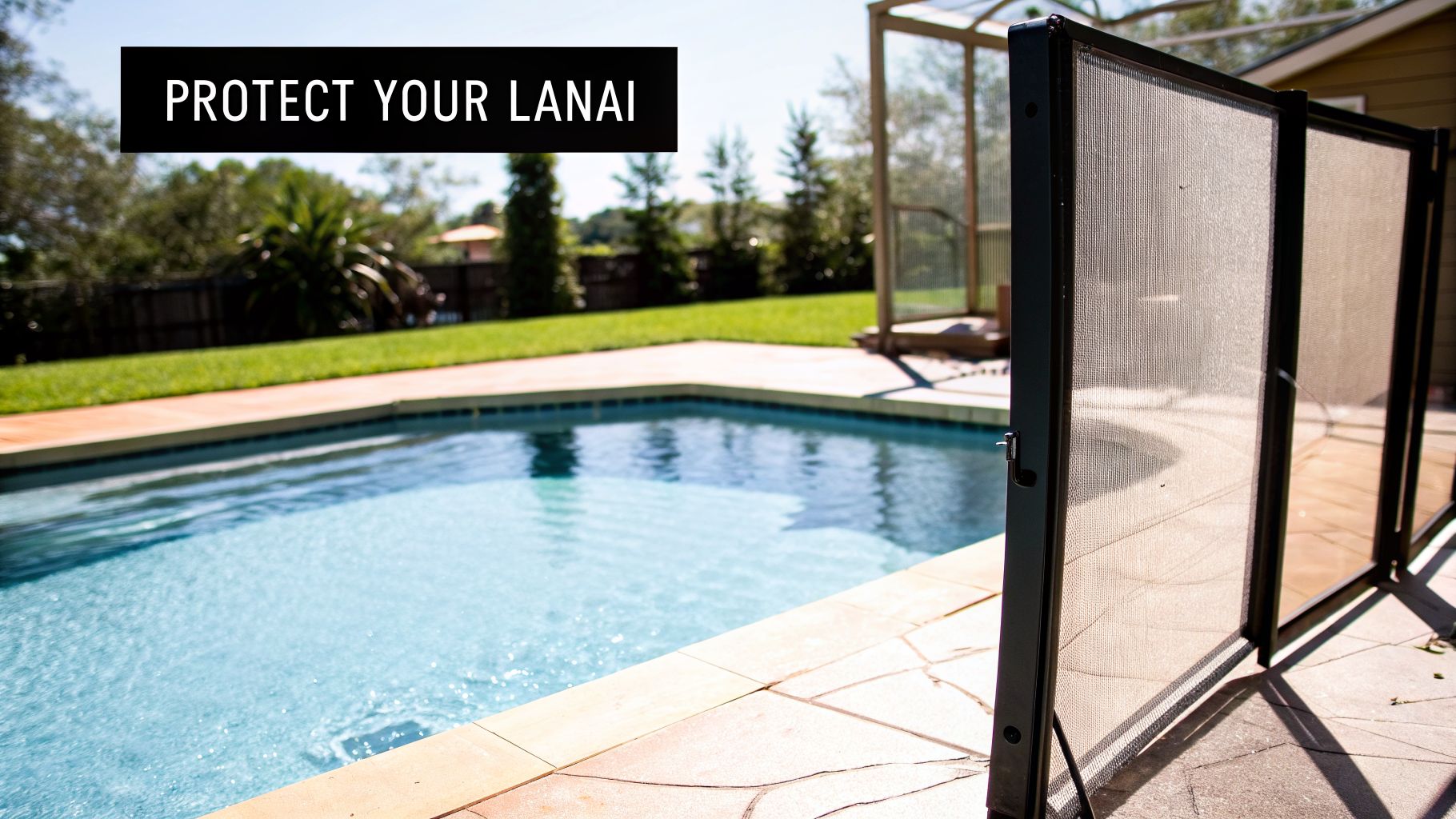
Think of your pool enclosure as the ultimate shield for your outdoor living area. Its whole job is to create a bug-free, comfortable zone where you can kick back and soak up that gorgeous Florida weather without being bothered by uninvited guests. But the moment that screen gets compromised, the shield is down.
Even a tiny rip acts like a wide-open door for mosquitoes, no-see-ums, and every other critter that wants to join your pool party. It also lets in a constant stream of leaves, pine needles, and other gunk that dirties up your pool and deck. That means more skimming for you and more strain on your pool's filter.
It's More Than Just Keeping Bugs Out
Beyond pest control, a solid screen enclosure is a huge contributor to your home’s safety and even its structural integrity. A torn screen can be a real hazard, especially if you have curious pets or small kids who might see it as an escape route.
Ignoring damage also puts a ton of stress on the aluminum frame. A loose, flapping screen panel gets yanked around by the wind, which can weaken the connections and lead to much bigger, more expensive problems down the road. Fixing a small hole now is all about protecting the entire structure.
Tackling screen damage right away is the single best thing you can do to stop a minor headache from turning into a major structural nightmare. It’ll save you a ton of money and frustration in the long run.
The Unrelenting Impact of Florida’s Climate
Let's face it, Florida's weather is amazing, but it's incredibly tough on outdoor screens. The combination of intense sun, high humidity, and regular storms is a recipe for breaking down screen materials over time.
- UV Radiation: That constant sunshine makes screen fabric brittle and discolored, which is why it tears so easily after a few years.
- Storms and Debris: High winds and flying debris during our storm season are the top culprits for punctures, rips, and entire panels blowing out.
- Moisture and Humidity: The persistent dampness is perfect for growing algae or mildew. Not only does it look gross, but it actively degrades the screen material itself.
Knowing what you’re up against is the first step to staying ahead of the game. You can get the full scoop on how Florida weather affects your screens in our detailed guide. A well-maintained screen is an investment that truly pays off by extending the life of your whole enclosure and keeping your lanai the pristine retreat it’s meant to be.
How To Inspect Your Pool Screen for Damage
Think of this like a routine checkup for your lanai. Knowing what to look for is the first real step toward a pool enclosure screen repair that actually lasts. Catching small issues early is the best way to keep them from turning into massive, expensive headaches down the road. A thorough walk-around doesn't take long, but it gives you the knowledge to understand what’s really going on with your enclosure.
The best way to spot problems is to walk the perimeter of your enclosure, both inside and out. I always recommend doing this on a bright, sunny day—the light makes even the tiniest imperfections stand out. Don't just give it a quick glance; take your time and look at each panel from a few different angles.
Identifying Common Types of Screen Damage
Damage isn't always as dramatic as a giant gash from a fallen tree branch. More often than not, the biggest problems start out incredibly small. Understanding the different kinds of damage helps you get a true sense of your enclosure's overall health.
A good way to start is by figuring out if the problems are isolated or widespread. Is the damage contained to one or two panels, or are you seeing the same issues across the entire structure? This is a critical distinction when you're trying to decide between a simple patch job and a more comprehensive solution. You can learn more about tackling specific problems in our guide to common screen enclosure repairs.
Here’s a quick checklist of what to keep an eye out for during your inspection:
- Punctures and Small Holes: These are the usual suspects, often caused by pets, birds, or small flying debris. They might seem harmless, but even a tiny hole is an open door for every mosquito and no-see-um in the neighborhood.
- Large Rips and Tears: This kind of damage usually comes from a bigger impact, like storm debris or someone accidentally leaning too hard against the screen. A large tear kills the panel's tension and needs to be addressed right away.
- Fraying Edges: Look closely at the area where the screen meets the aluminum frame. If you see frayed or unraveling material, that's a dead giveaway that the screen is getting old and losing its strength.
Recognizing the Subtle Signs of Wear and Tear
Beyond the obvious holes, your screens will give you some subtle clues that they're approaching the end of their lifespan. These are the warning signs people usually miss, but they’re just as important as a visible tear. Ignoring them can lead to a sudden, widespread failure, especially when a storm rolls through.
One of the most common culprits is UV degradation. Florida’s intense sun is relentless, slowly breaking down the screen material until it becomes brittle. If you gently poke the screen and it feels stiff or makes a crackling sound, it has lost all its flexibility and is just waiting for a reason to tear. That’s a huge indicator that a full rescreen might be in your near future.
A healthy screen should feel pliable and flexible, almost like a new tennis racket string. A screen that feels brittle or crunchy to the touch has lost its durability and is a tear waiting to happen.
Another key component to check is the spline—that’s the rubbery cord holding the screen tight inside the aluminum channel. Over the years, the spline can dry out, shrink, and pop right out of its groove. This is what causes those loose, saggy, or flapping screen panels that put a ton of stress on both the screen and the frame itself.
Finally, look for discoloration and algae growth. A screen that has faded from a deep black to a chalky gray is a classic sign of sun damage. And those green or black streaks of algae? They don't just look bad; they trap moisture against the screen, which speeds up its decay. These visual cues are basically your screen's way of telling you it’s getting old and tired.
Deciding Between DIY Fixes and Professional Repair
When you spot a rip in your pool screen, the first thought is usually a quick trip to the hardware store for a patch kit. It seems like the fastest, cheapest solution. And for a tiny, clean puncture, it might just hold you over for a bit. But it's crucial to weigh that short-term fix against the long-term reality of a proper, professional pool enclosure screen repair.
Think of a DIY patch like putting a bandage on a wound that really needs stitches. It covers the problem temporarily, but it's not a durable, seamless solution. These patches rarely match the screen color, stick out like a sore thumb, and often peel away under the stress of Florida’s relentless sun and wind. Before you know it, you're right back where you started.
The Hidden Risks of a Do-It-Yourself Job
Jumping into a DIY screen repair without the right experience or tools can easily make things worse. The biggest giveaway of an amateur job is improper screen tension. Professionals use specialized tools to stretch the new screen perfectly tight inside the frame. Without them, you’re almost guaranteed to get a saggy, loose panel that flaps in the breeze and puts extra strain on the whole structure.
And it’s not just about looks—there are real safety concerns. Working on the upper sections of a pool cage means climbing tall ladders, often 10 to 20 feet in the air. One slip can lead to a serious injury, turning a simple screen fix into a major personal and financial headache.
You’ll want to avoid these common DIY pitfalls:
- Mismatched Materials: Grabbing the wrong type or color of screen creates a patchwork quilt effect that tanks your home's curb appeal.
- Improper Spline Installation: The rubber spline is what holds the screen in place. If it’s not seated perfectly, the screen will pop right out with the first strong gust of wind.
- Safety Hazards: Let's be honest, working at heights without the proper safety gear is just plain risky for the average homeowner.
This flowchart can help you visualize what to look for when inspecting your enclosure and deciding if a repair is in your future.
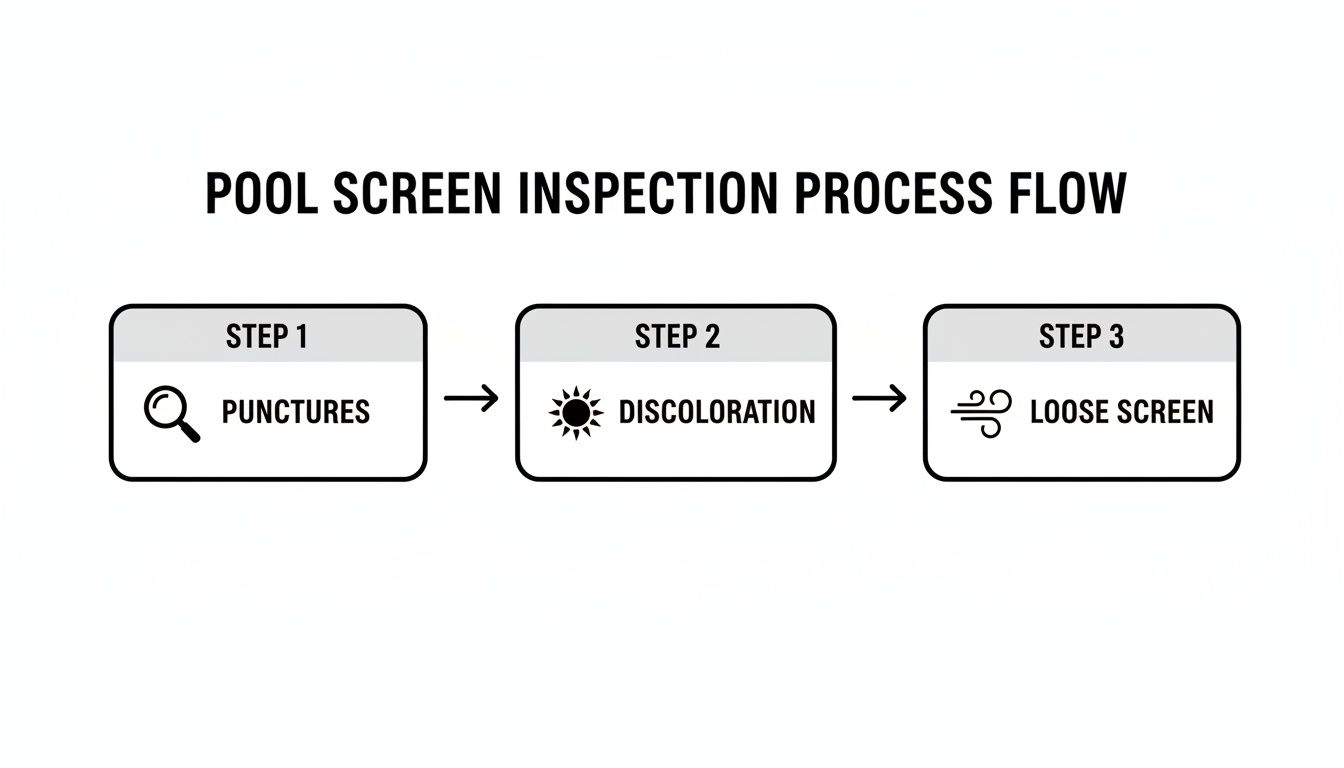
As you can see, things like punctures, sun discoloration, and loose screens are all connected signs of wear and tear that need attention.
Why Professional Expertise is Worth It in the Long Run
Hiring a professional for your pool enclosure screen repair is an investment in quality and your own peace of mind. Experienced technicians show up with specialized knowledge, commercial-grade materials, and the right equipment to get the job done correctly and safely the first time. They deliver a flawless, drum-tight finish that not only looks fantastic but is built to stand up to our wild Florida weather. While it's tempting to patch minor tears yourself, it pays to know when DIY fixes fall short and an expert is needed for a lasting fix.
A professional repair isn’t just about plugging a hole; it’s about restoring the integrity, safety, and beauty of your entire outdoor living space for years to come.
Ultimately, going with a pro ensures your enclosure remains a strong, secure, and beautiful part of your home.
Breaking Down the Cost of Screen Repair Projects
Figuring out the budget for a pool enclosure screen repair can feel like a bit of a guessing game, but it doesn't have to be. The final price isn't just a number pulled out of thin air; it’s a combination of a few key factors. Once you understand what goes into a quote, you can set a realistic budget and feel good about the investment you're making in your outdoor space.
It’s not just about the size of one little tear. Think of it this way: fixing a single panel at eye level is a straightforward job. But replacing a hard-to-reach panel on the roof? That’s a whole different story. The height and complexity of your enclosure play a massive role in the labor needed, which is a big driver of the total cost.
Key Factors That Influence Your Final Quote
Every pool cage is different, so every repair quote will be, too. A pro technician will look at several specific things about your enclosure to give you an accurate estimate. It’s a lot like getting a custom suit made—the final price depends on the fabric, the fit, and all the little details.
Before you make a call, it's smart to know what drives repair costs. A helpful guide on window screen repair costs can offer some great insights, as the same basic principles apply to lanais and pool enclosures. It really boils down to materials and labor.
Here’s what a professional will consider:
- Project Scope: Are we talking about a single-panel patch-up or a full rescreen? A complete rescreening is a much bigger project. It involves tearing out all the old, worn-out material and spline before carefully installing brand new screens across the entire structure.
- Enclosure Size and Height: This is a big one. Taller and larger enclosures obviously need more screen material, but they also demand more labor and specialized equipment like scaffolding or extra-tall ladders. All of that adds up.
- Screen Material Quality: The type of screen you pick is probably the biggest variable. Standard fiberglass is the most common, budget-friendly choice. But premium options like heavy-duty polyester or other specialty screens, while more expensive upfront, are built to last much longer in the Florida sun.
Understanding Price Ranges for Common Repairs
Having a ballpark idea of costs helps you plan without any surprises. While your project will be unique, national averages give you a pretty good starting point.
Industry data shows that most homeowners spend around $922 on typical pool screen enclosure repairs, with most smaller jobs falling somewhere between $297 and $1,586. Now, for a bigger job like a full rescreen of a standard 500-square-foot enclosure, you can expect the cost to be in the $3,500 to $4,500 range. These numbers really show how catching a small repair early can save you from a much bigger bill down the road.
Investing in a higher-quality screen material often provides a better return over time. While the initial cost is higher, a durable polyester screen that lasts 20-30 years can save you from having to do a second full rescreen compared to a standard fiberglass screen that might only last 15 years.
This long-term perspective is key. You can dive deeper into the numbers in our detailed guide that covers the full cost to rescreen a pool enclosure.
Comparing Pool Screen Material Costs and Lifespan
Choosing the right screen material is a balancing act between your immediate budget and long-term value. In Florida, this choice is especially critical due to the intense sun, humidity, and storm seasons. Here’s a breakdown of the most common options to help you see how they stack up.
- Standard Fiberglass: This is a budget-friendly choice for basic insect protection. It typically costs $1.50 – $2.50 per sq. ft. and has an expected lifespan of 10-15 years.
- Polyester (Super Screen): Ideal for long-term durability, high-traffic areas, and resistance to pets and UV rays. It costs around $2.50 – $4.00 per sq. ft. but can last for 20-30 years.
- Pet-Resistant Screen: A great option for households with cats or dogs that might claw or push against the screen. It costs between $2.00 – $3.50 per sq. ft. and lasts 15-20 years.
- Solar/Shade Screen: Best for enclosures with intense sun exposure, as it provides shade and reduces heat. Expect to pay $2.75 – $5.00 per sq. ft. for a screen with a lifespan of 15+ years.
As you can see, while standard fiberglass is the cheapest option upfront, investing in a polyester screen can nearly double the lifespan of your enclosure, saving you from a future rescreening project.
The Long-Term Value of Quality Materials
Going for the cheapest screen you can find might feel like a win for your wallet today, but it often ends up costing you more in the long run. Here in Florida, the sun and humidity are relentless. Budget-grade screens can get brittle and start tearing in just a few years, putting you right back where you started—paying for another repair.
Opting for a premium polyester screen is a strategic move. This stuff is way more resistant to UV damage, punctures from pets or flying debris, and the general abuse our storm season dishes out. Yes, the upfront cost is higher, but its incredible lifespan means you save a ton of money by avoiding a premature replacement. You get peace of mind knowing your enclosure will stay strong and look great for years to come.
Finding A Trusted Screen Repair Contractor
Choosing the right company for your pool enclosure screen repair is just as important as picking the best materials. A top-notch contractor gets the job done right the first time, saving you from future headaches and surprise costs. But with so many options out there, how do you find a team you can actually trust?
It really comes down to looking for a few non-negotiable signs of quality and professionalism. Think of it like hiring any other expert to work on your home. You wouldn’t let just anyone tinker with your plumbing or electrical system, and your pool enclosure deserves that same level of care. A reputable company will be transparent, knowledgeable, and committed to using materials that can handle Florida's brutal climate.
Verifying Licenses and Insurance
Before you get into the nitty-gritty of screen types or pricing, your very first move should be to confirm the contractor is properly licensed and insured. This isn't just a formality—it's your safety net as a homeowner.
A valid license proves they meet state and local standards, while solid insurance coverage protects you from any liability if an accident happens on your property. Don't be shy about asking for proof of both. A trustworthy company will have this documentation ready to go. If a contractor gets cagey or can't produce the credentials, that’s a huge red flag. Walk away.
Asking the Right Questions About Materials
Not all screen repair jobs are created equal, and the quality of the materials is what truly separates a temporary fix from a long-term solution. When you're vetting a contractor, you need to dig into the specifics of what they're planning to install. Don’t settle for vague promises; get direct answers.
Here are the key questions you need to ask:
- What grade and type of screen do you use? A pro will happily explain the differences between standard fiberglass and tougher polyester screens, guiding you to the right choice for your budget and how you use your space.
- What kind of fasteners will you install? In Florida's humid, salty air, basic steel fasteners are a recipe for disaster. They'll rust and fail within a couple of years, leaving stains on your enclosure and compromising its structure. You should insist on corrosion-resistant fasteners.
- Do you replace the spline with the screen? Some outfits try to cut corners by reusing old, brittle spline. A quality rescreen always includes brand-new spline to ensure every panel has a tight, secure fit that will last.
The Importance of a Strong Warranty
A solid warranty says everything about a company’s confidence in its own work. A contractor who stands behind their service will offer a clear warranty covering both the materials they use and the labor they perform. This is your guarantee that if something goes wrong, they’ll be back to make it right.
A strong warranty on both parts and labor isn't just a piece of paper; it's a direct reflection of the contractor's commitment to quality craftsmanship and customer satisfaction.
Always get the warranty details in writing. Make sure you understand how long the coverage lasts and exactly what it includes. A company offering a robust warranty is investing in its reputation and your peace of mind, making them a much safer bet for your project. If you want to learn more about finding local professionals, check out our guide on what to look for when searching for screen repair near me.
Simple Maintenance To Extend Your Screen's Life
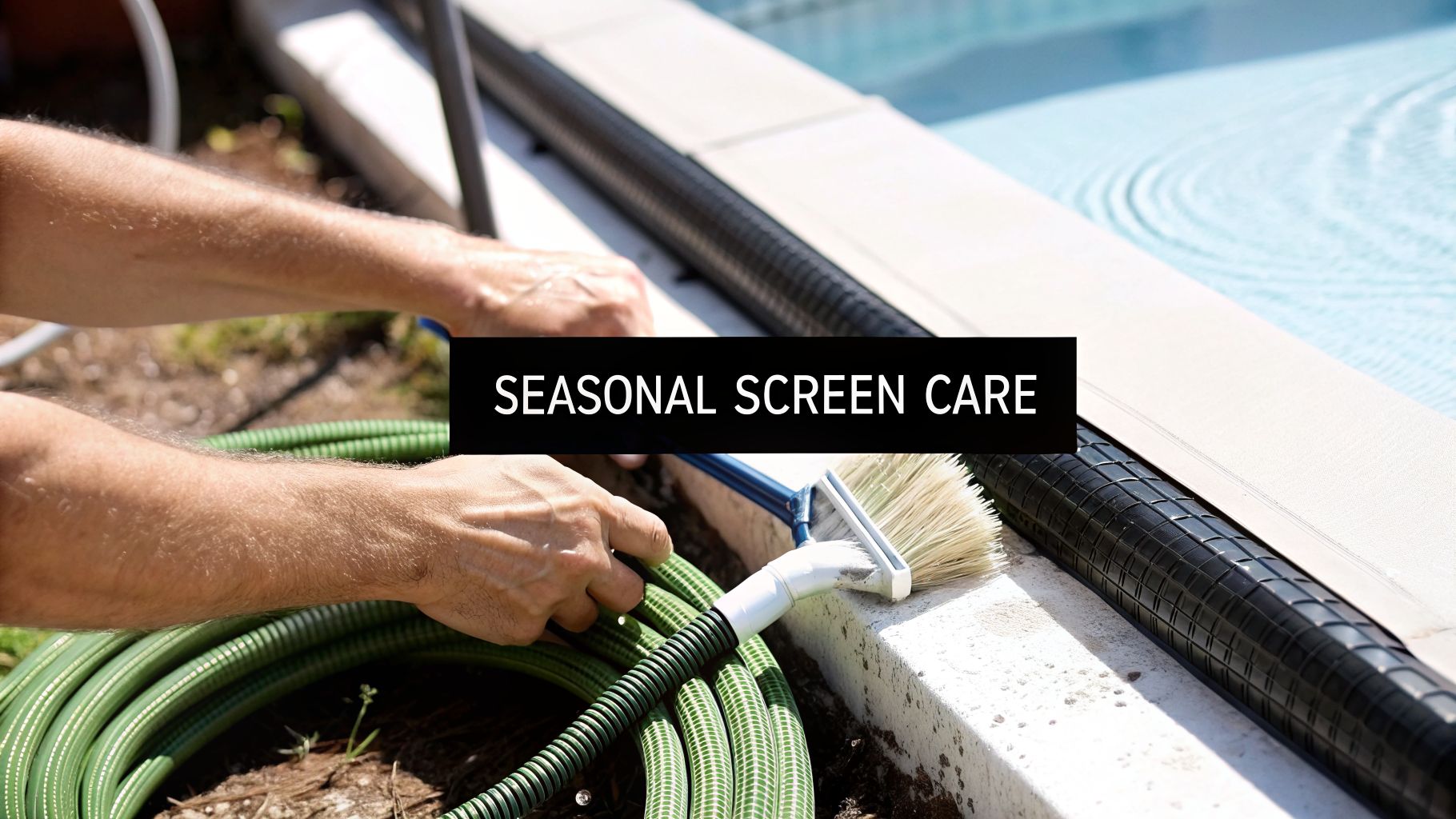
Now that your pool enclosure screen repair is done, a little proactive care will go a long way in protecting your investment. Think of it as a simple, long-term care plan for your outdoor oasis.
Regular maintenance doesn't just keep your lanai looking pristine. It also helps you catch minor issues before they spiral into bigger, more expensive problems. This routine doesn't need to be complicated—just a few key tasks added to your seasonal home maintenance schedule can dramatically extend the life of both your screens and the aluminum structure.
Your Seasonal Maintenance Checklist
A simple, consistent routine is your best defense against premature wear and tear. Just a few minutes of inspection and cleaning each season can add years to your screen’s life, preserving its strength and appearance.
Follow these easy steps to keep your enclosure in top shape:
- Gentle Cleaning: At least twice a year, give your screens a gentle wash. Use a soft brush and a simple mix of mild soap and water. This clears away corrosive stuff like dirt, pollen, and bird droppings that can weaken the screen material over time.
- Avoid High Pressure: Whatever you do, never use a high-pressure washer on your screens. The force can easily stretch, tear, or pop the screen right out of its spline. You'll turn a simple cleaning task into an immediate repair job.
- Inspect Splines and Fasteners: While you’re cleaning, take a close look at the rubber spline holding the screen in the frame. Is it secure? Also, give the fasteners a quick check for any signs of rust or corrosion.
Proactive Landscaping and Care
What happens around your enclosure is just as important as the structure itself. Your landscaping can be a huge source of damage if it's not managed properly, so a little yard work can make a massive difference.
Keeping nearby tree branches trimmed is one of the single most effective ways to prevent screen damage. One heavy branch falling during a storm can wipe out multiple panels in an instant.
Also, be mindful of where you place grills or fire pits. Intense, direct heat can easily melt or weaken the screen material, creating a major vulnerability. Just maintaining a safe distance protects your enclosure from accidental damage.
By combining gentle cleaning with smart landscaping, you create a robust defense that helps your pool enclosure screen repair last for years to come, keeping your outdoor space safe, clean, and beautiful.
Got Questions About Pool Screen Repair? We Have Answers
Even after walking through the entire process, it's completely normal to have a few more questions rattling around. Homeowners in the Tampa Bay area often ask us the same things, so we've put together some clear, no-nonsense answers to help you feel confident in your decision.
How Long Does A Full Pool Cage Rescreen Take?
You'll be happy to know it’s a quick turnaround. For a standard-sized pool cage, a full rescreen is typically finished in just one to two days. Our crews are pros who work efficiently without cutting corners on the important stuff.
The job involves more than just slapping on new screens. We methodically remove every bit of old screen and spline, install each new panel with that perfect drum-tight tension, and swap out old hardware like door kits and bug sweeps. Our goal is to get in, get the job done right, and get out, leaving your pool area clean, secure, and ready for you to enjoy.
Should I Repair One Panel Or Rescreen The Whole Thing?
This is a fantastic question, and it really comes down to short-term savings versus long-term value. The right answer depends on the age and overall health of your screens.
- A single panel repair makes sense if you have one random tear in an enclosure that's less than 7 years old, and all the other screens are still in great shape.
- A full rescreen is the smarter investment if your screens are getting brittle, feel chalky, are faded from the sun, or you’re seeing multiple tears. Constantly patching old, weak screens is a losing battle—you'll just end up with another tear somewhere else, leading to an endless cycle of service calls. A full rescreen gives you a fresh, uniform look and renewed peace of mind.
Think of it like the tires on your car. If you get a nail in a brand-new tire, you patch or replace that one. But if all four are bald and worn out, replacing them one at a time just doesn't make any sense financially or practically.
What Is The Best Screen Material For Florida Weather?
Hands down, a high-quality polyester screen is the way to go for Florida's brutal combo of sun, humidity, and storms. Standard fiberglass is a common budget option, but it just can't handle the constant UV beatdown and gets brittle and frail over time.
Polyester screen, on the other hand, is way more durable and puncture-resistant. It stays flexible much longer, which means it will outlast fiberglass by years, giving you far better long-term value and superior protection from bugs and damage.
Will New Screens Block My View Or Airflow?
Not at all—in fact, you'll probably be surprised by how clear your view is. This is a common worry, but modern, high-quality screens are engineered for maximum visibility and airflow. You can even get finer mesh options, like 'no-see-um' screens, that are amazing at keeping out the tiniest gnats while being practically invisible.
The premium materials we use strike the perfect balance between keeping pests out and letting the beautiful view and breeze in. Your lanai will feel just as open and airy as ever, just without the uninvited guests.
Ready to get your outdoor oasis back? The experienced team at Rescreen Rescue provides fast, reliable, and high-quality screen repair and rescreening services all across the Tampa Bay area. Get your free, no-obligation estimate today!