


That scraping sound. The frustrating gap at the top. We've all been there. A sagging screen door is more than just an annoyance—it's an open invitation for Florida's finest pests and a blemish on your beautiful lanai or pool cage.
Most of the time, the fix is simpler than you think. It usually comes down to tightening a few loose screws or making small adjustments to the frame.
Your Quick Guide To Fixing A Sagging Screen Door
Before you can fix the sag, you have to play detective. The problem almost always starts in one of a few key areas, especially with the constant use our doors get.
- Loose Hardware: This is the most common culprit. Over time, the daily opening and closing can wiggle hinge screws loose, causing the door to droop.
- Frame Misalignment: Sometimes the door's frame itself has shifted or warped, pulling it out of square. This is pretty common in our humid climate.
- Worn-Out Components: Hinges, closers, and other parts don't last forever. Constant exposure to moisture can cause rust and wear, weakening their ability to support the door's weight.
A little familiarity with the basic parts of a door can go a long way in helping you pinpoint exactly where the issue is.
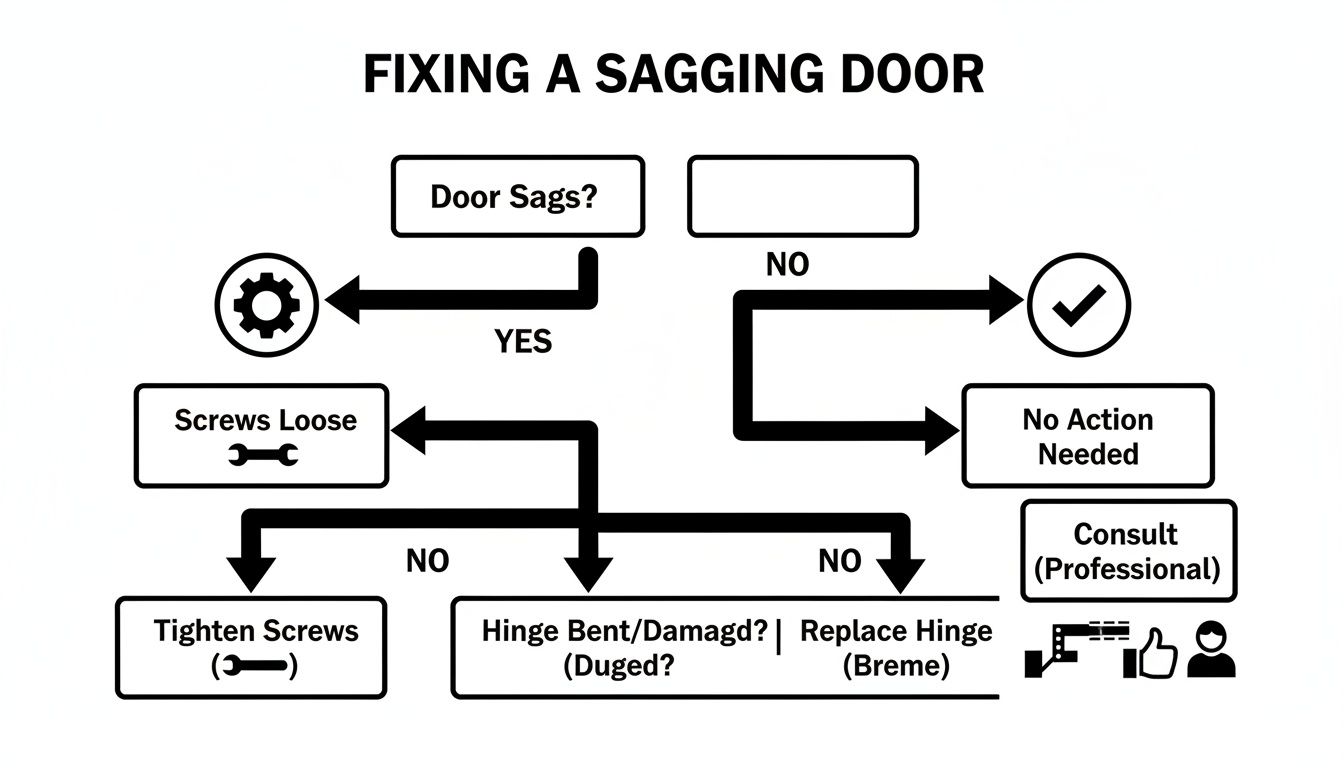
As you can see, the diagnostic process usually starts with the easiest things first—checking the hardware.
Diagnosing Your Sagging Screen Door
Not sure where to start? Match what you're seeing with the likely cause to find the right first step.
- If your door scrapes the ground at the bottom corner: This usually indicates a loose top hinge or worn-out hinge bushings. Your first step should be to tighten all screws on the top hinge.
- If there is a visible gap at the top of the door frame: This often points to a loose bottom hinge or a warped door. Check and tighten the bottom hinge screws first.
- If the door feels wobbly when you open or close it: This is a classic sign of loose screws on all hinges. Go down the line and tighten every screw.
- If the door is hard to latch or won’t stay closed: The latch is likely misaligned due to the overall sag. Try adjusting the strike plate on the door jamb.
This isn't an exhaustive list, but it covers the most common issues we see on a daily basis with lanai and pool enclosure doors.
Why You Shouldn't Ignore The Sag
Letting a sagging door go is more than just inconvenient; it can turn into a more expensive problem down the road. It's actually one of the most common issues flagged during home inspections, affecting up to 25% of properties in coastal markets like ours.
Here in Florida, the combination of humidity and frequent use means screen doors can start to sag from rust and frame swelling in as little as 5-7 years. A quick fix now is a smart investment.
Regular upkeep is always the best defense. For more on keeping your whole enclosure in top shape, check out our expert tips for maintaining your pool enclosure.
Gathering Your Essential Repair Tools
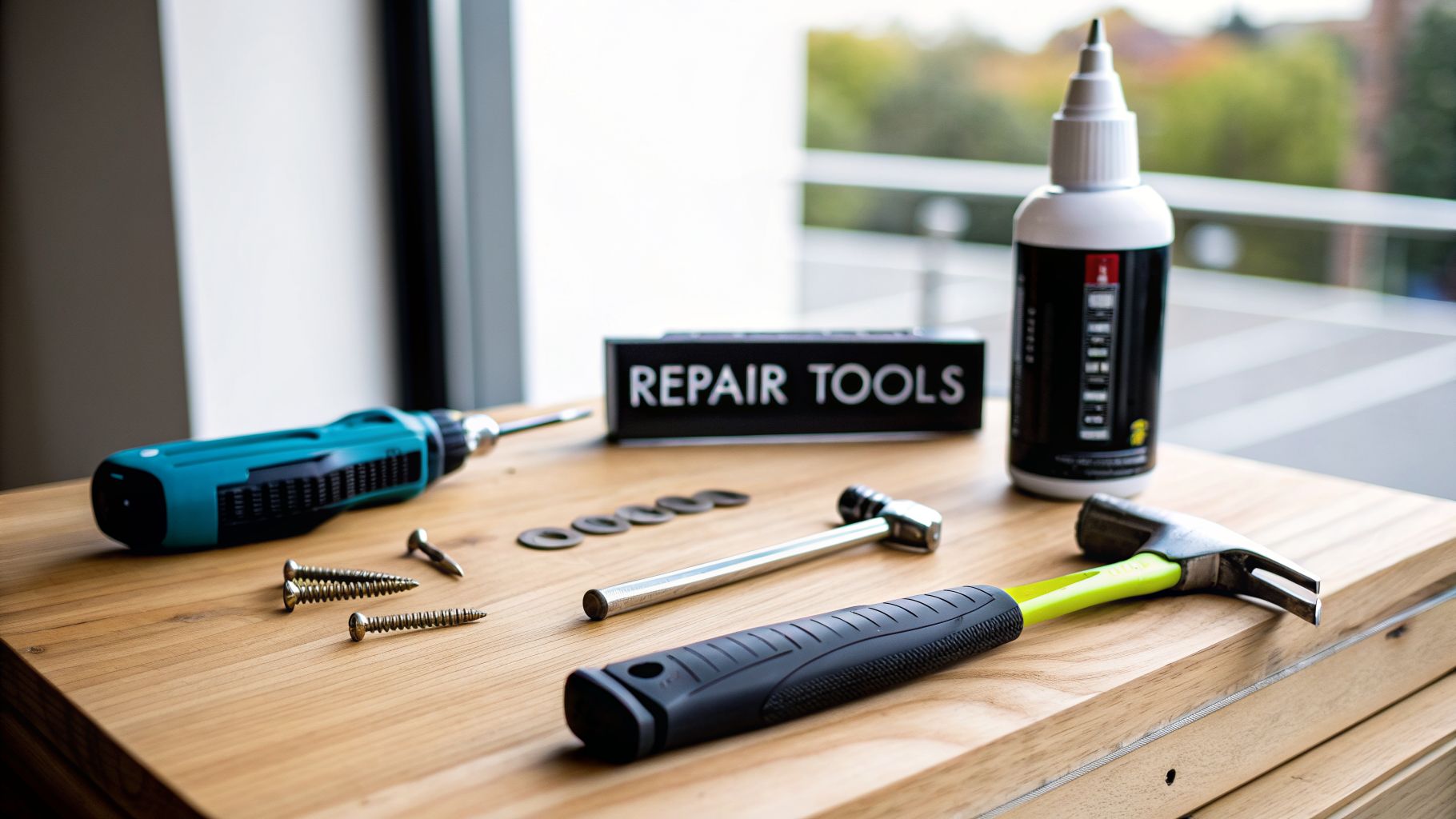
There’s nothing more frustrating than starting a simple home repair only to find you're missing the one tool you need. Trying to fix a sagging screen door without the right equipment can turn a quick job into a serious headache.
Before you even touch a screw, take a minute to gather your gear. Having everything laid out and ready to go is the secret to a smooth, efficient repair. Think of it as your pre-flight checklist—it saves you from making a dozen trips back to the garage or hardware store.
The Basic Toolkit
For most routine adjustments, you won't need anything fancy. A handful of common household tools will be more than enough to tackle the usual suspects, like loose hinge screws or a latch that just won't catch.
These fundamentals will handle about 90% of common screen door sag issues:
- Phillips Head Screwdriver: This is your go-to. It’s perfect for tightening those hinge and latch screws that seem to work themselves loose over time.
- Drill with Phillips Head Bit: When you need a little more muscle or you're dealing with stripped screws, a drill makes the job much faster and easier.
- Level: Don’t just eyeball it. A small level is the only way to know for sure if your door or its frame is actually square. It takes the guesswork out of the equation.
- Tape Measure: You'll need this to check the door's diagonal measurements, which is the quickest way to see if the frame itself has gone askew.
With these basics in hand, you’re all set for the initial diagnosis and most of the simple fixes.
Pro Tip: Grab a small block of wood or a few folded rags to prop up the sagging corner of the door while you work. This simple trick takes the weight off the hinges, making it way easier to tighten screws and preventing any further strain on the frame.
Helpful Additions For Tougher Jobs
Of course, sometimes a simple tightening just doesn't cut it. For those more stubborn problems, a few extra items in your toolkit can make all the difference between a temporary patch and a permanent fix.
- Rubber Mallet: If you need to add shims behind a hinge, a rubber mallet is perfect for gently tapping them into place without denting the door frame or chipping the paint.
- Longer, Corrosion-Resistant Screws: When the original screw holes are stripped out, a longer screw (think 2.5-3 inches) can bite into fresh wood deeper inside the door jamb, giving you a much more secure hold.
- Silicone Lubricant Spray: While many people reach for standard oil lubricants, they can be a magnet for dust and grime. In Florida's humidity, a silicone-based spray is a much better choice. It repels moisture and lubricates hinges and tracks without creating a sticky mess.
Mastering Hinge and Latch Adjustments
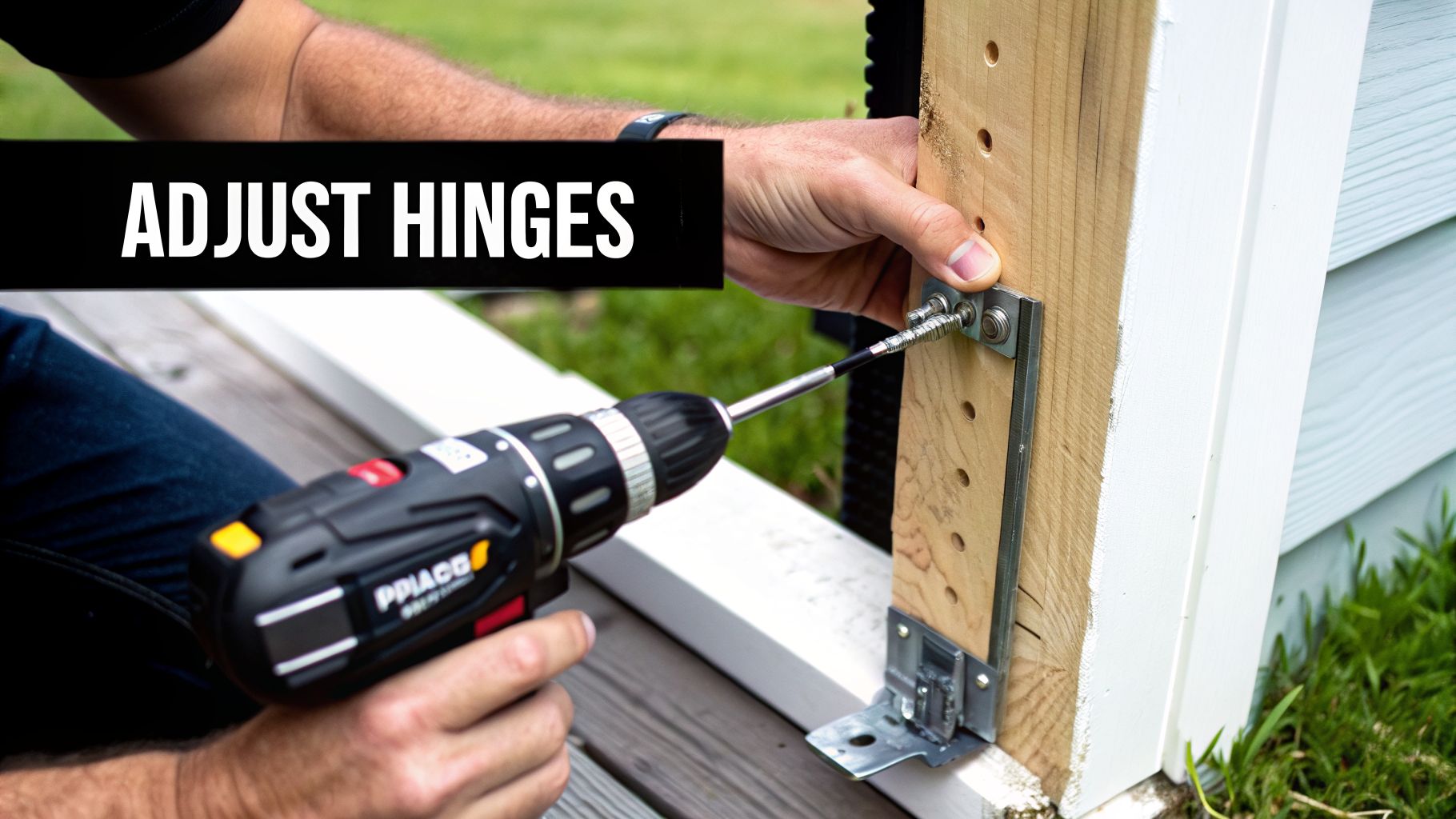
More often than not, a sagging screen door isn't a sign of a massive structural failure. It’s usually just a symptom of loose hardware—which is fantastic news for anyone looking for a quick weekend fix. The constant motion of opening and closing the door eventually causes hinge screws to back out, letting gravity slowly pull the door downward.
This is almost always the reason for that annoying scrape against the frame or ground. Before you assume the worst, always start with the hinges. A few minutes with a screwdriver can often restore your door's alignment and get it swinging smoothly again.
The Hinge Tightening Technique
Your first move should be to inspect every single hinge. Start at the top and work your way down, checking each screw on both the door side and the jamb side. You'll probably find the screws on the top hinge are the loosest, since that's where most of the door's weight hangs.
Here's a simple trick to make this job much easier and safer: wedge a small block of wood or even a few folded-up rags under the bottom corner of the door. This supports its weight, taking the strain off the hinges and preventing the door from shifting or falling while you work.
Once the door is propped up, use a Phillips head screwdriver or a drill to tighten every screw until it’s snug. Just be careful not to overtighten, as you can strip the screw hole and create a bigger problem for yourself.
After tightening, gently remove the support block and test the door's swing. In many cases, this simple adjustment is all that’s needed to eliminate the sag and restore a smooth, quiet close.
Handling Stripped Screw Holes
So what happens if you turn the screw and it just keeps spinning? That means the screw hole is stripped, and it can't grip the threads anymore. This is a super common issue, especially in older wooden frames or aluminum enclosures that have seen a lot of use over the years.
Luckily, there are a couple of effective ways to solve this without much fuss:
- The Toothpick Trick: Squirt a little wood glue into the stripped hole and pack it tight with a few wooden toothpicks, breaking them off flush with the surface. Once the glue dries completely, you’ve basically created new "wood" for the screw to bite into.
- Upgrade to Longer Screws: This is often the easiest solution. If the original was a 1-inch screw, try swapping it for a 2.5 or 3-inch replacement. This allows it to bypass the stripped section and anchor into the solid stud behind the door jamb, creating a much stronger hold.
For more complex issues, sometimes the entire hinge or surrounding hardware is too corroded or damaged to save. When basic fixes aren't enough, it might be time to call in a professional.
Adjusting The Latch And Strike Plate
After you've realigned the door, you might run into a new problem: the latch no longer lines up with the strike plate on the door jamb. The door might not catch at all, or it might click shut only to pop back open with a slight breeze. This is a direct, and very common, result of correcting the sag.
Fixing this is usually a simple adjustment. Loosen the screws holding the strike plate to the door jamb just enough so you can move it around. You probably only need to shift it up or down by a tiny fraction of an inch.
Close the door slowly and watch how the latch bolt enters the strike plate opening. Nudge the plate until the bolt slides in perfectly, then tighten the screws back down. This final touch ensures your door not only swings freely but also closes securely every single time.
Correcting Frame And Track Alignment

So, you’ve tightened the hinges and tinkered with the latch, but the door still sticks. When the simple fixes don’t work, it’s a sign to look at the bigger picture—the door's frame and its track. Here in Tampa Bay, structural issues like these are incredibly common, thanks to our relentless humidity that loves to warp and shift building materials over time.
A misaligned frame or a gunked-up track will force the door to hang crooked, causing that frustrating sag. This is where we graduate from quick tweaks to more involved—but totally manageable—repairs.
Inspecting The Door Frame For Warping
First things first, you need to check if your door is still "square." The easiest way is with a tape measure. Run it diagonally from the top left corner to the bottom right, then do the same from the top right to the bottom left. If those two numbers don't match, you've got a frame that's out of square.
A warped frame is a classic headache, but thankfully there's a reliable fix that doesn't involve ripping out the entire door: a turnbuckle cable kit.
These kits are a DIY-er's best friend for pulling a sagging frame back into line. They usually come with:
- Two corner brackets to attach to the high and low corners of the door.
- A steel cable that stretches diagonally between them.
- A turnbuckle right in the middle of the cable.
All you do is tighten the turnbuckle. This creates tension along the cable, pulling the droopy corner up and forcing the frame back into a perfect square. It's often the single best solution for older doors that have started to lose their shape.
A well-maintained home exterior provides a significant return on investment. Simply fixing a sagging screen door can boost a property's value by an estimated 5-10%. For homeowners and property managers in coastal Florida, proactive maintenance is crucial, as post-storm repair demand can spike by 15%. Addressing issues like corrosion, which is responsible for 40% of sags in our area, transforms frustrating problems into seamless functionality.
Cleaning And Adjusting The Door Track
If you have a sliding screen door, the track is almost always the prime suspect. Over the months and years, those tracks become a gross collection of dirt, sand, leaves, and pet hair. All that buildup can actually lift the rollers on one side, making the door tilt and drag.
Start with a deep clean. Grab a stiff brush and a vacuum with a crevice tool to get all the loose debris out. For the really stubborn, caked-on grime, some soapy water and a good scrub brush will work wonders.
Once it's sparkling clean, check if the track is level. Just pop a level inside the track and see where the bubble sits. If it's off-center, you'll need to adjust the rollers on the door itself. Most sliding doors have little adjustment screws on the top and bottom edges that allow you to raise or lower the rollers.
Giving those screws a few small turns can be all it takes to realign the door in its track, helping it glide smoothly instead of scraping. It’s a tiny adjustment that makes a world of difference.
Of course, if the frame is badly bent or the track is damaged beyond a simple cleaning, it might be time to call in the pros. For bigger jobs like that, a professional screen enclosure door installation or replacement is the best way to guarantee a perfect fit and a door that will last for years.
When A Professional Repair Is The Smartest Move
While a good DIY fix is incredibly satisfying, sometimes the smartest move is to put down the tools and pick up the phone. Knowing when a sagging door has graduated from a simple weekend task to a job for an expert can save you time, money, and a whole lot of frustration.
Some problems are clear signals that you've moved beyond a basic adjustment. If your door's metal frame is severely warped or bent, or if the hardware is so rusted that screws crumble the moment you try to turn them, a professional touch is needed. These are often signs of deeper, more complex issues.
Signs You Need An Expert
Certain situations almost always call for a professional. For example, if the sag is caused by structural issues with the entire screen enclosure itself—like a shifting frame or foundation—adjusting the door is only a temporary fix. An expert can diagnose and correct the root cause.
You should also consider calling a pro if you're dealing with:
- Extensive Corrosion: When rust has eaten through hinges or the door frame, simple replacements won't hold. A technician will have the right tools and materials to properly address the damage.
- A Warped Metal Frame: Unlike wood, a bent aluminum frame can't be easily forced back into shape. Pros use specialized techniques to correct alignment without causing further damage.
- HOA or Sale Requirements: If you're preparing a home for sale or need to meet strict HOA standards, a professional repair ensures the job is done right and looks flawless.
A professional repair guarantees a perfect, pest-proof fit that DIY fixes sometimes miss. It provides peace of mind knowing the job is done correctly with high-quality, commercial-grade materials that will last.
The Value Of Professional Craftsmanship
In an era where 70% of homeowners prefer repairs to replacements amid rising costs, getting the job done right the first time is crucial. The door repair market is growing at a 6.1% CAGR, and for good reason.
In coastal areas like Tampa Bay, which see a 35% higher incidence of sagging due to humidity, professionals often use stainless steel hinges rated for 50,000 cycles. These far outlast stock parts that fail 60% sooner in Florida's climate. For anyone needing to ensure their home is up to code, an insured team delivers flawless results. You can find more industry insights on the Window and Door Magazine website.
When considering professional help, it's crucial to know the best practices for how to hire contractors for smarter home projects to ensure a smooth and successful repair experience. A reputable company brings not just tools but also expertise, ensuring every component works together perfectly.
For larger structural issues, a qualified team can also provide a comprehensive screen enclosure repair to restore the integrity of your entire outdoor space. Choosing an expert means investing in a durable, long-lasting solution that keeps your lanai secure and bug-free for years to come.
Common Questions About Screen Door Repair
When you're staring at a sagging screen door, a few questions almost always come to mind. It's natural to wonder about costs, whether you can tackle it yourself, and why the problem seems to keep coming back. We hear these questions from homeowners all the time, so let's get you some clear, straightforward answers.
These are the real-world concerns that pop up when you’re trying to figure out a permanent fix for that frustrating sag.
How Much Does It Cost To Fix A Sagging Screen Door?
The cost to fix a sagging screen door really depends on what’s causing the problem. In many cases, the fix is completely free if it's just a matter of loose hardware. All you need is a screwdriver and five minutes of your time.
If you need to get a little more hands-on, the costs are still pretty minimal. A turnbuckle cable kit, which is a great way to pull a warped frame back into square, will only set you back $15 to $30 at the hardware store. If you'd rather have a pro handle a basic hinge and latch adjustment, a service call will typically run between $75 and $150.
Costs start to climb when the issue is more serious. A bent metal frame, significant corrosion on the enclosure, or broken rollers on a sliding door will require more intensive work. Any reputable repair company will give you a detailed, upfront estimate before they start, so you'll never be caught by surprise.
Can I Replace The Screen Mesh On My Lanai Door Myself?
Absolutely. Replacing the screen mesh on an exterior door is a classic DIY project, but your success really hinges on having the right tools and a good amount of patience. The key piece of equipment is a spline roller, which you'll use to press the new screen and spline into the frame's channel.
The real trick is getting the tension just right. It’s incredibly easy to end up with a screen that’s too loose and flaps in the breeze or, worse, one that’s so tight it actually bows the door frame. If you're prepping a home for sale or have strict HOA standards, professional rescreening is the best way to get that flawless, drum-tight finish. Small rips are a different story, and you can find out more by reading our guide on how to repair window screen holes.
Why Does My Door Keep Sagging After I Have Fixed It?
This is one of the most frustrating problems we see, and it almost always means there's a deeper issue that a simple tightening won't fix. If you adjust your door and it sags again a few weeks later, you're treating the symptom, not the cause.
One of the main culprits for a recurring sag is a structurally weak or "soft" door frame that just can't hold its shape. Another common issue, especially here in coastal Florida, is the builder-grade hardware that was originally installed. It simply can't stand up to our humid, salty air and quickly begins to rust and fail.
An experienced technician can spot the true root cause right away. They can reinforce a weak frame or install high-quality, corrosion-resistant hardware that’s actually meant for our climate, ensuring your door stays perfectly aligned for years.
Is your screen door still giving you trouble? Don't let a sagging door ruin your perfect outdoor space. The team at Rescreen Rescue has the experience and high-quality materials to provide a lasting solution. Get your free estimate today!