


When you need lanai screen repair in Tampa, you're not just looking for a quick fix. You need someone who gets the Florida climate and can deliver a repair that actually lasts. Going with a pro ensures your outdoor oasis stays bug-free, stands up to the weather, and keeps your home looking its best.
Enjoying Your Tampa Lanai Without Pests Or Problems
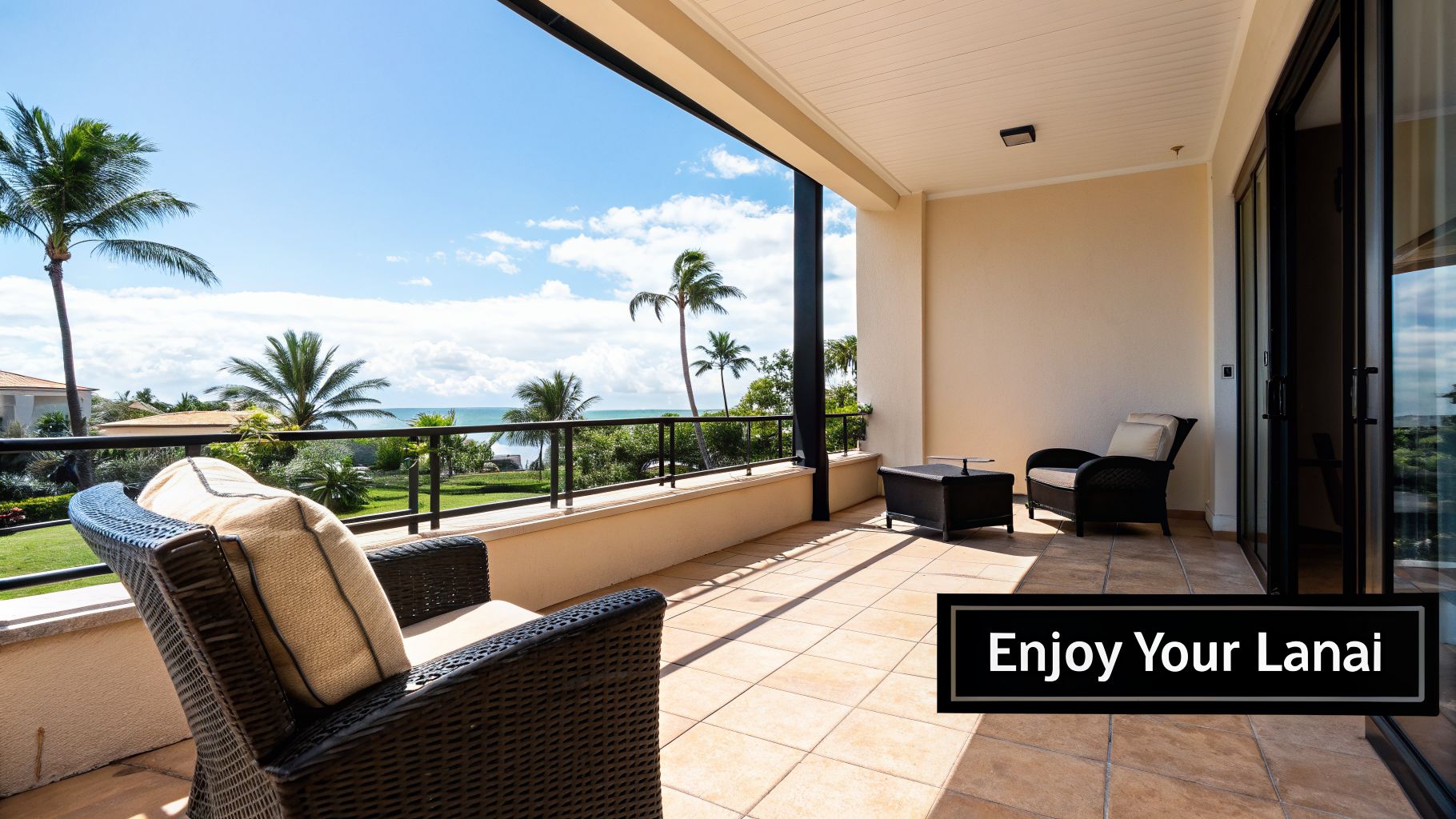
Here in Tampa, a lanai isn't just a nice-to-have; it's a core part of how we live. It’s the spot for that first cup of coffee in the morning, the best seat in the house for watching a thunderstorm roll through, and the perfect place to unwind on a breezy evening without being eaten alive by mosquitoes.
But the moment your screen enclosure starts showing its age—a small tear, a panel that’s started to sag, or mesh that’s gone brittle from the sun—that peaceful retreat is suddenly at risk.
There's nothing more annoying than staring at a ripped lanai screen. It’s a welcome mat for pests, it messes up your view, and it completely defeats the purpose of having a screen in the first place. Even one tiny tear is an open invitation for bugs, leaves, and yard debris, turning your relaxation time into a constant chore.
Your Guide To A Perfect Outdoor Space
Think of this guide as your go-to resource for any lanai screen issue you might face, from tiny holes left by the dog to major panel damage after a big storm. We’re here to give you the straightforward, practical information you need to make smart decisions for your home. Our goal is to arm you with the confidence to choose the right path forward, starting with a clear understanding of what it will take to get your lanai back in top shape.
Here’s what we’ll cover:
- Identifying Common Problems: You'll learn to spot the difference between a simple patch job and a problem that needs a professional’s touch, fast.
- DIY vs. Professional Repair: We'll break down the pros and cons of each, helping you decide what makes the most sense for your project and your budget.
- Understanding Costs: Get a realistic idea of what to expect for lanai screen repair services here in the Tampa market.
- Hurricane Preparedness: Find out how to protect your enclosure when Florida's intense storm season kicks into high gear.
A well-maintained lanai doesn't just improve your day-to-day life; it adds real value to your home. Homebuyers see a pristine screened-in area as a bonus living room—a prime spot for relaxing and entertaining.
At the end of the day, a fully functional screen enclosure lets you enjoy everything that’s great about Florida's weather without any of the drawbacks. By tackling repairs as soon as they’re needed, you're ensuring your lanai remains a beautiful, comfortable, and bug-free getaway for years to come.
Figuring Out What's Wrong With Your Lanai Screen
Not all screen damage is the same. A tiny tear from the dog’s claws needs a different fix than a whole panel that’s sagging after years under the Florida sun. The first step is always figuring out exactly what you're up against. Once you know the problem, you can gauge how urgent the repair is and what it's going to take to fix it right.
Think of your lanai screen as the bodyguard for your outdoor living space. When it's damaged, it's more than just an eyesore—it's a security breach. Each type of damage has its own headache, from letting in annoying bugs to creating weak spots that will only get worse.
Tears, Rips, and Punctures
These are the most obvious signs of trouble. They’re usually caused by some kind of impact or accident and can range from a tiny hole to a massive tear.
- Small Holes and Tears: You’ll often see these down low on the panels, thanks to pets, kids' toys, or a rogue weed whacker. They might look small, but even a tiny hole is an open invitation for mosquitoes and no-see-ums.
- Large Gashes: This is what happens when a tree branch falls during a storm or someone bumps the patio table into the screen a little too hard. A big, gaping hole makes that panel completely useless, letting in bugs, leaves, and whatever else the wind blows in.
- Stress Tears Near the Frame: Ever notice little rips starting right at the corners where the screen meets the aluminum? That’s often a sign the screen was pulled too tight during installation or the cage has settled a bit over time.
Putting off these fixes is like leaving a window wide open. What starts as a small inconvenience will quickly turn into a full-blown bug invasion, sending you running back inside.
Faded and Brittle Screens
Sometimes the damage is more subtle than a big hole. After years of baking in Tampa's intense UV rays, the screen material itself starts to break down. It’s a slow, quiet process called photodegradation.
This process essentially eats away at the screen's strength. You might notice the color has faded from a deep black to a chalky grey, or the screen feels stiff and crunchy when you touch it. A screen in this state is a ticking time bomb—a strong gust of wind or a bird flying into it could be enough to make it shatter. If your screens are 7-10 years old, this kind of wear is pretty much a given. At this point, a full rescreen is usually a smarter investment than trying to patch one panel at a time.
A brittle, faded screen isn't just ugly; it means your enclosure's main line of defense is shot. Trying to patch a sun-rotted panel is like putting a band-aid on a crumbling wall—the material around it is just too weak to hold the repair.
Loose Screens and Failed Spline
Is one of your screen panels looking wavy or sagging? The problem is probably the spline—that rubbery cord that wedges the screen into the channel of the aluminum frame.
Over time, the heat and sun cause the spline to dry out, shrink, and get hard. Once it loses its flexibility, it can pop right out of its track, letting the screen pull away from the frame. This not only looks sloppy but creates a perfect entry point for pests. Sometimes, just replacing the spline can fix a loose panel. But if the screen itself is also old and brittle, it's a sure sign that a more comprehensive lanai screen repair in Tampa is what you really need.
To get a better handle on how all these parts work together, you can check out our guide on common issues with screened enclosure repair. Taking care of these little things early on can save you from big, expensive problems down the road.
Should You DIY Or Hire A Professional Screen Service?
So you've spotted a tear in your lanai screen. Now comes the classic homeowner debate: roll up your sleeves and tackle it yourself, or call in the pros? It's the age-old question of saving a few bucks now versus investing in a perfect, durable repair. Honestly, both paths have their moments, but the right choice really boils down to the size of the job, your own handyman skills, and how much your weekend is worth to you.
The DIY route can look mighty tempting, especially for a single, small rip. The tools you need are pretty basic and won't break the bank. You're mainly looking at a utility knife for trimming and a spline roller—that little wheeled gadget designed to press the rubber spline into the frame's channel. While the upfront cost is low, the real test isn't buying the tools; it's mastering the technique.
Getting that professional, drum-tight finish is way harder than it looks on YouTube. You're aiming for that perfect tension—not so loose that it sags and looks sloppy, but not so tight it puts a strain on the frame or rips when the wind blows. It's a bit of an art form, and most first-timers end up with a panel that’s just a little… off. Wavy, puckered, and a constant reminder that it was a DIY job.
The Challenges Of A DIY Repair
Beyond just getting the screen tight, a few other snags can turn a quick weekend project into a multi-week headache. Safety is a big one, especially if you have a two-story enclosure. Balancing on a tall ladder while trying to stretch a screen panel is a recipe for disaster. It’s a job best left to folks who have the right safety gear and do it every day.
Here are a few common trip-ups we see with DIY repairs:
- Wrinkles and Sagging: This is the most common giveaway. An under-stretched screen not only looks bad but also catches the wind, putting more stress on the whole panel.
- Incorrect Spline Size: It seems minor, but using a spline that’s too thin means the screen will pop right out. One that’s too thick is nearly impossible to install and can even damage the aluminum channel.
- Reaching High Panels: Getting to those top-tier screens on a pool cage requires special ladders, a steady hand, and zero fear of heights. It’s a serious safety risk for the average homeowner.
To make it a bit clearer, we've put together a simple decision-making guide based on the kind of damage you're looking at.
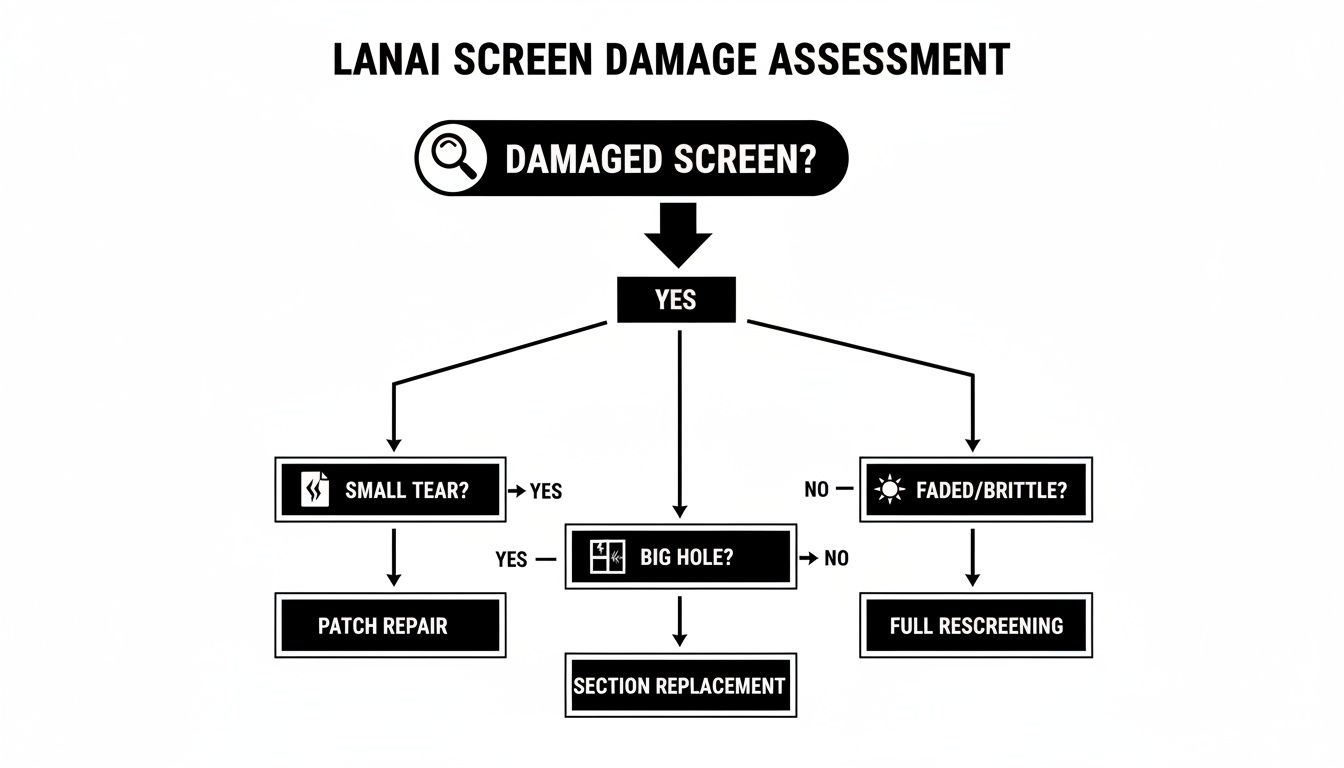
As you can see, a tiny tear might be fixable with a simple patch kit. But for bigger problems like large holes or screens that have gone brittle and chalky from the sun, calling a professional is almost always the right move.
DIY Vs Professional Screen Repair: A Quick Comparison
Deciding between a DIY project and hiring a pro can be tough. Here’s a look at the key factors to help you see which path makes the most sense for your situation.
DIY Repair:
- Cost: Lower upfront cost for materials.
- Time: Can take several hours to a full weekend, plus trips to the store.
- Quality: Difficult to achieve a taut, professional finish. Risk of wrinkles.
- Safety: High risk, especially on two-story enclosures or high panels.
- Tools: Requires purchasing specific tools like a spline roller.
- Warranty: No warranty. If it rips again, you're back at square one.
Professional Repair (Rescreen Rescue):
- Cost: Higher initial investment, but better long-term value.
- Time: Fast and efficient. Most jobs are done in just a few hours.
- Quality: Guaranteed drum-tight screens with a flawless appearance.
- Safety: Trained and insured technicians with professional safety equipment.
- Tools: We arrive with all the specialized tools needed for the job.
- Warranty: Our work and materials are backed by a solid warranty.
Ultimately, while a DIY repair might save you a little cash upfront, the time, frustration, and risk involved often aren't worth it. For a result that's guaranteed to look great and last for years, a professional service is the clear winner.
The Professional Advantage In Tampa
When you hire a professional for your lanai screen repair in Tampa, you’re turning a potential weekend-wrecker into a simple, stress-free phone call. The perks go way beyond just getting your time back. Experts bring a level of precision that’s nearly impossible for a homeowner to match on their first try.
A professional installation guarantees every single panel is perfectly tight, straight, and secured with the right materials. The result is a repair that doesn’t just look a hundred times better but also stands up to Florida’s intense sun and hurricane seasons.
Plus, professional companies have access to much higher-quality screen materials than what you’ll find at the local big-box store. We can help you choose the best fit for your home, whether that's a tough-as-nails pet screen or a fine no-see-um mesh to keep out even the tiniest gnats.
But maybe the biggest benefit is the peace of mind that comes with a warranty. If anything goes wrong, a reputable company will stand behind their work and fix it, no questions asked.
When you're weighing your options, think about the whole picture. If you're curious about what a full rescreening job entails, you can check out our detailed guide on how to rescreen a pool enclosure. For most Tampa homeowners, though, the speed, quality, and guaranteed results of calling in a pro make it the smartest way to protect their outdoor oasis.
Breaking Down The Cost Of Lanai Screen Repair In Tampa
When you're trying to budget for home maintenance, the last thing you want is a surprise bill. The cost of lanai screen repair in Tampa can feel like a moving target, but it really boils down to a few straightforward factors. Once you understand what goes into a quote, you'll be able to spot a fair price and make the best decision for your home.
Think of it this way: the final price isn't just one number pulled out of thin air. It’s a combination of materials, labor, and the unique quirks of your specific enclosure. It’s a lot like ordering a custom-built table—the type of wood, the size, and the complexity of the design all shape the final cost. Your lanai repair works the same way.
Key Factors That Influence Repair Costs
The price to fix your screen is about more than just the size of the tear. Any professional quote will take into account the unique details of your job to make sure the repair is done right and built to last.
Here’s what we look at:
- Panel Size: This is the most direct cost factor. A small panel down by the pool deck is naturally going to cost less to replace than a massive, vaulted panel two stories up. It all comes down to the amount of screen we need to use.
- Screen Material: You’ve got options, and each one has a different price point. Standard fiberglass mesh is the most common and budget-friendly choice. But if you need something tougher, like a pet-resistant or a super-fine no-see-um screen, you can expect to invest a little more.
- Accessibility: Simply put, how tough is it to get to the damaged panel? A screen at eye level is a pretty simple fix. But a panel on the second story of an enclosure? That requires special ladders, extra safety gear, and more time, which all gets factored into the labor cost.
These three elements come together to create a quote that’s tailored specifically for you. That way, you’re only paying for exactly what your lanai needs.
Understanding Typical Cost Ranges In The Tampa Bay Area
So, what should you actually budget for? The good news is that the market for lanai screen repair in Tampa is incredibly reasonable compared to other big cities. This local affordability means homeowners can keep their outdoor living spaces in top shape without emptying their wallets.
Recent data really puts it into perspective. According to 2026 figures, the average cost to rescreen or repair a lanai in Tampa, FL, falls somewhere between $400 and $1,500. That’s a whole lot better than what you’d see in places like San Antonio or Atlanta, where costs can get much higher. A big reason for this is our competitive local labor rates, which average around $110 for the first 38 square feet and just $2–$3 per additional square foot.
A fair quote is a transparent one. It should clearly break down the costs for materials and labor, so there are no surprises or hidden fees when the final bill comes.
At the end of the day, whether you just need one panel patched up or your entire enclosure needs a refresh, you can get a pretty solid idea of the cost by thinking about those factors. For a much deeper dive into how different materials and project sizes can affect your budget, be sure to check out our detailed guide on the lanai screen replacement cost.
Beyond the repair itself, it’s always smart to think about how these improvements impact your home's overall value and finances. For broader insights into home finance, particularly regarding mortgages in Tampa, other local resources can be helpful. Understanding these costs helps you plan effectively and protect one of your home's best features—that beautiful Florida outdoor living space.
Preparing Your Lanai for Florida Hurricane Season
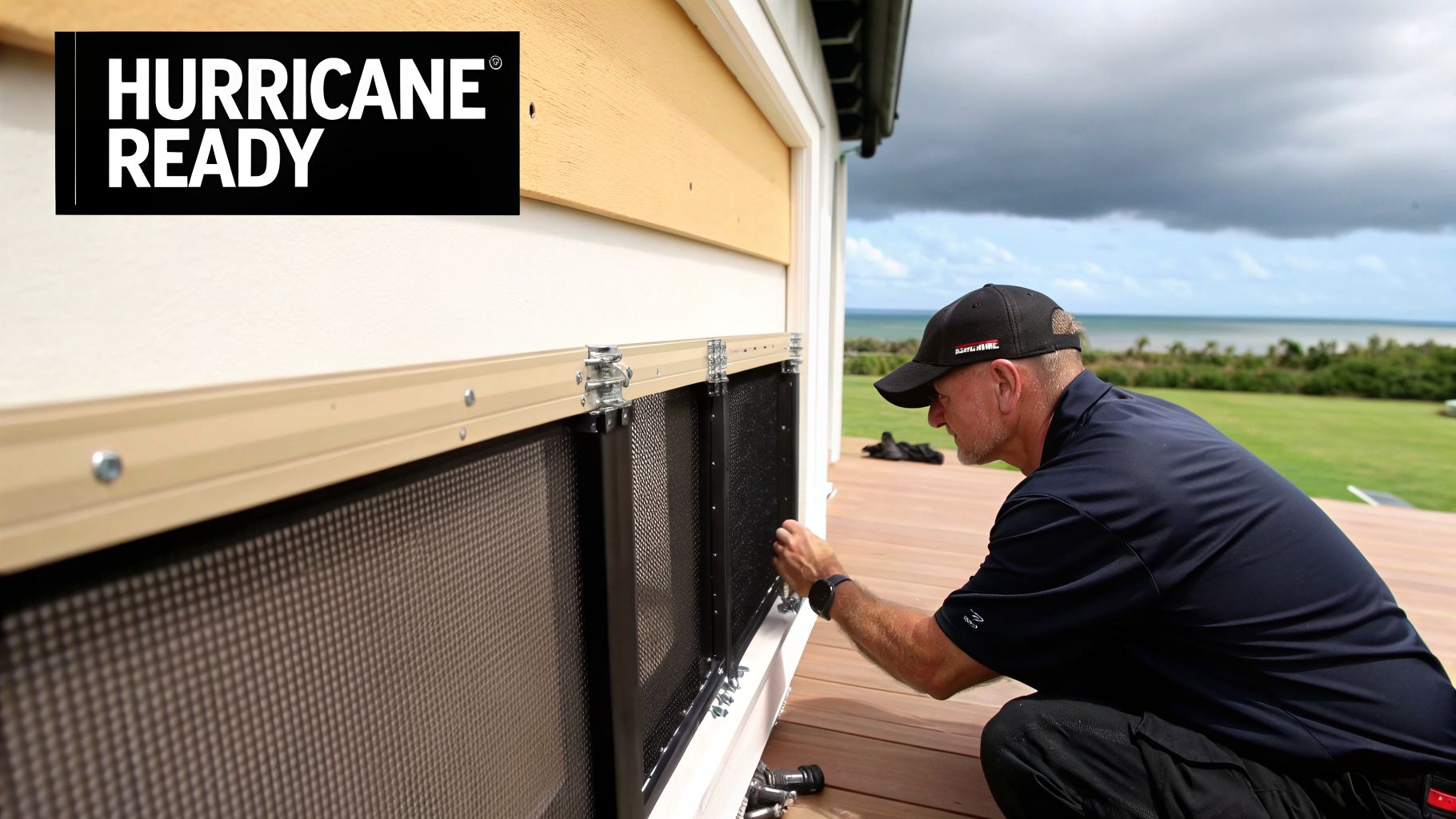
Here in Tampa, hurricane season isn't just a date on the calendar; it's a fact of life. We build lanais to enjoy the outdoors year-round, but they’re also one of the most vulnerable parts of our homes when a big storm starts churning in the Gulf. Getting your screen enclosure ready isn't just a good idea—it’s an essential part of protecting your home and investment.
A little proactive prep can be the difference between a few simple fixes and a total structural failure. It’s about more than crossing your fingers and hoping for the best. It means choosing the right materials, doing regular check-ups, and understanding why a professional installation is your best defense against Mother Nature’s fury.
Reinforcing Your Enclosure With The Right Materials
The strength of your lanai during a hurricane really boils down to the quality of its bones. Think of it as building a small fortress—every single piece, from the screen mesh to the tiniest screw, has a job to do.
The standard, contractor-grade stuff might be okay on a calm day, but it just won't hold up against hurricane-force winds. This is why upgrading to better materials is one of the smartest moves you can make to fortify your enclosure.
Here’s what really makes a difference:
- High-Tensile Strength Screens: You'll want to go for screen materials specifically made to resist tearing under extreme wind. This isn't your average window screen. These durable meshes can stretch and flex without ripping, creating a much stronger shield against flying debris.
- Corrosion-Resistant Fasteners: Tampa's salty air is brutal on metal. Standard screws will rust and weaken over time, becoming the first thing to give way in a storm. Using stainless steel or ceramic-coated fasteners is non-negotiable; they ensure the frame stays locked together when it counts.
The Importance of Pre-Storm Inspections
The absolute best time to find a weak spot in your lanai is long before a storm is even a blip on the radar. Think of regular inspections as your first line of defense. They let you spot and fix small issues before they become catastrophic failures.
A real check-up is more than just a quick look. You need to get up close and hunt for specific signs of wear and tear that could compromise the entire structure when the wind starts howling.
A single loose screw or a small tear can create a domino effect in a hurricane. Wind gets into the enclosure through that weak point, pressurizing the entire structure from the inside and dramatically increasing the risk of a total collapse.
When you're inspecting, make sure to tighten any loose bolts, check for rusty or corroded hardware, and run your hands over the screen panels to feel for brittleness or find tiny tears. A little reinforcement now is a small investment that can prevent a much bigger, more expensive lanai screen repair in Tampa after the storm has passed.
Adhering To Florida's Strict Building Codes
In Florida, and especially in coastal areas like Tampa, screen enclosures have to be built to withstand incredible forces. Our state building codes are some of the toughest in the nation for a reason—they're designed to ensure structures can handle winds of 150+ mph.
This is where a professional installation is so critical. A pro knows how to navigate these complex codes and build an enclosure that’s truly compliant. In high-wind zones like ours, the cost to meet these engineering standards can run anywhere from $18–$25 per square foot. If the concrete slab cracks under the pressure of the anchors, fixing that can add another $8 per square foot. You need a specialist who lives and breathes these requirements.
By making sure your lanai is built and maintained to these high standards, you're not just protecting a structure; you’re protecting your home and buying yourself some serious peace of mind. For more tips, check out our guide on how to protect your screens during natural disasters and hurricanes.
How To Choose The Right Screen Repair Company In Tampa
Finding a trustworthy contractor for your lanai screen repair in Tampa is easily the most important part of getting a quality, long-lasting fix. Pick the right company, and you get beautiful, taut screens that last for years. Pick the wrong one, and you could be left with sagging panels, a messy yard, and a warranty that isn’t worth the paper it’s printed on.
Think of it like hiring a mechanic for a prized classic car. You wouldn't just hand the keys to the first shop you find on Google. You’d look for a specialist with a great reputation, the right certifications, and a portfolio of happy customers. The same level of care applies when choosing a screen expert to work on your home.
The Non-Negotiables Of A Reputable Company
Before you even start comparing quotes, there are a few absolute must-haves for any legitimate screen repair company. These are the foundational things that separate the real pros from the fly-by-night operators.
Here’s a simple checklist to get you started:
- Proper Licensing and Insurance: This is non-negotiable. A licensed contractor is held to Florida’s standards, and their insurance protects you, your home, and their workers if an accident happens. Always, always ask for proof.
- A Strong Portfolio of Positive Reviews: What are past customers saying? It's smart to research a company's feedback to understand online reputation and what you can expect. Look for consistent comments about their punctuality, the quality of their work, and their professionalism.
- A Clear and Written Warranty: A company that stands behind its work will have no problem putting its promises in writing. A solid warranty on both materials and labor is your best insurance policy, proving they believe in the durability of their repairs.
Key Questions To Ask Before You Hire
Once you've got a short list of qualified candidates, it’s time to dig a little deeper. The answers to these questions will tell you everything you need to know about their process, standards, and how much they care about customer satisfaction.
- What grade and type of materials do you use? A true professional should be able to walk you through the differences between standard fiberglass, tough pet screens, and other specialty options, helping you pick what’s best for your home and lifestyle.
- What is your process for keeping the job site clean? Good contractors respect your property. They should have a clear plan for containing old materials and leaving your lanai and yard looking spotless when they’re done.
- Who will be performing the work? Find out if they use their own trained employees or if they subcontract the work out. In-house teams almost always deliver more consistent quality and are more accountable.
A top-tier service isn't just about fixing a screen; it's about providing a seamless, professional experience from the first call to the final inspection. They should make the process easy and leave you with total confidence in the work.
Doing this homework upfront ensures you end up with a reliable partner who delivers on their promises. For more tips, check out our guide on finding screen enclosure repair near you.
The demand for reliable home services is only growing, especially since over half of U.S. homes were built before 1980. This trend is part of a massive $543 billion home maintenance market, which includes the $1.3 billion Deck & Patio Construction industry that screen enclosures fall under.
Your Lanai Repair Questions, Answered
Even with all the info, it's normal to have a few last-minute questions before you commit to a lanai screen repair. Getting straight answers helps you feel good about the work you’re about to have done. We get asked a lot of the same questions, so we've put the most common ones right here for you.
How Long Should A New Lanai Screen Last In The Florida Sun?
When you get a brand-new screen installed by a pro, you should be set for quite a while. But let's be honest, the Florida sun is relentless. A standard fiberglass screen will typically give you a solid 7 to 10 years of service. After that, the constant UV exposure starts winning the battle, making the material brittle, faded, and much more likely to tear.
Of course, that's just a ballpark figure. A few things can shorten that lifespan:
- Constant splashing from a saltwater pool or harsh chemicals from pressure washing.
- The usual suspects: pets, kids, and falling branches from a storm.
- Living close to the coast. That salt air we love isn't so great for the screen or the aluminum frame over time.
When Should I Repair One Panel Versus Rescreening The Whole Enclosure?
This is the classic question, and it really comes down to the age and overall health of your screens. Think of it like this: if you have one or two bad panels but the rest of your screens are still dark, flexible, and looking good, a simple panel repair is the smart, budget-friendly move.
But if your screens are getting close to that 7-year mark and you can see they’re getting brittle or faded all over, patching one panel is like putting a new tire on a car with three bald ones. You just know the others are going to go soon. In that scenario, a full rescreen is a much better investment for the long haul. You get a uniform, clean look and you're not calling us back every few months for another patch job.
A full rescreen is a total refresh for your enclosure. It brings back that brand-new look, tightens everything up, and basically resets the clock on wear and tear, giving you years of worry-free enjoyment.
What Is The Difference Between Standard And Pet-Resistant Screen?
The short answer is toughness. Your standard fiberglass screen is perfect for keeping bugs out and giving you that crystal-clear view of the backyard. It's what you see on most lanais and pool cages around Tampa for good reason.
Pet-resistant screen, on the other hand, is a whole different animal. It's made from a much thicker, vinyl-coated polyester built to take a beating from claws, paws, and excited zoomies. It's incredibly durable, but there is a trade-off: it's a bit darker and the view isn't quite as sharp as with standard screen. A lot of homeowners find a happy medium by putting the tough pet screen on the bottom panels—where the action happens—and using standard screen up top to keep the view wide open.
When you're ready for a flawless repair that stands up to the Florida weather, you can count on the team at Rescreen Rescue. We deliver fast, professional lanai screen repair all over the Tampa area, making sure your outdoor space is beautiful, functional, and bug-free. Give us a call or visit us online to get your free estimate today at https://rescreenrescue.com.