


So, how much should you budget to get your lanai or pool cage screen doors professionally painted here in the Tampa Bay area? You’re typically looking at a range of $125 to $350 per door.
That price isn't just for a quick splash of paint. It covers the crucial prep work, top-tier weather-resistant paint, and the skilled labor needed for a clean, durable finish that lasts. Investing in a professional paint job not only brings back your home's sharp appearance but also shields the door frame from Florida’s relentless humidity and sun.
Your 2026 Screen Door Painting Cost A Quick Answer
When your exterior screen doors start looking faded, chalky, or chipped, a fresh coat of paint is one of the fastest ways to give your whole outdoor living space a facelift. It’s an instant boost to your curb appeal that doubles as a protective shield against corrosion and wear—something every aluminum frame on a lanai or pool enclosure desperately needs around here.
Of course, the final cost can shift depending on what your doors need. A simple refresh is a different ballgame than a full-blown restoration that requires a lot of prep. Knowing what goes into a professional quote helps you see the real value you're getting.
Breaking Down The Professional Price
That price tag isn’t just pulled out of thin air. It’s a thoughtful calculation based on the time, skill, and materials required to do the job right so it lasts. When you hire a professional service like Rescreen Rescue, your money is going toward:
- Meticulous Preparation: This is the most important part. It involves thoroughly cleaning the frame, scuff-sanding the surface so the paint actually sticks, and carefully masking off all the hardware and screen mesh to guarantee crisp, clean lines.
- Premium Materials: Pros don't use regular house paint. We use high-performance exterior enamel specifically formulated to stand up to our humidity, UV rays, and salt air. This is what prevents the new finish from peeling and fading in a year or two.
- Skilled Labor: Expert application is what gives you that smooth, factory-like finish. No drips, no streaks, and definitely no overspray on your screens or siding.
Let's put some numbers to this. Here’s a quick breakdown of what you can generally expect to pay for a standard exterior screen door painting project in 2026.
Estimated 2026 Cost to Paint a Standard Screen Door
Here is a quick summary of the potential costs associated with painting a standard exterior screen door, breaking down expenses for materials, labor, and professional services.
- DIY Materials Cost: For paint, primer, and all necessary supplies, you can expect to spend between $50 and $100.
- Professional Labor Cost: The labor for a single door typically ranges from $75 to $200.
- All-Inclusive Professional Service: For a complete professional job, the total cost per door is usually $125 to $350.
As you can see, hiring a pro involves more than just the cost of a can of paint. You're investing in a durable, high-quality finish that saves you the headache of redoing it yourself next year.
The latest data backs this up. In January 2026, industry cost calculators estimated the professional price to paint a standard door in the Tampa Bay area falls between $163 and $332 per door. This number factors in both the specialized paint needed for exterior frames and the non-negotiable labor for all that prep and application. You can dig deeper into these door painting cost estimates to see how different regional factors can influence the final price.
What Really Drives the Cost of Your Painting Quote
Getting a painting estimate can feel a lot like one for a car repair—the first number you hear is rarely the full story. The final cost to paint a screen door isn't just pulled out of thin air. It’s a thoughtful calculation based on a few key factors that dictate how big the job really is.
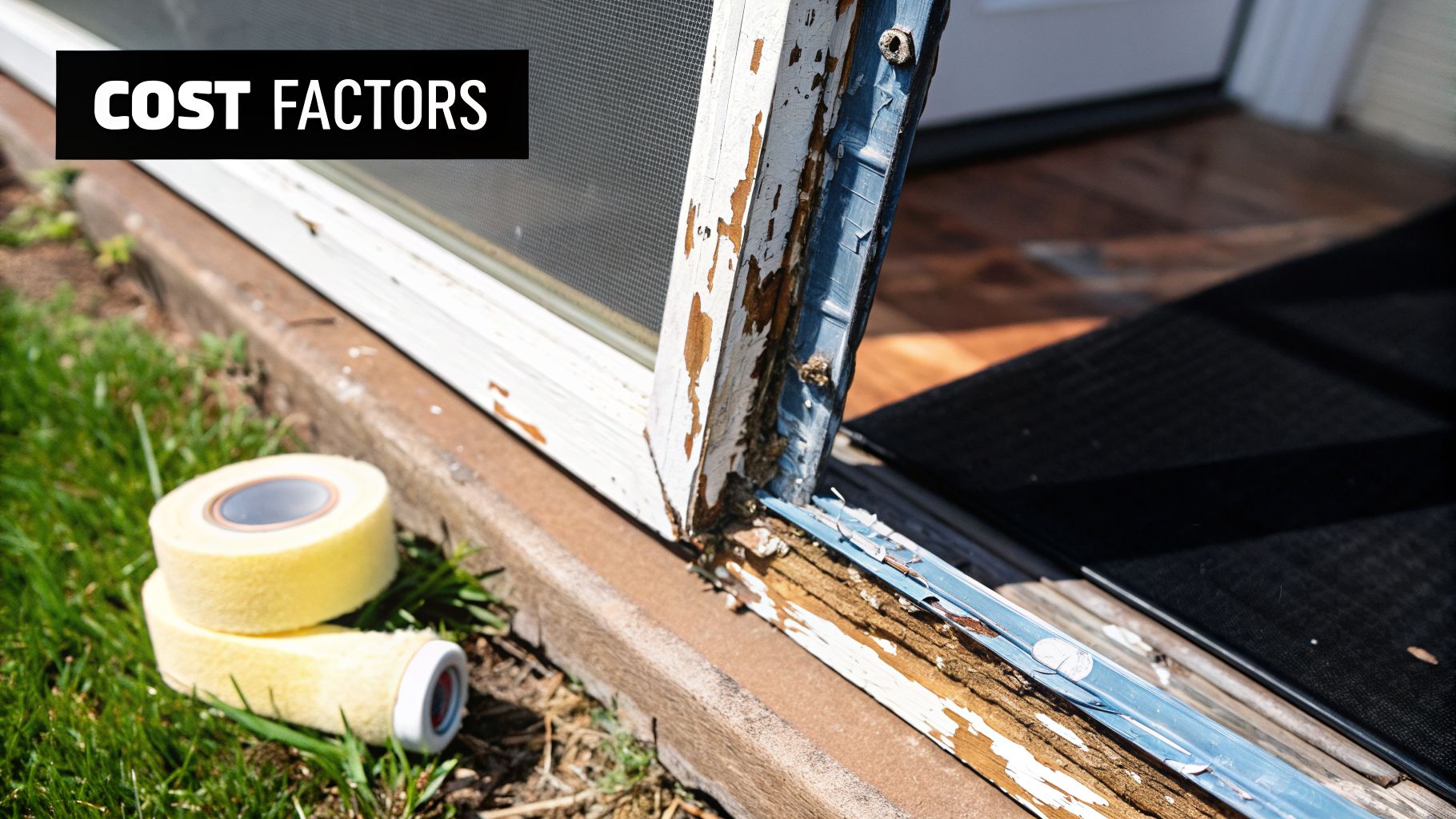
Think of it this way: painting a brand-new, perfectly smooth door is a quick sprint. But restoring a weathered, corroded, and peeling door? That’s a marathon that demands real skill and patience. That's why the current condition of your screen door is, by far, the biggest factor influencing the price.
The Critical Role of Door Condition
A door with flaking paint or that chalky white corrosion on its aluminum frame needs way more than just a quick coat of fresh paint. This is especially true for us here in Tampa Bay, where the brutal combination of sun, humidity, and salt in the air just chews through outdoor finishes.
Simply painting over these problems is a guaranteed way to watch your new paint job fail in a matter of months, not years.
Proper restoration is all about the prep work, and that's where the labor hours add up. This isn't optional; it's essential. The process includes:
- Stripping and Sanding: All that old, failing paint has to go. We have to get down to a clean, stable surface so the new coat can actually stick.
- Corrosion Treatment: Any oxidation on an aluminum frame must be meticulously cleaned and treated. If you don't, it will just bubble right back up through the new finish.
- Filling and Repairing: Dents, dings, and deep scratches in the frame need to be filled and sanded smooth for that flawless, like-new look.
The honest truth is that preparation can make up 70% of the total labor time on a restoration project. Trying to cut corners here to save a few bucks upfront is just asking for trouble and much bigger costs down the road.
Size, Complexity, and Accessibility
Once we've assessed the door's condition, its physical traits come into play. A simple, flat, standard-sized screen door is obviously going to be faster and easier to paint than a huge, ornate, or custom-sized one.
Doors with intricate designs or lots of little sections take a lot more time for careful masking and detailed brushwork, which naturally bumps up the labor cost.
Accessibility matters, too. Is the door easy to get to, or is it in a tight corner that makes it tough to work around? If painters have to navigate around permanent furniture, delicate landscaping, or work on an upper-level lanai, the job just takes longer. To see how these factors scale up for larger projects, check out our guide on professional pool cage painting costs.
Finally, the material of the door itself—whether it’s aluminum, wood, or vinyl—determines which specific primers and paints are needed, which can also influence the material costs. By understanding how condition, size, and location all fit into the puzzle, you'll be able to make sense of any professional quote and see that you're investing in a finish built to last.
Professional Painting Versus a DIY Project
Choosing between hiring a professional and tackling a job yourself is a classic homeowner’s dilemma, especially when it comes to painting exterior screen doors on lanais or pool cages. The DIY route often looks like the clear budget-friendly choice at first glance. But a few hidden costs and unexpected headaches can quickly turn a weekend project into a month-long saga.
Imagine this: you spend hours prepping and painting, only to end up with a streaky, uneven finish. Or worse, you pick a paint that starts bubbling and peeling under the harsh Florida sun within a year. Now, picture the alternative: a skilled technician shows up with the right gear, applies a durable, corrosion-resistant coating made for our climate, and leaves you with a flawless, factory-like finish that’s built to last.
Comparing The True Costs
That initial quote from a professional can sometimes cause a bit of sticker shock, but it’s so important to look at the whole picture. A DIY project takes a lot more than just a can of paint and a brush. The cost of quality materials adds up fast.
- Essential Supplies: You'll need primer, a high-quality exterior enamel, sandpaper, painter's tape, and drop cloths. For a really smooth finish, you might even need to rent or buy spray equipment. All told, you could easily spend $75 to $150.
- Your Time Is Valuable: A proper paint job isn't quick. It involves hours of cleaning, sanding, masking, and applying multiple coats. What's your weekend worth to you?
- The Risk of Rework: This is the big one. If the surface isn't prepped just right or you use the wrong type of paint, it can fail prematurely. That means stripping everything off and starting from scratch—doubling your cost and effort.
On the other hand, professionals bundle these costs into their quotes while bringing their expertise to the table. In 2026, professional exterior door painting in the Tampa Bay area averages between $100 to $225 per door. Labor usually makes up 40-60% of that price, which really highlights just how much prep work goes into a finish that lasts.
The Long-Term Value of Expertise
Hiring a professional isn't just paying for someone to slap on a coat of paint; it's an investment in quality and your own peace of mind. A seasoned painter knows exactly how to handle oxidized aluminum and stop future corrosion—a common headache with screen enclosures that requires specific know-how. This same expertise is vital for bigger jobs, too, like complete screen enclosure repairs.
The biggest difference between a DIY job and professional work is durability. A pro-grade finish is designed to withstand UV rays, humidity, and salt air for five to ten years, whereas a typical DIY job may need redoing in as little as one or two.
Let's break down the real differences in a side-by-side comparison.
DIY vs Professional Screen Door Painting A Cost and Time Analysis
Here’s a clear look at what you’re really signing up for, whether you go it alone or bring in an expert. This comparison highlights key differences across several important aspects:
- Upfront Cost: A DIY project will run $75 – $150 for materials, while a professional service costs $100 – $225 per door, which includes labor.
- Time Commitment: Expect to spend 6 – 12 hours of active work on a DIY job, plus drying time. With a pro, it's just 2 – 4 hours of your time for the appointment.
- Required Tools: For DIY, you must buy or rent all tools like brushes, a sprayer, and sandpaper. Professionals provide all their own high-grade equipment.
- Finish Quality: A DIY finish can be uneven with brush marks. A professional finish is smooth, consistent, and factory-like.
- Durability: A typical DIY job lasts 1-2 years before needing touch-ups. A professional job lasts 5-10 years due to proper prep and materials.
- Warranty: There is no warranty on a DIY project. Professional services often include a warranty on both workmanship and materials.
Ultimately, weighing the upfront savings against the long-term value, quality, and your own time will point you toward the best decision for your home. If you do decide to tackle it yourself, make sure you know where to dispose of paint cans and other materials responsibly.
Understanding Where Your Money Goes
When you get a quote for painting your screen doors, it's easy to just look at the final number. But what exactly are you paying for? A professional paint job isn't just a can of paint and a brush; the total cost is a blend of two critical parts: high-quality materials and, most importantly, skilled labor.
Labor is always the biggest piece of the puzzle, often making up the majority of the final price. This isn't just about the time spent rolling on the paint. A professional's hourly rate, which typically runs between $50 to $100, covers the meticulous prep work that separates a DIY-looking job from a durable, long-lasting finish.
Labor: The Secret to a Flawless Finish
Think of the prep work like the foundation of a house. If it isn’t done perfectly, everything built on top of it will eventually fail. The labor cost covers a few essential steps that you just don't get with a quick weekend project:
- Deep Cleaning: A pro will remove every bit of dirt, mildew, and that chalky oxidation you see on older aluminum frames.
- Surface Preparation: The surface is then scuff-sanded to create the perfect texture, giving the new paint something to grip onto securely.
- Precise Masking: Every handle, piece of hardware, and especially the screen mesh is carefully taped off to guarantee crisp, clean lines with zero overspray.
This painstaking prep is what achieves that smooth, factory-like finish that not only looks incredible but also holds up to the Florida weather.
This chart breaks down the time and money you'd invest in a DIY attempt versus just hiring a professional.
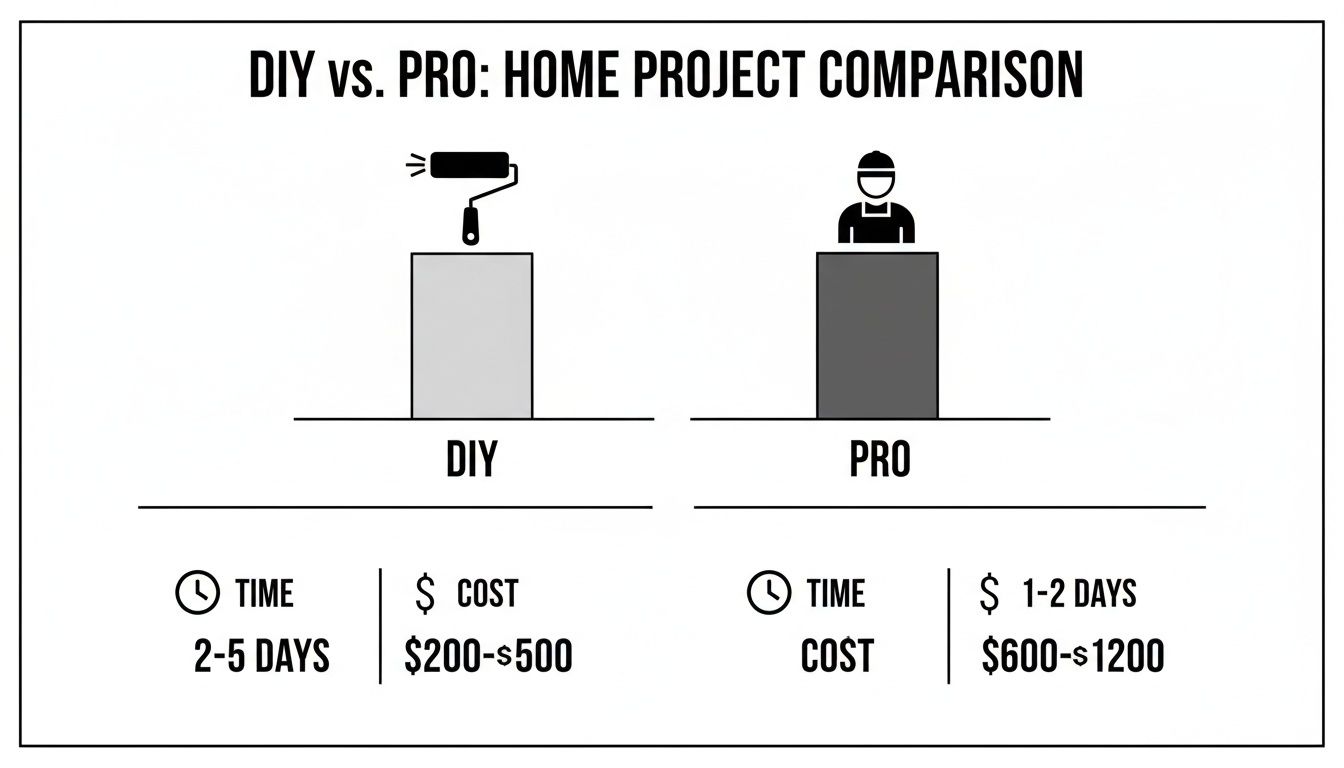
As you can see, while hiring a pro costs more upfront, it saves you a massive amount of time and delivers a much more durable result in the end.
Materials: Quality Paint Is Non-Negotiable
When it comes to exterior screen enclosures here in coastal Florida, you can't just grab any can of paint off the shelf. We only use premium exterior acrylic latex enamels that are specifically made with mildew and corrosion inhibitors.
This is a non-negotiable part of our process. Using cheaper, standard paint is a recipe for disaster—you'll see peeling and fading within a year, guaranteed. The right materials are foundational to a lasting job, which is a concept we explore further in our guide to the cost to rescreen a pool enclosure.
Looking at major U.S. markets, the average cost to paint an exterior door runs from $125 to $225. In metro areas like Tampa, labor often hits $55 to $75 an hour. The choice of paint alone can swing the total cost by 10-20%, which really highlights why investing in the right stuff is so crucial for the aluminum frames on our Florida homes.
You can dig into more detailed breakdowns of how labor and materials influence door painting prices to get an even clearer picture. By seeing exactly where your money goes, you can better appreciate the skill and quality materials needed to properly protect your home.
How To Save Money On Your Painting Project
Everyone wants to get the best value, and there are several smart ways to trim the cost of painting your screen doors without sacrificing a quality finish. A little strategic thinking about your project can lead to some pretty significant savings.
One of the most effective ways to save is to bundle services. If your screen doors are part of a larger pool cage or lanai that could also use a refresh, think about having everything painted at once. Companies often give much better package deals for bigger projects, which drops the per-door cost way down compared to a standalone job.
Smart Ways To Lower Your Quote
You can also get a little hands-on with some of the prep work. Simply clearing away patio furniture, potted plants, and any other obstacles from the work area saves the crew valuable time. Less time spent on-site directly translates into lower labor costs for you. It's a simple, no-cost way to chip away at the final bill.
Here are a few other tips to keep your budget in check:
- Get Multiple Quotes: Always shop around to get a feel for the going rate here in the Tampa Bay area. This is the best way to spot a fair price and understand what different companies include.
- Beware of the Lowest Bid: An unusually low quote can be a major red flag. It often means cheap materials or rushed work, which will almost certainly fail quickly and cost you more in repairs down the road.
- Ask About Discounts: Many local businesses, including Rescreen Rescue, offer discounts for seniors, military personnel, and first responders. It’s always worth asking if you qualify—it's a straightforward way to save.
A common mistake I see homeowners make is focusing only on the initial price. A slightly higher quote that includes superior, corrosion-resistant paint and a solid workmanship warranty often delivers much better long-term value than the cheapest option you can find.
Planning ahead can also make the project more affordable. For instance, making sure your door is in good working order before the painters arrive can prevent surprise costs. If you notice any issues like dragging or misalignment, you might find our guide on how to fix a sagging screen door helpful. A well-maintained door is always easier—and cheaper—to paint.
Get A Free Painting Estimate In Tampa Bay
Ready to bring your outdoor living space back to life? A professional paint job is one of the smartest and most affordable investments you can make in your home’s beauty, longevity, and overall value. It's a surprisingly simple step that delivers a huge visual punch, making your entire lanai or pool enclosure feel brand new again.
After more than two decades of serving the Tampa Bay area, our team at Rescreen Rescue knows exactly what it takes to get results that last. We understand that our local climate demands a whole lot more than just a standard coat of paint.
Why Choose A Local Expert
We only use top-tier, corrosion-resistant materials specifically designed to stand up to Florida's humid, salty air. Our licensed and insured technicians make sure every single job is done right the first time—from the painstaking prep work to a flawless final finish. We believe understanding the true cost to paint screen doors also means factoring in the long-term protection that quality materials and expert application provide.
A professional paint job is more than an aesthetic upgrade; it's a protective shield for your investment. By using the right products, we prevent the rust and corrosion that can lead to more expensive repairs or full replacements down the line.
We proudly invite homeowners, property managers, and real estate agents across St. Petersburg, Clearwater, and Tampa to see the Rescreen Rescue difference firsthand. A freshly painted enclosure doesn't just look fantastic—it can seriously boost a property's appeal on the market. If you're managing a larger project, exploring options like our services for pool cage painting near you can offer even greater value.
Contact us today for a completely free, no-obligation estimate. You'll discover just how easy and cost-effective it is to make your screen enclosures look incredible again. We make scheduling simple and convenient, so you can get started without any of the usual hassle.
Common Questions About Painting Your Screen Doors
When it comes to painting an exterior screen door on a lanai or even a full pool cage, a lot of the same questions pop up. It makes sense—you want to understand what you're paying for and why a professional job can completely transform your outdoor space. We get these questions all the time, so we've put together some straight-to-the-point answers to help you out.
This way, you can make a confident decision about bringing your outdoor living area back to life.
What’s the Best Paint for Florida's Climate?
This is a big one. For aluminum screen doors battling the intense Florida sun and swamp-like humidity, we only trust a top-shelf acrylic latex exterior paint. But not just any kind—it's absolutely critical that the formula includes corrosion inhibitors to stop the metal frame from breaking down over time.
We also stick to a semi-gloss or satin sheen. This isn't just for looks; this finish is tough enough to stand up to the elements and makes the doors incredibly easy to wipe down, keeping them looking brand new for years.
Should I Just Replace My Old Screen Door Instead of Painting It?
We hear this all the time, and it’s a great question. Here’s the deal: if the door's frame is still structurally solid—meaning no major bends, breaks, or rot—then painting is almost always the smarter, more cost-effective move.
A professional paint job doesn’t just make it look good again; it adds a crucial protective shield against future wear and tear. Think of it as giving your existing door a new lease on life for a fraction of what a full replacement would cost. It’s a savvy investment in your home’s long-term health.
How Do You Paint the Frame Without Getting Paint on the Screen?
It’s a valid concern—no one wants a messy paint job with overspray all over their new mesh. You can tell a true pro from an amateur by how they handle this. We never remove the screen mesh to paint the frame. That’s an old-school method that’s totally unnecessary and just jacks up the labor cost.
Instead, we have a meticulous process. We carefully mask off the entire screen mesh, along with every piece of hardware like handles and hinges. This technique gives us perfectly clean, crisp lines and protects every surface that isn't supposed to get painted. The final product is a flawless, factory-like finish without the hassle of taking everything apart.
How Long Does a Professional Paint Job Take?
For a single, standard-sized screen door, the whole process—from detailed prep to the final coat—usually only takes a few hours. A couple of things can affect that timeline, though.
The door's current condition is the main factor. A frame that's already peeling or showing corrosion is going to need more hands-on prep work to get it right. And, naturally, Florida's unpredictable weather can play a role in drying times, but any experienced crew knows how to navigate that to keep things moving efficiently.
Ready to restore your outdoor space without the hassle? Rescreen Rescue provides expert screen door painting services across the Tampa Bay area, delivering a flawless finish that lasts. Get a free quote today!