


Figuring out the cost to add a front porch can feel a bit overwhelming, but a good starting point is the national average: anywhere from $6,000 to $18,000. That breaks down to about $40 to $120 per square foot. Think of this as your ballpark estimate—a solid financial baseline before we dive into the details that can really make that number swing.
Your Quick Guide To 2026 Front Porch Costs
Adding a front porch is one of the best moves you can make to boost your home’s curb appeal and overall value. This is especially true here in the Tampa Bay area, where an inviting outdoor space is practically a necessity. Before you start dreaming about specific materials and designs, it’s helpful to get a feel for the general cost landscape. This is the "sticker price" for your project, and it's what helps you set a realistic budget right from the start.
Understanding The Average Investment
Most homeowners land on a porch size somewhere between 100 to 200 square feet. This gives you enough room for a couple of chairs and a small table, creating that perfect, welcoming vibe. For a standard 20-foot by 10-foot porch (200 sq ft), you should budget anywhere from $8,000 to $30,000.
What causes that wide range? It’s almost always down to the materials. You could go with classic wood, low-maintenance composite decking, or the ever-popular pressure-treated lumber that stands up so well to Florida’s humidity.
The biggest takeaway here is simple: size and cost go hand-in-hand. A smaller, more modest porch will always be friendlier on the wallet than a huge, wraparound design.
How Size Shapes Your Budget
To help you visualize what these numbers mean for your home, let’s break down how common porch dimensions translate into dollars. These are national averages, but they provide a fantastic starting point for your initial planning.
Estimated Front Porch Costs by Size (2026 Averages)
Here is a quick snapshot of estimated total costs based on common porch sizes, giving you a solid idea of what to expect for the basic structure.
- Small (8' x 10' / 80 sq ft): Estimated Cost Range of $3,200 – $9,600
- Medium (12' x 12' / 144 sq ft): Estimated Cost Range of $5,760 – $17,280
- Large (20' x 10' / 200 sq ft): Estimated Cost Range of $8,000 – $24,000+
Just keep in mind, these estimates are for the porch itself—the foundation, floor, and any steps. Adding a roof or screening it in will naturally increase your total investment. For those curious about enclosing their new space (a very popular option here in Florida), you'll want to check out our detailed guide on the cost to build a screened porch.
With these figures in mind, you’re ready for the next step: breaking down the specific costs of materials and labor.
Deconstructing Your Porch Budget: Materials and Labor
So, you’re thinking about adding a front porch. Let's get right into the nuts and bolts of what it's going to cost. The total price tag really comes down to two big-ticket items: the materials you choose and the labor needed to build it right.
Think of it like this: your project budget is a pie, and these two things make up the biggest slices. A good starting point is to split your budget 50/50 between materials and labor. Of course, this isn't set in stone. A really complex design with custom metalwork might skew more towards labor, while using high-end tropical hardwood will push the material costs up.
Choosing The Right Porch Materials
The materials you pick for your porch aren't just about curb appeal; they're a long-term commitment to durability, especially here in Tampa Bay's humid, salty air. Every option has a different price point and, more importantly, a different level of maintenance you'll have to deal with down the road.
- Pressure-Treated Wood: This is almost always the most wallet-friendly option, coming in at around $15 to $25 per square foot. It's specially treated to fight off rot and pests, but it needs your attention. Plan on sealing or staining it every 1-3 years to keep it from warping or cracking under the relentless Florida sun.
- Cedar or Redwood: These woods are naturally beautiful and have their own built-in defenses against rot and insects. They'll cost you more, typically $25 to $40 per square foot, but the premium look is undeniable. Just like pressure-treated wood, they need regular maintenance to keep their rich color and stay strong.
- Composite Decking: If you hate the idea of yearly maintenance, this is your champion. Made from a mix of wood fibers and recycled plastics, composite runs $30 to $60 per square foot. The big selling point? It fights off fading, stains, and rot all on its own, no sealing or painting required. It's the perfect "set it and forget it" choice for a busy homeowner.
- Concrete: For a ground-level porch or a patio-style entryway, a concrete slab is an absolute tank. It's incredibly durable and requires almost no upkeep. The cost can range quite a bit, from $6 to $15 per square foot, depending on whether you want a simple slab or something more decorative like a stamped or stained finish.
This visual gives you a great idea of how these choices stack up and influence the final cost based on the size of your porch.
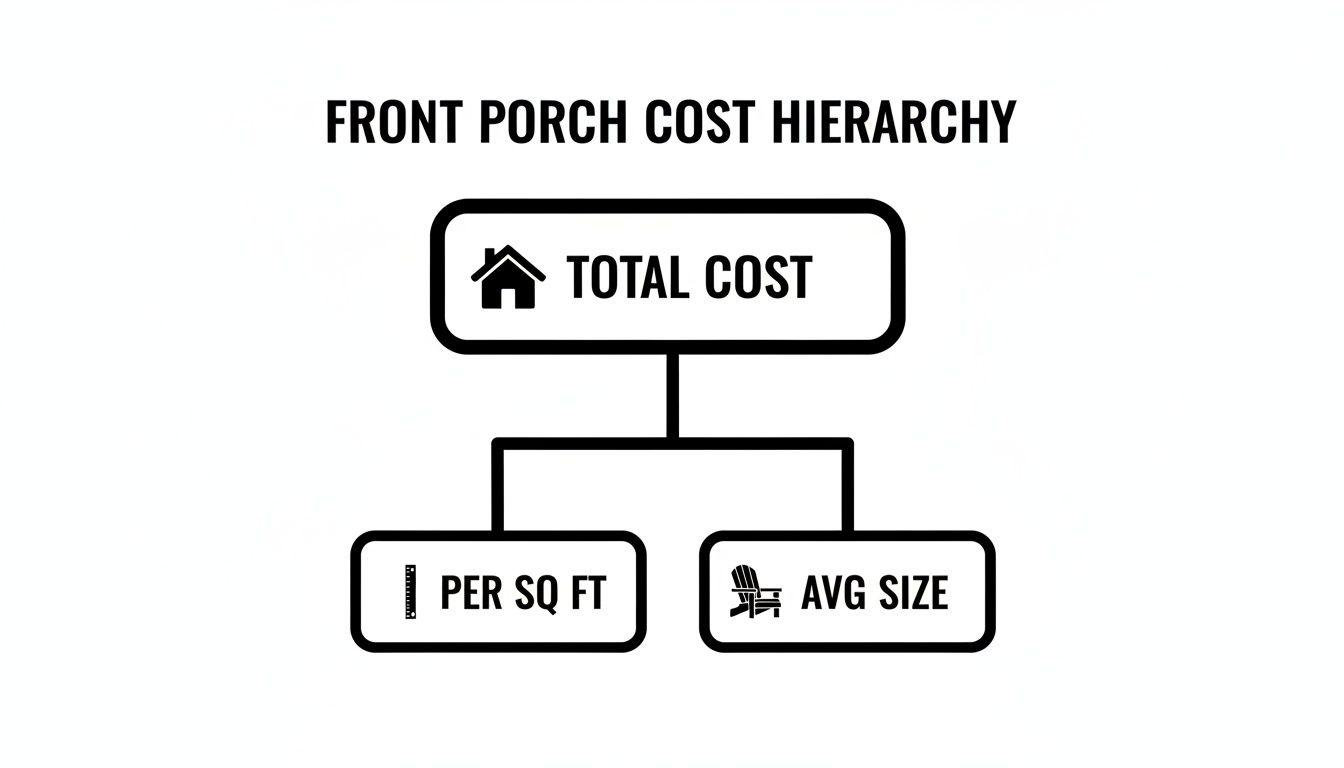
As you can see, the final number is a straightforward calculation: the cost per square foot of your chosen material multiplied by the porch's total area.
Unpacking The Cost Of Labor
Labor is the other half of the puzzle. Here in Florida, you can expect to pay a licensed and insured contractor anywhere from $40 to $100+ per hour. What you pay depends on their crew's experience, how complex your porch design is, and even what time of year it is (demand spikes in the spring).
Building a simple, rectangular porch on level ground is going to be on the lower end of that scale. But if you're dreaming of a wraparound porch with multiple levels, custom railings, and a full roof system, the hours—and the cost—will add up quickly. This isn't just about nailing boards together; you're paying for the expertise to make sure your porch is safe, perfectly level, and built to meet local building codes.
Remember, the cheapest quote isn't always the smart money. Quality work from a skilled pro prevents headaches and expensive repairs later on, making it a solid investment in your home's future.
Looking Out For Hidden Costs
Beyond the obvious material and labor expenses, a few other costs can pop up and catch you by surprise. A smart budget accounts for these "hidden" items right from the get-go.
- Permits: Just about any porch addition will need a building permit from your local city or county. Budget between $200 and $500 for this piece of paper.
- Site Preparation: Is your yard sloped? Do you have trees or bushes in the way? Grading the land or clearing it can add anywhere from a few hundred to a couple of thousand dollars to your total.
- Demolition: If you're tearing out an old, cracked concrete stoop or a rickety wooden deck first, you have to factor in the cost to break it up and haul it away. This often runs between $500 and $1,500.
- Architectural Plans: For a truly custom or structurally complex porch, you might need a professional architect to draw up the plans. This could add 5% to 15% of the project's total cost.
And as you're planning, if you think you might want to screen in your new porch, the type of screen you pick is a big decision. To get a head start, check out our guide on selecting the best screen for your porch.
How Porch Design Choices Impact Your Final Cost

The front porch you're picturing for your home can take many shapes and sizes, and each one comes with its own price tag. Figuring out how different designs affect the final cost to add a front porch is the key to matching your dream with what you can realistically spend. Think of this as your design-to-budget translator—it's all about finding that sweet spot between style, function, and investment.
Your choices run the gamut from simple, open platforms to elaborate, room-like spaces. Every step up in complexity—whether it's adding a roof, screens, or more square footage—will add to the material and labor costs. Let's walk through the most common porch styles, starting with the most budget-friendly and working our way up.
The Simple And Open Portico
A portico, or a small, uncovered porch, is the most straightforward and affordable way to give your home’s entrance a lift. This design is essentially a raised platform, often with a few steps leading to the front door and maybe some simple railings. Because it has no roof or walls, the material and labor costs are kept to a bare minimum.
The main expenses here are the decking, the substructure holding it up, and the foundation. A small, simple portico is a fantastic choice if your goal is to boost curb appeal and create a basic transitional space without a major financial commitment. It’s the perfect spot for some potted plants and seasonal decorations.
Covered Porches For Year-Round Use
Adding a roof is the next big step up in both cost and function. A covered porch instantly becomes a much more usable outdoor living area, offering shade from that intense Florida sun and shelter from afternoon rain. This one simple addition turns your porch into a true extension of your home—a place where you can sip your morning coffee no matter the weather.
Of course, that roof is where the cost increase comes from, thanks to the extra materials and skilled labor involved.
- Framing: Building the roof requires a good amount of lumber for rafters, joists, and support posts.
- Roofing Materials: You'll need shingles, metal, or another material that matches your home's existing roof, which adds a significant expense.
- Labor: Tying a new roofline into your existing home structure is a complex job that requires skilled carpenters and roofers, driving up the labor hours.
If you're considering this upgrade, it's worth digging into the details. You can learn more about what's involved in our guide on building a roof over a deck, which covers many of the same principles.
Screened-In Porches: The Florida Favorite
Here in Tampa Bay and all across Florida, a screened-in porch is often seen as a necessity, not just a nice-to-have. By enclosing your porch with screens, you create a protected oasis, free from mosquitoes, no-see-ums, and other pests. This is the choice that lets you actually enjoy those beautiful Florida evenings without getting eaten alive.
The cost to screen a porch is an add-on to the price of a covered porch—you still need the foundation, floor, and roof. The extra expenses come from the aluminum framing for the screen panels and the screen material itself. While it does increase the budget, most Florida homeowners will tell you the investment pays for itself in sheer usability and enjoyment.
A screened-in porch fundamentally changes how you interact with your outdoor space. It transforms a simple porch into a versatile three-season room, perfect for dining, relaxing, or entertaining.
Wraparound Porches: The Ultimate Upgrade
Finally, we have the wraparound porch, which sits at the high end of both design and cost. These spacious porches extend along at least two sides of a house, offering maximum curb appeal and a ton of outdoor living space. They're iconic features on Southern and farmhouse-style homes, giving you multiple zones for seating, dining, and enjoying different views.
The cost of a wraparound porch is significantly higher simply because of the sheer amount of materials and labor involved. You're basically building two or three porches and connecting them. The foundation, decking, railings, and roofing all scale up, leading to a project that can easily cost two to three times as much as a standard front porch. This is a major construction project, but for the right home, it can be an absolutely stunning and valuable addition.
Tampa Bay Pricing And What Makes Florida Costs Unique
While national averages offer a decent ballpark for the cost to add a front porch, they don’t paint the full picture for those of us living in Florida. Building in St. Petersburg, Clearwater, or anywhere across Tampa Bay means dealing with a specific set of cost drivers that often push project budgets higher than in other parts of the country. Getting a handle on these local factors is absolutely key to mapping out a realistic financial plan.
It’s a bit like buying a car. The sticker price is the national starting point, but the final number you pay is shaped by local taxes, dealership fees, and even regional demand. Construction works the same way—local conditions have a huge say in the final quote.
Hurricane-Rated Construction Is Non-Negotiable
The single biggest factor that sets Florida construction apart is our weather. Living in a beautiful coastal paradise means we also live with the constant threat of hurricanes and powerful tropical storms. Because of this, our local building codes are, for good reason, incredibly strict. They demand specific construction techniques and materials tough enough to stand up to high winds and driving rain.
This directly affects your budget in a few major ways:
- Stronger Fasteners: Your everyday nails and screws simply won't pass inspection here. Contractors are required to use hurricane straps, specialized clips, and corrosion-resistant screws to make sure your porch roof and frame are securely anchored to your house.
- Impact-Resistant Materials: If your design includes enclosed sections, you may need to upgrade to impact-rated windows or doors.
- Deeper Footers: The foundation of your porch has to be dug deeper and built stronger to keep the entire structure from lifting during the powerful upward forces of hurricane-force winds.
These extra safety measures add to both material and labor costs, but they’re a non-negotiable investment in your home’s security and long-term durability.
Building in Tampa Bay isn't just about making a pretty space; it's about engineering a structure that can hold its ground against a Category 3 hurricane. This focus on resilience is a primary driver of local construction costs.
High Demand For Skilled Labor
The Tampa Bay area is booming. With a constant flow of new construction and home renovations, the demand for skilled, licensed tradespeople—from framers to roofers—is sky-high. When you have a limited supply of experienced labor, hourly rates naturally climb higher than in quieter markets.
When you hire a reputable contractor, you aren't just paying for their time on-site. You're investing in their deep knowledge of local codes, their established relationships with reliable suppliers, and their expertise in building something that will pass tough inspections. In a busy market like ours, that expertise comes at a premium. For homeowners who might one day think about converting their porch into a four-season room, understanding these labor costs is even more important. You can find out more about how this influences bigger projects in our guide on enclosing a porch for living space.
Combating Salt Air and Humidity
Living so close to the Gulf means we're constantly surrounded by salty air, which is incredibly corrosive. This humid, salty environment is brutal on building materials, especially metal. To head off premature rust and decay, contractors have to use very specific hardware.
This includes things like:
- Stainless Steel or Coated Fasteners: Every screw, nail, and connector must be made from materials that fight off corrosion.
- Durable Finishes: The paint and sealants used must be high-quality and specifically rated for coastal conditions to shield wood and metal from moisture damage.
These specialized materials have a higher upfront cost than standard hardware, but they save you from expensive repairs and replacements down the line. It's a classic "pay now or pay more later" scenario.
To give you a clearer picture, here’s a quick summary of the unique cost factors for a Tampa Bay porch project.
Key Cost Factors for a Tampa Bay Porch Project
- Hurricane Building Codes: Strict requirements for fasteners, foundation depth, and structural ties to withstand high winds. This has a high impact on the budget.
- High Labor Demand: A booming construction market leads to higher hourly rates for skilled, licensed contractors. This has a moderate to high impact on the budget.
- Corrosion Resistance: The need for stainless steel or specially coated hardware to combat rust from salt air and humidity. This has a moderate impact on the budget.
- Permitting & Inspections: Navigating local municipal requirements adds administrative time and fees to the project. This has a low to moderate impact on the budget.
Ultimately, the combination of hurricane codes, a competitive labor market, and the need for corrosion-resistant materials is what truly defines the cost of building a porch in our beautiful but demanding Florida climate.
Is A New Front Porch A Smart Financial Investment?
Beyond the simple joy of having a new spot to unwind, a front porch is a smart home improvement that can directly boost your property's bottom line. When you look at the cost to add a front porch, it's only natural to ask the big question: what’s my return on investment (ROI)? The answer is pretty compelling—a new porch isn't just an expense, it’s a powerful financial asset.
A well-built porch does more than just make your home look better; it adds real, tangible value you’ll see at resale. Think of it as investing in your home’s first impression. It’s the first thing that greets potential buyers, and it can make them fall in love before they even step through the door. This powerful first impression is what we call curb appeal.
The Strong Return On Investment Of A New Porch
Data consistently shows that outdoor living projects offer some of the best returns of any home renovation. Porch additions, in particular, are top performers because they increase both your home's usable square footage and its aesthetic appeal. They create that perfect, welcoming transition from the outside world into your home.
Recent analysis shows just how smart this move can be. A 2026 HomeAdvisor report found that while the average 200-square-foot porch build is around $14,500, a whopping 80% of homeowners recoup those costs through a 12-15% increase in home value. The National Association of Realtors backs this up, reporting that porch additions can yield an ROI between 67-90%. That significantly outpaces popular projects like kitchen remodels, which average around 60%. You can find more details in HomeAdvisor's in-depth cost analysis.
The takeaway is clear: while a new kitchen mainly benefits the current homeowners, a new porch benefits both the homeowners and every potential buyer who drives by. Its value is visible right from the street, immediately boosting your home's perceived worth.
Boosting Curb Appeal To Sell Faster And For More
Great curb appeal isn't just a buzzword; it's a real financial tool. Homes that look attractive and well-maintained from the outside naturally get higher offers and spend less time on the market. In a competitive real estate market, a beautiful front porch can be the one feature that makes your property stand out. It helps to understand how a porch fits into the broader strategy of learning how to improve curb appeal for any home.
The numbers don't lie. Properties with inviting porches can sell 20 to 30 days faster than similar homes without them. This is especially true down here in the South, where outdoor living is a huge part of the culture and 40% of new homes are built with porches. In markets like ours, a porch addition alone can raise a home's value by 5-10%.
Putting The Investment Into Perspective
To really get a feel for the value, let's compare a porch addition to other popular home improvement projects:
- Minor Kitchen Remodel: Often costs over $25,000 with an ROI around 60-70%.
- Bathroom Remodel: Can easily top $20,000 for a mid-range update, also returning about 60-70%.
- Front Porch Addition: Gives you a similar—or even better—ROI, often for a lower upfront cost, all while dramatically improving your home's public-facing image.
At the end of the day, a front porch is a dual-purpose investment. It improves your daily quality of life by giving you a beautiful, functional outdoor space, and at the same time, it works to increase your home's market value. By planning your project carefully, you’re not just spending money—you’re making a strategic investment in your property’s future. For more tips on making smart home improvements, check out our guide on how to increase home value before selling.
Hiring The Right Porch Contractor And Getting Accurate Quotes

A great porch is only as good as the contractor who builds it. This final step—choosing the right professional—is the most critical decision you'll make, directly impacting the quality, timeline, and final cost to add a front porch. Think of your builder as your partner in this journey. They’re the one who will bring your vision to life, so you need to choose someone you can trust completely.
It’s a lot like hiring an artist to paint a family portrait. You wouldn’t just pick the cheapest person you could find. You’d want to see their past work, talk to their previous clients, and make sure their style matches what you’re looking for. The same logic applies here.
Finding Reputable Local Builders
Your search for a trustworthy contractor begins with a bit of old-fashioned due diligence. A little research now can save you from huge headaches and surprise costs down the road. The goal is to create a shortlist of three to five qualified pros before you even think about asking for bids.
Here’s a simple game plan to get you started:
- Seek Local Recommendations: Ask friends, family, and neighbors who have had similar work done. A referral from someone you trust is often the best lead you can get.
- Check Online Reviews: Use Google and local community forums to see what people are saying. Look beyond the star ratings—pay close attention to how contractors respond to feedback, both good and bad.
- Verify Their Credentials: This is absolutely non-negotiable in Florida. Make sure every single contractor you consider has a valid state license, general liability insurance, and workers' compensation. This is what protects you if an accident or property damage happens on your watch.
A professional contractor will have no problem showing you their credentials. If a builder gets defensive or hesitant when you ask for proof of their license and insurance, that’s a massive red flag. Thank them for their time and move on.
Reviewing Portfolios And Checking References
Once you have your shortlist, it’s time to dig deeper. A contractor’s past work is the best preview of their future performance. Ask to see a portfolio of completed porch projects that are similar in scope and style to what you want.
Look closely at the details—the fit and finish of the woodwork, the sturdiness of the railings, and the overall craftsmanship. When looking at different builders, it's smart to check if they specialize in outdoor structures like dedicated veranda construction services to guarantee a quality result. Don’t just rely on pictures, either. Ask for addresses of a few recent local jobs so you can do a quick drive-by and see their work for yourself.
Most importantly, call their references. A quick phone call with a past client is invaluable. Ask about the contractor’s communication skills, their professionalism, and whether they stuck to the original budget and timeline.
How To Get And Compare Accurate Quotes
Getting good quotes isn't just about finding the lowest price; it's about understanding exactly what you're paying for. A detailed, itemized estimate is the sign of a thorough professional. A vague, one-page quote is often a sign of hidden costs to come.
Your quote should be a clear breakdown that includes:
- Materials: Specific types and quantities of decking, framing lumber, roofing, and even hardware.
- Labor: A clear cost for all the work, whether it’s a flat fee or an estimated number of hours.
- Permit Fees: The cost for filing and obtaining the required building permits.
- Debris Removal: A line item for cleaning up and hauling away all construction waste.
- Payment Schedule: A clear outline of when payments are due at each stage of the project.
Once you have at least three detailed bids, you can finally compare them apples-to-apples. Be very suspicious of any quote that comes in drastically lower than the others. It could signal cheap materials, uninsured labor, or a contractor who plans to make up the difference with "unexpected" charges later. Choosing the right pro ensures your new porch is an investment that's built to last.
Frequently Asked Questions About Front Porch Projects
As you get closer to making a decision, a few final questions usually pop up. Getting these sorted out is the last step before you can confidently move forward with your new front porch. Let's run through the common ones we hear from homeowners.
How Long Does It Take To Build A Front Porch?
The timeline really hinges on how big and complex your vision is. A simple, small portico on a flat patch of ground might only take a few days to a week for a professional crew to knock out.
But if you're planning a larger covered or screened-in porch—complete with a full roof, electrical for lights and fans, and custom finishes—you should budget anywhere from two to six weeks. Keep in mind that things like bad weather, permit inspection schedules, and material backorders can stretch that timeline out a bit.
Do I Always Need A Permit For A Porch In Florida?
Almost always, yes. Here in Florida, especially in coastal counties like Pinellas, Hillsborough, and Manatee, the building codes are incredibly strict because of hurricane safety standards. Any new structure you attach to your home, and that includes most porches, is going to require a building permit.
A permit is your assurance that the porch is built to code, which is vital for both structural safety and your homeowner's insurance policy. A good contractor will handle the entire permitting process, from submitting the plans to scheduling the final inspection.
Trying to skip the permit is a bad idea. It can lead to steep fines, a demolition order, and huge headaches when it's time to sell your house.
What Are The Best Ways To Save Money On A Porch Project?
While you never want to cut corners on structural safety, there are definitely smart ways to manage the cost to add a front porch. The single biggest way to save money is to keep the design simple. A basic rectangular porch is always going to be more budget-friendly than a custom-curved or multi-sided design.
You can also control costs by:
- Choosing cost-effective materials: Pressure-treated pine is a solid, affordable choice that costs significantly less than premium composite decking or exotic hardwoods like Ipe.
- Handling the demolition: If you're just removing a small concrete stoop or some old wooden steps and feel comfortable doing the work, you can save a bit on labor.
- Doing the finishing touches yourself: Once the pros have built the structure, you can trim a few hundred dollars off the final invoice by painting or staining the porch yourself.
What Is The Long-Term Maintenance For Different Porch Materials?
The material you pick has a direct impact on how much work you'll be doing down the road. For wood porches, like those built with pressure-treated pine or cedar, you should plan on cleaning and re-staining or sealing them every one to three years. This is key to protecting the wood from Florida's brutal sun and humidity.
Composite decking, on the other hand, is the low-maintenance winner. All it really needs is an occasional cleaning with soap and water to stay looking great. For a basic concrete slab porch, the upkeep is even simpler—usually just a good sweep or a quick pressure wash now and then.
Ready to add a beautiful, functional screen enclosure to your new porch? The team at Rescreen Rescue has over 20 years of experience delivering top-quality craftsmanship to homeowners across Tampa Bay. For fast, reliable service and a free, no-obligation estimate, visit us online at https://rescreenrescue.com today.