


Figuring out the cost of a new pool can feel like trying to hit a moving target. You see national averages thrown around—anywhere from $44,499 to $87,349 for a standard inground setup. But for us here in the Tampa Bay area, that's only half the story. The real investment includes a critical second piece: the screen enclosure.
Put them together, and you get the true cost of creating that perfect, bug-free Florida backyard oasis.
Your 2026 Florida Pool Installation Cost Snapshot
Before you start picturing those weekend barbecues and late-night swims, it’s smart to get a handle on the budget. A new pool project in Florida isn't just about digging a hole and filling it with water. It’s a two-part investment: the pool itself and its protective screen enclosure, or what we all call a "pool cage." This combo is what gives you a comfortable, clean space you can actually use year-round.
Of course, the final price tag will swing based on the pool's size, the materials you pick, and any custom bells and whistles you add. To give you a realistic starting point, let's talk numbers. Nationally, the average cost to install an in-ground pool in 2026 hovers around $65,909. That said, you can find basic models for under $15,000 or go all-out with luxury builds that top $135,000.
Budgeting For Your Pool And Cage
Here in the Tampa Bay area, we see homeowners plan for the pool and the cage as one unified project, which is exactly the right way to do it. The screen enclosure isn't just some afterthought; it’s a vital part of your investment. It keeps out leaves and pests, adds a layer of safety, and dramatically extends your outdoor living space.
Adding a pool is a major home improvement, and it's one that often boosts your property value. We get into more detail on that in our guide on how to increase home value before selling.
To help you start mapping out your budget, let's take a look at what to expect for a new inground pool and a standard screen enclosure in the Tampa, St. Pete, and Clearwater areas.
2026 Pool & Enclosure Installation Costs At A Glance
Here is a breakdown of the typical costs for the most common inground pool types, along with the price for a new screen enclosure to complete the project.
- Vinyl Liner Pool: The pool installation typically costs between $35,000 and $65,000.
- Fiberglass Pool: The pool installation usually ranges from $45,000 to $85,000.
- Concrete (Gunite) Pool: The pool installation can cost from $60,000 to $120,000+.
- Average Screen Enclosure: A standard screen enclosure to pair with any of these pool types generally costs between $12,000 and $20,000+.
These are the three main options you'll be choosing from, and each has its own pros and cons:
- Vinyl Liner Pool & Enclosure: This is your most budget-friendly path to a new pool. It gets you in the water for a lower upfront cost.
- Fiberglass Pool & Enclosure: A very popular mid-range choice. People love them because they go in fast and have a smooth, non-porous surface that resists algae.
- Concrete (Gunite) Pool & Enclosure: This is the premium, custom-built option. If you can dream it, you can build it with concrete, but it comes with a higher price tag and longer installation time.
While we live and breathe Florida pools, it's sometimes helpful to see what's happening elsewhere. The average cost of a pool in Arizona, for instance, offers a good comparison since both states share a hot climate and a strong pool culture. Think of these figures as a solid starting point for our deep dive into what really drives these costs.
How Pool Material Shapes Your Installation Budget
When you start budgeting for a new pool, the single biggest decision you'll make is the material. Think of it like choosing the foundation for a house; it dictates not just the upfront construction cost but also the long-term maintenance, durability, and the entire feel of your backyard oasis. The average cost of a pool installation is directly tied to whether you go with the endless design freedom of concrete, the quick installation of fiberglass, or the budget-friendly approach of a vinyl liner.
Getting a handle on these differences is the key to making sure your dream pool lines up with your real-world budget. Each material comes with its own set of trade-offs—from the initial price tag and installation timeline to what you’ll be spending on upkeep for years to come. Let's break down how these choices will shape your project's bottom line.
This chart gives you a bird's-eye view of how the total cost of a new pool is typically split between the pool itself and the all-important screen enclosure here in Florida.
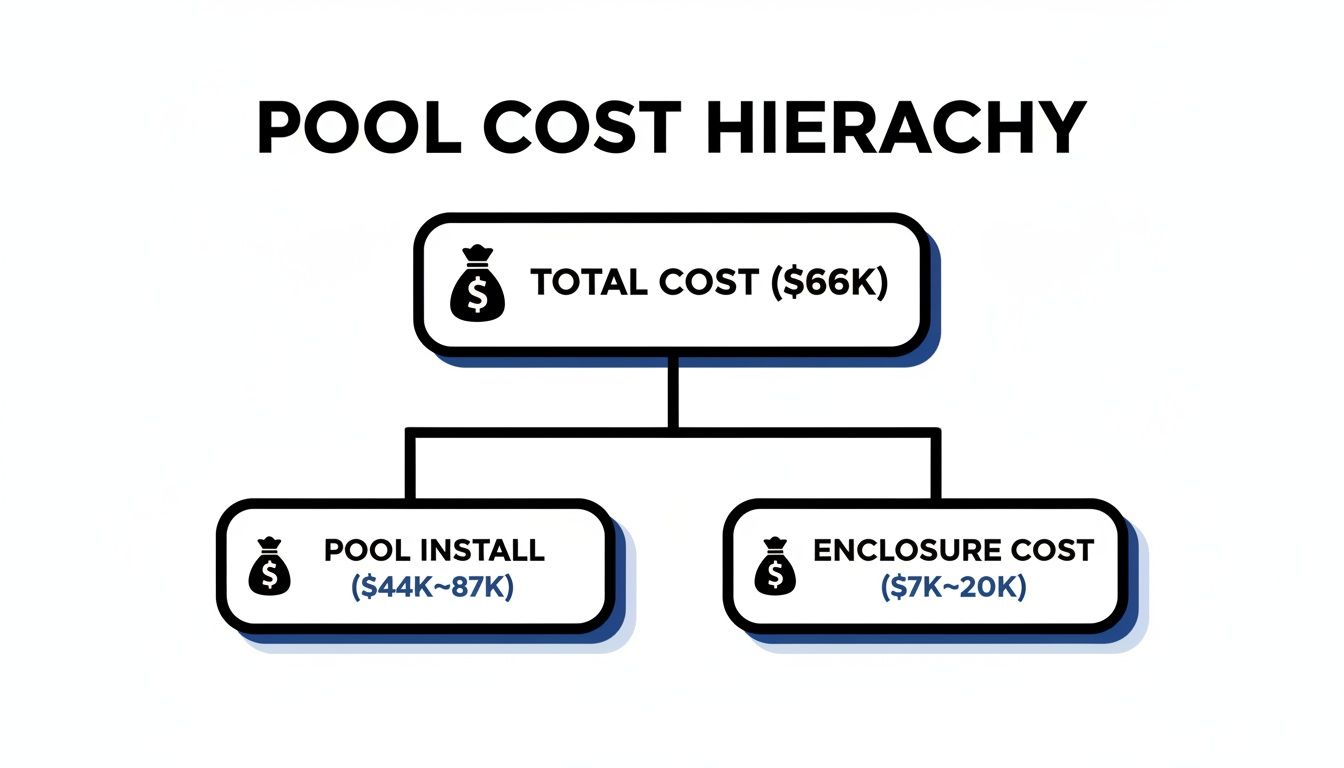
As you can see, while the pool installation is the biggest piece of the pie, that screen enclosure is a major and necessary part of the total investment.
Concrete (Gunite) Pools: The Custom Build
If you’ve ever imagined a freeform pool that perfectly follows the curve of your yard, complete with a built-in tanning ledge or intricate custom tile work, you’re picturing a concrete pool. Also known as gunite or shotcrete, this is the top-tier option for anyone who wants total design freedom.
That flexibility, however, doesn't come cheap. Concrete pools are the most expensive to build, with a price range that usually starts at $60,000 and can easily climb to $120,000 or more. It’s a labor-intensive job that can take months, from bending rebar into shape and spraying the concrete shell to waiting for it all to cure properly.
The upside is their incredible durability—they can last 50 years or more. The downside is that they also demand the most hands-on long-term care. Because the surface is porous, it soaks up more chemicals to keep algae at bay. You’ll also need to acid wash it every few years and completely resurface it every 10 to 15 years, which adds a significant cost over the pool's lifetime.
Fiberglass Pools: The Quick and Smooth Option
Fiberglass pools have taken Florida by storm, and for some very good reasons. These pools are built in a factory and shipped to your home as one big shell. This process dramatically slashes the installation time to just a few weeks—a huge win for homeowners who want to start swimming sooner rather than later.
The average cost of a fiberglass pool falls right in the middle, typically running between $45,000 and $85,000. While the upfront cost is a bit higher than a vinyl liner pool, the long-term savings can be substantial.
The secret is their smooth, non-porous gelcoat surface. This finish naturally fights off algae growth, which means less time and money spent on chemicals and scrubbing, a massive advantage in our warm, humid climate. You can also dig deeper into the pros and cons in our guide comparing above-ground pools vs inground pools.
Vinyl Liner Pools: The Budget-Friendly Choice
For homeowners whose main goal is getting into a beautiful new pool for the lowest possible upfront cost, vinyl liner is the way to go. With an average installation cost between $35,000 and $65,000, it’s the most affordable inground option on the market.
The pool is built using a wall system made of metal or polymer panels. A custom-fitted sheet of vinyl is then stretched over this frame to create the waterproof surface. It's this construction method that helps keep those initial costs down.
The major trade-off here is the liner itself. While today’s liners are quite tough, they generally need to be replaced every 7 to 10 years. That’s a significant future expense you’ll need to budget for. They can be punctured by sharp objects, but they offer a soft, comfortable surface underfoot and are a fantastic way to get into pool ownership without breaking the bank.
Budgeting For Your Pool Screen Enclosure
In Florida, planning a new pool without budgeting for a screen enclosure is like buying a convertible but leaving the top at the dealership. It’s a choice you’ll almost certainly regret. The enclosure, or “pool cage” as everyone here calls it, isn't just an optional extra; it's a critical part of your total investment that delivers comfort, safety, and huge savings on maintenance. A pool without one is just an open invitation for leaves, bugs, and the blistering sun.
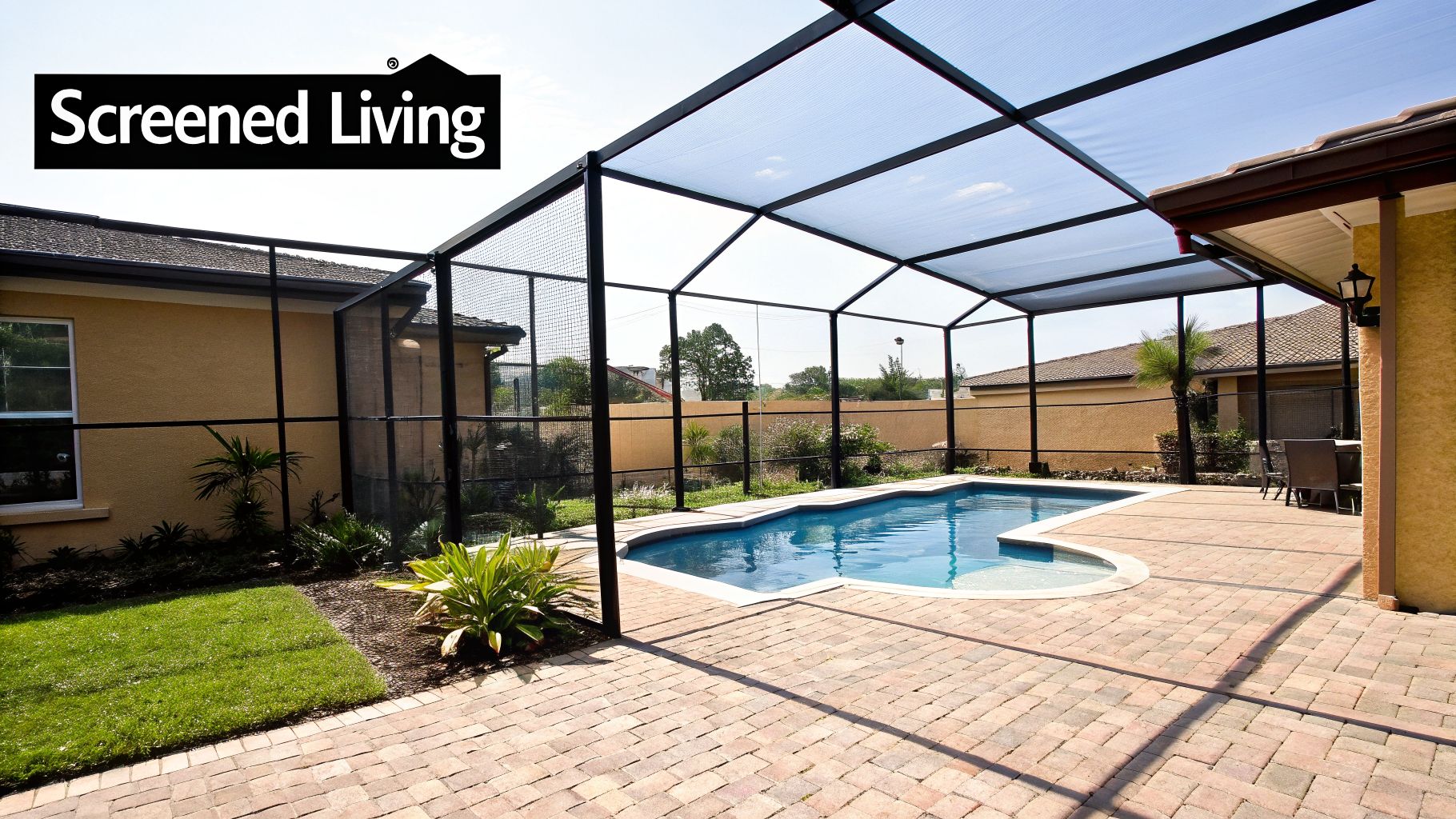
This structure really transforms a basic swimming area into a true outdoor living room. It protects your pool investment by keeping it cleaner, safer, and ready for a swim at a moment’s notice. Factoring its cost into your initial budget is one of the smartest moves you can make when figuring out the average cost of a pool installation.
Key Factors Driving Enclosure Costs
Just like the pool itself, the price tag for a screen enclosure isn't a single number. A few key factors will determine the final cost, and the most significant one is its overall size. A larger pool deck naturally needs a bigger, and therefore more expensive, cage to cover it. Simple as that.
Another major cost driver is the roof design. A standard flat or low-slope mansard roof is the most budget-friendly option. But if you want something with more architectural flair, like a dome or hip roof, you can expect to pay more for the extra labor and materials involved.
Finally, the type of screen you choose makes a difference. Standard fiberglass screen gets the job done and is cost-effective. However, upgrading to a specialty screen—like a "super screen" for extra durability or a solar screen for better UV protection—will bump up the project cost. These upgrades often pay for themselves in the long run.
Typical Cost Ranges For New Enclosures
So, what should you actually set aside for a new screen enclosure here in the Tampa Bay area? For a standard-sized pool, most new installations land in the $12,000 to $20,000 range. This price typically includes a high-quality aluminum frame, standard-grade screen, and one or two doors.
Of course, several variables can push that cost higher:
- Extra-Large Cages: If you have an oversized pool deck or want to screen in a big patio space, costs can easily top $25,000 or more.
- Custom Rooflines: Complex roof designs that need to match your home’s unique architecture will add to the final bill because of the increased engineering and labor required.
- Premium Screens: Choosing pet-resistant, high-visibility, or solar-blocking screens will increase the material cost upfront.
The thought process behind budgeting for a pool cage is similar to choosing between various outdoor structures like pergolas or gazebos. It all comes down to balancing the size, materials, and special features with what you're prepared to invest.
A screen enclosure is the best defense for your pool. It drastically reduces the time you'll spend skimming leaves and fighting off pests, allowing you more time to actually enjoy your investment. It also adds a crucial layer of safety for homes with children or pets.
Why The Investment Is Worth It
While the initial cost might seem like a big number, a pool cage really does pay for itself over time. The most immediate return you'll see is a huge drop in maintenance. You'll spend far less time and money on cleaning and chemicals because your pool is shielded from all that falling debris.
The enclosure also protects you and your family. The screen acts as a barrier against harsh UV rays, making your pool area a much more comfortable and safer place to be during the hottest parts of the day. Plus, it keeps out annoying insects like mosquitoes and no-see-ums, letting you enjoy your backyard oasis well into the evening.
Eventually, all screens wear out. When it's time for a refresh, it’s helpful to know the difference between a simple repair and a full replacement. You can learn more about what to expect in our guide that breaks down the cost to rescreen a pool enclosure. By treating the enclosure as a vital part of the project from day one, you ensure your entire pool setup delivers maximum value and enjoyment for years to come.
Uncovering The Hidden Costs Of A New Pool
When you get that first quote for a new pool, it's easy to get excited. But that initial number is often just the opening act. The real, total cost includes a whole cast of supporting characters—expenses that are absolutely necessary but can easily catch homeowners by surprise if they aren't prepared.
Thinking of your total investment as just the pool's sticker price is like planning a road trip but only budgeting for gas; you're forgetting about food, hotels, and all the tolls along the way. Our goal here is to shine a bright light on these so-called "hidden" costs, so you can build a complete, transparent budget and avoid any sticker shock.
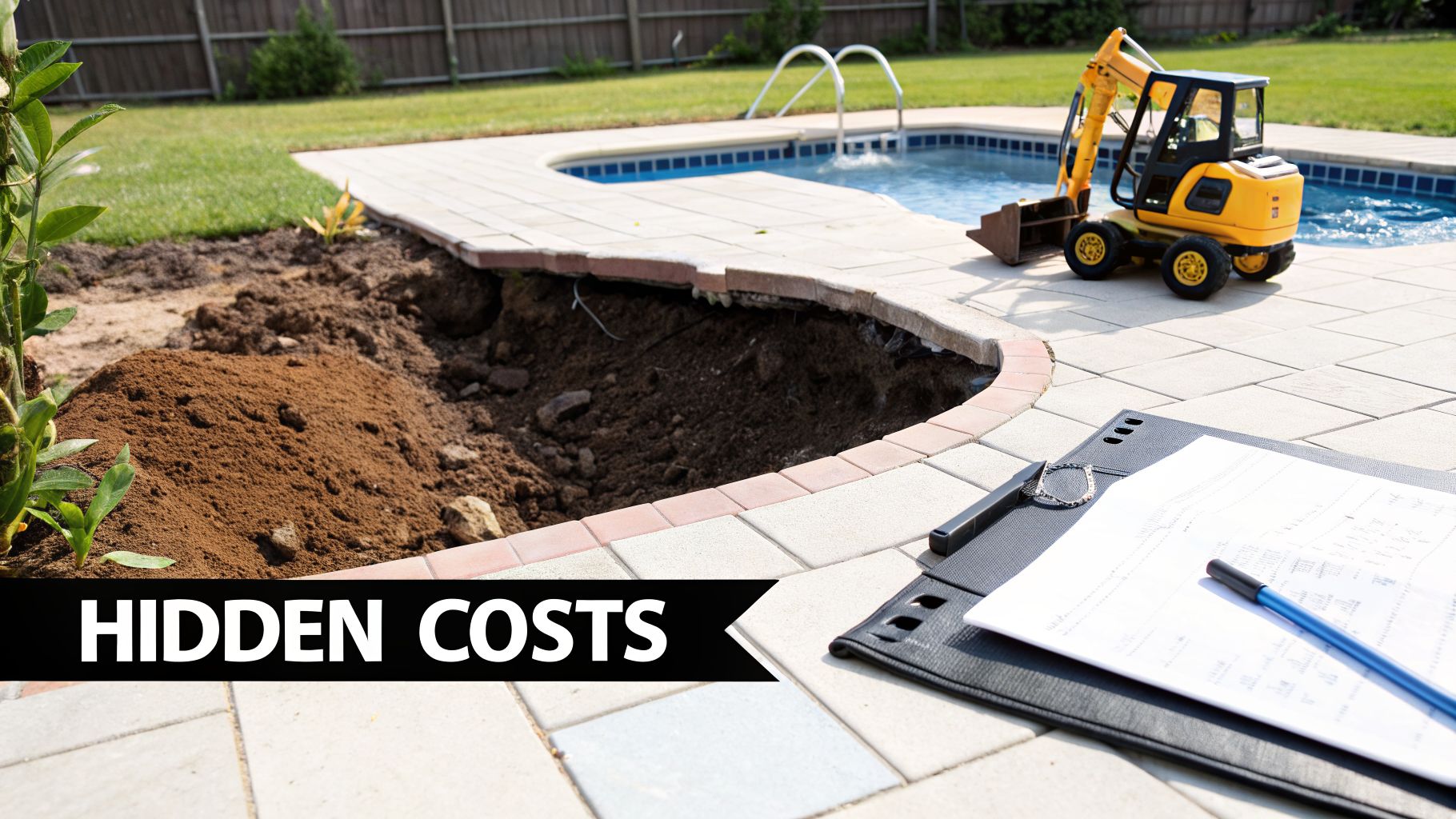
The quote from a pool builder typically covers the essentials: the pool shell itself, basic plumbing, and standard filtration equipment. But everything else needed to transform a patch of grass into a functional backyard oasis often falls into a separate category. To truly understand the average cost of a pool installation, you have to account for these crucial behind-the-scenes expenses.
Essential Site Preparation Costs
Before a single shovel hits the ground, your backyard has to be prepped. This is where some of the most significant—and variable—additional costs live. It's not as simple as just digging a hole; the site needs to be properly graded, and sometimes, a lot of work is required just to make it suitable for construction.
Here are the key site-prep costs you need to plan for:
- Excavation and Debris Removal: This covers the labor and machinery needed to dig the hole for your pool. If your yard has tricky access or is full of rock, these costs can climb. A standard excavation might run $1,500 to $5,000, but complex jobs can definitely be more.
- Land Clearing and Tree Removal: Got a few trees, an old shed, or a jungle of shrubs where the pool needs to go? Clearing that land can add $500 to $3,000 or more to your budget, depending on how much work is involved.
- Grading and Dirt Hauling: After the dig, you'll be left with a literal mountain of dirt. You can't just leave it there. Hauling it away costs money, typically $200 to $600 per truckload. On top of that, proper site grading is critical for drainage to prevent water issues down the road.
Mandatory Utility and Permit Fees
A pool can’t run without power and water, and it certainly can't be built without the city's blessing. These are non-negotiable costs and must be factored into your budget from day one.
Think of permits and utilities as the official permissions and lifelines for your pool. Without them, your project can't legally or functionally exist. It's an upfront cost that prevents major headaches and fines down the road.
These are the common utility and permit expenses you’ll face:
- Electrical Work: Your pump, lights, and any heating systems need dedicated power. You'll need a licensed electrician to run the wiring and install a sub-panel, which can cost anywhere from $2,500 to $7,500.
- Plumbing: Beyond the basic pool plumbing, you might need to run new water lines to the site for filling the pool or for handy features like a hose bib on the deck. This can tack on another $500 to $2,000.
- Permits and Inspections: Every city has its own fee structure. Here in the Tampa Bay area, you should budget between $500 and $2,500 for building permits and the required inspections that happen throughout the construction process.
Finishing Touches That Complete Your Oasis
With the pool in the ground and the equipment humming, you're close—but not quite finished. The final stage is all about creating a safe, attractive, and usable space around your new pool. These are the elements that truly transform it into a backyard destination. As we've mentioned, the pool cage is a major component, but there's more to consider. In fact, if your cage eventually needs an update, you can find all the details on that process in our guide to pool cage restoration costs.
Key finishing costs include:
- Decking or Patio: The concrete, pavers, or stone surrounding your pool isn't just for looks; it's essential for safety and function. This can range from $15 to $35 per square foot, meaning a modest patio could easily add $6,000 to $15,000 to your total.
- Fencing: Most local codes require a safety fence around the pool, even if you have a screen enclosure. A standard aluminum fence might run $3,000 to $10,000, depending on the size of the area you need to secure.
- Landscaping: This is the final polish. It includes everything from laying new sod and adding flower beds to installing landscape lighting. A basic landscaping package might start around $2,000, but elaborate, resort-style designs can cost much more.
It’s also important to remember how much location can swing these numbers. Regional price differences can be dramatic. In Florida, which is known as the pool capital of the country, the average costs for a pool and cage project offer good value, sitting between $38,200 and $101,328.
Understanding Long-Term Pool Ownership Costs
Your financial commitment to a new pool doesn't just stop once the installation crew drives away. Think of it like bringing home a new car; the initial purchase price is just the starting line. A pool brings immense joy, but it also comes with ongoing responsibilities and expenses that are part of the long-term investment in your home and lifestyle.
Understanding these future costs is the key to a happy ownership experience. From the daily operational needs to major repairs down the road, being prepared financially ensures your backyard oasis remains a source of relaxation, not a source of stress. This foresight transforms your pool from a simple purchase into a well-managed asset.
The Yearly Rhythm of Pool Expenses
Just as a car needs gas and oil changes, a pool has regular, predictable running costs. These are the expenses you'll run into year after year to keep the water sparkling, safe, and ready for a swim. Here in Florida, where pools often get year-round use, these costs are a constant part of the household budget.
On average, homeowners can expect to spend between $3,030 and $5,995 annually on total pool upkeep. This range covers everything from basic chemicals and electricity to minor repairs.
Here’s a breakdown of what that typically includes:
- Routine Maintenance: Whether you hire a pro or do it yourself, this involves skimming, vacuuming, and testing the water. Professional services in the Tampa Bay area can range from $960 to $1,800 per year.
- Chemicals: Sanitizers like chlorine, balancers for pH and alkalinity, and algaecides are non-negotiable. You should budget $175 to $750 annually to keep your water chemistry in check.
- Electricity: Your pool pump is one of the biggest energy consumers in the backyard. Running it daily can easily add $800 to $1,200 to your yearly electric bill.
- Water: Topping off the pool due to evaporation, especially during our hot, sunny summers, will add a smaller but noticeable amount to your water bill—often $45 to $245 a year.
Planning For Major Future Replacements
Beyond the annual rhythm of maintenance, every pool has a lifecycle that includes major "big-ticket" repairs. These are the larger, less frequent expenses you absolutely must save for. The specific repairs you’ll face depend directly on the type of pool you chose in the first place.
Think of it like setting aside money for a new roof on your house; you know it's coming eventually, and you don't want to be caught off guard.
Budgeting for future pool repairs isn't just smart—it's essential. A vinyl liner replacement or a concrete resurfacing can cost thousands of dollars. Being caught unprepared can turn a planned project into a full-blown financial emergency.
Here are the most common long-term replacements to plan for:
- Vinyl Liner Replacement: This is the most frequent major expense for this pool type. Vinyl liners typically need to be replaced every 7 to 10 years. The cost can range from $4,000 to $7,500 or more, depending on your pool's size and the liner quality.
- Concrete Pool Resurfacing: The durable plaster finish on a concrete pool needs to be redone every 10 to 15 years. This is a significant job, often costing between $10,000 and $20,000.
- Fiberglass Pool Refinishing: While incredibly durable, the gelcoat on a fiberglass pool may need refinishing after 25 years or more. It's a costly process that restores its smooth, waterproof surface.
For a more detailed look at these ongoing costs, check out our complete guide on the average cost of maintaining a pool.
Your Pool’s Impact on Home Value
The good news is that this long-term investment often pays off when it's time to sell. While a pool rarely recoups its full installation cost, it can seriously boost your home's marketability and value, especially in a hot market like Florida where a pool is a highly desirable feature for buyers.
Studies show a pool can increase a home's value by up to 7%. In the Tampa market, a pool was found to add a value of around $29,611 to the median home. When you pair that pool with a clean, functional screen enclosure, you create a complete outdoor living package that helps your property stand out from the competition and sell faster.
Common Questions About Pool Installation Costs
Jumping into a new pool project naturally brings up a lot of questions, especially around the timeline, financing, and what it's all really going to cost. It's completely normal to want a clear picture before you dive in. To help, we've pulled together the most common questions we hear from homeowners across the Tampa Bay area.
Getting these answers upfront helps you plan with confidence and makes sure there are no major surprises along the way. Think of this as your quick-reference guide to the practical side of building your backyard oasis.
How Long Does It Take To Install A Pool And Enclosure?
This is easily one of the first questions on every homeowner's mind. From the day the excavation crew breaks ground to your first cannonball, a standard inground pool installation typically takes 8 to 12 weeks. This window covers everything—the digging, plumbing, electrical work, pouring the deck, and finally, filling it with water.
The screen enclosure is the last major piece of the puzzle, and it's a much quicker process. Once the pool deck is fully cured, a professional crew can usually have the entire aluminum structure and screens installed in just 1 to 2 weeks. Keep in mind, this is an ideal timeline; a classic rainy Florida summer, permit delays, or complex custom features can definitely add to the schedule.
Can I Finance A New Pool And Screen Enclosure?
Yes, absolutely. A new pool and enclosure is a major home improvement, and a huge percentage of homeowners use financing to make it happen without touching their savings. Spreading the cost out over time makes the project much more manageable.
Several popular financing routes are available, and each has its own benefits:
- Home Equity Line of Credit (HELOC): This lets you borrow against your home's equity, often with a very competitive interest rate.
- Home Equity Loan: Similar to a HELOC, but you get the money as a lump sum with a fixed rate and predictable monthly payments.
- Personal Loans: These are unsecured loans from banks or credit unions and can be a great option if you have a strong credit history.
- Pool Builder Financing: Many pool companies work directly with lenders to offer financing options designed specifically for these kinds of projects.
We always recommend homeowners get quotes from several lenders. Comparing interest rates, loan terms, and any fees is the best way to find a monthly payment that fits comfortably into your budget.
How Can I Save Money On My Pool Project?
While a quality pool is a serious investment, there are smart ways to manage the budget without sacrificing the final result. If you're looking to lower the average cost of your pool installation, a few key decisions can make a big difference. It's all about balancing your must-haves with your nice-to-haves.
One of the most effective ways to cut costs is to opt for a smaller or simpler pool design. A clean, rectangular pool will always be more affordable than a custom freeform shape with lots of curves. Also, choosing a vinyl liner pool over concrete or fiberglass will significantly drop that initial upfront price tag.
Another great strategy is to handle some of the finishing touches yourself. If you've got a bit of a green thumb, doing the final landscaping—like laying sod and planting flower beds—can save you thousands. The single most important step you can take, however, is to get at least three detailed quotes from licensed, insured, and reputable contractors for both the pool and the enclosure. This is the only way to know you’re getting a fair market price.
What Is The Difference Between A Pool Rescreen And Full Restoration?
This question comes up all the time, especially for people who already have an enclosure. Knowing the difference is critical for budgeting future maintenance correctly.
A simple rescreen is exactly what it sounds like: a technician comes out and replaces only the torn or damaged screen panels on your lanai, pool cage, or porch. The aluminum frame itself is left alone. This is the perfect, budget-friendly fix if your enclosure's structure is solid but a few panels have seen better days.
A full restoration, on the other hand, is a complete makeover for your pool cage. It's a much more involved process for enclosures that are structurally sound but look faded, chalky, or stained. This service includes pressure washing the entire structure, painting the aluminum with a durable finish, replacing all the old, rusty fasteners with new hardware, and then installing brand-new screen everywhere. It brings an old, tired cage back to life for a fraction of what a full replacement would cost.
If your lanai, porch, or pool cage is looking worn out or has suffered storm damage, the expert team at Rescreen Rescue is here to help. From a single panel repair to a complete pool cage restoration, we provide fast, reliable service with fair pricing across the Tampa Bay area. Get your free, no-obligation estimate today by visiting us at https://rescreenrescue.com.