


Figuring out the budget for a new patio enclosure is a lot like shopping for a new car. You can go for a practical, no-frills model that gets the job done, or you can spring for a luxury version with all the bells and whistles. Your final price tag will reflect that choice.
Here in Tampa, the enclosed patio cost typically falls somewhere between $8 to $25 per square foot, but that's just a starting point. The real cost depends on your vision—from a simple rescreen of your existing lanai to a brand-new, custom-built sunroom that acts as a true home extension.
To get a better handle on what to expect, it helps to understand how to estimate construction costs the way the pros do. This knowledge will make you much more confident when you start getting quotes from contractors.
Your 2026 Guide To Enclosed Patio Costs In Tampa
Let's break down where your money goes. The single biggest factor that will move the needle on your project’s cost is the type of enclosure you want. A simple screen keeps the bugs out while letting the breeze in. A fully insulated sunroom, on the other hand, creates a year-round living space.
Comparing Enclosure Types
Think of these as different tiers, each with its own purpose and price point.
- Screened-In Patios: This is your most budget-friendly option. It’s all about protection from insects and stray leaves while keeping that classic, open-air Florida feel.
- Three-Season Enclosures: A solid middle ground. These often use vinyl or single-pane glass windows, giving you more protection from wind and rain and letting you enjoy your patio for more of the year.
- All-Season Sunrooms: The premium choice. These are built like a true home addition with insulated glass, climate control hookups, and high-end framing. They become a genuine, usable room 365 days a year.
This chart gives you a quick visual on how the starting costs stack up.
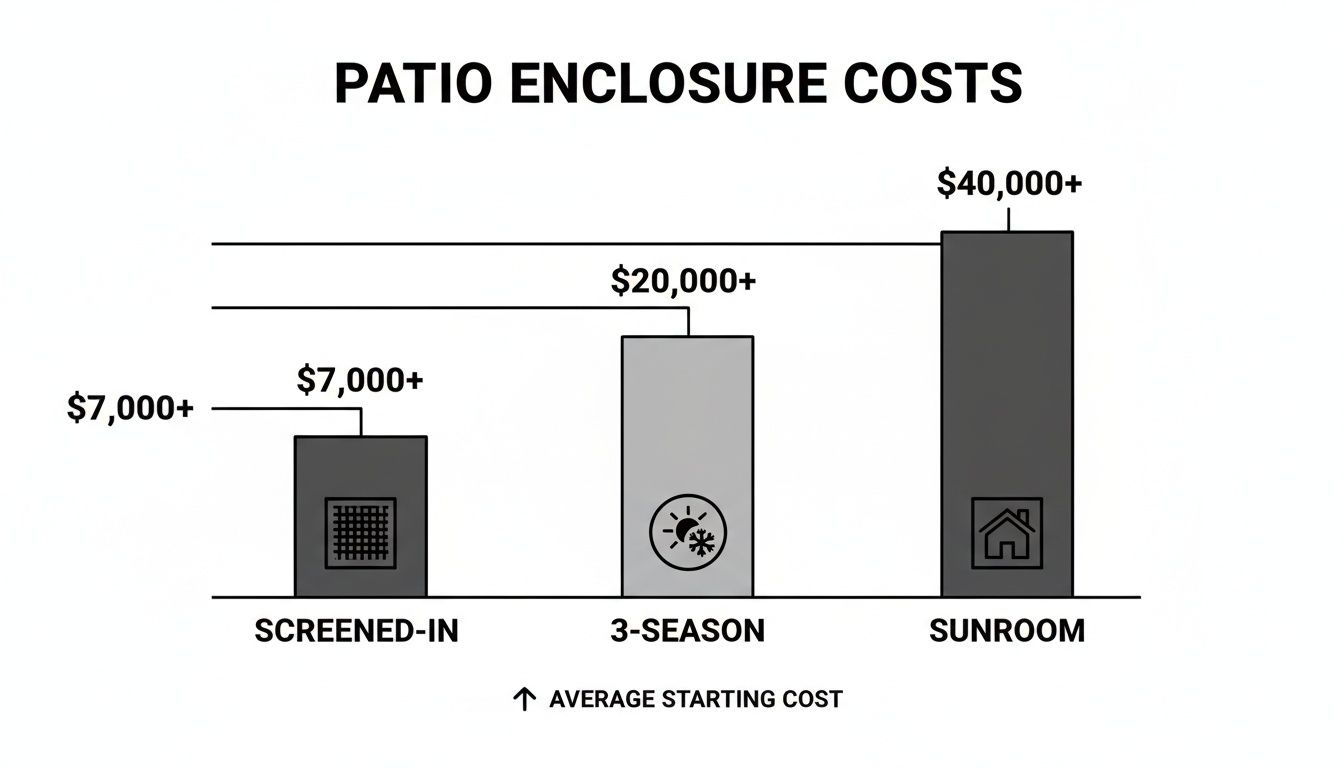
As you can see, the jump from a basic screen to a full sunroom is significant, and that's before adding any custom features.
A Quick Look At National Averages
While Tampa Bay pricing is what really matters for your project, it’s always helpful to look at national data to set a realistic baseline. These numbers give you a ballpark idea of what homeowners are spending across the country.
Here's a quick summary of typical price ranges to help you frame your budget:
- Screened-In Patio: Ranging from $2,100 to $8,000+, this option is best for maximizing airflow and keeping bugs out on a budget.
- Three-Season Room: Typically costing between $8,700 and $28,000+, this choice is ideal for extending patio use into cooler or rainy weather.
- All-Season Sunroom: With a price tag of $25,000 to $50,000+, a sunroom is best for creating a true, year-round extension of your home's living space.
These figures show just how wide the spectrum is. On average, most projects land somewhere between $8,706 and $28,371, with a national midpoint around $17,842. Of course, a simple screen job can start as low as $2,100, while a high-end, fully custom sunroom can easily top $50,000.
These numbers reflect the huge difference in materials, labor, and features. For a deeper look into what makes each option unique, you can check out our guide on the different types of patio screen enclosures.
What Really Drives Your Enclosure's Final Price
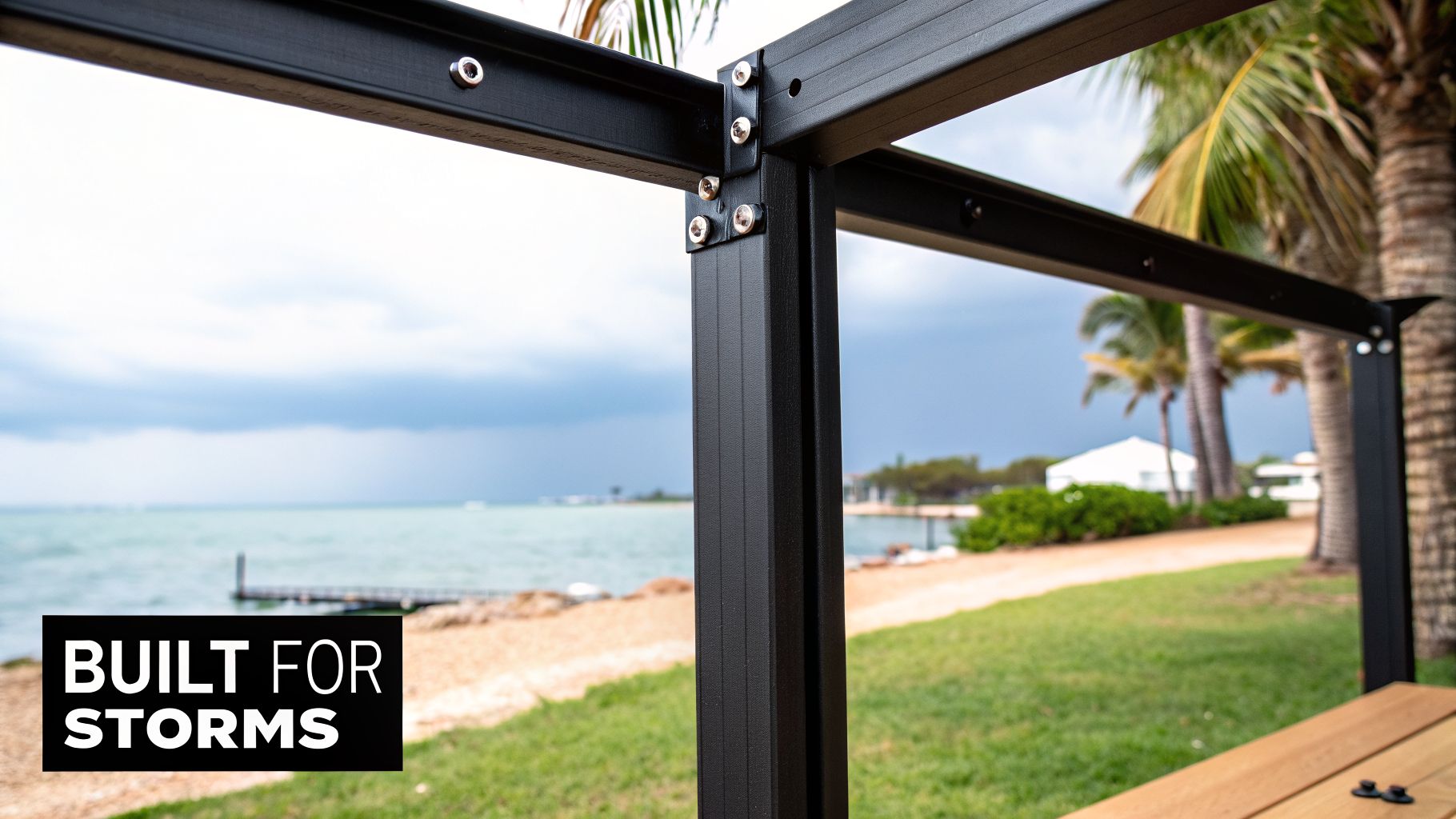
When you get an estimate for a new patio enclosure, it helps to think of it like a build sheet for a new car. Every single component—from the aluminum frame down to the last screw—has a price tag. The final number you see is simply all those individual costs added up.
Getting a handle on these core components is the secret to getting the Tampa Bay outdoor space you want without blowing your budget.
The biggest line item on that sheet? It’s almost always size. Just like building a bigger house costs more, a larger enclosure demands more materials and more hours of labor. This simple fact is the foundation of every quote you'll receive.
A bigger footprint means more aluminum, more screen, and more fasteners to bolt everything together. It's the most direct relationship in the entire project.
The Impact Of Project Size And Scale
It’s no surprise that the scale of your project is the number one cost driver. A small 144-square-foot patio (a simple 12’ x 12’ space) will have a completely different price tag than a sprawling 360-square-foot enclosure (maybe 18’ x 20’) designed to cover a large lanai and part of a pool deck.
But it’s not just about square footage. The complexity of your design plays a huge role, too. A basic rectangle is the most straightforward and affordable shape to build. Start adding multiple angles, different roof pitches, or attachments to tricky, existing rooflines, and the cost will climb. Every extra corner or custom connection means more labor and specially cut materials.
While you're budgeting for the enclosure itself, remember that site prep can overlap with general landscaping costs, as you may need to level the ground or pour a new concrete slab first.
The larger the enclosure, the higher the cost—it's the most predictable variable in your project. A 20% increase in square footage can easily translate to a 15-20% increase in the final price, depending on the materials chosen.
This logic applies to other services, too. For example, a full rescreening job on a massive pool cage will naturally cost more than the same job on a small lanai.
Choosing The Right Screen Material
Once you've landed on the size, your next big decision is the screen mesh itself. This choice has a huge impact on your initial cost, but it also determines the durability, day-to-day function, and long-term maintenance of your enclosure. It’s not just there to keep bugs out; it’s a performance feature of your home.
Here’s a breakdown of the most common screen types and how they affect your budget:
-
Standard Fiberglass Screen: This is the industry workhorse and the most budget-friendly option. It gives you great visibility and airflow, making it the perfect default choice for keeping insects out without a major investment. Think of it as the baseline for your enclosed patio cost.
-
Pet-Resistant Screen: If you have dogs or cats who see screens as a challenge, this upgrade is a must. It’s made from a tough, vinyl-coated polyester that’s seven times more durable than standard fiberglass. It costs more upfront, but it’ll save you a ton of money on patch jobs and future repairs.
-
Solar Screen (or Sun-Blocking Screen): The Florida sun is no joke. Solar screens are designed to block a large chunk of UV rays, which keeps your patio noticeably cooler and stops your outdoor furniture from fading. That added comfort and protection comes at a higher price, but it can make your patio usable even on the hottest days.
How Tampa's Climate And Codes Affect Your Budget
Building an enclosure in the Tampa Bay area means playing by a different set of rules than in many other parts of the country. Our beautiful, sunny weather comes with a price: serious hurricane-force winds and relentless humidity. These local factors directly bump up the enclosed patio cost because certain materials and building standards are completely non-negotiable.
Think of it like buying a car for a snowy climate. You wouldn't skip the all-wheel drive and snow tires; they're essential for safety. Here, hurricane-rated construction and corrosion-resistant hardware are our all-wheel drive. They aren't optional upgrades—they are built directly into the budget for any legitimate project.
Understanding these local requirements is the key to setting a realistic budget for a safe, durable structure that will actually last.
Navigating Florida's Hurricane Building Codes
After past hurricanes ripped through the state, Florida put some of the nation's toughest building codes in place. For screen enclosures, this means every structure must be engineered to handle specific wind loads, which can be as high as 150 mph or more right here in our region. This isn't just a friendly suggestion; it's the law, and it absolutely affects your material and labor costs.
To meet these tough standards, contractors have to use specific materials and techniques.
- Stronger Aluminum Framing: The structural aluminum used for new enclosures today is much thicker and more robust than what was used a decade ago. This ensures the frame won’t buckle under the immense pressure from high winds.
- Specialized Fasteners: Every screw and bolt holding the structure together must be officially rated for high wind loads. These specialized fasteners cost more, but they’re what keeps the enclosure from flying apart in a storm.
- Proper Bracing: The codes require specific bracing, like "k-bracing" or gusset plates at the corners, to give the entire structure rigidity and strength. This takes more material and more precise, time-consuming labor.
These code-mandated upgrades are a huge reason why a new enclosure costs more than it did years ago. It’s a direct investment in your home’s safety.
A structure built to modern hurricane codes isn't just an expense; it's a critical investment in your home's resilience. It's the difference between an enclosure that survives a major storm and one that becomes dangerous, flying debris.
The Battle Against Salt And Humidity
Besides powerful winds, your enclosure is in a constant fight against moisture. Tampa Bay’s sticky humidity and salty air create a highly corrosive environment. If you’ve ever seen an older enclosure with rusted, bleeding screws and discolored aluminum, you’ve seen firsthand what happens when the wrong materials are used.
This is exactly why corrosion-resistant hardware is a necessity, not a luxury. Standard steel fasteners might save a tiny bit of money upfront, but they will start to rust and fail within just a few years. That rust doesn't just look awful; it weakens the structural integrity of your entire enclosure.
Choosing the right materials from the start prevents expensive repairs and restoration projects down the road. This means using ceramic-coated or stainless steel screws specifically designed for coastal environments. Any good contractor will insist on this, knowing it’s essential for your investment's long-term health. It ensures your enclosed patio cost covers a structure built to last, not one that needs a complete hardware replacement in five years.
Beyond The Basics: Uncovering Hidden Costs And Smart Add-Ons
When you're pricing out a new screen enclosure, it's easy to focus on the big-ticket items: the aluminum frame and the screen itself. But just like buying a house, the initial price doesn't cover the furnishings. The final enclosed patio cost is often shaped by the smaller, practical details that make the space truly yours.
Ignoring these add-ons and related services can lead to some unwelcome surprises on the final bill. Planning for things like new doors, protective kick plates, or even a good pressure washing upfront ensures your quote is complete and you get the finished product you were picturing.
Practical Upgrades For Function And Durability
While the frame and screen are the stars of the show, a few supporting actors are crucial for your enclosure's day-to-day use and longevity. These are the kinds of things a good contractor will bring up during the quote process, and it’s almost always cheaper and easier to include them from the start.
Here are a few valuable add-ons that are well worth considering:
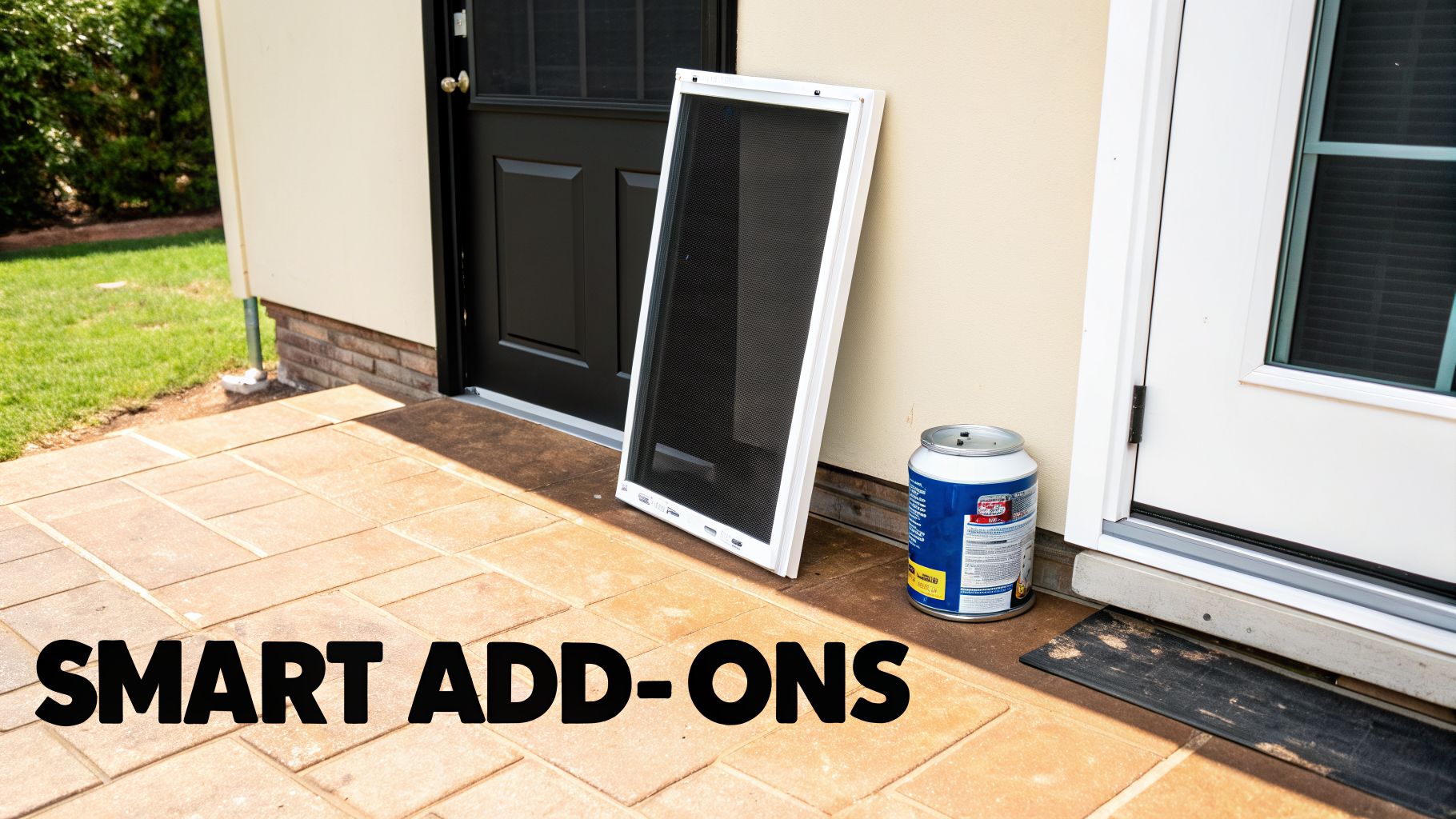
- New Screen Doors: Nothing ruins the feel of a brand-new enclosure like a rickety, sagging old door. Installing a sturdy new screen door, complete with a modern handle and a smooth closer, typically adds $250 to $500. It’s a small price to pay for a secure and hassle-free entryway.
- Pet Doors: For those of us with four-legged family members, a built-in pet door is an absolute game-changer. It gives your pets the freedom to come and go without you playing doorman all day. Adding a pet door usually runs between $150 and $300, depending on the size and style.
- Kick Plates: This is a protective aluminum panel that runs along the bottom of your screen walls. It’s a fantastic upgrade for blocking dirt, grass clippings, and splashes from sprinklers. More importantly, it shields the lower screen panels from accidental damage from weed whackers, kids, or excited pets, saving you a headache and future repair costs.
Bundled Services For A Complete Restoration
If you’re already making a significant investment in a rescreen or a new build, it’s the perfect time to tackle other maintenance jobs around the patio. Many contractors will bundle services, which saves you money compared to hiring different companies for each task. It’s a smart way to get the entire area looking pristine all at once.
Bundling restoration services with your rescreening or enclosure project is one of the smartest ways to maximize your investment. You save on mobilization costs and ensure a cohesive, professionally finished look for your entire outdoor space.
These are some of the most common services to bundle:
- Pressure Washing: Over the years, that Florida humidity can leave a layer of algae, dirt, and grime on your aluminum frame and concrete slab. A professional pressure wash gets everything sparkling clean, creating a perfect canvas for new paint or just bringing back the original luster.
- Full Cage Painting: Is your enclosure's frame looking faded, chalky, or chipped? A fresh coat of specialized paint can make the whole structure look brand new again. It’s an incredibly popular option for transforming the entire vibe of your patio for much less than the cost of a full replacement. For those considering a more extensive makeover, understanding what goes into building a Florida room can provide valuable context for your project's scope.
- Fastener Replacement: As we’ve mentioned, rusted screws are a huge issue here in coastal Florida. If you’re rescreening an older cage, this is non-negotiable. Swapping out every old, corroded fastener for new, corrosion-resistant hardware is absolutely vital for restoring the structural integrity of your enclosure and making it last.
The True Financial Return Of Your Enclosed Patio
It's easy to look at the enclosed patio cost and see only the initial price tag. But that’s only half the picture. Think of it less as an expense and more as a smart investment—one that pays you back in both lifestyle upgrades and a serious boost to your home's financial value.
A beautiful, well-built outdoor enclosure is one of the few home improvements that delivers on multiple fronts. In a market like Tampa Bay, where outdoor living is baked into our culture, a quality lanai or pool enclosure isn't just a nice feature; it's a powerful selling point that makes your home shine.
Boosting Your Home's Market Value
From a purely financial perspective, an enclosed patio is a solid move with a clear return. Recent data shows a quality enclosure can increase your home's value by as much as 8% to 10%. For a home valued at $300,000, that’s an extra $24,000 to $30,000 in equity—often much more than the project cost itself.
This makes an enclosure project a no-brainer for homeowners and real estate agents looking to get the most out of a sale. The reason for this impressive return is simple: you’re adding a flexible, all-weather living zone. It expands your home's usable square footage without the cost and headaches of a full-blown room addition.
A well-maintained screen enclosure is more than just an amenity; it's a tangible asset that can dramatically improve your home's marketability and final sale price. Homebuyers in Florida see it as an immediate lifestyle upgrade.
Suddenly, services like rescreening and restoration aren't just maintenance chores. They become strategic moves to protect and grow a valuable asset.
The Lifestyle Return on Investment
Beyond the numbers, the lifestyle return starts the moment the job is done. Your new enclosure is instantly a bug-free spot for morning coffee, a shaded play area for the kids, and a comfortable place to relax in the evening without swatting away mosquitoes.
It truly extends your living space outdoors, turning a patio you barely use into the most popular "room" in the house. Choosing a quality project, whether it’s a full restoration or a simple rescreen, pays you back every single day. If you want to dive deeper into this topic, our guide on how to increase home value before selling offers more practical tips.
Focusing on quality materials and professional work ensures your investment provides lasting enjoyment, peace of mind, and a strong financial return when it’s time to sell.
How to Choose the Right Enclosure Contractor in Tampa
Finding a contractor for your patio enclosure in a busy market like Tampa Bay can feel like a huge task. With so many companies all making big promises, how do you find one that actually delivers quality work and stands behind it? The right partner ensures your enclosed patio cost is a smart investment, not a source of future headaches.
Think of it like hiring a specialist for any important job on your home. You wouldn't trust just anyone with your roof or your plumbing; you'd look for a pro with a proven track record, deep knowledge, and a reputation for being straight with you. The same exact principle applies here. Your home is your biggest asset, and your new enclosure deserves someone who respects that.
This is especially true with so many Tampa Bay homeowners adding enclosures. The demand for these spaces is growing, and with it, the number of contractors has exploded. It’s more important than ever to do your homework. While the global market for sunrooms is projected to be around $3.5 billion by 2025, what matters to you is finding a reliable local expert, not just another name on a truck. You can see more on these trends and how they affect homeowners. Learn more about the growth of the patio enclosure market on datainsightsmarket.com.
Verify Their License and Insurance First
Before you even glance at a portfolio, your first move should be to confirm the contractor is properly licensed and insured to work in Florida. Don't just take their word for it. A legit contractor will have no problem giving you their license number, which you can check yourself on the Florida Department of Business and Professional Regulation (DBPR) website.
Next, ask to see proof of both general liability insurance and workers' compensation. This isn't just red tape—it protects you.
- General Liability Insurance: This covers your property if there’s any accidental damage during the job. Think a ladder falling into a window or equipment scratching up your deck.
- Workers' Compensation: This is critical. It covers their employees if they get hurt on your property, shielding you from any liability claims.
If a contractor can't produce these two policies, walk away. The financial risk you'd be taking on just isn't worth it.
Dig Into Reviews and Past Projects
Once you've confirmed their credentials, it's time to check their reputation. Look for recent customer reviews on independent sites like Google. Don't just look at the star rating; read what people are actually saying.
Look for patterns in the reviews. Consistent praise for showing up on time, keeping the job site clean, clear communication, and fixing issues without a fuss are huge green flags. These are the hallmarks of a truly professional company.
You should also spend time looking through their portfolio of completed jobs. Do their finished enclosures look sturdy and clean? Do they have plenty of examples of projects like yours, whether it's a simple rescreen or a full-blown pool cage restoration? A solid portfolio is proof of experience and pride in their work.
Insist On a Detailed, Written Estimate
Never, ever accept a verbal quote or a vague, one-line estimate. A professional will always provide a detailed, itemized quote that breaks down the entire job from start to finish. This document is your roadmap and should clearly lay out:
- The total project cost
- A breakdown of material versus labor costs
- The exact type of screen and hardware being used (e.g., Phifer screen, Nylo-Tec fasteners)
- A clear scope of work, including any extras like door replacement or pressure washing
- The payment schedule
- An estimated timeline for start and completion
A detailed estimate prevents nasty surprises and ensures you know exactly what you're paying for. It’s also the only way to accurately compare quotes between different companies and manage your final enclosed patio cost. If a contractor gets cagey about providing this level of detail, consider it a major red flag.
Your Top Questions About Enclosed Patio Costs, Answered
As you get closer to starting your project, you're bound to have a few final questions, especially about the budget. Planning for a major home improvement can feel a little overwhelming, but getting straight answers helps you make decisions with confidence. We’ve rounded up the questions we hear most often from Tampa Bay homeowners to give you the clear information you need.
How Much Does It Cost To Just Rescreen An Existing Enclosure?
This is a common one. Many homeowners are perfectly happy with their enclosure's aluminum frame but are dealing with old, torn, or faded screens. The good news is that a full rescreening is way more affordable than building a new structure from the ground up.
While a brand-new enclosure can run anywhere from $8 to $25 per square foot (or even more), a professional rescreening project is just a fraction of that. For a standard-sized lanai or pool cage, you can typically expect the cost to fall between $1.50 and $2.50 per square foot of screen area. That price includes both the new, high-quality screen material and the professional labor to make sure every panel is installed perfectly tight. You save thousands by reusing the existing aluminum frame, which is the most expensive part of any enclosure.
Can I Save Money By Using A Cheaper Screen?
It’s always tempting to trim the initial enclosed patio cost by opting for a cheaper, builder-grade screen. While you’ll see a lower number on the initial invoice, this is a classic case of short-term savings leading to long-term headaches and costs.
The trade-off is simple: a lower initial cost for a screen that will likely need repairs within a few years versus a slightly higher upfront investment in a durable screen that will last for a decade or more.
Bargain-bin screen materials simply can't handle the intense Florida sun and constant humidity. They become brittle, fade quickly, and are far more likely to tear from high winds, falling debris, or even the family pet. You’ll just end up paying for frequent patching or a full replacement much sooner than you expected, wiping out any money you thought you saved. Investing in a quality screen like Phifer is always the smarter financial move for any Tampa homeowner.
Why Is A Licensed and Insured Contractor So Important?
In Florida, this isn’t just a suggestion—it's essential for protecting your home and your wallet. Our state has strict hurricane building codes for a reason. Only a licensed professional has the training and expertise to build or repair an enclosure that actually meets these critical safety standards. An unlicensed handyman just doesn't have the required knowledge, which puts your property at huge risk during the next big storm.
On top of that, proper insurance is your financial safety net. If an uninsured worker gets injured on your property, you could be held liable for their medical bills. Hiring a licensed and insured pro is a non-negotiable step that protects your investment and guarantees the job is done right.
Do You Offer Any Payment Options For Larger Projects?
Yes, we do. We completely understand that a full enclosure restoration or a large-scale rescreening is a significant investment for any family. To make these important projects more manageable, we are always happy to discuss available payment options. Our goal is to help you get the safe, beautiful outdoor space you deserve without putting a major strain on your budget.
Ready to get a clear, no-surprise quote for your screen enclosure project? The team at Rescreen Rescue has over 20 years of experience helping Tampa Bay homeowners restore their patios, lanais, and pool cages. Contact us today for your free estimate.