


When a rip appears in your patio screen, the first question that pops into your head is usually, "How much is this going to cost me?" The answer can range from $20 for a small DIY patch all the way up to $3,900 or more for a complete professional rescreen of your entire pool enclosure.
For most Tampa Bay homeowners, the reality is somewhere comfortably in the middle. You can typically expect to pay between $400 and $1,500 for common jobs, like replacing a few wind-damaged panels on your lanai.
What Is The Real Cost To Repair A Patio Screen In Tampa Bay?
Figuring out the cost to fix your lanai, pool cage, or porch screen can feel a bit confusing at first. You might see national averages that paint a picture of a huge, expensive project, but the truth for homeowners here in the Tampa Bay area is often much more manageable.
Think of it like this: patching a small hole from a stray golf ball is a quick, low-cost fix. Replacing every single screen on a large, two-story pool cage, on the other hand, is a much more significant investment. The key is knowing whether you need a simple patch, a few new panels, or a full-blown rescreen.
Breaking Down The Numbers
Nationally, the average cost to repair a patio enclosure can fall anywhere between $187 and a whopping $21,000, with a typical project landing around $3,960 in 2026. That massive range covers everything from a tiny DIY kit to a full rescreen of a massive structure with premium, hurricane-rated materials.
Luckily for us, costs here in Tampa, St. Petersburg, and Clearwater are often more competitive. Local labor rates and the ready availability of materials help keep our prices more reasonable than in many other parts of the country.
For local homeowners, the cost to repair a patio screen is much less intimidating. A typical professional repair in our area usually lands in the $400 to $1,500 range, a far cry from those scary high-end national figures.
To give you a clearer picture, here’s a breakdown of what you can generally expect to pay for different types of exterior screen repair jobs in the Tampa Bay area.
Estimated Patio Screen Repair Costs in Tampa Bay (2026)
Here’s a look at typical repair types and their associated costs:
- DIY Patch Kit:
- Average Cost Range: $10 – $30
- Best For: Tiny holes (less than 3 inches) or small tears away from the frame. A quick, temporary fix.
- Single Panel Repair:
- Average Cost Range: $85 – $250
- Best For: One or two damaged panels from isolated incidents like falling branches or accidental damage.
- Multiple Panel Repair:
- Average Cost Range: $400 – $1,500
- Best For: The most common job. Replacing several panels that are torn, sagging, or brittle, often on one side of an enclosure.
- Full Enclosure Rescreen:
- Average Cost Range: $1,700 – $7,500+
- Best For: Widespread damage, screens older than 7-10 years, or when you want to upgrade to a better material (like pet or solar screen).
Disclaimer: These are estimates for standard enclosures and materials. Your final cost will depend on the specific factors of your project.
Understanding Your Project Scope
The size and complexity of the job are the biggest drivers of your final price tag. To set realistic expectations, it helps to figure out which category your repair falls into:
- Minor Repairs: Small holes or single, clean tears can often be handled with a simple patch kit, especially if you’re comfortable with a little DIY. It's the cheapest but least durable solution.
- Panel Replacements: This is our most common service call. When a storm, a pet, or just age has damaged one or a few panels, a technician can come out and replace just those sections. It’s far more affordable than redoing the whole thing. For more details on this, check out our guide on pool screen repair costs.
- Full Rescreening: If your screens are getting brittle, showing their age with discoloration, or have damage across multiple areas, a complete rescreen is your best long-term investment. This involves stripping off all the old mesh and spline and installing brand-new screen on your entire enclosure.
Ultimately, your patio screen repair cost comes down to the extent of the damage and the type of service you need. In the next sections, we'll dive into the specific factors that can raise or lower your final quote.
Key Factors That Influence Your Screen Repair Quote
Ever wonder why one screen repair quote comes in at $300 while another is closer to $3,000? It's a lot like pricing a car—the final number depends on the model you choose, the features you add, and whether there's any existing damage under the hood. Several key factors come together to determine what you'll actually pay for a professional, long-lasting repair.
A small tear in a single, ground-floor panel is usually a quick and simple fix. But if you’re looking at replacing brittle, sun-rotted screens across an entire two-story pool cage, you’re talking about a much bigger and more involved project.
This diagram helps show how a job can quickly scale from a basic patch to a full-blown rescreening project, with the price tag changing accordingly.
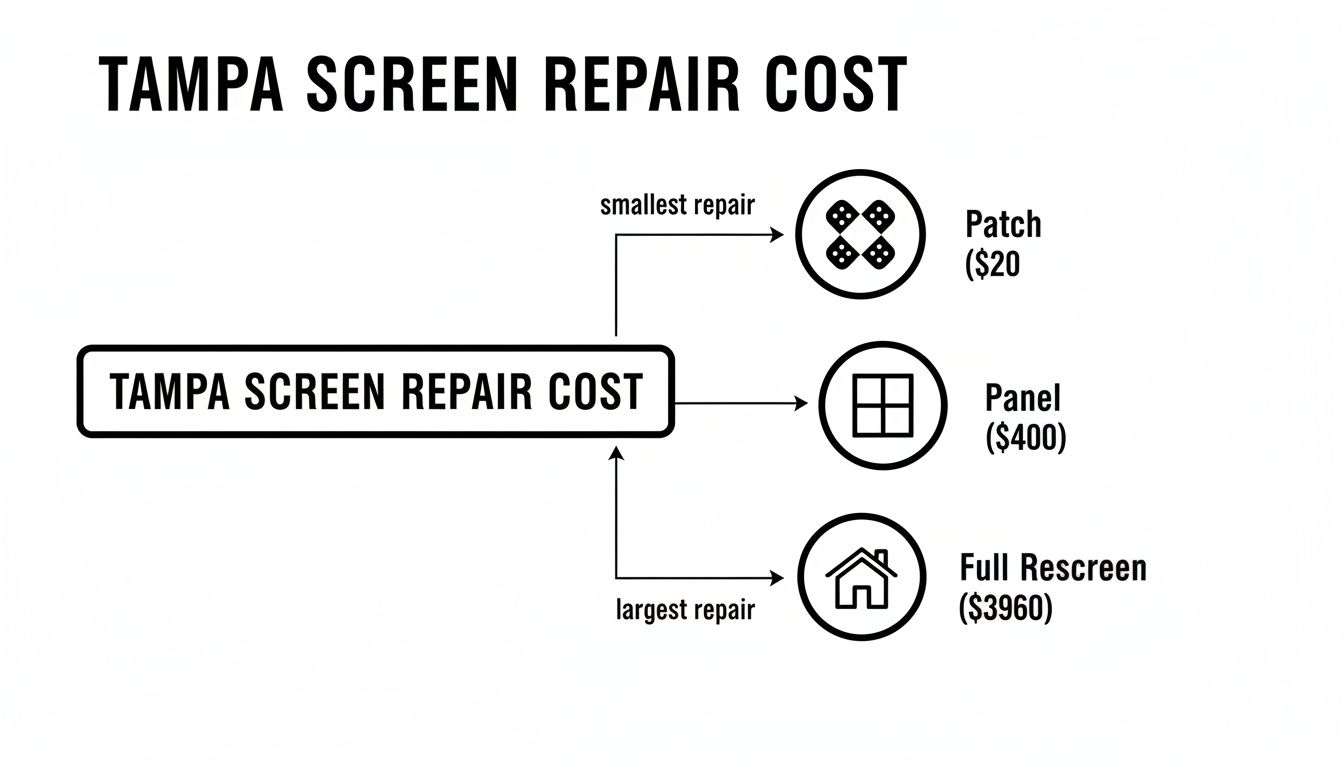
As you can see, the complexity of the job is the biggest driver of cost. That’s why it’s so important to know exactly what your enclosure needs.
The Size And Accessibility Of Your Enclosure
The sheer size of your screened-in area—the total square footage—is the first thing any technician will look at. It’s simple math: a massive pool cage requires a lot more screen mesh and spline than a cozy little lanai, which means more materials and more labor.
But it’s not just about size; it’s also about access. Are the damaged panels on the second story? That means our crew needs to bring out the tall ladders and safety gear, which adds time and complexity to the job. If we have to work around tricky landscaping, heavy patio furniture, or an unusual roofline, the quote will have to account for that extra effort.
Material Selection And Hardware Upgrades
The type of screen you pick has a direct impact on your final bill. Standard fiberglass mesh is the most budget-friendly choice, but here in Florida, many homeowners are wise to upgrade to something more durable. For example, a pet-resistant screen costs more upfront but can save you a fortune in future repairs if you have dogs or cats who love to climb or scratch.
But the screen itself is only part of the story. The tiny pieces of hardware holding everything together are just as important.
Upgrading to corrosion-resistant fasteners is one of the smartest investments you can make for your enclosure. In Florida’s humid, salty air, standard screws will rust out in just a few years, but quality fasteners can extend the life of your entire structure.
Labor is a huge part of any screen repair budget. Most jobs have a base service fee plus a per-panel or per-square-foot cost. In our experience, about 55% of repairs involve upgrading hardware, which might add $100 to $500 to the total. It sounds like a lot, but this one upgrade can extend your enclosure's lifespan by up to 50%.
Hidden Damage And Structural Repairs
Sometimes, that torn screen is just a symptom of a bigger problem hiding in plain sight. During a thorough inspection, a good technician might uncover underlying issues that absolutely need to be addressed, such as:
- Corroded or damaged aluminum frame pieces that are weak and need replacement.
- Rusted-out or broken fasteners that are compromising the enclosure’s stability.
- Bent or broken screen doors that won’t close right, letting pests sneak in.
Fixing these structural problems is crucial for the long-term health and safety of your enclosure. While it does add to the initial repair cost, ignoring them is a recipe for disaster and will only lead to more expensive and dangerous failures down the road. If you want to learn more about what these fixes involve, check out our guide to common screen enclosure repairs.
Choosing Your Screen Material: A Cost-vs-Benefit Breakdown
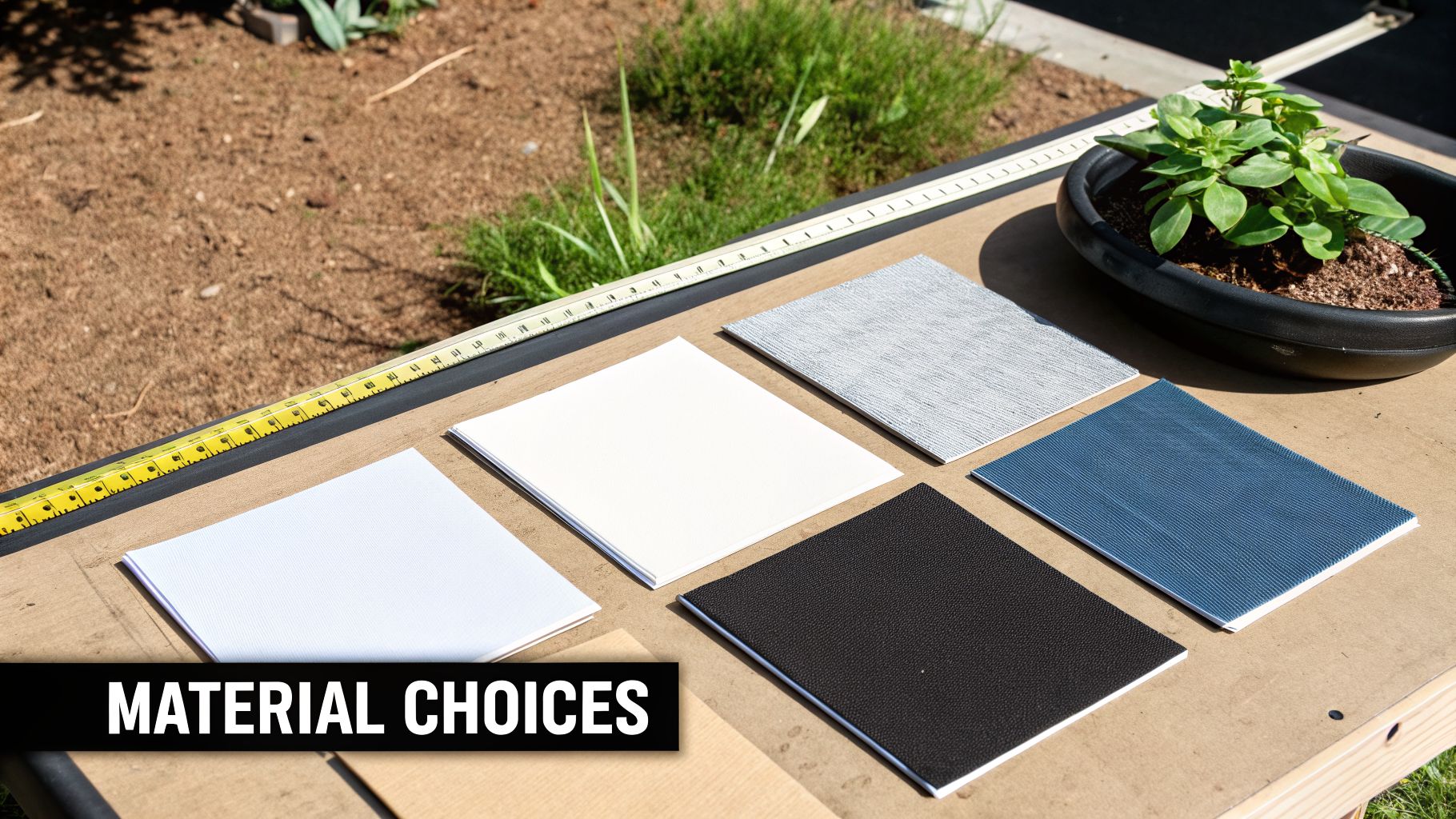
When it comes to screen repair, not all mesh is created equal. The material you pick for your lanai or pool cage directly influences your immediate patio screen repair cost and, more importantly, how well it holds up to our punishing Florida weather. It’s a lot like choosing tires for your car—you can go with the standard model or upgrade for better performance against specific challenges, like storms or pets.
This is a classic balancing act: spend less now or invest in durability to save on future repairs. Let's walk through the most common screen materials we see here in the Tampa Bay area so you can make the right call for your home.
Standard Fiberglass Screen
This is the bread and butter of the screen world. It’s affordable, easy to install, and offers great visibility and airflow, which is why it's the go-to for many new builds and quick fixes.
The catch? Its lower price comes at the expense of durability. Standard fiberglass is more likely to tear from a stray branch, an excited dog, or even a strong gust of wind. While you can sometimes patch up minor damage by repairing fibreglass yourself, it might not be the most resilient choice for high-traffic areas or large enclosures that face the full force of a Florida storm.
Pet-Resistant Screen
If you have a cat that loves to climb or a dog that scratches at the door, pet screen is an absolute game-changer. Made from a tough, vinyl-coated polyester, it’s roughly seven times stronger than the standard fiberglass stuff.
Yes, it costs more upfront, but this material can take a beating from claws and paws without ripping. For pet owners, that initial investment often pays for itself by completely eliminating those frequent calls for panel replacements. The weave is a bit thicker, so visibility is slightly reduced, but the peace of mind is truly priceless.
Solar Screen (No-See-Um Screen)
In Florida, we often call this "no-see-um screen," and it's a premium material that works overtime for your comfort. Its main job is to block a huge chunk of the sun's harsh UV rays, which helps keep your patio cooler and stops your outdoor furniture from fading.
But the real magic for Florida living is its incredibly tight weave. It’s dense enough to keep out even the tiniest biting pests like no-see-ums, making your outdoor space genuinely enjoyable, especially during those buggy evenings.
This is the most expensive option, but the benefits in energy savings and pest-free relaxation are undeniable. If you want to truly maximize how much you use and enjoy your lanai, solar screen is an investment that pays you back every single day. For a deeper dive, check out our guide on choosing the best screen for your porch.
Screen Material Comparison: Cost and Benefits
Here’s a quick-glance comparison of the top choices for Tampa Bay homeowners. This should help you line up your budget with your biggest priorities, whether that's affordability, durability, or pure comfort.
- Standard Fiberglass:
- Avg. Material Cost (per sq. ft.): $0.50 – $0.75
- Primary Benefit: Affordability & Visibility
- Best For: Low-traffic areas, budget-focused repairs
- Pet-Resistant:
- Avg. Material Cost (per sq. ft.): $1.25 – $1.75
- Primary Benefit: Extreme Durability
- Best For: Homes with pets or young children
- Solar/No-See-Um:
- Avg. Material Cost (per sq. ft.): $1.50 – $2.50
- Primary Benefit: UV & Pest Protection
- Best For: Maximizing comfort and energy savings
Ultimately, the best screen is the one that fits your lifestyle and solves your biggest frustrations. Thinking about these trade-offs ahead of time ensures you get an enclosure that you’ll be happy with for years to come.
DIY vs. Professional Screen Repair: A Cost Breakdown
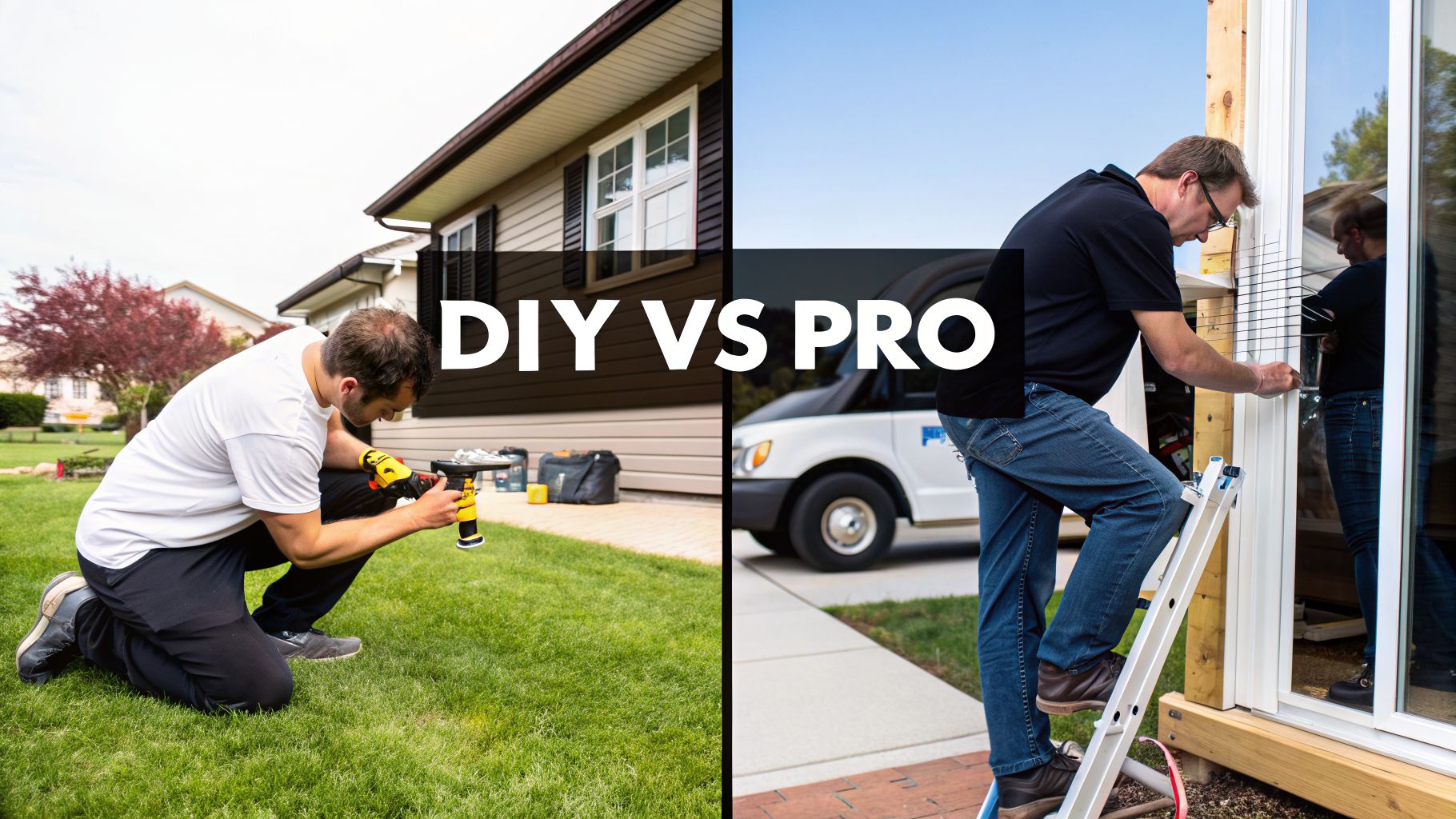
When you find a tear in your patio screen, the urge to fix it yourself is completely understandable. A quick trip to the hardware store for a roll of mesh feels like a simple, budget-friendly solution. But does that weekend project really save you money in the long run?
Let's have an honest chat about the true costs of DIY versus professional screen repair. Think of it like a home-cooked meal versus a chef-prepared one. Both will get you fed, but the experience, effort, and final quality are worlds apart. The DIY route looks cheaper on the surface, but it's loaded with hidden costs in tools, time, and common mistakes.
Analyzing The Do-It-Yourself Cost
The initial price of a DIY kit is definitely tempting. You can grab a small patch kit for about $20, or a roll of screen big enough for a 10×10 porch for somewhere between $50 to $300. The material, however, is just where the spending starts.
To do the job right, you’ll also need a few specialty tools you probably don't have lying around.
- Spline Roller: This is non-negotiable for pressing the spline neatly into the frame’s channel.
- Utility Knife: You need a razor-sharp blade for a clean, straight cut.
- Flat-Head Screwdriver: It’s the easiest way to pry out the old, stubborn spline.
Then you have the biggest hidden cost of all: your time and the risk of mistakes. Sagging screens, crooked panels, or wasted material from a miscut are classic DIY headaches. These slip-ups can quickly turn a "cheap" project into a frustrating and more expensive do-over.
The All-Inclusive Value Of Professional Service
Hiring a professional might seem more expensive upfront, but that price is all-inclusive. It covers not just the materials but also the skilled labor, years of expertise, and the guarantee of a flawless finish. Our technicians arrive with every tool needed to get the job done right—and efficiently—the first time.
A professional repair guarantees a tight, drum-like screen without any sags or wrinkles. It’s that clean, polished look that’s incredibly difficult for a first-timer to achieve on their own.
Data confirms this. While DIY kits run from $20 to $300, professional services average $2 to $4 per square foot, including all materials and labor. That labor portion often makes up 60-75% of the total project cost. This reflects the skill, safety protocols, and sheer efficiency involved, especially when we’re talking about large enclosures or second-story repairs.
Ultimately, for a single, small panel on the ground floor, a DIY approach can work. But for larger jobs, multiple panels, or any work above the ground floor, the safety, speed, and quality an insured professional provides deliver far superior long-term value.
How To Get An Accurate Quote And Avoid Hidden Fees
Getting a fair and accurate quote is the single most important step in controlling your final patio screen repair cost. Think of it as the project's blueprint; a detailed estimate makes sure everything is accounted for, so there are no surprise charges when the bill comes. This is your guide to getting a reliable, transparent price right here in Tampa Bay.
A reputable company doesn’t just throw out a number—they gather facts. To give you a precise quote, they’ll need some specific details from you. Having this information ready makes the entire process faster and smoother for everyone.
Providing The Right Information
To get the most accurate quote possible, have this information on hand when you call or text a screen repair company:
- Photos of the Damage: A picture really is worth a thousand words. Snap a few clear photos of the torn or damaged panels, and then take a wider shot of the whole enclosure.
- Rough Dimensions: Just a ballpark idea of the height and width of your enclosure helps the company estimate how much material they'll need. Is it a single-story or a two-story cage?
- Number of Damaged Panels: Do a quick count of how many individual screen sections need to be replaced. This is one of the biggest factors in determining labor time.
Armed with these details, an experienced pro can often give you a solid estimate right over the phone or by text, saving you a ton of time. This first step helps you ballpark the cost before anyone even has to come to your property.
What A Professional Quote Includes
A real professional quote is a lot more than just a number scribbled on a napkin. It should be a detailed document that breaks down every part of the job, giving you total transparency and protecting you from those dreaded hidden fees. You have a right to know exactly what you’re paying for.
A trustworthy contractor will always provide a free, no-obligation estimate in writing. This document protects both you and the company by clearly outlining the scope of work and associated costs before any work begins.
Your written quote should clearly itemize:
- Cost of Materials: This should list the type of screen mesh you chose and the price of the new spline needed to install it.
- Labor Charges: This is the cost for the technician’s time, skill, and expertise.
- Hardware Upgrades: Any extra costs for things like replacing old, rusty screws with new corrosion-resistant fasteners.
- Warranty Information: The details on the guarantee covering both the screen materials and the quality of the installation.
Choosing a licensed and insured company that provides these comprehensive, free estimates is your best defense. It gives you the confidence to spot red flags and pick a contractor who values honesty. When you're ready to find a trustworthy team, you can learn more about finding local experts by reading our guide on screen repair near me.
Smart Tips To Save Money On Your Screen Repair
Keeping your patio enclosure in top shape doesn’t have to break the bank. With a few smart moves, you can manage your patio screen repair cost and keep your outdoor space the beautiful, bug-free oasis you love.
One of the absolute best ways to save money is to catch problems early. A small tear in a screen is a quick, inexpensive fix. But if you ignore it, you’re asking for trouble. That tiny rip can easily catch the wind, turning a single-panel job into a major, multi-panel headache that sends your repair bill through the roof.
Bundle Services For Bigger Savings
If you’re noticing several of your screens are getting old or you're already thinking about another project, bundling services is a great way to get a better deal. A popular option here in Tampa is to combine a full rescreen with a pool cage painting or restoration job.
Think about it: the crew is already on-site with all their gear. Because of that, companies can often offer a much better price than if you scheduled each service on its own. It’s an efficient way to save money and time, getting your entire enclosure looking brand new in one go.
For property managers and real estate agents, locking in a long-term relationship with a reliable local screen company is a game-changer. It gives you access to consistent pricing, priority service when you need it, and trusted expertise for all your properties.
Leverage Discounts And Payment Options
Never be shy about asking for a discount. Many reputable companies are proud to offer special pricing to show their appreciation for key members of our community. It’s always worth checking for deals available to:
- Military members (both active duty and veterans)
- First responders (police, firefighters, and EMTs)
- Seniors
On bigger projects, these discounts can make a real difference. And beyond the initial quote, understanding restoration payment plans can be a huge help in managing the expense of a significant repair. A little financial planning ahead of time means you can get the work done right away without the stress.
Frequently Asked Questions About Patio Screen Repair Costs
When it comes to maintaining your screen enclosure, you've probably got a few questions. We hear them all the time from homeowners across Tampa Bay who want to make smart, cost-effective decisions for their property.
Here are some clear, straightforward answers to the most common questions we field about screen repair costs and upkeep.
How Often Should I Rescreen My Pool Cage In Florida?
This is a big one, and the answer almost always comes down to Florida’s intense weather. For a standard fiberglass screen, you should plan on a full rescreen every 7 to 10 years. The combination of relentless UV rays, high humidity, and seasonal storms makes the mesh brittle and weak over time.
Of course, if you upgrade to a more durable material like a polyester or a premium solar screen, you can definitely stretch that timeline out longer.
Will Homeowners Insurance Cover Storm Damage?
Sometimes, yes. Many homeowners' policies will cover damage to your screen enclosure if it’s caused by a named storm or another covered "peril." The key word here is sometimes.
Your coverage really depends on the fine print of your policy and your deductible. The best thing you can do is take plenty of photos of the damage right after a storm and call your insurance agent immediately. They can walk you through your specific options and tell you what’s covered.
Is It Cheaper To Repair One Panel Or The Whole Thing?
For isolated damage—like a single hole from a stray golf ball or a fallen branch—it’s much cheaper to just repair the one or two affected panels. A single panel repair could run you anywhere from $85 to $250.
But if your screens are getting old (think over seven years) and you're seeing multiple tears, brittleness, or discoloration across the enclosure, a complete rescreen is the smarter move. It saves you from the headache and mounting cost of calling for one small repair after another.
For a transparent and reliable quote on your patio screen repair cost, trust the local experts at Rescreen Rescue. We provide fast, free estimates and professional service to ensure your enclosure is secure and beautiful. Get your free estimate today!