


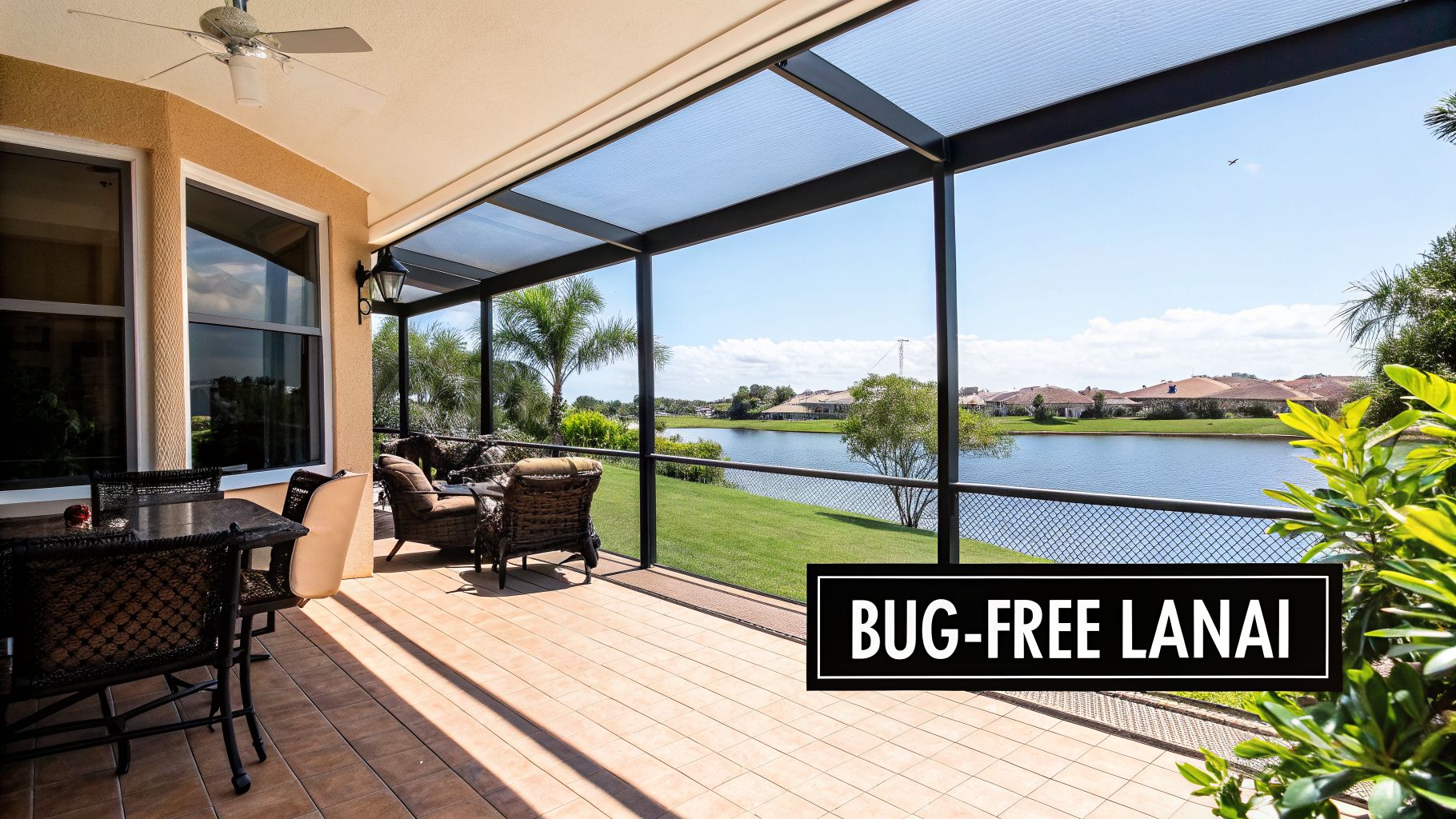
Your lanai screen is the unsung hero of the Florida lifestyle. It’s the silent barrier that keeps your outdoor sanctuary free from pests while letting that perfect coastal breeze roll through. But the moment that barrier gets a tear or starts to sag, it’s more than just an eyesore—it’s an open invitation for every bug in the neighborhood and a hit to your property’s appeal. This is where professional lanai screen repairs come in, restoring that critical line of defense.
Keeping Your Florida Oasis Beautiful And Bug-Free
Think of your screen enclosure as the one feature that truly transforms a simple porch into a proper Florida room. It’s what blends indoor comfort with the beauty of the outdoors. When your screens are in good shape, you can relax, entertain, and just enjoy the day without swatting at mosquitoes or worrying about no-see-ums. A well-kept lanai is a genuine extension of your living space.
The second a screen panel tears or pulls away from the frame, though, that peaceful retreat is compromised. A single hole is all it takes for insects to find their way inside, turning your happy place into a source of constant frustration. On top of that, damaged exterior screens can seriously drag down your home's curb appeal and even its market value, which is a big deal for homeowners and real estate agents alike.
Why Proactive Repairs Matter
We put this guide together for Tampa Bay homeowners who want the full picture on lanai screen repairs—from spotting the first signs of trouble to knowing when you need a full rescreen. Being proactive is always the best approach.
- Pest Prevention: The number one job of your lanai screen is to keep your outdoor living area sealed off from bugs and other critters.
- Property Value: A clean, intact screen enclosure looks great from the street and protects the value of your home.
- Structural Integrity: Fixing small issues now stops them from turning into bigger, more expensive problems, especially when a storm is on the way.
We’ll walk you through everything you need to know, whether you’re dealing with a tear from the dog, damage from storm debris, or just the slow wear from the Florida sun. Part of that care is regular cleaning, and knowing the best way to clean window screens can prevent grit and grime from causing premature damage.
A standard builder-grade fiberglass screen often lasts between 7-10 years under the intense Florida sun before becoming brittle. Addressing wear and tear early can prevent a sudden failure during a storm.
Ultimately, keeping your lanai in top shape is all about preserving your quality of life here in Florida. For more tips on extending the life of your enclosure, check out our guide on how to clean lanai screens.
How To Spot Lanai Screen Damage Before It Worsens
Knowing when your lanai needs attention is a lot like spotting a small chip in a windshield. You catch it early, and it's a simple fix. You ignore it, and you're looking at a full replacement down the road. The key to proactive lanai screen repairs is training your eye to see beyond the obvious rips and tears.
A gash from a fallen branch or a pet’s claws is easy to spot. But the more subtle signs of wear and tear on your exterior enclosure are just as critical. These are the quiet clues telling you the screen's integrity is fading, making it a prime candidate for a blowout during the next big storm.
Look For Signs Of Material Fatigue
One of the first signs of an aging screen is a change in how it looks and acts. Years of baking in the intense Florida sun take a serious toll on standard fiberglass mesh, leaving the material brittle and faded.
- Discoloration: If your once-black screen now has a chalky, gray appearance, that's a red flag. It’s not just a cosmetic problem—it means the UV-protective coating has broken down, and the screen is becoming fragile.
- Excessive Flapping: Take a look at your screens on a breezy day. If you notice a panel or two flapping and rippling in the wind, the screen has lost its tension and is no longer held securely in its frame.
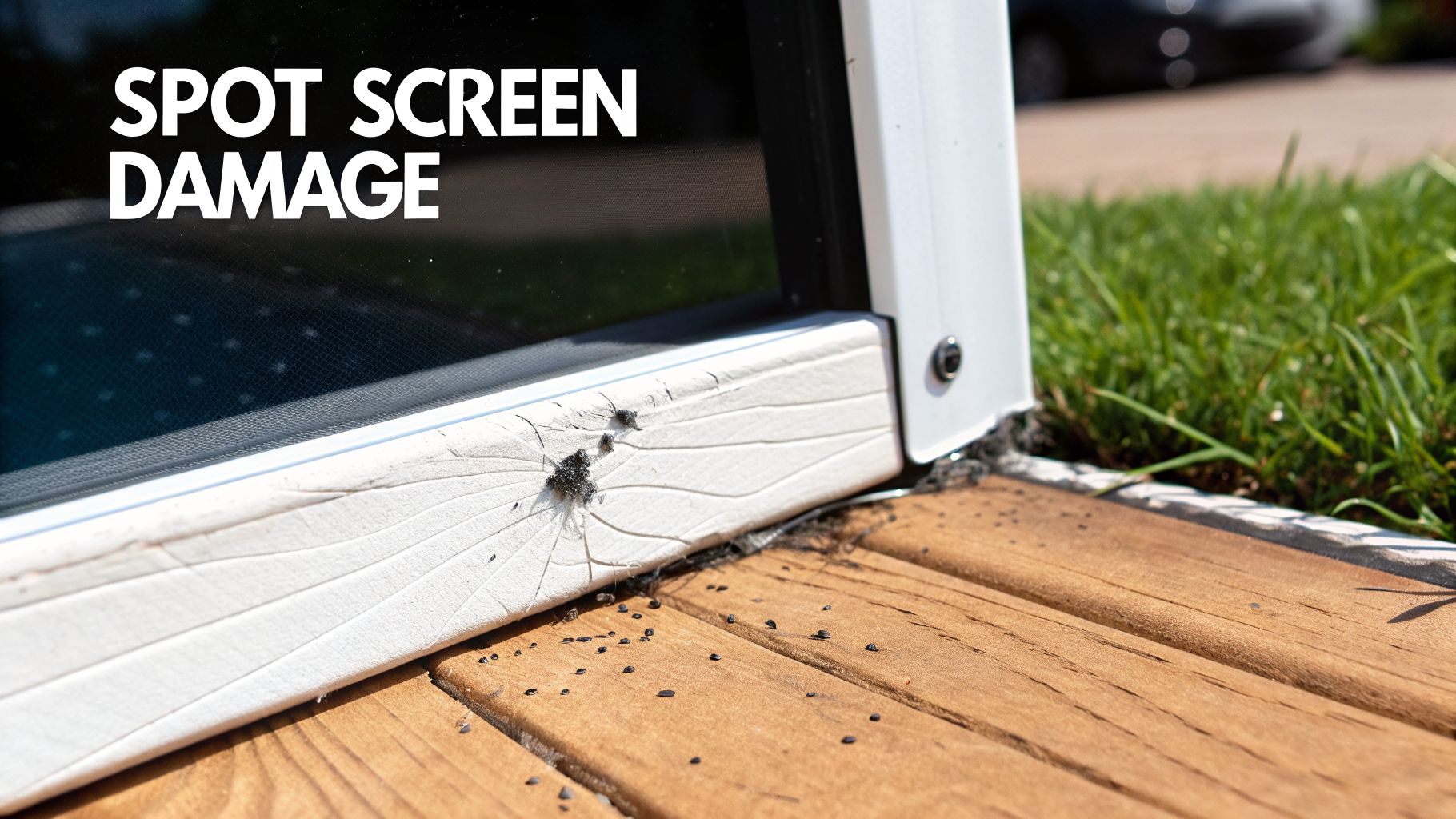
- "Screen Dust": Ever seen tiny, black flakes on your lanai deck or floating in your pool? That’s what we call "screen dust." It's the screen material itself, literally flaking away as it deteriorates. This is a sure sign your screen is at the end of its life.
A screen that is brittle from sun exposure is significantly more likely to tear or completely blow out during a storm. Proactively replacing sun-rotted panels is a smart investment in your home’s storm preparedness.
Inspect The Frame And Fasteners
The screen mesh is only one part of the system. The hardware holding it all together is just as crucial for your enclosure's stability and lifespan. A problem with the frame or its fasteners can undermine even brand-new screens.
The rubber spline is the gasket that locks the screen mesh into the aluminum frame. Over time, it gets dry, cracked, and shrinks, causing it to pop out of the channel. If you can see the spline pulling away, that panel is at high risk of coming loose.
Likewise, the structural integrity of a large enclosure often comes down to its fasteners. Many older enclosures were built with steel screws that rust quickly in our humid, salty air. You can learn more about how these components factor into larger projects in our guide to pool cage repairs.
For anyone living in coastal communities like St. Petersburg or Clearwater, spotting corrosion early is non-negotiable. Look for tell-tale orange or brown rust streaks running down the aluminum from the screw heads. This corrosion doesn't just look awful; it weakens the connection points, compromising the entire structure's ability to stand up to high winds. Taking care of these small details saves you a fortune and prevents a simple repair from turning into a major structural failure.
Understanding Your Lanai Screen Repair Options
When you spot a tear or hole in your lanai screen, it's easy to jump to conclusions about a costly, complicated fix. But the truth is, not all screen damage is created equal. Knowing the different types of lanai screen repairs will help you have a confident conversation with any contractor and make a smart, cost-effective choice for your home.
Think of it like a problem with your car's tire. A small nail hole might just need a simple plug, but a major sidewall gash means you're buying a whole new tire. Exterior screen repair works the same way—the solution has to match the problem.
From A Simple Patch To A Full Panel Replacement
The quickest and most basic fix is a panel patch. This is a great solution for a single, small hole caused by something like a stray golf ball or a flying pebble. A patch gets the job done by sealing the opening to keep bugs out, but it's really a temporary band-aid. Patches work best on newer screens that still have good tension and strength.
But if the tear is large, runs right up to the frame, or the screen itself feels brittle and sun-baked, a patch just isn't going to cut it. That's when a full panel replacement is the right call. We remove all the old, damaged screen and spline from just that one section and install a brand-new screen, pulling it perfectly tight. This is the professional standard for fixing significant damage that's still limited to one or two panels.
When A Full Rescreen Becomes Necessary
Sometimes the issue isn't just one or two bad panels. If you're seeing sagging, brittleness, or tears across multiple sections of your enclosure, you've hit the point where a full rescreen becomes the most logical and financially sound decision. This is where we replace the screen material on your entire enclosure all at once.
A full rescreen is definitely the way to go in these situations:
- Widespread Sun Rot: Your screens look chalky, feel flaky, and tear easily. This is a sign of systemic failure, and replacing panels one by one will turn into an endless, frustrating game of whack-a-mole.
- Aging Enclosure: If your screens are over 7-10 years old, they're all approaching the end of their lifespan together. A full rescreen restores the whole structure's look and function in one shot.
- Upgrading Materials: This is the perfect time to move up to a better product, like a tough pet-resistant screen for your four-legged friends or a high-visibility screen that offers a clearer view of your beautiful backyard.
A full rescreen might feel like a bigger upfront investment, but it’s almost always more cost-effective than paying for separate panel repairs over and over again. It completely resets the clock on your enclosure's lifespan.
Going Beyond The Screen Material
A proper lanai repair isn't just about the screen mesh. The frame and hardware holding it all together are just as critical, especially here in Tampa Bay with our humid, salty air. Any thorough repair assessment needs to look at these components, too.
One of the most important hardware fixes is replacing old, rusted steel screws with modern, corrosion-resistant fasteners. This simple upgrade alone can stop those ugly rust streaks in their tracks and add years to your enclosure's structural life. We also frequently repair or replace worn-out door hardware—handles, closers, and bug sweeps—to make sure your lanai is a truly sealed, pest-free space. Occasionally, the aluminum frame itself has damage that needs a professional touch to keep the whole structure stable and safe.
DIY Repair vs. Hiring a Professional Contractor
You spot a hole in your lanai screen. Your first thought is probably to grab a patch kit from the hardware store and call it a day. The idea of a quick, cheap fix is definitely tempting. But before you break out the tools, it's worth weighing the real-world trade-offs between a DIY job and calling in a pro for your lanai screen repairs.
The appeal of DIY is obvious: saving money on labor. For a single, clean tear in a newer screen, a patch might hold up for a little while. However, that quick fix can unravel fast, and the hidden costs start adding up.
For anything bigger than a tiny hole, you’re looking at a trip to the store for specialized tools. You'll need a spline roller to wedge the screen into the frame's channel, a sharp utility knife, and the exact diameter of rubber spline. Guessing on the spline size is a recipe for a saggy, unprofessional-looking screen that will just come loose again.
The Case for Calling in a Pro
This is where a professional really shines. While you're paying for labor, you're also paying for experience, efficiency, and a result that lasts. A pro will get that perfectly taut, drum-like finish that’s the hallmark of a quality installation—something that's incredibly difficult for a first-timer to get right.
It’s especially true for trickier jobs. Think about trying to replace a panel on a second-story enclosure. Between balancing on a ladder and managing tools, the safety risks add up quickly. Professionals are trained and insured to handle that kind of work safely.
A seasoned pro doesn't just fix the hole you can see. They spot the problems you can't, like corroded fasteners, a weakened aluminum frame, or when a full rescreen is actually cheaper in the long run than patching one panel after another.
This decision tree gives you a great visual for when a simple patch is enough versus when it’s time to think bigger.
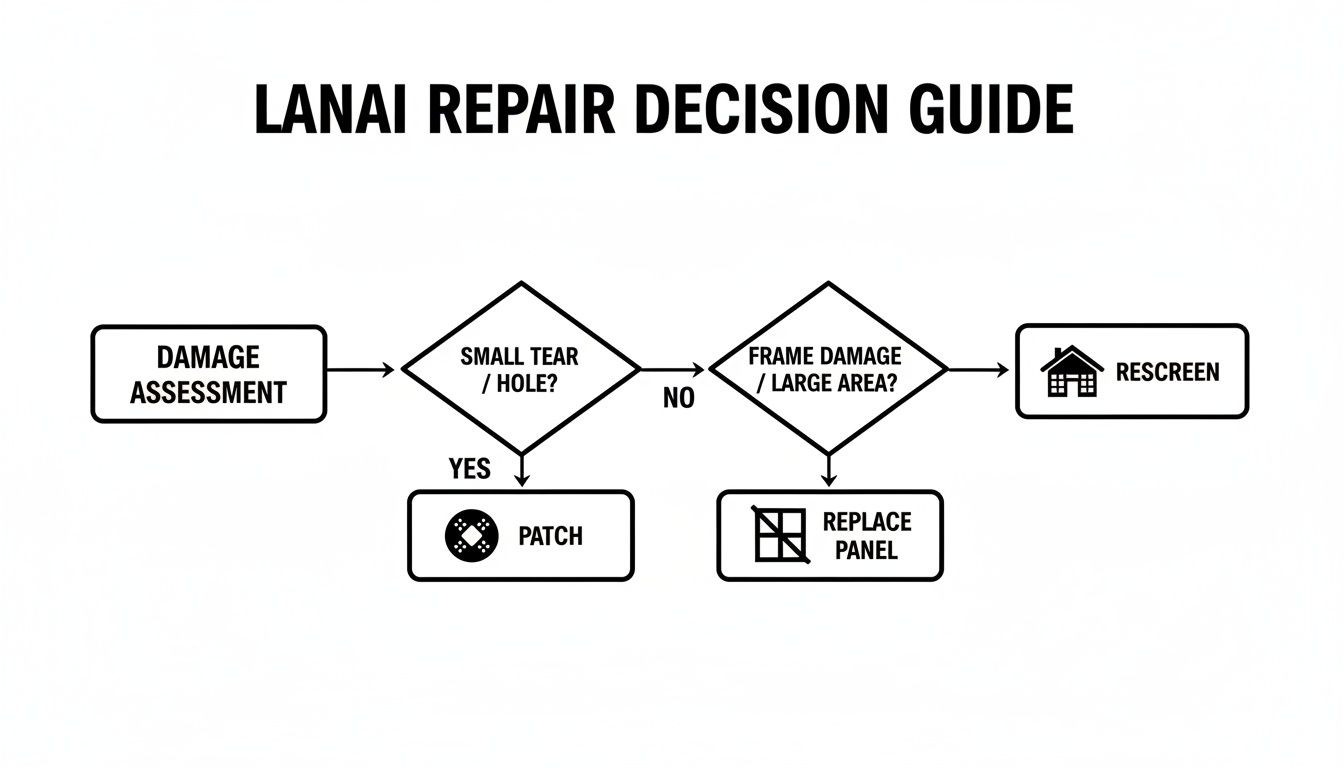
As you can see, small, isolated tears are the only real candidates for patching. Once you have larger damage or issues with the frame itself, it’s time to replace the whole panel or consider a full rescreen.
Making the Smartest Investment
So, what's the final verdict? A DIY patch might work as a temporary stop-gap for a very minor issue. It'll get you by for a bit.
But for a durable repair that actually boosts your property's value and keeps your enclosure secure for years, hiring a professional is almost always the smarter choice. They show up with the right tools, the right materials, and the know-how to get it done correctly the first time.
If you're leaning toward a bigger project, you can get a feel for what’s involved in our guide that explains how to rescreen a pool enclosure. An experienced team guarantees that flawless finish, keeping your outdoor oasis beautiful and bug-free.
The Hallmarks Of A Reputable Screen Repair Company
Picking the right contractor is hands-down the most important part of getting a quality, long-lasting lanai screen repair. A great finished product doesn't start when the tools come out—it starts with that very first phone call. A truly professional service will always offer a free, no-obligation estimate and keep the lines of communication wide open from the get-go.
This initial visit isn't just about getting a price tag. A real pro will do a full-blown assessment of your entire enclosure. They won't just glance at the one torn panel; they’ll inspect the whole frame, check fasteners for rust and corrosion, and get a feel for the overall structural stability. That kind of thoroughness tells you they’re in it to do the job right, not just do it fast.
What A Professional Quote Looks Like
After that inspection, you should get a detailed, itemized quote. This is non-negotiable and a clear sign of a trustworthy business. If all you get is a vague, one-line price on the back of a business card, consider it a red flag.
A proper quote for lanai screen repairs will break everything down for you:
- The cost of materials, specifying the exact type of screen being used.
- Labor charges for the actual repair work.
- Any additional costs for hardware, like a new door kit or upgraded fasteners.
- The final, total cost—no hidden fees waiting to jump out at you later.
It’s also helpful to know that established companies often have solid marketing plans. Understanding the creative ways home improvement companies generate leads can show you which businesses are serious about growth and customer satisfaction.
Professionalism During And After The Job
On repair day, you can spot a pro by their punctuality, how they treat your property, and their focus on safety. The crew should show up on time, take care to protect your landscaping and deck, and work efficiently without cutting corners.
A top-tier contractor never leaves a mess. A meticulous cleanup of all the old screen, spline, and any other debris is part of the service you're paying for.
The job isn’t truly done until you’re happy with the result. A good contractor will do a final walkthrough with you to inspect their work and answer any lingering questions. A quick search for a local screen enclosure repair near me can help you find pros in your area and check out their reviews and credentials.
Finally, always ask for a clear warranty that covers both the materials and the installation workmanship. A company that stands behind its work with a solid guarantee is a company you can trust with your outdoor oasis.
Common Questions About Lanai Screen Repairs
Even when you know your lanai needs work, it’s completely normal to have a few questions. After all, this is your home's outdoor oasis, and the details really do matter. We get calls every day from homeowners across Tampa Bay with the same great questions.
Let's dive into the most common ones we hear about lanai screen repairs. We'll give you the straightforward answers you need to feel confident about your project, from costs and materials to permits and pet-proof options.
How Much Does Lanai Screen Repair Cost In The Tampa Area?
This is usually the first question on everyone's mind, and the honest answer is: it depends. The total cost hinges entirely on the size and scope of the job.
For a simple fix, like replacing a single, ground-floor screen panel, you’re typically looking at a range of $85 to $225. The price can vary based on the panel's size and how easy it is to get to—a second-story panel, for example, is a bit more involved and requires extra equipment.
If you're looking at a full rescreen for a standard-sized lanai, the cost generally falls between $1,500 and $3,500. This is a much bigger project, but it gives your entire enclosure a complete refresh with brand-new material.
So, what influences that final price?
- Screen Type: Your choice of material plays a huge role. Standard fiberglass screen is the most affordable, but premium options like Super Screen or Pet Screen cost more upfront for significantly better durability.
- Structural Condition: If your aluminum frame is in great shape, the job is pretty straightforward. But if beams are bent or the fasteners are rusted out and need replacing, that will add to the total cost.
- Hardware Upgrades: Swapping out old, rusty screws for new, corrosion-resistant fasteners is a smart move we always recommend. This will be broken down as a line item on any professional quote.
The only way to get a firm price is to get a detailed, written estimate from a licensed and insured company. This ensures there are no surprises and you know exactly what you’re paying for.
For a deeper dive, check out our guide on the factors that influence lanai screen repair cost. It breaks down what to expect for your specific project.
How Long Does A New Screen Last In Florida?
Here in Florida, the lifespan of your lanai screen is a constant battle against the sun. How long your screen lasts comes down to one thing: the quality of the material you choose.
A standard, builder-grade fiberglass screen will typically give you 7 to 10 years in our intense climate. Over time, the sun's UV rays break down the coating, making the material brittle, faded, and easy to tear.
But upgrading to a higher-quality material can make a massive difference. Options like Phifer's TuffScreen or the incredibly tough Super Screen are popular for good reason. Super Screen, for instance, usually comes with a 10-year manufacturer warranty and can realistically last 15 to 20 years—or even longer. It’s specifically engineered to resist UV damage and tearing far better than standard mesh.
A little maintenance helps, too. Gently cleaning off dirt and mildew will help any screen material last as long as possible.
Is A Permit Needed For Lanai Screen Repairs?
This is a great question, and we have good news. For most typical lanai screen repairs, the answer is no.
If your project just involves replacing a few panels or even doing a full rescreen on an existing, structurally sound enclosure, a permit is not required in Hillsborough, Pinellas, or the surrounding counties.
The rules change, however, if the job involves structural work. You will almost certainly need a permit if you plan to:
- Build a brand-new lanai or pool enclosure.
- Change the size or footprint of your current enclosure.
- Replace major structural supports like beams or posts.
Any reputable, licensed contractor will know the local building codes inside and out. They'll tell you if a permit is needed and can handle that whole process for you, making sure your project is 100% compliant.
What Screen Material Is Best For Pets Or High Traffic Areas?
If you have pets or young kids, you already know that a standard fiberglass screen doesn't stand a chance against sharp claws or a stray soccer ball. One little accident can create a huge, ugly tear. For active households, upgrading to a specialty screen isn't just a suggestion—it's practically essential.
Your two best bets are Pet Screen and TuffScreen. Both are designed to take a whole lot more abuse than standard mesh.
Pet Screen is engineered specifically to resist damage from cats and dogs. It’s made from a tough, vinyl-coated polyester that's about seven times stronger than regular fiberglass screen. It can handle scratching, pawing, and pushing without ripping.
TuffScreen offers similar heavy-duty performance. It’s also a vinyl-coated polyester and is a fantastic choice for any high-traffic area, especially the lower panels of an enclosure that get bumped by lawnmowers, patio furniture, or general horseplay. Investing in one of these durable options is a smart move that pays for itself in peace of mind.
If you're ready to get your outdoor oasis back in shape and keep the bugs out for good, the team at Rescreen Rescue is here to help. We offer fast, reliable, and professional lanai screen repair services throughout the Tampa Bay area. Contact us today for your free, no-obligation estimate at https://rescreenrescue.com.