


A no see um screen is a high-density mesh, typically woven at 20×20 threads per inch, designed specifically to block biting midges that sail right through standard window screening. If you’ve ever sat on your lanai at dusk and felt invisible bites with nothing to show for it, you already know the problem. Standard 18×14 insect screens have openings large enough for no-see-ums to pass through freely, since these insects measure less than 1/16 inch long, roughly the size of a printed period on this page.
For Florida homeowners, this isn’t a minor annoyance. No-see-ums are most aggressive from june through august, peaking at dawn and dusk, precisely when you want to be outside. The right mesh screen solves that without sealing off your porch.
Key reasons Florida homeowners upgrade to no-see-um mesh:
- Blocks biting midges, sand flies, and gnats that standard screens miss
- Maintains adequate airflow in well-ventilated enclosures
- Protects pool cages, lanais, and screened patios year-round
- Reduces reliance on sprays and repellents outdoors
- Fiberglass construction resists Florida’s sun, salt air, and humidity
How does a no see um screen compare to a regular insect screen?
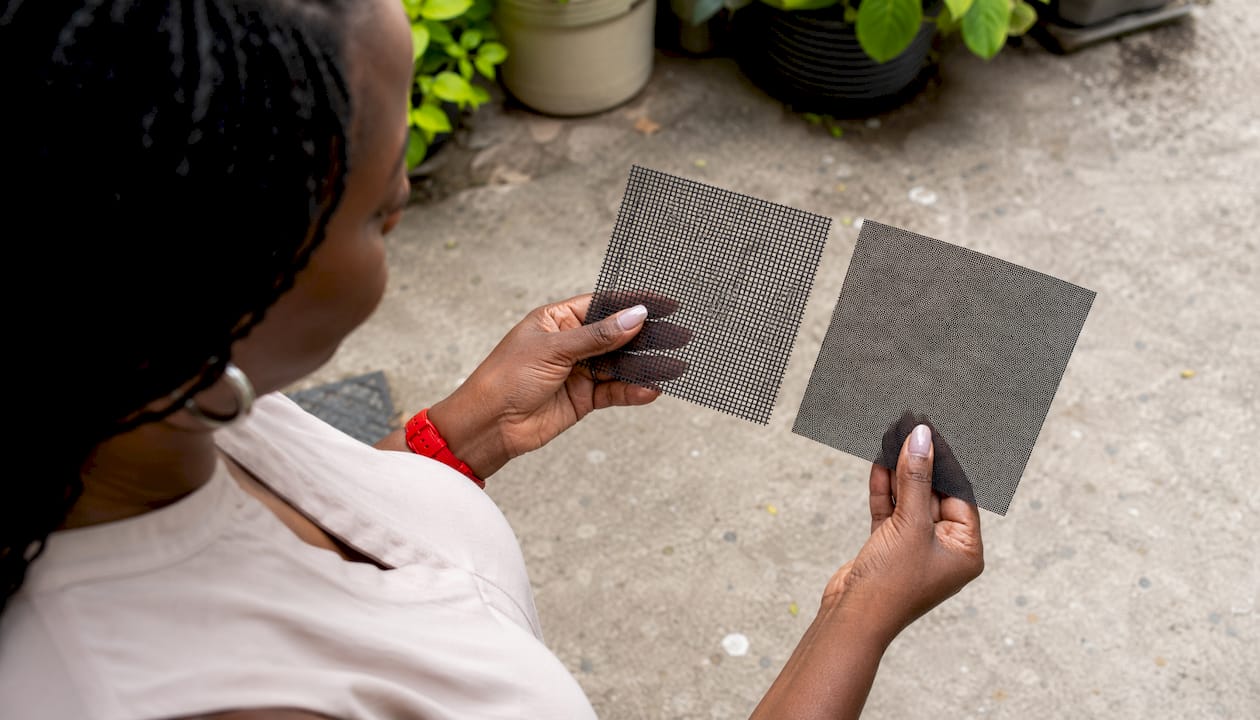
The core difference is mesh density. A standard insect screen runs at 18×14 mesh, meaning 18 threads per inch horizontally and 14 vertically. A 20×20 no-see-um mesh packs more threads in both directions, closing the gaps that let tiny insects through. That tighter weave is what makes it effective against biting midges.
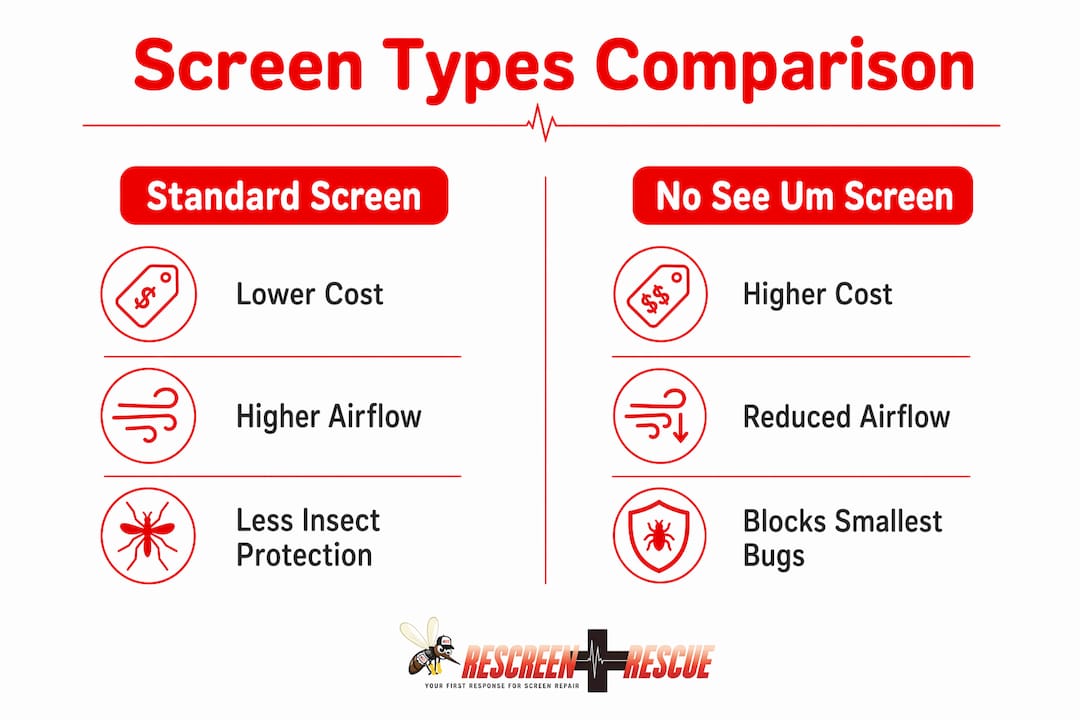
| Feature | Standard 18×14 Screen | No-See-Um 20×20 Screen |
|---|---|---|
| Mesh density | 18×14 threads/inch | 20×20 threads/inch |
| Insect protection | Mosquitoes, large flies | Midges, gnats, sand flies, mosquitoes |
| Airflow | Higher | Slightly reduced |
| Material | Fiberglass or aluminum | High-density fiberglass |
| Durability in Florida | Moderate | High (corrosion-resistant) |
| Typical use | Windows, doors | Pool cages, lanais, porches |
| Cost | Lower | Moderately higher |
Pros of no-see-um screens:
- Blocks the full spectrum of Florida biting insects
- Coated fiberglass resists corrosion from salt air and UV exposure
- Airflow reduction is minor in enclosures with good cross-ventilation
- Works as a bug screen for porch, pool cage, and lanai applications
Cons of no-see-um screens:
- Slightly less airflow than standard mesh in poorly ventilated spaces
- Higher material cost than basic insect screen
- Requires more frequent rinsing to prevent debris buildup on tight mesh
Regular screens cost less and move more air, but they leave you exposed to the insects that matter most in coastal and marshy Florida. For most homeowners with a pool cage or screened patio, the tradeoff is straightforward.
Top Florida no-see-um screen providers in 2026
Eight reputable Florida providers offer no-see-um screen installation, repair, and rescreening. Their services, warranties, and coverage areas vary enough that the right choice depends on where you live and what your enclosure needs.
| Provider | Services | Rating | Warranty | Specialization | Coverage Area |
|---|---|---|---|---|---|
| A Screen Repair | Pool/patio repair, pet doors, pressure washing | 4.8★ | 3-year | Pet-safe screening, full enclosure overhaul | Orlando area |
| Rescreen Rescue | Rescreening, restoration, hardware replacement, frame-in, door installation | 5★ (546) | Not publicly listed | Pool cages, lanais, enclosure restoration | Pinellas & Hillsborough counties |
| Bug Out Screens LLC | Screen replacement, pool enclosure rescreening, lanai restoration | 5★ (293) | 3-year workmanship | Pool enclosures, lanais, patios | Tampa Bay |
| Super Screen Enclosure LLC | Full rescreen, new enclosures, sliding doors, windows | 5★ (175) | Not publicly listed | Heavy-duty super screen, new pool cage builds | Florida (statewide) |
| Florida Phantom – Unseen Screens | Motorized retractable screens, multi-panel, sliding screens | 4.9★ (134) | Not publicly listed | Large opening retractable systems up to 12 ft wide | Florida |
| Screen Factory Florida | Custom enclosures, pool cages, motorized screens, hurricane shutters | 4.8★ (121) | 10-year (aluminum, screen, labor) | Hurricane-rated, code-compliant custom builds | Fort Myers area |
| Oceanside Screen | Pool enclosure refurbishment, screen replacement, structural repairs | 5★ (108) | Not publicly listed | Aluminum specialty, BBB A+ rated | Florida Space Coast |
| All About Screens Florida | Screen repair, rescreening | 5★ (15) | Not publicly listed | UV-resistant materials | St. Johns County |
A Screen Repair stands out in the Orlando market with a licensed and insured team, a 3-year warranty, and a specialization in pet-safe screening that few competitors match. Their full enclosure overhaul service covers everything from spline replacement to pressure washing.
Bug Out Screens LLC brings 30 years of hands-on Florida experience to Tampa Bay pool enclosures and lanais. Their 3-year workmanship warranty and competitive pricing make them a practical choice for homeowners who want a proven local contractor without premium pricing.
Florida Phantom – Unseen Screens occupies a different niche entirely. If your porch has a large opening where a fixed screen isn’t practical, their motorized retractable systems handle spans up to 12 feet wide and 10 feet high, a solution standard rescreening companies don’t offer.
Screen Factory Florida is the strongest option for new construction or full custom builds. Their 10-year warranty covering aluminum, screen, and labor is the longest in this group, and every project is fully permitted and compliant with Florida Building Code. Pool enclosures start at $9 per square foot and patio enclosures at $10 per square foot.
Rescreen Rescue focuses on Pinellas and Hillsborough counties, handling rescreening, restoration, hardware replacement, and enclosure frame-in projects for residential properties. The family-owned operation is built around personalized service and fast turnaround, which matters when a storm tears out a panel and you need it fixed before the next evening.
Oceanside Screen serves the Space Coast as a licensed aluminum specialty contractor with a BBB A+ rating, well suited for homeowners needing structural repair alongside screen replacement.
Super Screen Enclosure LLC and All About Screens Florida are solid options for their respective areas. Super Screen handles both standard and heavy-duty mesh with new enclosure builds; All About Screens focuses on UV-resistant materials for St. Johns County homeowners.
How to choose and install the right no-see-um screen for your home
Choosing the right screen starts with mesh density. A 20×20 or finer mesh is the industry standard for blocking biting midges. Anything coarser and you’re back to the same problem you started with.
What to evaluate before buying or hiring:
- Mesh density: 20×20 minimum; some coastal homeowners opt for even finer weaves
- Material: Coated fiberglass is the best fit for Florida, resisting corrosion and UV degradation better than aluminum mesh
- Airflow needs: If your enclosure has limited cross-ventilation, discuss this with your installer before committing to the tightest available mesh
- Budget: No-see-um mesh costs more than standard screen material, but the price difference is modest compared to the labor cost of a full rescreen
- Provider credentials: Licensed, insured providers with warranty coverage protect you if the installation fails
Recommended installation areas in Florida:
- Pool cages and screen enclosures
- Lanais and covered patios
- Screened-in porches facing water or vegetation
- Porch doors and screen door frames in coastal neighborhoods
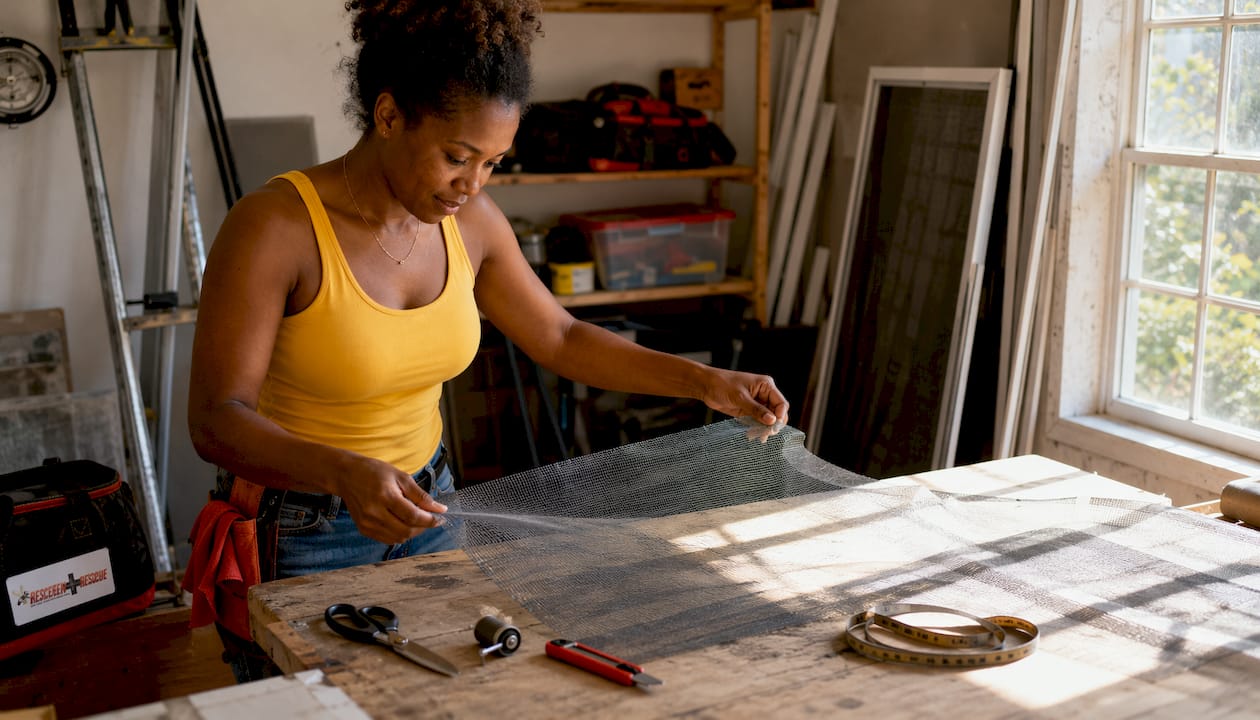
For DIY installation, measure the frame opening carefully, cut mesh with a few inches of overlap on each side, use a spline roller to press the spline and mesh into the channel evenly, and trim the excess with a utility knife. Tension matters: loose mesh sags and creates gaps where insects can enter.
Pro Tip: No-see-ums are weak fliers. Placing a box fan at your porch entrance creates a breeze that disrupts their flight and keeps them away from the screen, especially useful at dusk when activity peaks.
Expert maintenance tips for no-see-um screens in Florida
Florida’s combination of salt air, humidity, and intense UV exposure puts more stress on screen mesh than almost any other climate in the country. Fiberglass no-see-um screens hold up well, but only with basic upkeep.
Maintenance checklist for Florida homeowners:
- Rinse mesh with a garden hose every 4–6 weeks to remove salt, dust, and organic debris that can clog the tight 20×20 weave and reduce airflow
- Inspect spline channels after storms for lifted or cracked spline that lets mesh pull away from the frame
- Check for small tears at corners and along the bottom rail, where foot traffic and pets cause the most wear
- Replace hardware, including hinges and door closers, before they corrode to the point of pulling the frame out of alignment
- Eliminate standing water near your enclosure, such as in planters, gutters, or low spots in the yard, since no-see-ums breed in moist soil and debris near water
Fiberglass no-see-um mesh in Florida typically lasts several years under normal conditions, though coastal properties with heavy salt exposure may see degradation sooner. Annual professional inspection catches small problems before they become full rescreen jobs.
Pro Tip: After a hurricane or tropical storm, inspect every panel for micro-tears. A small puncture in tight 20×20 mesh is hard to see but easy for insects to find.
Rescreen Rescue serves Tampa Bay homeowners directly
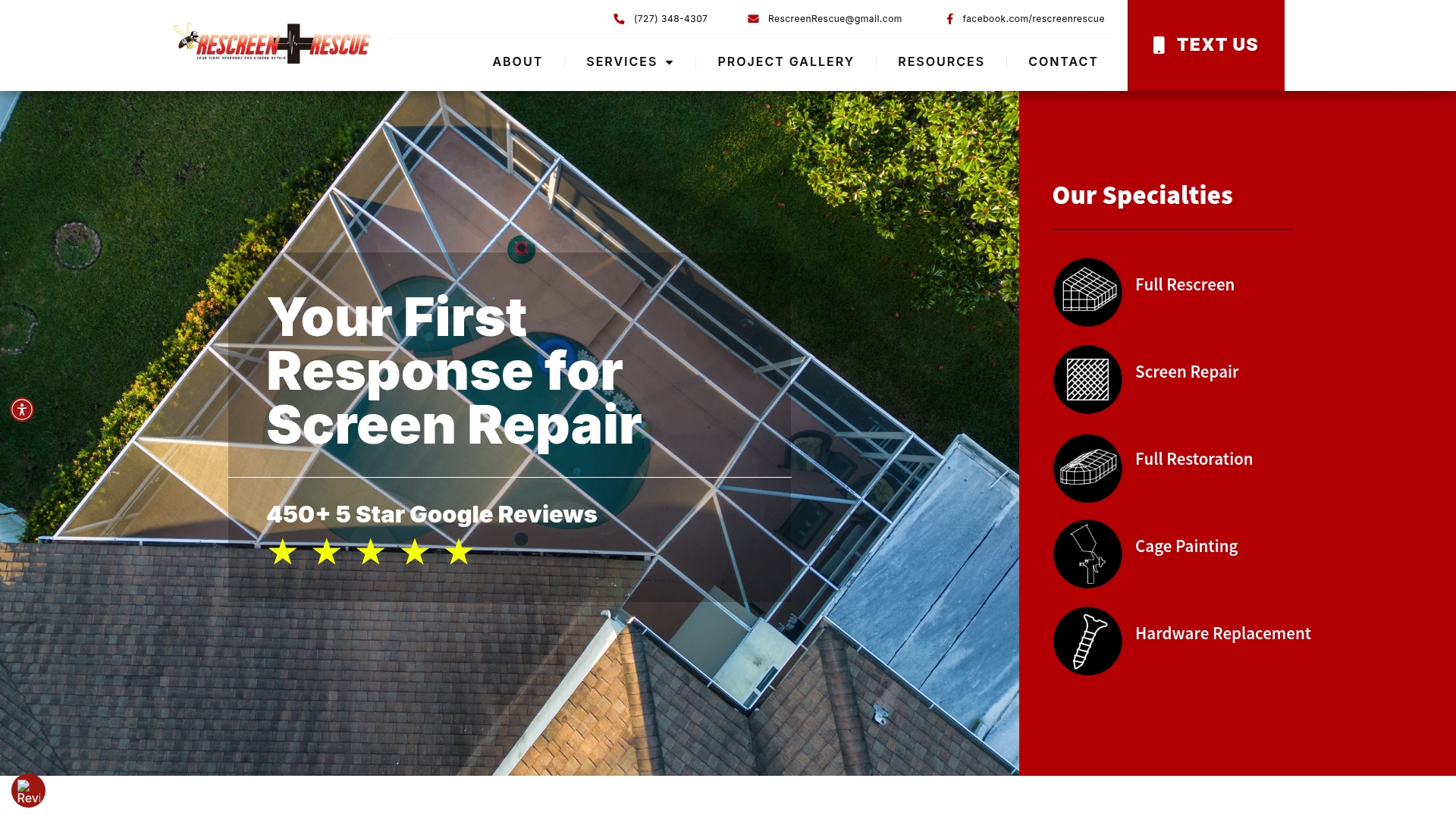
When your pool cage or lanai screen is overdue for a full rescreen, Rescreen Rescue offers a direct alternative to the larger regional contractors. The company focuses on Pinellas and Hillsborough counties, handling rescreening, restoration, hardware replacement, and enclosure frame-in projects for residential properties.
What sets Rescreen Rescue apart is the combination of over 20 years of experience, free estimates, and a family-owned approach that means you’re talking to the people doing the work, not a call center. If you’re in the Tampa Bay area and want a fast, reliable screen enclosure repair without the wait times of a larger operation, Rescreen Rescue is worth a call. Free estimates make it easy to compare before you commit.
FAQ
What is the best screen for no-see-ums?
A 20×20 high-density fiberglass mesh is the industry standard for blocking no-see-ums. It closes the gaps that standard 18×14 screens leave open while maintaining adequate airflow.
Do no-see-um screens really work?
Yes. Because no-see-ums measure less than 1/16 inch, a properly installed 20×20 mesh physically blocks them from entering an enclosure. The key is intact spline and no tears in the mesh.
What repels no-see-ums in Florida?
Screens block them physically, while fans deter them by creating airflow, since no-see-ums are poor fliers and stop feeding in even a slight breeze. Eliminating standing water near your enclosure also reduces the local population.
What kills no-see-ums instantly?
Direct contact insecticides labeled for biting midges can kill them on contact, but they offer no lasting protection. Physical exclusion with no-see-um mesh combined with fan placement is the most practical long-term solution for Florida outdoor spaces.
Key Takeaways
A 20×20 fiberglass no-see-um screen is the most effective physical barrier against Florida’s biting midges, outperforming standard insect screens in every coastal and marshy environment.
| Point | Details |
|---|---|
| Mesh density matters | Use 20×20 or finer mesh to block no-see-ums; standard 18×14 screens let them pass through. |
| Florida climate demands fiberglass | Coated fiberglass resists UV, salt air, and humidity better than aluminum mesh. |
| Fans add a second layer | No-see-ums stop feeding in a slight breeze; a porch fan at dusk complements your screen. |
| Maintenance extends screen life | Rinse mesh every 4–6 weeks and inspect spline after storms to extend lifespan. |
| Rescreen Rescue for Tampa Bay | Rescreen Rescue handles full rescreening, restoration, and hardware replacement in Pinellas and Hillsborough counties with free estimates. |