


TL;DR:
- Most screen door latch failures result from poor maintenance and environmental factors like humidity. Proper diagnosis, appropriate tool use, and regular upkeep ensure long-lasting, effective latch operation. Upgrading to durable hardware and maintaining alignment prevent costly repairs and keep doors secure.
A screen door latch is the spring-loaded or lever-operated mechanism that holds your door closed against the strike plate, keeping pests out and your home secure. When that latch fails, you get mosquitoes inside, doors swinging open in the breeze, and a security gap that grows worse with every humid Florida summer. The good news is that most screen door latch repair jobs cost between $5 and $30 in parts and take less than an hour with basic tools. This guide walks you through diagnosing the problem, fixing or replacing the mechanism, and keeping it working long-term. Rescreen Rescue has seen nearly every latch failure across Pinellas and Hillsborough counties, and the patterns are consistent and fixable.
How to fix a screen door latch: diagnosing the problem first
The right repair starts with the right diagnosis. Jumping straight to replacement wastes money and time when a simple adjustment would do the job.
The most common symptoms homeowners report are:
- Latch won’t catch: The door closes but the latch tongue slides past the strike plate without engaging. This is almost always a misalignment issue.
- Latch sticks or drags: The tongue does not retract smoothly. Dirt buildup, corrosion, or a worn internal spring causes this.
- Loose or wobbly handle: Screws have backed out or the latch body has cracked. Check the mounting screws first before assuming the latch is broken.
- Door bounces open after closing: The strike plate opening is too shallow or the latch spring has lost tension.
- Visible rust or corrosion: Salt air and humidity accelerate metal degradation, especially on factory-stamped steel latches.
Florida’s climate adds a layer of complexity that homeowners in drier states rarely deal with. Seasonal humidity causes wood frames to swell, shifting the latch out of alignment with the strike plate. This cyclical movement often resolves with a minor strike plate adjustment rather than a full latch replacement. That means a latch that fails every summer may not be broken at all.
To diagnose accurately, close the door slowly and watch where the latch tongue meets the strike plate. If the tongue hits above or below the strike plate opening, misalignment is your problem. Tighten all visible screws first. A loose hinge can drop the door enough to throw off the latch entirely. If screws are tight and alignment looks correct but the latch still won’t catch, the internal spring or latch body itself has failed.
Pro Tip: Rub a lipstick or crayon on the latch tongue, then close the door once. The mark it leaves on the strike plate shows exactly where the tongue is hitting, giving you a precise target for adjustment.
What tools and materials do you need for latch repair?
Gathering the right supplies before you start prevents mid-repair trips to the hardware store. Common DIY tools for latch repair include screwdrivers (both flathead and Phillips), a measuring tape, pliers, a drill with bits, and a lubricant spray. For materials, you will need a replacement latch set if the body is cracked, a new strike plate if the old one is bent, replacement screws, sandpaper, and naval jelly for rust removal.
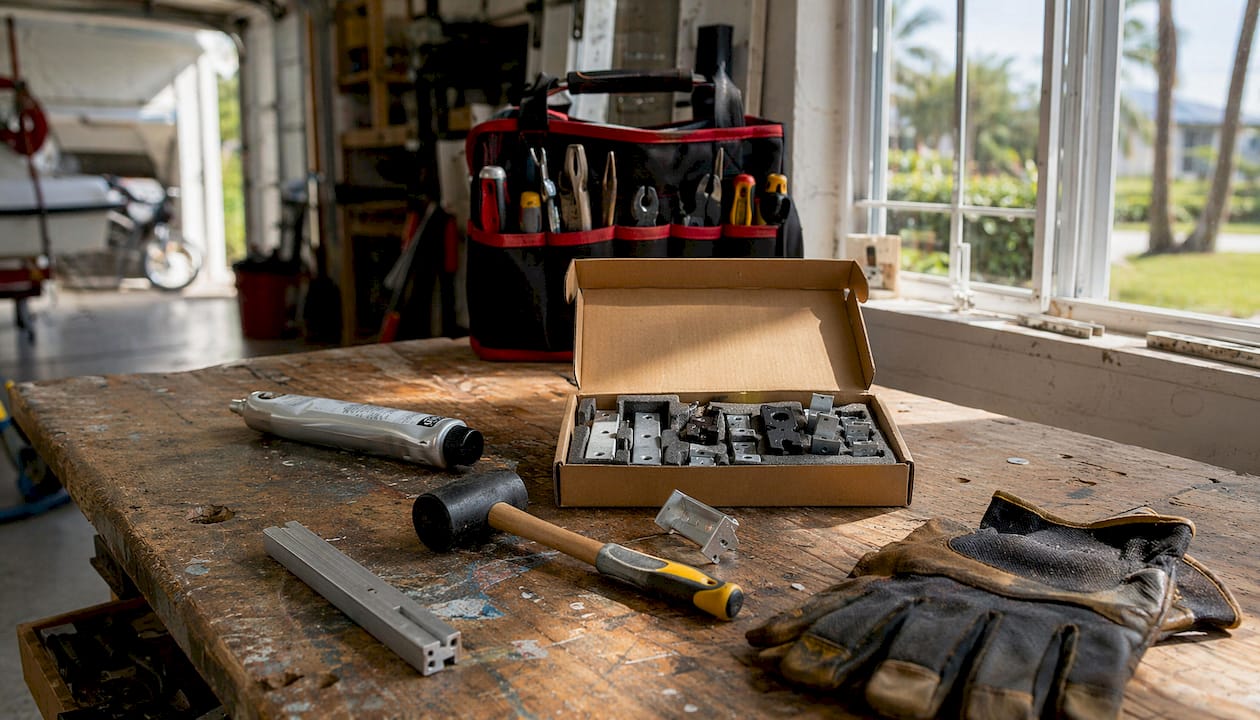
Safety matters more than most homeowners expect. Wear gloves and safety glasses when sanding corroded metal or applying naval jelly. Metal dust from rusted latches is a real irritant, and naval jelly contains phosphoric acid. A dust mask is worth adding if you are sanding an older painted frame.
The table below shows the most common latch types and what to look for when buying replacements.
| Latch type | Typical material | Replacement notes |
|---|---|---|
| Hook and eye | Zinc or steel | Simplest fix; measure eye diameter and hook length |
| Push-button (gem style) | Stamped steel | Note backset distance and door thickness |
| Barrel slide | Aluminum or steel | Match barrel diameter; check for universal spacer kits |
| Lever handle set | Brass or stainless steel | Measure backset and confirm spindle size |
| Magnetic latch | Plastic housing | Replace full unit; magnets are not serviceable |
Pro Tip: Photograph the latch assembly from multiple angles before removing any screws. That photo will save you significant frustration during reassembly, especially with multi-piece lever sets.
When buying a replacement, note the backset measurement and door thickness before heading to the store. Universal latch sets often include plastic spacers to accommodate different door thicknesses, but confirming your measurements first avoids a second trip.
Step-by-step guide to replacing or adjusting a latch
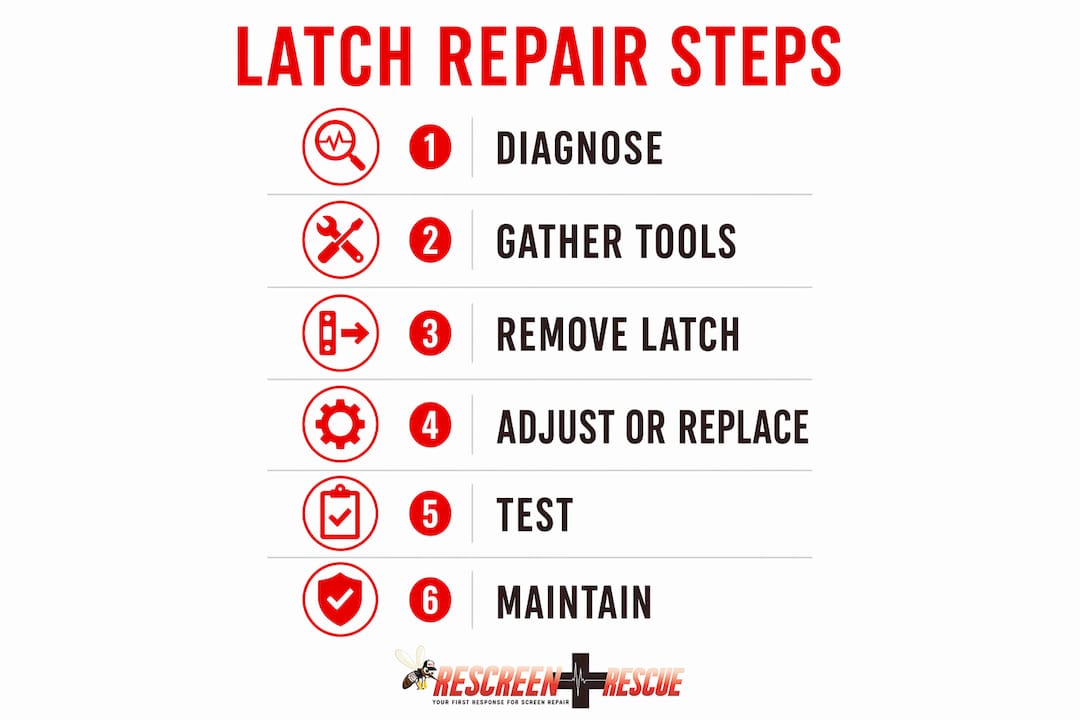
Most screen door latch repairs follow the same sequence, whether you are realigning a strike plate or swapping out a broken mechanism entirely.
-
Remove the old latch. Unscrew the mounting screws on both the interior and exterior latch plates. Pull the latch body out of the door edge. Keep all screws in a small container so nothing rolls away.
-
Inspect the strike plate. Check whether the strike plate opening aligns with where the latch tongue actually travels. If misalignment exceeds 1/4 inch, fill the old screw holes with wooden toothpicks and wood glue, let it dry fully, then remount the strike plate in the correct position.
-
Replace the latch body if needed. If the latch body is cracked or the internal spring is broken, install the new unit using the same screw holes when possible. Confirm the backset matches before driving screws.
-
Clean the strike plate and door edge. Use a toothbrush and mild soapy water to remove grit and old lubricant residue. Rinse and dry completely before reassembly.
-
Lubricate with silicone spray. Apply silicone-based lubricant to the latch tongue, the strike plate opening, and any pivot points on the handle. Avoid oil-based lubricants entirely. They attract dust and grit, which accelerates wear rather than preventing it.
-
Reassemble and test. Mount the new latch, tighten screws firmly but not so tight that you strip the holes. Close the door five times in a row. The tongue should engage the strike plate cleanly on every pass.
Pro Tip: Do not overtighten the latch mounting screws on aluminum frames. Aluminum strips easily. Snug is enough. If a screw spins freely, use a slightly longer screw or add a small metal anchor.
The most common mistake homeowners make is skipping the test phase. A latch that works once may bind after the door warms up in afternoon sun. Test it at different times of day if you can.
Maintenance tips to keep your latch working for years
Prevention is cheaper than repair. A few minutes of attention twice a year keeps most latches functioning well past their expected lifespan.
- Clean regularly. Wipe down the latch and strike plate with mild soapy water and a toothbrush every few months. Salt air in coastal areas like St. Petersburg and Clearwater deposits residue that corrodes metal faster than inland locations.
- Lubricate annually. Apply silicone spray to all moving parts once a year. In humid or coastal areas, annual protective sealant application extends latch life well beyond the standard 3–5 years that factory-stamped metal hardware typically delivers.
- Adjust for seasonal movement. Check latch alignment in june and again in december, when Florida humidity swings are most pronounced. A quick strike plate adjustment in the wet season prevents the latch from grinding against misaligned metal all summer.
- Upgrade hardware when replacing. Factory-stamped metal latches last 3–5 years by design. Brass or stainless steel latches last significantly longer and resist corrosion far better. The price difference at the hardware store is minor compared to the labor of repeated repairs.
- Acclimate wood components. If your door frame is wood, allow any replacement wooden parts to acclimate to local humidity at 6–8% moisture content before installation. Wood installed too dry will swell and bind the latch within weeks.
Pro Tip: Set two calendar reminders each year, one in may before peak humidity and one in october after it breaks. A five-minute inspection at those times catches problems before they become repairs.
Key Takeaways
Fixing a screen door latch correctly requires diagnosing the root cause first, using the right materials, and maintaining the hardware twice a year to prevent repeat failures.
| Point | Details |
|---|---|
| Diagnose before replacing | Check alignment and screw tightness before buying a new latch; misalignment is the most common cause. |
| Use silicone lubricant only | Oil-based lubricants attract grit and accelerate wear; silicone spray is the correct choice. |
| Match backset and thickness | Note your door’s backset measurement and thickness before purchasing any replacement latch set. |
| Upgrade to brass or stainless steel | Factory-stamped latches last 3–5 years; brass and stainless steel hardware lasts significantly longer. |
| Maintain twice a year | Clean and inspect latches in may and october to catch seasonal misalignment before it causes failure. |
What 20 years of screen repairs taught me about latches
Most latch problems we see at Rescreen Rescue are not hardware failures. They are maintenance failures. A latch that “suddenly stopped working” almost always has a history: screws that were never tightened after installation, a strike plate that was never adjusted after the first wet season, or a frame that was lubricated once with WD-40 and then forgotten. The latch did not fail overnight. It was failing slowly for months.
The second thing I have learned is that homeowners consistently underestimate how much Florida’s humidity affects door hardware. A latch that works perfectly in january may bind or miss entirely by july. That is not a defective product. That is wood and metal responding to a 30-point swing in relative humidity. The fix is a screwdriver and five minutes, not a new door.
Where I do recommend calling a professional is when the door frame itself has warped, when multiple hinges have pulled loose from the frame, or when the screen mesh and frame need full replacement at the same time. Trying to fix a latch on a structurally compromised frame is like adjusting a picture frame on a cracked wall. The underlying problem will undo your work quickly.
Invest in quality hardware once, maintain it consistently, and your screen door latch will outlast the door itself.
— Rescreen Rescue
Screen door repairs in St. Petersburg, Clearwater, and Tampa
When a latch repair reveals bigger problems with your screen door or enclosure, Rescreen Rescue is ready to help.

Rescreen Rescue serves homeowners across St. Petersburg, Clearwater, and Tampa with expert screen door repair and full enclosure restoration. With over 20 years of experience and free estimates on every job, the team handles everything from a single latch replacement to a full pool cage rescreen. Quality hardware, fast turnaround, and a focus on getting the repair right the first time are what set Rescreen Rescue apart. If your door needs more than a DIY fix, contact Rescreen Rescue to schedule a consultation and get your screen door working like it should.
FAQ
Why won’t my screen door latch catch?
The most common cause is strike plate misalignment. Close the door slowly and check whether the latch tongue lines up with the strike plate opening; if it misses by more than 1/4 inch, reposition the strike plate.
How much does screen door latch repair cost?
Parts for most repairs cost between $5 and $30 depending on latch type. Simple hook-and-eye repairs fall at the lower end; push-button or lever handle sets run higher.
What lubricant should I use on a screen door latch?
Use a silicone-based spray. Oil-based lubricants like WD-40 attract dust and grit, which causes the latch to stick and wear faster, especially in Florida’s humid coastal environment.
How long should a screen door latch last?
Standard factory-stamped metal latches are designed to last 3–5 years. Brass or stainless steel latches last considerably longer with proper annual maintenance.
When should I replace instead of repair my screen door latch?
Replace the latch when the body is cracked, the internal spring has failed, or corrosion prevents the tongue from moving. If the door closes fully but the latch still won’t catch after realigning the strike plate, the latch mechanism itself needs replacement.