


TL;DR:
- Fiberglass screens last 8 to 15 years and cost less but resist salt air better. Aluminum screens last 15 to 25 years, are more durable inland, but corrode faster near saltwater. The choice depends on environment, with fiberglass favored in coastal areas and aluminum preferred inland.
Fiberglass and aluminum are the two dominant materials used in residential screen enclosures, and choosing between them determines how your pool cage or patio screen performs for the next decade or more. The fiberglass vs aluminum screen decision comes down to three factors: durability, maintenance effort, and visual clarity. Aluminum lasts 15–25 years under moderate conditions, while fiberglass typically runs 8–15 years. Fiberglass costs 30–50% less than metal mesh and delivers better visibility. For Florida homeowners dealing with salt air, intense sun, and afternoon storms, the right choice is rarely obvious.
1. Fiberglass vs aluminum screen: how the materials differ
Fiberglass screen mesh is woven from glass fibers coated in PVC. The result is a flexible, matte material that resists permanent denting and bends without breaking. Aluminum screen mesh is woven from thin metal strands, giving it a rigid structure and a slight metallic sheen. Both materials block insects and allow airflow, but they behave very differently under stress.
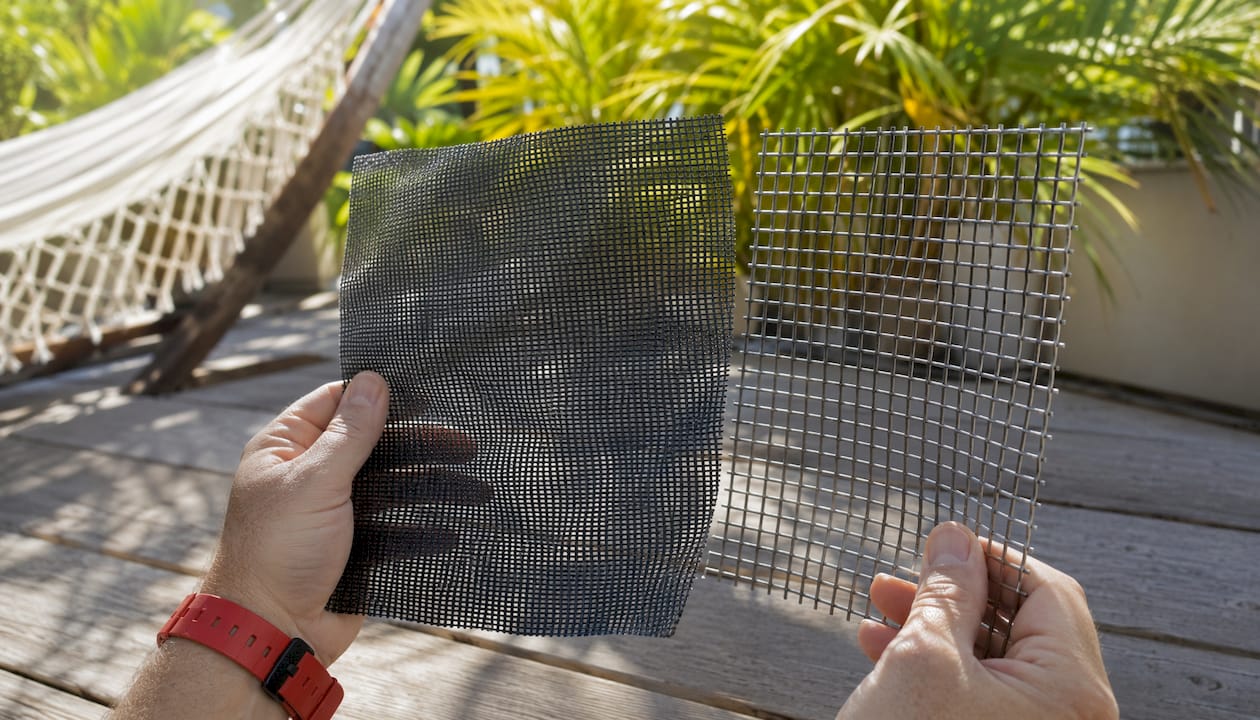
The core trade-off is flexibility versus rigidity. Fiberglass gives when pressure is applied, which means a pet or a stray branch is less likely to leave a permanent mark. Aluminum holds its shape under tension, which is why it maintains a taut, flat appearance across large screen panels for years.
Cost separates them further. Fiberglass mesh runs significantly cheaper per square foot than aluminum, making it the default choice for budget-conscious rescreening projects. Aluminum costs more upfront but can outlast fiberglass by a decade in the right environment.
2. Durability and lifespan: what to expect from each material
Aluminum screen durability is its strongest selling point. Aluminum can exceed 30 years in protected inland areas, and it maintains mesh tension without sagging across large openings. That structural integrity makes it the preferred material for oversized pool cage panels where a loose, flapping screen is a real problem.
Fiberglass holds up well in most residential settings, but its lifespan drops faster under harsh conditions. Budget fiberglass options can fail in as few as 7–10 years when exposed to Florida’s intense UV radiation. Sun-baked mesh becomes brittle, and brittle mesh tears.
The durability picture flips in coastal environments. Salt air causes pinhole rust spots in aluminum within 12–15 years, often making fiberglass the longer-lasting option near the Gulf or Atlantic coast. That is a critical consideration for homeowners in Pinellas County or anywhere within a few miles of saltwater.
Durability comparison at a glance:
| Factor | Fiberglass | Aluminum |
|---|---|---|
| Typical lifespan | 8–15 years | 15–25 years |
| Dent resistance | Flexes, resists dents | Dents permanently |
| Tear resistance | Lower | Higher |
| Coastal performance | Better (no corrosion) | Degrades faster in salt air |
| UV resistance | Fades over time | More stable in sun |
Pro Tip: If your enclosure sits within two miles of the Gulf of Mexico or Tampa Bay, fiberglass is often the smarter long-term investment despite its shorter average lifespan on paper.
3. Maintenance requirements and installation ease
Fiberglass is the more forgiving material to install. The mesh flexes as you work the spline into the channel, which reduces the chance of tearing during the rescreening process. Aluminum is rigid, and a single crease during installation becomes a permanent flaw that weakens the panel. Installation technique directly impacts long-term screen durability for both materials.
Cleaning routines are similar for both, but the risks differ. Follow these steps to keep either material in good condition:
- Rinse the screen with a garden hose every 3–4 months to remove surface dust and pollen.
- Apply a mild dish soap solution with a soft-bristle brush for deeper cleaning.
- Rinse thoroughly and let the screen air dry before closing any enclosure panels.
- Inspect the spline and frame channels for gaps or lifting after each cleaning.
- Clean screens every 6–12 months at minimum to extend the lifespan of both materials.
Avoid pressure washing. High-pressure water damages fiberglass weave and can permanently dent aluminum mesh. One pressure wash session can shorten a screen’s life by years.
Pro Tip: After a Florida storm, check your screen panels for debris caught in the mesh. Wet leaves and pine needles hold moisture against the frame, accelerating corrosion in aluminum and mold growth on fiberglass spline.
Fiberglass does have one maintenance drawback in dry climates. Static electricity causes fiberglass to attract dust and pollen more than aluminum does. In Florida’s humid climate this is less of a problem, but during dry winter months you may notice fiberglass screens looking dusty faster than aluminum ones.
4. Visual appeal and what you actually see through each screen
Fiberglass delivers 15–20% better visual clarity than aluminum. The thinner strands and matte finish reduce glare and create a cleaner view of your pool or backyard. If you spend time in your screen enclosure watching the sunset or keeping an eye on kids in the pool, that visibility difference is noticeable.
Aluminum has a metallic sheen that can reflect light, particularly in the late afternoon when the sun hits the screen at a low angle. This is not a dealbreaker, but it does affect the ambiance of an outdoor living space.
Visual and functional differences:
- Color options: Fiberglass typically comes in charcoal and gray tones that blend with most frame colors. Aluminum is available in similar tones but can appear shinier.
- Airflow: Both materials offer comparable airflow at standard mesh densities (18×14 or 18×16 mesh count).
- Insect protection: Both block standard insects effectively. Tighter mesh options exist in both materials for no-see-um protection.
- Frame blending: Fiberglass’s matte finish tends to disappear visually against a dark frame, giving the enclosure a more open feel.
For pool cages and patio enclosures where the view matters, fiberglass is the better choice for aesthetics. Aluminum works well when structural performance outweighs the visual experience.
5. Situational recommendations: matching material to your home
The right screen material depends on where you live, how you use the space, and what you can realistically maintain. No single material wins every situation.
Choose aluminum when:
- Your enclosure is in an inland area with no salt air exposure.
- You have a large pool cage where panel tension and shape retention matter.
- Wind is a consistent factor, such as on an elevated or exposed property.
- You want the longest possible lifespan with minimal replacement cycles.
Choose fiberglass when:
- Your home is within a few miles of the Gulf, Tampa Bay, or the Atlantic coast.
- You have pets or young children who regularly contact the screen panels.
- Budget is a priority and you plan to rescreen every 10–12 years.
- You want better visibility and a less reflective enclosure interior.
Aluminum suits high-wind, high-traffic areas due to its structural tension, but it requires protective coatings in coastal zones to slow corrosion. Fiberglass is flexible and resists permanent dents, making it practical for busy households where the screen takes daily contact.
For property managers overseeing multiple units, fiberglass often makes more financial sense. The lower material cost and easier installation mean rescreening projects are faster and cheaper, even if they happen slightly more often.
Pro Tip: Ask your screen installer about pool enclosure maintenance tips that apply to the full outdoor structure, not just the mesh. A well-maintained frame and deck extend the life of any screen material.
| Environment | Recommended Material | Key Reason |
|---|---|---|
| Coastal (within 2 miles of saltwater) | Fiberglass | Aluminum corrodes faster in salt air |
| Inland, high-wind exposure | Aluminum | Better tension and tear resistance |
| Homes with pets or children | Fiberglass | Flexes instead of denting permanently |
| Large pool cages, inland | Aluminum | Maintains shape across wide spans |
| Budget rescreening projects | Fiberglass | 30–50% lower material cost |
Balancing upfront cost against lifetime value is the real decision. Aluminum costs more now but replaces less often in the right environment. Fiberglass costs less now but may need replacement sooner if UV exposure is severe. Knowing your local conditions makes this calculation straightforward.
Pairing good screen material with solid pool deck maintenance practices also protects the full enclosure structure, not just the mesh panels.
Key Takeaways
Aluminum lasts longer in protected inland areas, while fiberglass performs better in coastal Florida environments and costs significantly less upfront.
| Point | Details |
|---|---|
| Lifespan comparison | Aluminum lasts 15–25 years inland; fiberglass lasts 8–15 years with UV exposure. |
| Coastal environments | Fiberglass outlasts aluminum near saltwater due to corrosion resistance. |
| Cost advantage | Fiberglass mesh costs 30–50% less than aluminum per square foot. |
| Maintenance matters | Gentle cleaning every 6–12 months extends both materials’ lifespan significantly. |
| Visibility and aesthetics | Fiberglass offers 15–20% better visual clarity with a matte, glare-free finish. |
What 20 years of rescreening taught me about this choice
After working on screen enclosures across Pinellas and Hillsborough counties for over two decades, the pattern I see most often is homeowners choosing aluminum because it sounds more durable, then calling us back in 10 years because the coastal salt air has eaten through it. The word “durability” misleads people. Durability means different things for different materials. Fiberglass flexes to avoid dents; aluminum resists tears but dents permanently. Neither is universally better.
The mistake I see most is choosing based on lifespan numbers without accounting for environment. A homeowner in St. Petersburg with a pool cage 1,000 feet from the bay is not in the same situation as someone in Brandon with an inland patio enclosure. Coastal homes often benefit more from fiberglass precisely because aluminum’s lifespan advantage disappears in salt air.
My honest advice: spend five minutes assessing your actual conditions before you commit to a material. How close are you to saltwater? Do your kids or pets regularly push against the screens? How often are you willing to clean and inspect the mesh? Those three questions will give you a clearer answer than any spec sheet. The cheapest screen is the one you do not have to replace ahead of schedule.
— Rescreen Rescue
Screen repair and replacement services in Tampa Bay
Rescreen Rescue has served homeowners across St. Petersburg, Clearwater, and Tampa for over 20 years, handling both fiberglass and aluminum screen repairs and full rescreening projects.
Whether your pool cage needs a single panel replaced or a full rescreen with upgraded mesh, the team at Rescreen Rescue provides free estimates and fast turnaround. Pinellas and Hillsborough county homeowners get prompt service from technicians who know local conditions, from Gulf-side salt exposure to inland UV intensity. Quality materials and competitive pricing mean you get a screen enclosure that holds up, not one that needs attention again in two years.
FAQ
Which screen material is better for Florida pool cages?
Fiberglass is often the better choice for coastal Florida pool cages because aluminum corrodes faster in salt air. Inland homeowners may prefer aluminum for its longer lifespan and superior tension across large panels.
How long does fiberglass screen last in Florida?
Fiberglass screen typically lasts 8–15 years, though budget options exposed to intense Florida UV can fail in 7–10 years. Regular cleaning and shade from a roof overhang extend its lifespan.
Is aluminum screen harder to install than fiberglass?
Aluminum is less forgiving during installation because it creases permanently if mishandled. Fiberglass flexes during spline installation, making it easier for both professionals and experienced DIYers.
Does fiberglass screen provide better visibility than aluminum?
Fiberglass offers 15–20% better visual clarity than aluminum due to its thinner strands and matte finish, which reduces glare and creates a cleaner view through the enclosure.
How often should I clean my screen enclosure mesh?
Clean screen enclosure mesh every 6–12 months using a soft brush and mild detergent. Avoid pressure washing, which damages fiberglass weave and permanently dents aluminum mesh.