


TL;DR:
- The best screen door closers in Florida are pneumatic models with adjustable speed and rust-resistant hardware suitable for coastal conditions. Proper sizing based on door weight, correct installation, and maintenance ensure reliable performance amid humidity, salt air, and frequent use. Local specialists like Rescreen Rescue offer expert installation, repairs, and advice tailored to Florida’s climate challenges.
What are the best screen door closer options for your home?
The best screen door closer for most Florida homes is a pneumatic model sized to match your door’s weight, with dual-speed adjustment and a push-button hold-open. That combination handles the daily grind of kids, pets, and Gulf Coast humidity effectively. Here is what works for different situations:
- Standard aluminum screen door (25–35 lbs): A size-matched pneumatic closer (Size 2–3) closes reliably in 3–5 seconds and handles winds up to 25 mph without slamming.
- Heavier storm or wood-framed door (40–55 lbs): Step up to a Size 4–5 pneumatic or a hydraulic model with a buffered sweep for controlled, quiet closing.
- High-traffic households with kids and pets: A hydraulic closer with oil-damped braking prevents finger-pinching slams and responds to sudden gusts automatically.
- Coastal or windy exposures: Dual pneumatic closers (top and bottom) reduce racking forces and keep the door tracking true even when afternoon storms roll in off Tampa Bay.
Pro Tip: Weigh your door on a bathroom scale before buying anything. A standard aluminum screen door typically runs 25–35 lbs; a full-view glass storm door can hit 50 lbs or more. Putting a lightweight closer on a heavy door is the single most common reason closers fail within months.
How do you choose the right closer for your door’s weight and usage?
Start with the door itself, not the closer aisle. Measure the door’s height and width, then weigh it. Matching closer size to door weight prevents slamming and premature wear, especially under wind pressure. A Size 2–3 handles most standard 36-inch doors; larger sizes are recommended for heavier or wider doors.
Next, think honestly about how the door gets used:
- High-traffic households need a closer with a stronger final latching pull so the door seats firmly every time, not just when someone closes it carefully.
- Homes with young children or pets benefit from a slower sweep speed and a soft final snap to protect fingers and avoid startling animals.
- Florida’s humidity and temperature swings affect pneumatic closers more than hydraulic ones. Air inside a pneumatic cylinder expands in summer heat and contracts in cooler months, which means you may need to adjust the tension screw twice a year.
- Coastal properties face salt air corrosion. Look for closers with aluminum or stainless steel bodies and rust-resistant hardware throughout.
Proper installation with heavy-duty hinges and a correctly adjusted latch matters as much as the closer itself. A great closer on a sagging, misaligned door will still underperform.
What types of screen door closers should you know about?
Pneumatic closers
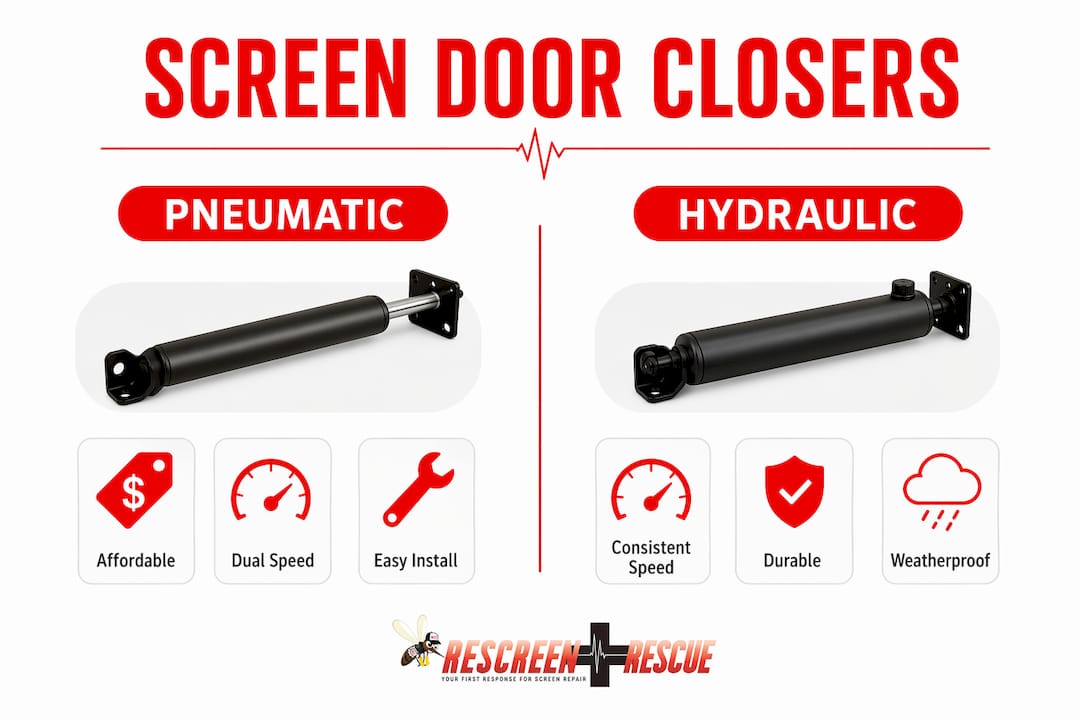
Pneumatic closers use compressed air to control closing speed. They are affordable, easy to install, and widely available. Most residential screen doors use them. The downside in Florida is temperature sensitivity: air expands and contracts with heat, so closing speed drifts seasonally. A quick turn of the adjustment screw fixes it, but you have to stay on top of it.
Hold-open and dual-speed adjustment features are the two upgrades worth paying for. Dual-speed control gives you one valve for the main sweep and a separate one for the final 10–15 degrees of latching travel. That means the door glides slowly through most of its arc, then gets a firm final push to seat the latch every time.
Hydraulic closers
Hydraulic closers use oil instead of air. Oil does not compress the way air does, so closing speed stays consistent regardless of temperature. They are quieter, smoother, and better suited to busy households. The trade-off is cost and, in very humid coastal environments, a small risk of seal leaks over years of use.
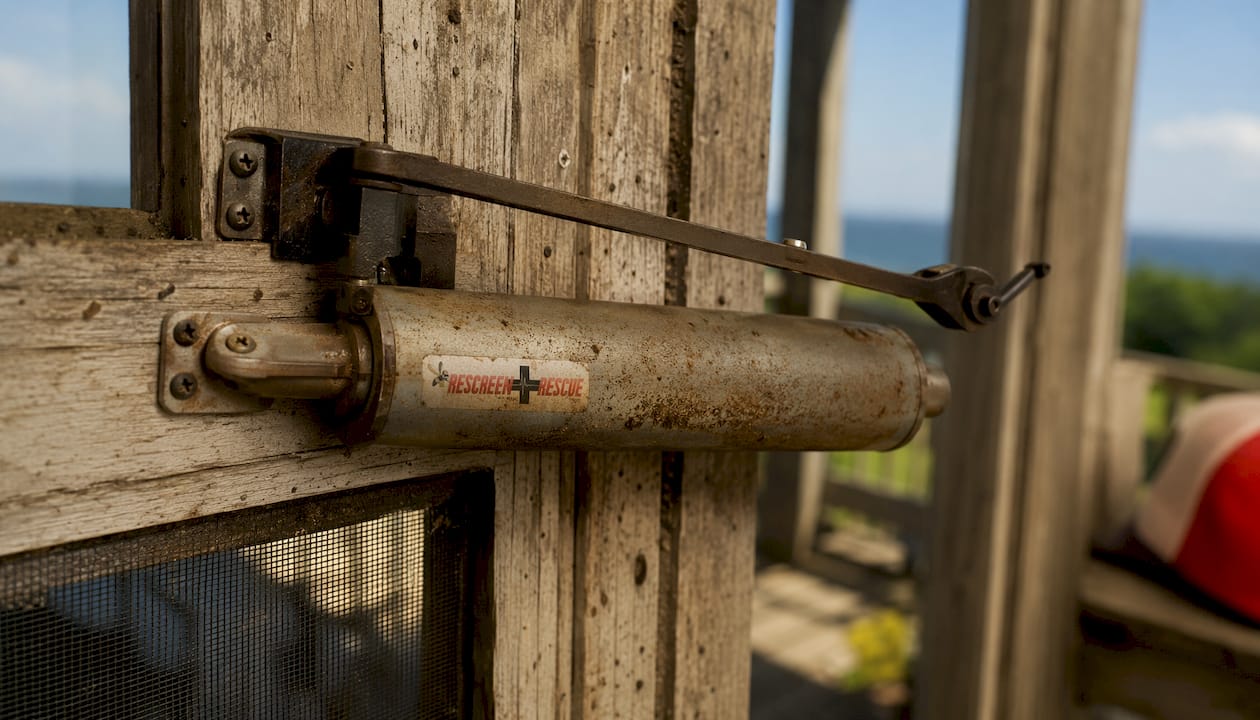
A practical note for Florida homeowners: In humid coastal conditions, pneumatic closers often outlast hydraulic ones because there are no oil seals to degrade. For most screen doors in Pinellas and Hillsborough counties, a quality adjustable pneumatic closer is the practical choice. Reserve hydraulic models for heavier doors or situations where noise control matters.
Key features worth prioritizing
- Dual-speed adjustment: Independent control of sweep and latching speed for a soft close that still latches firmly
- Push-button hold-open: Far more convenient than a slide-on washer when your hands are full of groceries
- Rust-resistant materials: Aluminum or stainless steel bodies for coastal Florida exposure
- ADA compliance: Hydraulic hinge-style closers that meet ADA and ICC A117.1 standards for opening force are worth considering for accessibility
What does Rescreen Rescue know about closers in Florida’s climate?
Rescreen Rescue has been repairing and restoring screen enclosures across Pinellas and Hillsborough counties for over 20 years. That experience translates directly into knowing which hardware holds up and which fails when Florida’s heat, salt air, and afternoon thunderstorms test it daily.
A few things the team sees repeatedly:
- Mismatched closer size is the leading cause of premature failure. A standard pneumatic closer on a heavy pool cage door will blow its seals within months.
- Corroded hinges and a worn latch undermine even a perfect closer. The whole system, hinges, latch, and closer, needs to work together for reliable performance.
- Spring hinges combined with a closer create competing tension. If your door has spring hinges, reduce their tension when adding a closer so the components are not fighting each other.
Customers consistently praise Rescreen Rescue’s attention to these details, noting that doors repaired or upgraded by the team close smoothly and stay that way through Florida’s punishing summers.
Pro Tip: If your screen door uses spring hinges, back off the spring tension before installing a closer. Two mechanisms pulling against each other wear out both faster and make the door feel stiff.
How much does a screen door closer cost, including installation?
The closer itself is one of the more affordable hardware upgrades you can make. Quality pneumatic models run $15–$40, with well-regarded options like the Wright V2012 available for around $18. Hydraulic and commercial-grade models range from $40 to well over $100 for cast-iron commercial units.
Professional installation adds to that figure. A straightforward closer swap on an existing screen door typically costs $50–$150 in labor, depending on your area and whether related hardware like hinges or a latch needs replacement at the same time. If the door frame is out of square or the existing hardware is corroded, budget more. For a full screen door replacement with a new closer installed, total costs in the Tampa Bay area generally run $150–$400 depending on door size and materials.
DIY installation is realistic for most pneumatic closers. They come with all necessary hardware and take under an hour on a properly hung door.
How do you find and evaluate a local installation or repair service?
Start with licensed, insured contractors who specialize in screen enclosures rather than general handymen. Screen door hardware, especially on pool cages and lanai enclosures, has specific requirements around frame compatibility, hinge load ratings, and Florida building codes.
Ask these questions before hiring anyone:
- Do you carry liability insurance and a current Florida contractor’s license?
- How long have you been working specifically with screen enclosures in this area?
- Do you offer a written estimate before starting work?
- What brands and grades of hardware do you use, and why?
Check Google reviews for patterns, not just star ratings. A service with consistent mentions of clean work, on-time arrival, and durable results tells you more than an average score alone. Local experience with Florida’s coastal climate is a real differentiator: a contractor who has replaced corroded hardware on a hundred Clearwater pool cages knows which materials actually hold up.
How do you install a screen door closer for best results?
- Check the door first. Open and close it by hand. It should swing freely without binding, sagging, or rattling. Fix any hinge issues before installing the closer.
- Position the jamb bracket. Mount it so the closer arm pulls the door tight in the last few inches of travel. The cylinder should sit roughly level with a slight downward pitch away from the hinge side.
- Start with the manufacturer’s recommended hole position. Do not guess. The mounting position directly affects the mechanical advantage and closing force.
- Set the sweep speed first. Adjust so the door closes fully in 3–5 seconds from a 90-degree open position.
- Tune the latching speed separately if your closer has dual-speed adjustment. The final 10–15 degrees should have enough push to seat the latch without bouncing off the frame.
- Test in wind conditions. If the door slams in gusts, increase resistance slightly. If it stalls before latching, increase the latching speed.
How do you troubleshoot and maintain a screen door closer?
Door slams shut: The sweep speed is set too fast. Turn the adjustment screw to slow it down. On a dual-speed closer, check the latching valve separately.
Door won’t latch: Either the latching speed is too slow, the latch strike is misaligned, or the closer is undersized for the door’s weight. Check latch alignment first since it is the most common culprit.
Door closes too slowly in summer: Heat expands the air in a pneumatic cylinder. A small clockwise turn of the speed screw restores normal closing time.
Closer leaks oil: This is a hydraulic seal failure. In most cases, replacement is more practical than repair, especially if the unit is more than a few years old.
For ongoing maintenance, lubricate the pivot points and arm joints with a light machine oil once or twice a year. Wipe down the cylinder body to remove salt residue, particularly on coastal properties. Check all mounting screws for tightness each season since Florida’s heat cycles cause fasteners to work loose over time.
Rescreen Rescue: local screen door expertise you can count on
When a closer swap turns into a bigger project, or when the door frame, hinges, and screen mesh all need attention at once, having a local specialist matters.
Rescreen Rescue handles screen door closer installation, hardware replacement, and full enclosure rescreening across Pinellas, Hillsborough, and neighboring Florida counties. With over 20 years of hands-on experience in Florida’s coastal climate, the team knows which hardware holds up against salt air, humidity, and daily use. Free estimates, competitive pricing, and a track record of satisfied homeowners in the Tampa Bay area make Rescreen Rescue a practical first call when your screen door needs more than a quick fix.
Key Takeaways
The best screen door closer is the one sized precisely to your door’s weight and household traffic, not the most expensive model on the shelf.
| Point | Details |
|---|---|
| Match size to door weight | Size 2–3 handles most standard doors; heavier doors need larger sizes as appropriate. |
| Dual-speed adjustment matters | Independent sweep and latching speed control ensures a soft close that still seats the latch every time. |
| Florida climate considerations | Pneumatic closers often outlast hydraulic models in humid coastal conditions due to lower seal-leak risk. |
| Installation quality is critical | Proper hinge condition and latch alignment are as important as the closer itself for reliable performance. |
| Rescreen Rescue | Offers screen door closer installation and full enclosure repairs across Pinellas and Hillsborough counties with free estimates. |
FAQ
What is the best type of screen door closer for Florida humidity?
Pneumatic closers are generally more reliable in Florida’s humid coastal climate because they have no hydraulic seals to degrade over time. Choose a model with corrosion-resistant aluminum or stainless steel body.
How do I know what size closer my door needs?
Weigh your door and match the closer size to that weight: Size 2–3 for doors up to 35 lbs, Size 4–5 for doors in the 40–55 lb range. Add one size if your door faces a windy or coastal exposure.
Can I install a screen door closer myself?
Yes. Most pneumatic closers are designed for DIY installation and include all necessary hardware. The job takes under an hour on a properly hung door with aligned hinges and a working latch.
How often does a screen door closer need maintenance?
Lubricate pivot points and arm joints once or twice a year, check mounting screws each season, and wipe down the cylinder to remove salt residue. Adjust the speed screw seasonally if you notice the door closing too fast or too slowly with temperature changes.
When should I call a professional for screen door closer installation?
Call a professional when the door frame is out of square, hinges are corroded, or the screen mesh and hardware all need replacement at the same time. Rescreen Rescue handles these combined repairs across the Tampa Bay area with free estimates.