


TL;DR:
- Installing a pet door in a screen enclosure involves choosing the right model for your frame thickness and sealing all edges against insects and weather. Proper measurement, clean cutting using the frame as a template, and securing the frame with a spline or screws are essential for a successful installation. Rescreen Rescue has over 20 years of local experience in Florida, offering professional, seal-tight pet door installations across the Tampa Bay area.
Installing a pet door in a screen enclosure comes down to three things: choosing the right door model for your frame thickness, cutting the mesh cleanly, and sealing the assembly so bugs and weather stay out. Here’s the short version before we go deeper:
- Match the door to your frame. Standard models fit frames ½ inch or less; universal models handle thicker frames using metal retainer clips and a channel system on all four sides.
- Measure from the ground to your pet’s shoulder, then add 2.5 inches of clearance for the flap height.
- Remove the screen panel and lay it flat before cutting anything.
- Use the door frame itself as a cutting template on the mesh — no guesswork.
- Assemble interior frame first, then exterior frame, securing with spline or screws depending on your kit.
- Seal edges with silicone caulk where the frame meets the screen border.
- Reinstall the panel and test the flap, adjusting magnets until it closes snugly.
Pro Tip: Painter’s tape holds the door frame steady while you mark and cut, preventing the kind of shifting that leads to a crooked installation.
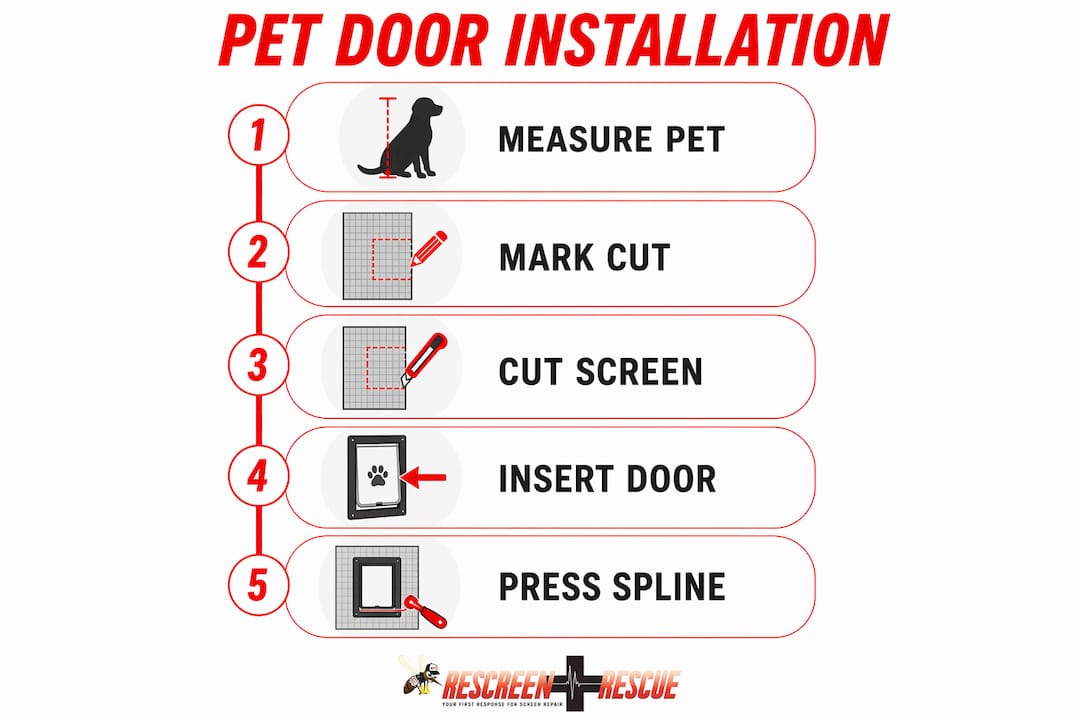
How to install a pet door in a screen enclosure: step by step
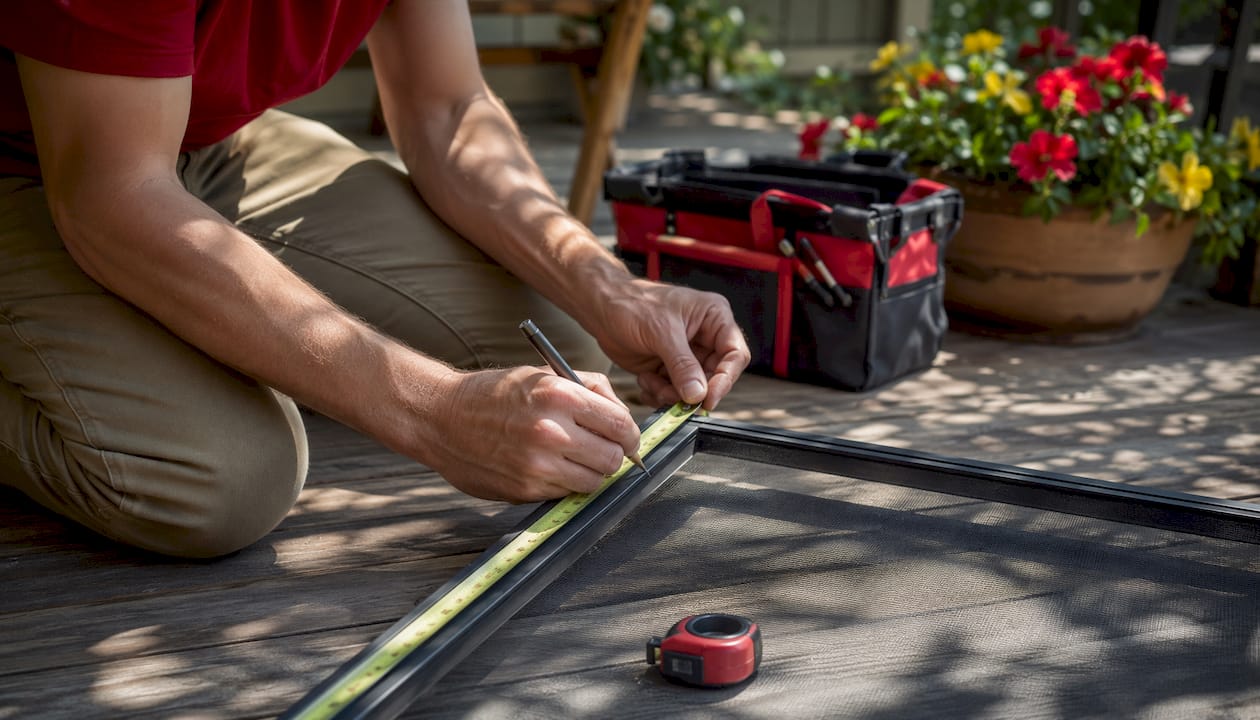
Before you pick up a utility knife, pull the screen panel out of its track and set it on a flat surface. Working flat gives you control over the mesh tension and keeps cuts straight.
- Measure your pet. Mark shoulder height on the outside screen surface, then add clearance. That mark is your flap’s top edge.
- Level your lines. Use a carpenter’s level to draw horizontal and vertical cut lines centered on your mark.
- Tape the door frame in place. Press painter’s tape around the perimeter of the pet door frame to hold it while you trace the cutout.
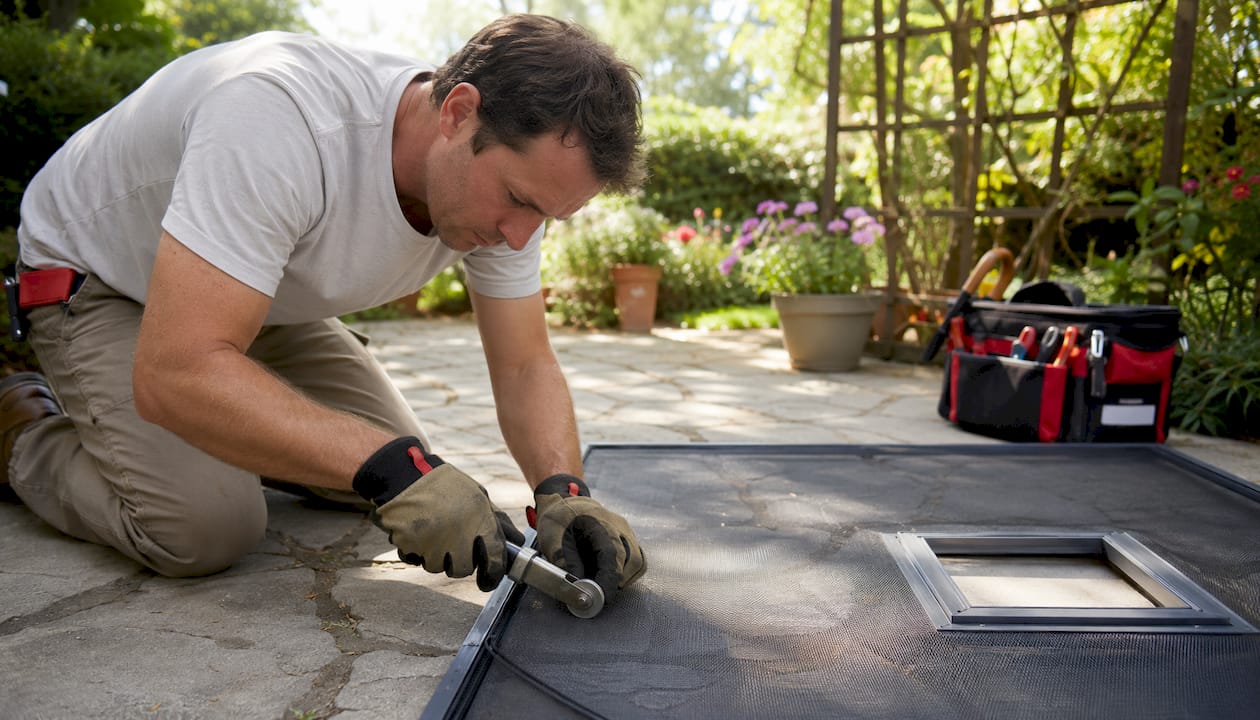
- Cut the mesh. Score along the frame’s inner edge with a razor blade or utility knife. Short, controlled strokes beat one long drag.
- Insert the interior frame and flap. Push it through from the inside, aligning it with your cut.
- Attach the exterior frame. For standard screen models, press the spline into the groove using a spline roller, working corner to corner. For universal models, fasten with the included screws and metal retainer clips.
- Apply sealant. Run a thin bead of silicone along the outer frame edge where it contacts the screen border.
- Reinstall the panel and slide it back into the track.
- Test the flap. Push it open and let it close. Adjust the magnets if it gaps or sticks.
Florida pool enclosure note: Florida regulations prohibit pet doors from serving as the sole child-safety barrier on pool screen enclosures. A compliant pool safety alarm or fence must supplement any pet door installation near a pool.
Pro Tip: Press spline firmly into the screening groove with a spline roller, working from the center of each side outward. This keeps mesh tension even and prevents tears at the corners.
What tools and materials do you need for this job?
The frame thickness of your enclosure determines which pet door model you buy and which installation method you use. Aluminum beams thicker than ½ inch require a universal model; thinner vinyl or standard aluminum frames work with a basic spline-mount kit.
Tools you’ll need:
- Utility knife or razor blades
- Screwdriver (flathead and Phillips)
- Screen spline roller
- Carpenter’s level
- Painter’s tape
- Pliers
What comes in most pet door kits:
- Interior and exterior frames
- Magnetic flap with weatherstripping
- Screen spline
- Metal retainer clips
- Mounting screws
| Pet Door Type | Frame Thickness | Mounting Method | Best For |
|---|---|---|---|
| Standard | ½ inch or less | Spline groove | Thin aluminum or vinyl frames |
| Universal | Any thickness | Retainer clips + screws | Thicker aluminum beams or mesh-only areas |
| Cut-to-fit | Varies | Spline or screws | Custom frame sizes |
For patio spaces where you’re also updating outdoor furniture or layout, patio design resources can help you think through the full enclosure setup.
Why adding a pet door to your screen enclosure is worth it
Pet doors designed specifically for screen enclosures offer better insect resistance than generic alternatives, keeping your Florida lanai comfortable for everyone. The strong magnets and weatherstripping create a seal tight enough to block mosquitoes while letting your dog or cat pass freely.
Beyond bug control, the practical benefits stack up fast:
- Pets move in and out without you opening the main door repeatedly
- Fresh air circulation through the enclosure stays uninterrupted
- Screen aesthetics hold up when the door frame matches your existing mesh color
- Properly sealed flaps reduce the chance of pest intrusion
- Universal models fit most existing enclosure configurations without major modifications
Why Rescreen Rescue is trusted for pet door installation in Florida
Rescreen Rescue brings over 20 years of expertise in screen enclosure work across Pinellas, Hillsborough, and neighboring Florida counties. That experience shows up in the details: matching the right door model to your specific frame, cutting mesh without tearing it, and sealing every edge against Florida’s humidity and insects.
What Rescreen Rescue offers:
- Free estimates with fast response times
- High-quality materials rated for Florida’s heat and humidity
- Pool enclosure compliance guidance, including secondary safety barrier requirements
- Residential and light commercial service across the Tampa Bay area
- Customer satisfaction backed by years of proven workmanship
Get your pet door installed right the first time
Skipping a crooked cut or a poorly seated spline costs more to fix than getting it done correctly from the start. Rescreen Rescue handles the full job, from measuring your frame and selecting the right door model to cutting, fitting, sealing, and testing the flap.
If you’re in Pinellas or Hillsborough County and want a pet door that holds up through Florida summers, get a free estimate from Rescreen Rescue. Fast scheduling, quality materials, and no guesswork on your end.
Key Takeaways
Installing a pet door in a screen enclosure requires matching the door model to your frame thickness, cutting the mesh cleanly with the frame as a template, and sealing all edges to keep insects and weather out.
| Point | Details |
|---|---|
| Match door to frame thickness | Standard models fit frames ½ inch or less; universal models handle thicker aluminum beams. |
| Measure before cutting | Mark pet shoulder height plus 2.5 inches of clearance before touching the mesh. |
| Seal every edge | Apply silicone along the outer frame border to block insects and moisture. |
| Florida pool safety rule | Pet doors cannot serve as the sole child-safety barrier on pool enclosures; a secondary barrier is required. |
| Rescreen Rescue | Provides professional pet door installation across Pinellas and Hillsborough counties with free estimates and 20+ years of experience. |
FAQ
What type of pet door fits a screen enclosure?
Standard pet doors fit frames ½ inch or less using a spline system; universal models use retainer clips and work with any frame thickness, including thicker aluminum beams.
Can I install a pet door in a pool screen enclosure in Florida?
Yes, but Florida regulations require a compliant secondary safety barrier, such as a pool alarm or fence, since a pet door cannot serve as the sole child-safety measure on a pool enclosure.
How do I measure for a pet door in a screen?
Measure your pet’s shoulder height from the ground, then add 2.5 inches. That total is the height at which the top of the flap should sit on the screen.
Do pet doors in screen enclosures keep insects out?
Yes. Pet doors designed for screen use include magnetic flaps and weatherstripping that create an insect-resistant seal when closed, maintaining the enclosure’s bug barrier.
Does Rescreen Rescue install pet doors in screen enclosures?
Rescreen Rescue installs pet doors in screen enclosures across Pinellas and Hillsborough counties, handling measurement, cutting, fitting, and sealing with materials suited to Florida’s climate.