


TL;DR:
- For Florida homes near water, 20×20 no-see-um mesh is recommended to block biting midges and gnats effectively. Upgrading from standard 18×16 screens reduces insect passage but may decrease airflow and increase dust accumulation. Proper installation and material choice, like polyester for durability, are essential for long-lasting, effective protection.
For Florida homeowners near water, marshes, or heavy vegetation, 20×20 no-see-um mesh is widely recommended as an effective screen choice for blocking biting midges and gnats. Standard 18×16 mosquito screen leaves openings large enough for these tiny insects to pass right through. The 20×20 weave closes that gap with small openings that are tight enough to stop no-see-ums at dusk and dawn when they’re most active.
Here’s what you need to know before buying or calling a pro:
- Pick your material first: fiberglass 20×20 for most windows and doors (affordable, easy to install); polyester for pool cages and pet-heavy homes (stronger, holds tension better); micro-mesh for the clearest view at a higher price.
- Decide DIY vs. pro: small window panels are manageable for a handy homeowner. Large pool cage panels and lanai enclosures need professional spline tensioning to avoid ripples.
- Measure before you call: note each opening’s width and height, count the panels, and check frame condition so any installer can give you an accurate estimate on the first call.
What does 20×20 mesh mean, and why does it stop no-see-ums?
The notation “20×20” describes the weave density: 20 strands per linear inch running in each direction. That geometry creates an opening of roughly 0.9 mm per hole, which is the threshold recommended for homes near marshes, lakes, and southern coasts where biting midges are common.
Standard 18×16 screen (18 strands per inch horizontally, 16 vertically) has noticeably larger openings. Biting midges, sometimes called sand gnats or no-see-ums, are small enough to slip through those gaps without touching a strand. The 20×20 weave physically blocks them because the opening is smaller than the insect’s body width.
The trade-off is real: a tighter weave means slightly less airflow and a marginally darker view. Switching from 18×16 to 20×20 typically reduces airflow moderately, and the finer mesh catches pollen and dust faster. That’s manageable with a seasonal wash, but it’s worth knowing before you rescreen every opening in the house.
Pro Tip: Use 20×20 on the openings you actually use at dusk and dawn: bedroom windows, porch doors, and pool cage panels facing water or vegetation. Leave standard mesh on north-facing or rarely opened windows to preserve airflow where no-see-ums aren’t a problem.
Which screen material works best for no-see-um protection?
The mesh count is the same across materials, but the fiber type changes how long the screen lasts, how it looks, and what it costs. Here’s how the main options compare for pool cages, lanais, windows, and doors.
| Feature | Fiberglass 20×20 | Polyester (TuffScreen / Super Screen) | Micro-Mesh | Aluminum No-See-Um |
|---|---|---|---|---|
| Bug-blocking effectiveness | Excellent | Excellent | Excellent | Excellent |
| Airflow / ventilation | Moderate (10–20% less than 18×16) | Moderate | Moderate | Moderate |
| Visibility / view | Good | Good to very good | Best | Fair |
| Durability / tear resistance | Moderate | High | Moderate to high | Very high |
| Material cost (approx.) | Lowest | Moderate to high | Highest (~double fiberglass) | High |
| DIY friendliness | Good | Moderate | Moderate (delicate) | Difficult |
| Best use cases | Windows, doors, small enclosures | Pool cages, lanais, pet homes | Scenic views, premium installs | High-impact or commercial |
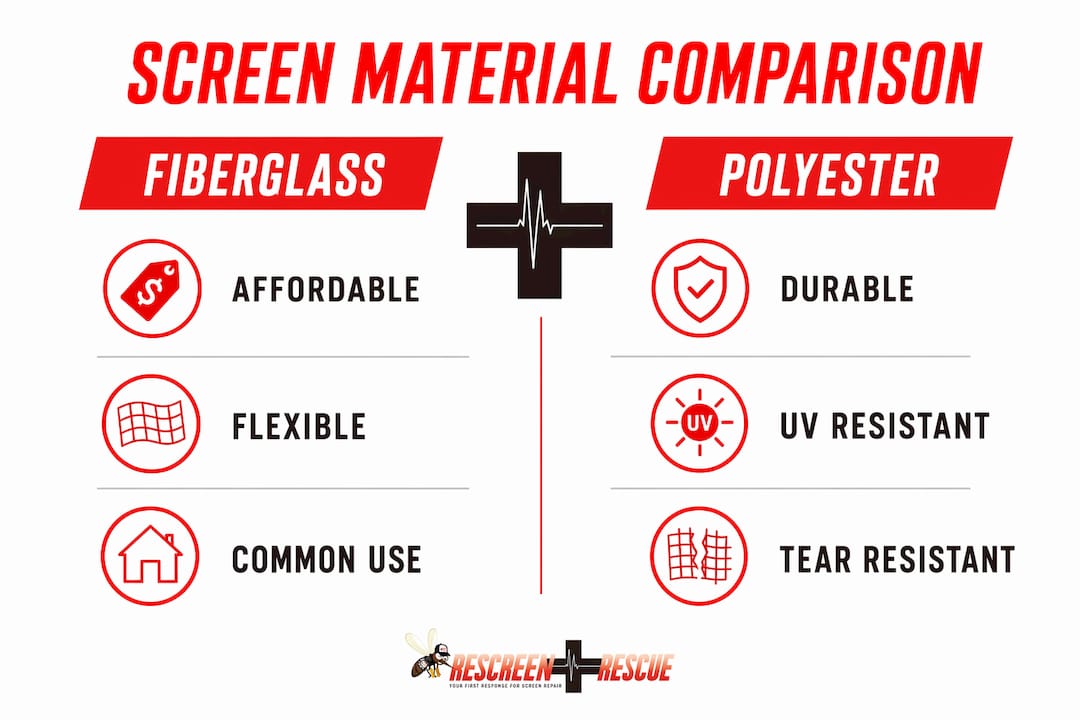
Fiberglass 20×20 is the common residential baseline for good reason. It’s affordable, flexible enough to work into a spline channel without cracking, and widely available in rolls and custom cuts marketed specifically for coastal Florida and Gulf Coast homes. If you’re rescreening bedroom windows or a small porch, fiberglass is where most homeowners start.
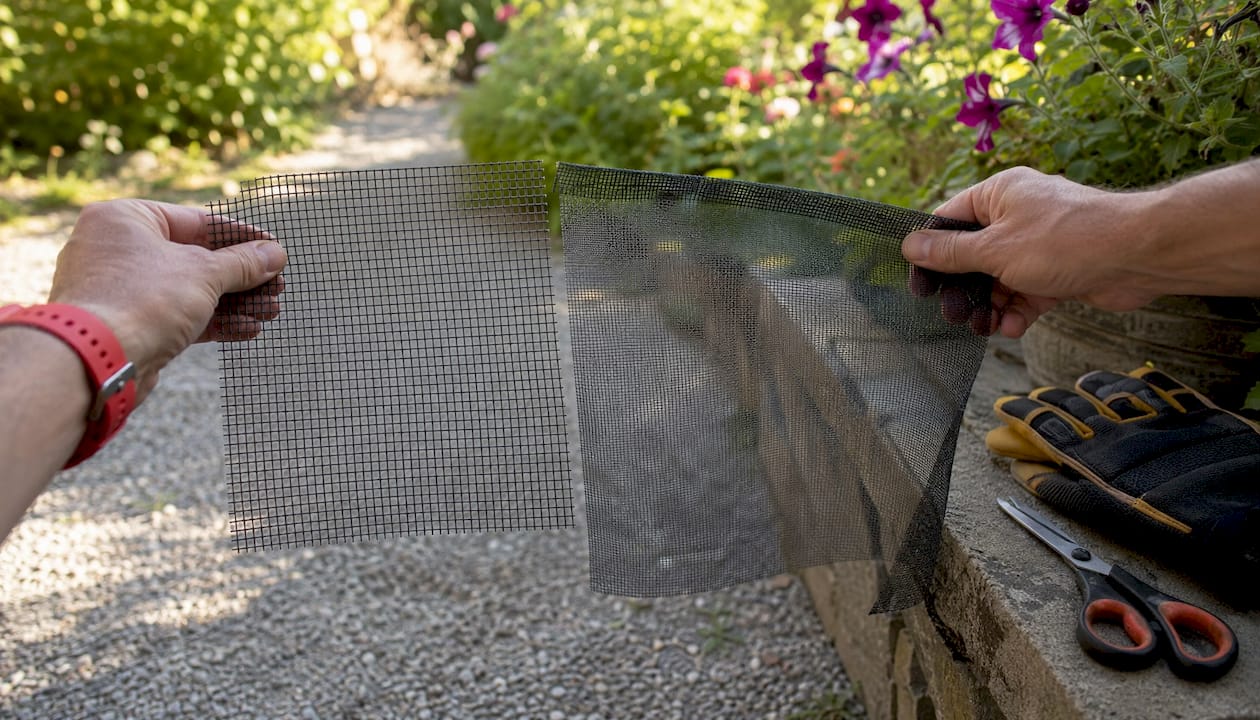
Polyester (Phifer TuffScreen® / Super Screen® families) resists stretching, tearing, and UV damage better than fiberglass. Polyester screens hold tension better and handle pet contact without sagging or puncturing, which makes them the go-to for pool cages and lanais where the panels are large and the Florida sun is relentless. Phifer also offers PetScreen®, UltraVue 2®, and specialty products with Water Shed Technology® for added maintenance benefits. The cost is higher, and you may not find polyester 20×20 at a standard hardware store, but a professional installer like Rescreen Rescue can source it directly.
Micro-mesh uses thinner fibers at higher counts to deliver a near-invisible view while still blocking tiny insects. Premium micro-mesh can cost materially more than the material price of standard 20×20 fiberglass, and it requires careful handling during installation. It’s the right call for a screened porch with a waterfront view where aesthetics matter as much as protection.
Aluminum no-see-um options exist for high-durability applications, but aluminum’s rigid nature makes it difficult to weave fine enough while preserving good airflow and visibility. It’s a specialty choice, not a standard residential recommendation.
Pros and cons of upgrading to 20×20 vs. keeping standard mosquito screen
Knowing the upside is easy. The trade-offs are where most homeowners get surprised.
Reasons to upgrade:
- Blocks biting midges and gnats that pass through standard 18×16 mesh
- Available in pet-resistant polyester variants for homes with dogs or cats
- Noticeably improves comfort during dusk and dawn hours near water
- Works alongside other pest measures (repellents, fans, traps) for layered protection
Reasons to think carefully before upgrading everything:
- Airflow drops roughly 10–20% compared to standard screen, which matters on still summer evenings in Tampa Bay
- Finer mesh clogs with pollen and dust faster, requiring a seasonal wash at minimum
- Spline work is more sensitive: uneven tension on large panels causes visible ripples
- Material cost is higher, especially for polyester or micro-mesh variants
The practical middle ground: rescreen the openings you use most at dusk — bedrooms, porch doors, pool cage panels facing the yard — and leave standard mesh on less-used windows. That approach cuts cost, preserves airflow in rooms you rarely open at night, and still solves the problem where it actually bothers you.
Pro Tip: If you’re on the fence about upgrading a full pool cage, ask your installer to rescreen just one or two panels in 20×20 first. Live with it through a few evenings near the water. If the airflow reduction is acceptable, proceed with the rest.
How to choose the best no-see-um screen for your home
Work through these questions in order. Your answers will point you to the right material and installation approach.
-
Are you within a half mile of water, marsh, or heavy vegetation? If yes, 20×20 is not optional near your most-used openings. Biting midges breed in moist soil and standing water; proximity is the single biggest risk factor.
-
Which openings do you actually use at dusk and dawn? Prioritize those panels for 20×20 upgrades. A bedroom window you open every evening matters more than a rarely used utility room.
-
Do pets or kids contact the screens regularly? Choose polyester (TuffScreen® or PetScreen® family) over fiberglass. Fiberglass tears under repeated pet pressure; polyester holds up.
-
Is an unobstructed view a priority? If you’re looking at a waterfront or a landscaped yard, micro-mesh is worth the extra cost. For a standard suburban porch, standard 20×20 fiberglass gives a perfectly acceptable view.
-
What’s your realistic budget? Fiberglass 20×20 is the most cost-effective entry point. Polyester adds durability at moderate extra cost. Micro-mesh is a premium investment. Factor in installed cost, not just material.
-
How large are the panels? Single windows and small door panels are reasonable DIY projects with the right spline roller and patience. Pool cage panels and full lanai enclosures are a different story — large panels require consistent spline tension that’s hard to achieve without experience.
Red flags to ask any installer about: uneven spline tension (causes ripples visible from inside), no warranty on labor or materials, skipping frame inspection before rescreening, and using standard 18×16 when you specifically requested 20×20.
Should you install no-see-um screen yourself or hire a pro?
Small window panels — one or two at a time — are within reach for a homeowner with a spline roller, a utility knife, and a patient afternoon. The process is straightforward: remove the old spline, pull out the worn mesh, cut new 20×20 to size with a few inches of overlap, press the spline into the channel, and trim the excess.
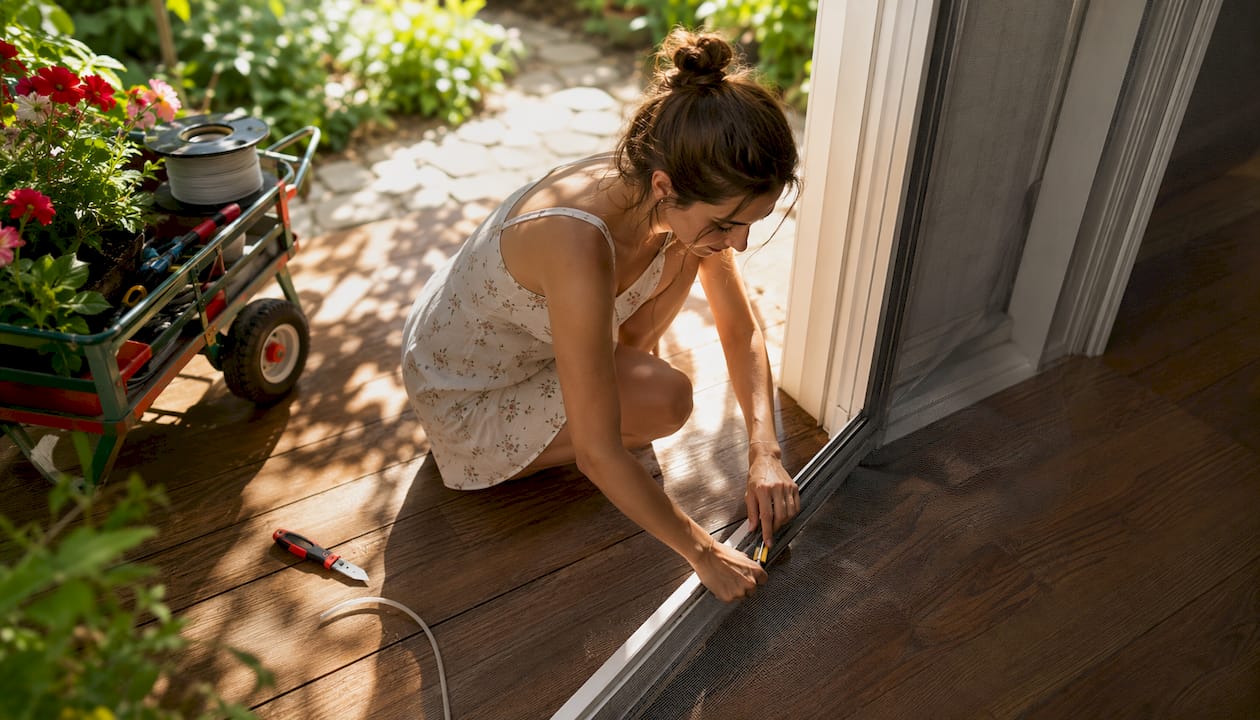
Pool cages and lanai enclosures are a different job entirely. Large panels amplify every tension inconsistency. Installing 20×20 requires more careful spline tensioning than standard mesh, and uneven tension on a 4-by-8-foot panel produces visible ripples that won’t flatten out after the fact. Getting it right the first time on a large enclosure typically requires professional tools and experience.
DIY checklist for small panels:
- Gather tools: spline roller, utility knife, replacement spline (match the original diameter), and 20×20 mesh cut slightly larger than the frame.
- Lay the frame flat on a clean surface — never work vertically on a large panel.
- Remove old spline completely and inspect the channel for cracks or debris.
- Lay mesh over the frame, keeping it square to the frame edges.
- Press spline into one long side first, then the opposite long side, keeping tension even.
- Work the two short sides last, checking for ripples as you go.
- Trim excess mesh flush with the outer edge of the spline channel.
Pro Tip: For pool cages, the cost of a professional rescreen is almost always justified by the warranty and the finished appearance. A rippled panel on a large cage is nearly impossible to fix without pulling the spline and starting over.
When to call Rescreen Rescue: large cage panels, full lanai rescreens, pet-resistant polyester installs, any project where you want a warranty on both materials and labor, and any situation where you want the job done in a day rather than a weekend.
What does rescreening with 20×20 mesh typically cost?
Costs vary by material, enclosure size, frame condition, and regional labor rates. The table below gives realistic ranges for the Tampa Bay area based on typical project types.
| Project type | Material only (approx.) | Installed (approx.) |
|---|---|---|
| Single window screen | $5–$15 | — |
Several factors push costs up or down:
- Material choice: polyester and micro-mesh cost more per square foot than fiberglass
- Frame condition: damaged or corroded aluminum frames need repair or replacement before rescreening
- Spline and hardware: old spline channels may need new spline, corner pieces, or door hardware
- Enclosure size and height: taller cages require scaffolding or ladders, adding labor time
- Removal and disposal: some contractors include old screen disposal; others charge separately
Timeline is straightforward for smaller jobs: a single window takes under an hour, a small porch takes a half day. A full pool cage rescreen typically runs one to two days for a professional crew. Specialty micro-mesh or high-visibility panels may require a lead time of several days if the material isn’t in stock locally.
How long do no-see-um screens last, and how do you maintain them?
Lifespan depends heavily on material and environment. In Florida’s combination of intense UV, salt air (for coastal homes), and frequent afternoon storms, screens work harder than they do in most other climates.
- Fiberglass 20×20: typically 5–10 years under normal conditions; UV and pet contact shorten that range
- Polyester (TuffScreen® / Super Screen® family): resists UV damage and stretching better than fiberglass, often lasting 10–15 years with proper care
- Aluminum: longest lifespan, but less common in fine-mesh configurations
Maintenance checklist:
- Wash screens each spring with a soft brush, mild soap, and low-pressure water — fine mesh clogs with pollen faster than standard screen
- Check spline tension after any major storm; loose spline lets panels sag and creates gaps
- Inspect for tears, pet punctures, or sun-baked brittleness at the corners each fall
- Clear debris from the bottom rail of pool cage panels after heavy rain
Small tears (under 2 inches) in fiberglass can be patched with a mesh repair kit as a temporary fix. Anything larger, or any tear in a pool cage panel where the full tension of the frame is involved, warrants full panel replacement. Patching a large panel rarely holds long-term in Florida’s heat and humidity.
Why trust Rescreen Rescue for no-see-um screen advice?
Rescreen Rescue brings over 20 years of screen enclosure experience to every project in Pinellas, Hillsborough, and neighboring Florida counties. That field time matters when it comes to 20×20 mesh, because the installation nuances — spline diameter matching, tension consistency on large panels, frame prep — are exactly where DIY jobs go wrong.
Field tests you can run yourself to check screen performance:
- The flashlight test at dusk: hold a flashlight behind the screen from inside. If you can see light scattering through oversized openings, the mesh count may be too coarse for no-see-um protection.
- The daylight visibility check: stand inside and look through the screen in bright daylight. A quality 20×20 install should have no visible ripples or sagging sections.
- The insect-count test: on a calm evening near water, note whether insects are gathering at the screen surface or getting through. Installer guidance recommends observing activity near openings at dusk as a practical performance check.
Rescreen Rescue backs every project with warranty coverage on both materials and labor, and before-and-after photos from completed pool cage and lanai rescreens are available on the company site for homeowners who want to see finished results before committing.
How does no-see-um screen compare to other pest control methods?
Screen mesh is a physical barrier, which puts it in a different category from repellents, traps, and fans. Each approach has a role, and they work best in combination.
| Method | Effectiveness vs. no-see-ums | Coverage | Ongoing cost | Best use |
|---|---|---|---|---|
| 20×20 no-see-um screen | High (physical block) | Fixed openings | Low (maintenance only) | Enclosed porches, pool cages, windows |
| DEET / picaridin repellents | High (personal) | Body only | Moderate (per use) | Outdoor activity away from enclosures |
| CO₂ / UV insect traps | Moderate | Yard perimeter | Moderate (power + maintenance) | Reducing yard population |
| Oscillating fans | Moderate | Immediate area | Low (power) | Open patios without screens |
| Insecticide sprays | Variable | Treated surfaces | Moderate to high | Perimeter treatment, not enclosed spaces |
Screen mesh wins on one dimension that nothing else matches: it works passively, around the clock, without any action from you. You don’t have to remember to apply it, recharge it, or refill it. For a pool cage or screened lanai, a properly installed 20×20 screen is the foundation. Repellents and traps make sense as supplements for time spent outside the enclosure, not as replacements for the screen itself.
The Florida Department of Health recommends using physical barriers alongside personal protection measures for the most effective insect control around the home.
How do humidity, wind, and sunlight affect no-see-um screen performance?
Florida’s environment puts specific demands on screen mesh that homeowners in drier climates don’t face. Understanding these factors helps you choose the right material and placement.
Humidity and moisture: High humidity accelerates corrosion on aluminum frames and can cause fiberglass mesh to feel tacky with accumulated mold and mildew over time. Polyester resists moisture-related degradation better. For homes within a few blocks of salt water, polyester or coated aluminum frames are worth the extra investment.
Wind: Strong winds — especially during afternoon storms — put lateral stress on large screen panels. A pool cage panel that’s correctly splined handles this well. One with loose or mismatched spline can bow, gap at the corners, or pull free entirely. After any named storm, inspect spline channels along the bottom rail where wind pressure is highest.
Sunlight and UV: Florida’s UV index is among the highest in the continental United States. Fiberglass mesh becomes brittle and discolored after years of direct sun exposure, especially on south- and west-facing panels. Polyester with UV-stabilized fibers holds color and flexibility significantly longer. If your pool cage faces west and catches afternoon sun year-round, polyester is the smarter long-term choice even if the upfront cost is higher.
Airflow considerations by orientation: North-facing openings tend to get less direct sun and more consistent breeze. These are good candidates for keeping standard 18×16 mesh if no-see-um pressure is lower on that side of the house. South- and east-facing openings near water are where 20×20 earns its keep most.
Key Takeaways
For Florida homeowners near water or marshes, 20×20 no-see-um mesh is the minimum effective screen count, with polyester the best material for pool cages and lanais where durability and UV resistance matter most.
| Point | Details |
|---|---|
| Mesh count matters | 20×20 mesh with ~0.9 mm openings physically blocks biting midges that pass through standard 18×16 screen. |
| Airflow trade-off is real | Expect roughly 10–20% less airflow than standard screen; upgrade selectively, not whole-house. |
| Material choice drives lifespan | Polyester outlasts fiberglass in Florida’s UV and humidity; micro-mesh costs roughly double but delivers the clearest view. |
| Large panels need a pro | Uneven spline tension on pool cage panels causes visible ripples; professional installation protects your investment. |
| Rescreen Rescue is the local option | With 20+ years of experience in Pinellas and Hillsborough counties, Rescreen Rescue handles full pool cage rescreens, pet-resistant installs, and micro-mesh upgrades with warranty coverage. |
What most homeowners get wrong about no-see-um screens
The most common mistake we see at Rescreen Rescue is the all-or-nothing approach: a homeowner decides to rescreen every opening in the house with 20×20 mesh, then spends the next summer complaining that the house feels stuffy. The smarter move is selective upgrading — prioritize the openings you actually use at dusk, match the material to the specific demands of each location, and leave standard mesh where no-see-um pressure is low.
The second mistake is choosing material based on price alone. Fiberglass is the right call for a bedroom window. It’s the wrong call for a pool cage panel that faces west, gets afternoon sun year-round, and has a dog that leans against it. Polyester costs more upfront and saves you a rescreen in three years. We always walk homeowners through that trade-off before quoting, because the cheapest option today isn’t always the most cost-effective one over five years.
Free estimates, warranty coverage on materials and labor, and a focus on long-term performance rather than the fastest possible close — that’s how Rescreen Rescue approaches every job, from a single window to a full pool cage rescreen.
Rescreen Rescue can handle your no-see-um upgrade from estimate to finish
Tired of no-see-ums getting through your pool cage or porch screens? Rescreen Rescue offers complete rescreening services across St. Petersburg, Clearwater, Tampa, and surrounding Pinellas and Hillsborough county communities, using 20×20 fiberglass, polyester TuffScreen®, pet-resistant mesh, and micro-mesh options matched to your specific enclosure.
Services include pool cage rescreening, window and door rescreening, pet-resistant installs, micro-mesh upgrades, hardware replacement, frame painting, and structural repairs. Every project comes with a free on-site estimate and warranty coverage on both materials and labor. No guesswork on pricing, no surprises on material quality.
Request your free estimate today and get a clear quote for upgrading your enclosure to 20×20 no-see-um mesh — with a crew that’s been doing this in the Tampa Bay area for over 20 years.
Useful sources
These manufacturer pages, mesh-size guides, and industry resources were used as references throughout this article. They’re worth bookmarking if you want to dig deeper before making a material decision.
- Window Screen Mesh Sizes: Chart, Counts, and Uses — Detailed mesh-count chart covering opening sizes, airflow trade-offs, and use-case recommendations for 18×16, 20×20, and finer weaves. Good starting point for understanding the numbers.
- Which No-See-Um Screen Material Works Best? — Side-by-side material comparison covering fiberglass, polyester, aluminum, and micro-mesh with durability and cost context.
- How to Choose Screening Material — Phifer — Manufacturer guidance from Phifer covering TuffScreen®, PetScreen®, UltraVue 2®, and specialty product families with feature descriptions.
- No-See-Um Mesh Screen Rolls — Metro Screen Works — Retail source for 20×20 mesh in rolls and custom cuts, labeled specifically for coastal Florida and Gulf Coast applications.
- Florida Resident Guide to Mosquito Control — Florida Department of Health — State guidance on integrated pest management, including physical barriers alongside personal protection measures.
FAQ
What is the best screen for no-see-ums?
20×20 no-see-um mesh is the best screen for blocking biting midges, with openings of about 0.9 mm that are too small for these insects to pass through. For pool cages and lanais, polyester 20×20 (such as Phifer TuffScreen®) offers the best combination of protection and durability.
Do no-see-um screens really work?
Yes, when correctly installed with proper spline tension, 20×20 mesh physically blocks biting midges at the screen surface. Performance depends on installation quality — loose spline or gaps at frame corners will let insects through regardless of mesh count.
Can no-see-ums get through regular window screens?
Standard 18×16 mosquito screen has openings large enough for biting midges to pass through without contact. Upgrading to 20×20 mesh closes that gap and stops no-see-ums at the screen surface.
What window screen keeps out gnats?
20×20 fine mesh is the minimum recommended count for keeping out gnats and biting midges, particularly for homes near water, marshes, or heavy coastal vegetation. Micro-mesh at higher counts offers the same protection with a clearer view, at roughly double the material cost.