


For most Florida pool cages and lanais, 18/14 is the everyday workhorse — better airflow, clearer views, and solid protection against mosquitoes and common flies. Go with 20/20 when tiny pests, pine needles, or privacy matter more than maximum ventilation.
Here’s the quick breakdown by situation:
- Standard lanai or screened porch (inland, dry yard): 18/14 screen — open feel, good breeze, clear sightlines
- Pool cage near water, marsh, or mangroves: 20/20 screen — blocks no-see-ums and gnats that 18/14 lets through
- Wooded lot with pine trees: 20/20 screen — tighter weave prevents pine needles from lodging in the mesh
- Pet area or high-traffic porch: Ask Rescreen Rescue about pet-screen upgrades; mesh count matters less than material here
- Privacy-focused enclosure: 20/20 adds a mild shade and daytime privacy effect
The trade-off in one sentence: 18/14 gives you more airflow and a clearer view; 20/20 gives you finer insect protection, more shade, and better pine-needle resistance. Phifer, one of the most trusted screen manufacturers in the industry, makes both mesh types and labels their 20×20 product explicitly as “No-See-Um” screening.
What do the numbers on screen mesh actually mean?
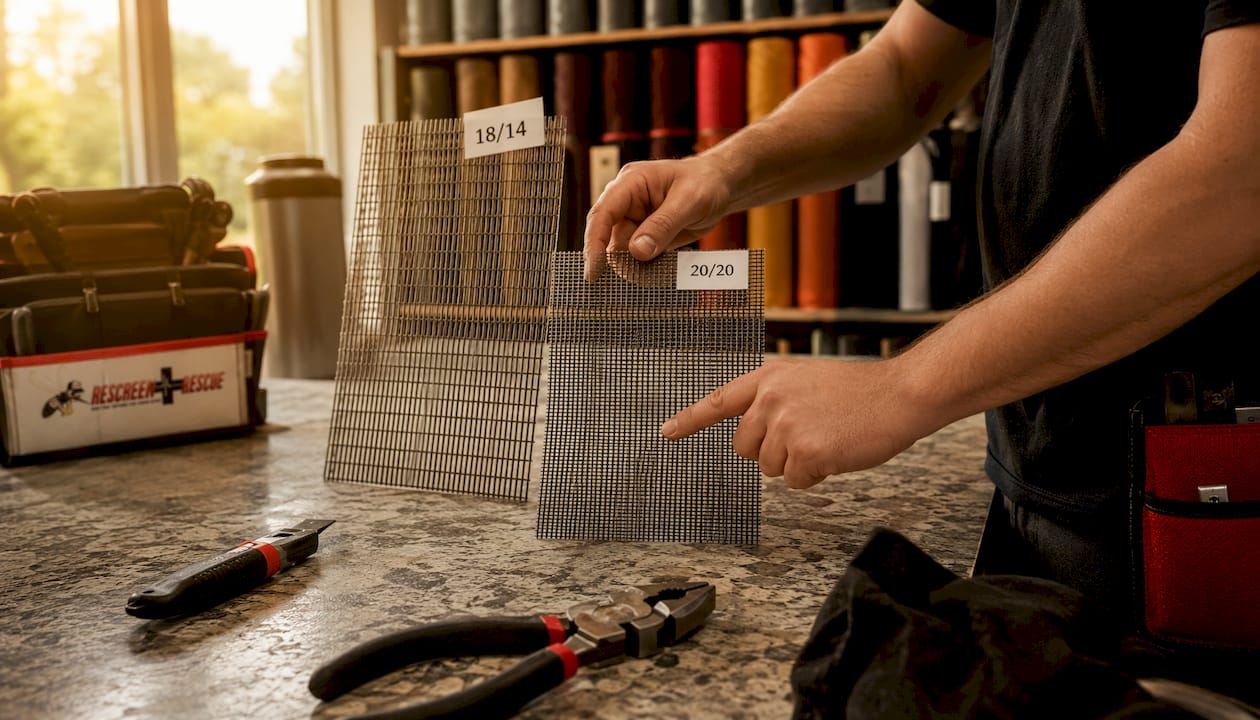
The two numbers describe how many strands of yarn run through one inch of screen in each direction. The first number is horizontal strands per inch; the second is vertical.
- 18/14 mesh: 18 horizontal strands × 14 vertical strands per inch. Because the counts differ, the openings are rectangular rather than square.
- 20/20 mesh: 20 horizontal × 20 vertical strands per inch. Equal counts create square openings, which is why this weave feels noticeably tighter.
That rectangular vs. square distinction matters more than it sounds. A rectangular opening (18/14) is slightly taller than it is wide, which allows a bit more air to pass through vertically. A square opening (20/20) is uniform and smaller overall, leaving less gap for both air and insects. 18/14 mesh is one of the most commonly used options for Florida screen enclosures precisely because that rectangular geometry balances airflow, visibility, and general insect protection.
Phifer, a leading U.S. screen manufacturer, labels their 20×20 product as No-See-Um screening — a name that tells you exactly what the tighter weave is designed to stop.
How much does airflow actually differ between 18/14 and 20/20?
The short answer: 18/14 offers measurably better cross-ventilation, and you’ll feel it most on still, humid days.
More strands per inch means less open space in the mesh. The 20/20 weave is denser, so it restricts the passage of air more than 18/14 does. On a breezy afternoon in Tampa Bay, both meshes will feel comfortable. On a still, muggy August evening, the difference becomes noticeable — 18/14 lets that faint natural breeze through; 20/20 can feel slightly stuffy.
- When airflow should be your priority: passive cooling in a non-air-conditioned lanai, humid inland lots, enclosures where you spend long evenings without fans
- When airflow matters less: shaded pool cages with ceiling fans, enclosures near water where insect pressure outweighs ventilation needs, spaces used mainly during the day
Pro Tip: Hold a swatch of each mesh up to your face in still air and breathe through it. The difference in resistance is subtle but real — and it’s the fastest way to understand what your guests will feel on a hot Florida night.
Insect protection and visibility: where the two meshes really diverge
20/20 blocks smaller pests that 18/14 simply cannot stop. Mosquitoes, houseflies, and larger gnats won’t get through either mesh. But no-see-ums (biting midges), sand flies, and very fine gnats are small enough to squeeze through 18/14’s rectangular openings. The 20/20 weave closes that gap.
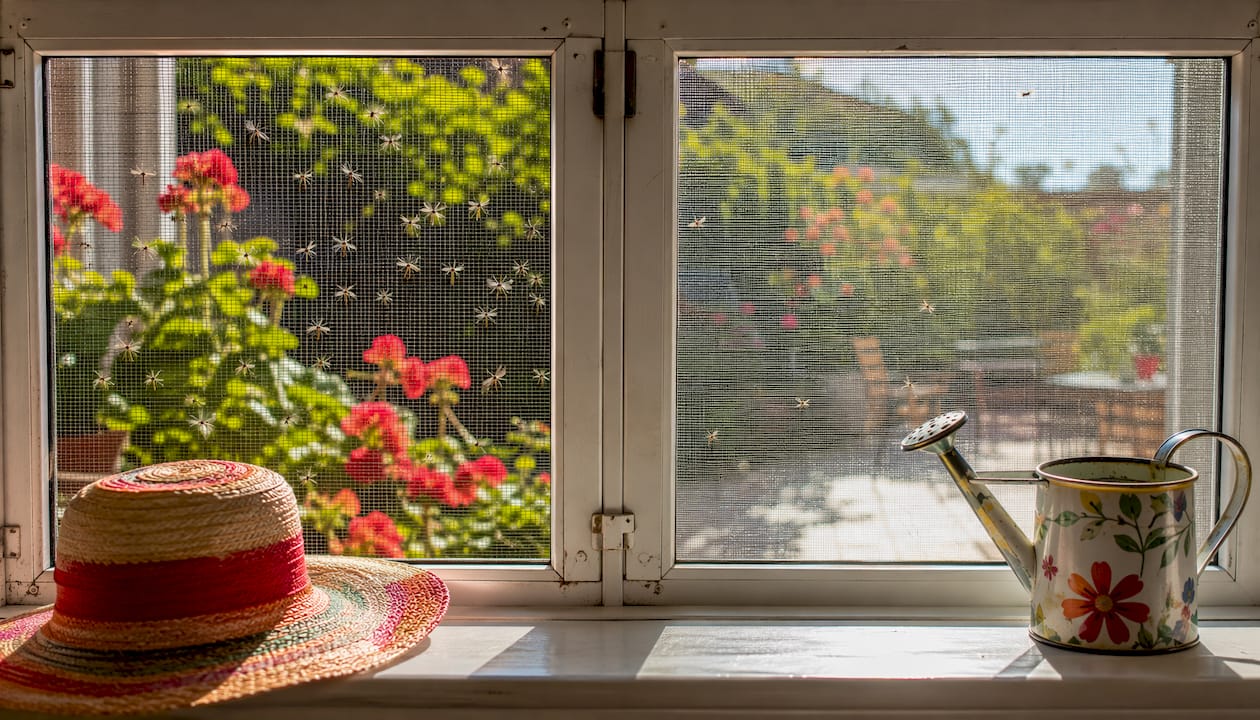
Phifer’s No-See-Um screen is a tightly woven fiberglass mesh made from permanent glass yarn coated in vinyl, designed specifically to block those tiny flying insects while still allowing good ventilation. It’s GREENGUARD® Certified and installs the same way as standard insect screening.
The visibility trade-off is real but modest. More strands per inch means slightly less open space for light to pass through, so 20/20 gives the enclosure a marginally darker, more enclosed look. Most homeowners only notice it when they compare swatches side by side.
Match your mesh to your surroundings:
- Near mangroves, standing water, or coastal marshes → 20/20 (no-see-um pressure is high)
- Waterfront dining or lounging areas → 20/20 (tiny pests ruin meals fast)
- Inland dry yard, minimal standing water → 18/14 usually handles insect pressure fine
- Open suburban lot with good breezes → 18/14 for the clearer, airier feel
Durability, pet resistance, and what material type actually drives longevity
Weave density is a secondary factor in durability. Material type and installation quality are what determine how long your screen lasts.
Both 18/14 and 20/20 are commonly produced in fiberglass — specifically, permanent glass yarn coated in vinyl — which handles Florida’s UV exposure and humidity well. Aluminum mesh lasts longer under impact but is stiffer and more prone to denting. Polyester-based pet screens are a separate category altogether, built for households with dogs or cats that push and scratch against the panels.
- Standard fiberglass (either mesh count): Good for most residential enclosures; UV-resistant but will degrade faster near salt air without regular cleaning
- Aluminum mesh: Harder to tear, better for high-traffic areas; heavier and less forgiving to install
- Pet screen: Thicker, coated material that resists puncture and clawing; available in both mesh configurations
For pine-needle-prone lots, 20/20 has a practical maintenance advantage. The tighter weave prevents needles from piercing and lodging in the screen, which means fewer stuck debris pieces and less risk of the mesh tearing under the weight of accumulated needles.
Pro Tip: When getting an estimate, ask the installer to show you a physical swatch of the material brand they plan to use — not just the mesh count. A Phifer fiberglass panel and a generic import may both be labeled “18/14,” but they won’t perform the same way after two Florida summers.
How mesh choice affects light, privacy, and how the space feels
20/20 will make your enclosure feel slightly darker and more private; 18/14 keeps it bright and open. That’s not a flaw in either mesh — it’s a feature, depending on what you want.
The denser weave in 20/20 filters more UV and reduces transmitted daylight noticeably compared with 18/14. Field observations report roughly twice the UV-blocking effect for 20/20 in practical use. For pool owners, that means cooler water temperatures on sunny days — a genuine benefit if you’re trying to keep the pool comfortable in July. For a lanai where you want to feel like you’re sitting outdoors, it can feel a touch more enclosed than you’d like.
- Daytime privacy from neighbors: 20/20 provides a mild screening effect from outside; 18/14 is more transparent
- Pool temperature: 20/20 shades the water more, which can reduce heating costs in winter but also slow solar warming
- Natural light indoors: 18/14 lets more light into adjacent rooms; 20/20 can make a covered porch feel slightly dim on overcast days
Cost difference and expected lifespan
20/20 typically costs slightly more than 18/14 in material price, but installation labor runs about the same for both. The premium is modest — most homeowners report it’s a reasonable upgrade when tiny-insect protection is the goal.
Lifespan depends far more on environment and maintenance than on mesh count:
- UV exposure: Sun-baked mesh on a south-facing enclosure degrades faster than shaded panels
- Storm debris: Direct impact from branches or hail shortens screen life regardless of mesh type
- Nearby trees: Pine needles and oak debris accelerate wear; 20/20 handles needle accumulation better
- Cleaning frequency: Rinsing panels annually removes salt, pollen, and mildew that break down the vinyl coating over time
- Material quality: Installer-vetted brands like Phifer outlast generic imports
When you’re budgeting, think about the cost of re-installation, not just the material. Labor to remove old spline, pull the old screen, stretch new mesh, and re-spline is the same whether you upgrade to 20/20 or stick with 18/14. If you’re already rescreening, the incremental cost to step up to 20/20 is small relative to the total job.
When to choose 18/14 and when 20/20 makes more sense
The right mesh comes down to your specific yard, not a universal rule. Here’s a practical scenario guide:
| Situation | Recommended Mesh | Key Reason |
|---|---|---|
| Shaded inland lanai, minimal insects | 18/14 | Best airflow and clearest view |
| Waterfront or canal-side home | 20/20 | No-see-um and gnat pressure |
| Coastal or marsh-adjacent property | 20/20 | Sand flies and biting midges |
| Lot with mature pine trees | 20/20 | Prevents needle lodging and debris buildup |
| Suburban pool cage, no standing water nearby | 18/14 | Balanced protection, open feel |
| Dining or lounging area near water | 20/20 | Tiny pests ruin meals; worth the airflow trade-off |
| Pet area or high-traffic porch | Pet screen (ask installer) | Puncture resistance matters more than mesh count |
| Privacy-focused enclosure | 20/20 | Mild daytime screening effect |
Local contractor experience consistently shows that environmental context is the primary decision factor — no single mesh is ideal everywhere. A homeowner two blocks from a retention pond has a very different insect situation than one on a dry, breezy lot a mile inland.
How to decide on-site and what to ask your installer
Narrow your choice down before the installer arrives by running these four quick checks:
- Visual insect check: Spend 15 minutes outside at dusk near your enclosure. If you see tiny flies or feel biting midges, that’s a strong signal for 20/20.
- Pine-needle test: Look at your existing screen (or the ground around it). Needles stuck in the mesh or piled against the frame mean 20/20 will cut your maintenance time.
- Brightness test with swatches: Hold an 18/14 and a 20/20 swatch at arm’s length against the view you want to preserve. The difference in clarity is immediately obvious.
- Wind check: On a calm day, stand inside the enclosure and note how much natural breeze you feel. If it’s already minimal, 20/20’s slight airflow reduction won’t bother you.
Questions to ask your installer:
- What brand of screen do you use? (Phifer is a widely trusted benchmark.)
- Can you show me a physical swatch of both mesh types?
- What’s the warranty on materials and installation?
- How do you handle spline replacement and frame repairs if needed?
- What’s the lead time, and will you remove and dispose of the old screen?
Red flags to watch for: An installer who can’t show you a physical sample, quotes only a mesh count with no brand name, or offers no warranty on workmanship is worth questioning. Reputable contractors carry swatches and can explain exactly what they’re installing. Choosing the right screen material for a lanai means matching material type to your primary performance need — insect control, durability, or solar shading — not just picking the cheapest option on the quote.
What Rescreen Rescue technicians see most often in the field
With extensive experience rescreening pool cages and lanais across Pinellas and Hillsborough counties, the pattern is consistent: most Florida homeowners do well with 18/14, but the ones who live near water or under pine trees almost always wish they’d gone with 20/20 from the start.
Common field observations from Rescreen Rescue jobs:
- Pine-needle complaints: Homeowners on lots with slash pines or longleaf pines frequently call back after a season because needles have worked through 18/14 and torn panels from the inside. Switching to 20/20 solves this almost entirely.
- Nighttime no-see-um complaints: Customers near retention ponds or tidal areas who chose 18/14 for the view often upgrade to 20/20 after one summer of biting midges getting through.
- Mis-specified orders: The most common ordering mistake is specifying mesh count without confirming material brand. Two rolls labeled “18/14 fiberglass” can perform very differently depending on the manufacturer.
Pro Tip: On a site visit, Rescreen Rescue technicians hold swatches flat against the existing frame in direct sunlight. You can see the light transmission difference immediately — and a quick hand-sweep across the surface reveals how much debris the finer mesh catches versus lets through. Try it yourself before you commit to either option.
If you’re planning broader outdoor upgrades alongside your rescreening project, it’s worth coordinating your screen choice with any outdoor structure changes you have planned — shade structures and roof overhangs affect both insect pressure and how much ventilation you actually need.
Key Takeaways
For most Florida homeowners, 18/14 is the right starting point, but 20/20 is worth the modest upgrade whenever tiny insects, pine needles, or privacy are real concerns.
| Point | Details |
|---|---|
| Mesh count basics | 18/14 has rectangular openings (18×14 per inch); 20/20 has square, tighter openings (20×20 per inch). |
| Airflow vs. insect protection | 18/14 delivers better ventilation and clearer views; 20/20 blocks no-see-ums and fine gnats that 18/14 cannot stop. |
| Pine needles and debris | 20/20 prevents pine needles from lodging in the screen, reducing maintenance on wooded lots. |
| UV and light | 20/20 blocks roughly twice the UV of 18/14, which lowers pool temperature and adds mild daytime privacy. |
| Rescreen Rescue | Rescreen Rescue offers free on-site estimates in Pinellas and Hillsborough counties and carries swatches of both mesh types for side-by-side comparison. |
A note from Rescreen Rescue
With over 20 years of hands-on experience rescreening pool cages and lanais across the Tampa Bay area, we’ve seen what works and what doesn’t in Florida’s specific climate. Our honest recommendation: don’t guess on mesh type from a spec sheet alone. Let us bring swatches to your property, walk the perimeter with you, and look at what’s actually coming through your existing screen. That 10-minute on-site check prevents the frustration of a re-do six months later.
We serve homeowners throughout Pinellas and Hillsborough counties, and we offer free estimates with no pressure. If you’re weighing 18/14 vs. 20/20 for an upcoming rescreen, we’ll show you both options in person and give you a straight answer on which one fits your yard.
Ready to get the right screen installed the first time?
Choosing between 18/14 and 20/20 is straightforward once you’ve seen both meshes in your own light conditions. Rescreen Rescue brings the swatches to you.
With extensive experience serving Pinellas and Hillsborough counties, Rescreen Rescue handles the full job: rescreening, spline replacement, hardware swaps, pet door installation, and structural repairs. No guessing on specs, no generic quotes. You get a free on-site estimate, a clear recommendation for your specific yard, and workmanship backed by real local experience.
Services include: pool cage rescreening, lanai and porch repairs, pet doors, hardware replacement, frame-in projects, and painting.
Schedule your free estimate with Rescreen Rescue today and get the right mesh matched to your property.
Useful resources and manufacturers
A few trusted sources worth bookmarking before you order or schedule an installer visit:
- Phifer No-See-Um (20×20) product page — manufacturer specs, roll widths, and material details
- Lafferty Aluminum & Screening — 18/14 vs. 20/20 guide — Florida contractor perspective on mesh selection
- Rescreen Rescue — free estimates, Pinellas and Hillsborough counties
A note on local variation: Insect species and tree types vary significantly across Florida. A home in Dunedin near the bay faces different no-see-um pressure than one in Brandon near a retention pond. Order a swatch from your installer and test it on-site before committing to a full rescreen.
Phifer No-See-Um (20×20) standard roll specs:
| Spec | Detail |
|---|---|
| Weave | 20×20 (square, tightly woven fiberglass) |
| Standard widths | 24", 30", 36", 48", 60", 72", 84", 96", 108" |
| Certification | GREENGUARD® Certified |
| Primary use | Pool cages, patio enclosures, porches |
For long-term enclosure performance, screen choice is just one piece. Keeping the surrounding patio surfaces sealed and maintained reduces moisture buildup at the base of your frame, which is one of the more overlooked factors in how long a screen enclosure holds up.
FAQ
What is the cost difference between 18/14 and 20/20 screen mesh?
20/20 typically costs slightly more than 18/14 in material price, but installation labor is similar for both. Most homeowners find the modest material premium worth it when tiny-insect protection is a priority.
What type of screen is best for a lanai in Florida?
18/14 fiberglass is the most common choice for inland lanais with standard insect pressure. Homes near water, marshes, or pine trees benefit from 20/20, which blocks no-see-ums and reduces pine-needle debris.
Is 20/20 screen worth the upgrade?
Yes, if you live near water or experience biting midges and gnats. The tighter weave also blocks roughly twice the UV of 18/14, which lowers pool temperature and adds mild daytime privacy.
What mesh size keeps the smallest bugs out?
20/20 (No-See-Um) mesh is specifically designed to block very small flying insects like no-see-ums, gnats, and sand flies that pass through standard 18/14 mesh. Phifer’s No-See-Um screen is a widely used option for this purpose.
How do I choose between 18/14 and 20/20 for my enclosure?
Check your surroundings at dusk for tiny biting insects, look for pine needles stuck in your existing screen, and hold swatches of both meshes against your view in natural light. Rescreen Rescue offers free on-site estimates and brings swatches to help you decide.