


Picking the best window screens for your Florida home is about more than just keeping bugs out. It’s about finding the right balance of durability, visibility, and protection to handle our intense sun and relentless humidity. The perfect screen setup combines a tough mesh—like fiberglass or a specialty solar screen—with frames and hardware that won’t rust or corrode.
This ensures your lanai, pool cage, or porch stays a beautiful, functional, and relaxing outdoor space for years to come.
Your Guide To Selecting The Best Window Screens In Florida

Trying to find the right screens for your lanai, pool enclosure, or patio can feel like a chore, especially here in Florida. Our unique climate—a mix of harsh sun, thick humidity, salty air, and seasonal storms—demands a solution that's way tougher than a standard screen.
We designed this guide to cut through all the noise. It’s here to help homeowners in Tampa Bay, St. Petersburg, and the surrounding areas make smart, confident choices. Think of your screen enclosure less like a simple barrier and more like a key part of your home that improves your lifestyle and protects your investment.
Understanding Florida's Unique Screening Needs
At its core, any screen is supposed to stop pests while letting the breeze flow through. Simple enough. But in Florida, that job description gets a lot longer. A top-quality screen has to wear multiple hats to be considered one of the best window screens for our area.
Here’s what your screens really need to do:
- Pest Control: Block everything from annoying mosquitoes to those infuriating no-see-ums.
- UV Protection: Shield your family and outdoor furniture from the sun’s fading, damaging rays.
- Durability: Stand strong against tears from pets, wind-tossed debris, or even a stray golf ball.
- Corrosion Resistance: Hold up against the salty, humid air that’s a constant in our coastal communities.
Choosing the right screen is all about striking the perfect balance between visibility, airflow, and protection. The best solution is always the one that fits your specific location and how you live, turning your outdoor space into a sanctuary, not a source of frustration.
Navigating Your Options
To pick the perfect screen, you first need to get a handle on the different materials and mesh types out there. Each one offers specific benefits designed for different priorities.
For instance, some screens are engineered specifically to block solar heat, which is a game-changer for lowering those summer cooling bills. You can dive deeper into these specialized options by exploring different energy-efficient screen solutions.
While this guide zeroes in on Florida's needs, getting a wider view by looking into window screen solutions in different regions can be helpful. Our local environment throws unique challenges our way, from hurricane-force winds to tiny insects, that really dictate which screens will perform and which will fail. With over 20 years of local experience, we’re here to give you practical, honest advice to protect your home’s value and your family’s enjoyment.
Understanding The Anatomy Of A Durable Screen Enclosure

A top-notch screen enclosure is a lot more than just the mesh you see at first glance. Think of it like a well-built ship; every single piece, from the sails down to the smallest nail, has to work together to handle whatever the sea throws at it. In the same way, the best exterior screens depend on a whole system of parts playing their roles perfectly to deliver durability and protection.
When you're looking at an enclosure for your lanai or pool cage, you have to look beyond the screen material. A truly tough structure is a sum of its parts, where the frame, spline, and fasteners are every bit as important as the mesh. If you cut corners on any of these, you’re setting yourself up for premature failure and turning a great home asset into a constant headache.
Knowing what makes up a quality screen empowers you to ask the right questions and recognize good craftsmanship. It’s the difference between an enclosure that stands strong for years and one that needs repairs every other season. This is the foundational knowledge you need to make a smart investment that saves you money and stress down the road.
The Screen Material Is The First Line Of Defense
The screen mesh is obviously the most visible part of your enclosure, and it acts as its main shield. Different materials bring different strengths to the table, much like you'd choose lightweight cotton for a summer shirt but rugged canvas for a tent.
Standard fiberglass is the go-to for most projects, giving a great balance of flexibility, visibility, and affordability. For everyday wear and tear, it’s a solid choice. But for spots that face tougher conditions, specialty screens offer far superior strength and longevity. They act like heavy-duty armor against specific threats like pets, high winds, or intense sun. Picking the right material from the get-go prevents many of the most common screen issues and solutions homeowners run into.
The Unsung Heroes: Spline And Fasteners
If the mesh is the shield, then the spline and fasteners are the rivets and bolts holding it all together. They are the unsung heroes of a durable screen enclosure, and skimping on their quality is a non-starter, especially here in Florida’s coastal climate.
-
Spline: This is the flexible rubber cord we press into the frame’s channel to lock the screen mesh in place. Cheap spline will get brittle and shrink under the Florida sun, which leads to screens sagging or popping right out of the frame. Quality spline, on the other hand, keeps its elasticity, guaranteeing a tight, secure fit for years.
-
Fasteners: These are the screws and anchors attaching the screen frame to your home or pool cage. Using the wrong type here is a recipe for disaster. Standard steel screws will rust in a matter of months in our salty, humid air. You’ll see ugly orange stains, and worse, the structural integrity of your whole enclosure will be at risk.
In Florida's coastal environment, using corrosion-resistant, marine-grade fasteners isn't a luxury; it's an absolute necessity. These specialized screws are designed to resist rust and degradation, ensuring your enclosure remains strong and stable for its entire lifespan.
Investing in high-quality components from the start is the single most effective way to make sure your enclosure does its job. A professional installation is all about getting these details right because we know the entire system is only as strong as its weakest link. By using superior materials for every part of the job, we build enclosures that provide lasting value and peace of mind.
Choosing The Right Screen Mesh For Your Florida Lifestyle
The true heart of any screen enclosure is the mesh itself. Think of it as choosing the right tires for your car—the aluminum frame gives you the structure, but the mesh is what actually handles the road. Or, in our case, the sun, bugs, and unpredictable Florida weather.
The best window screens aren't a one-size-fits-all solution. The perfect choice for your lanai, pool cage, or porch comes down to your priorities. Are you constantly swatting at those nearly invisible no-see-ums every evening? Do you have a furry friend who loves to test the limits of your screen door? Or is your main goal to block that intense afternoon sun and maybe save a little on your AC bill?
Each of those scenarios points to a different type of screen. Let’s break down the most popular options so you can make a smart, long-lasting investment.
The Foundation: Standard 18/14 Mesh
For many Florida homeowners, the standard 18/14 fiberglass mesh is the go-to choice, and for good reason. The numbers just refer to the density of the weave: 18 threads per inch in one direction and 14 in the other. This creates a balanced screen that’s fantastic at keeping out common pests like mosquitoes and flies without getting in the way of a good breeze.
It's the workhorse of the screening world—reliable, effective, and budget-friendly. If your main goal is basic bug protection without sacrificing your view or the airflow, 18/14 mesh is an excellent pick that just plain works.
For Ultimate Pest Defense: 20/20 No-See-Um Screen
While 18/14 mesh is great for the bigger bugs, it can sometimes lose the battle against Florida’s tiniest and most annoying pest: the no-see-um. These minuscule biting gnats can wiggle through a standard weave, turning a perfect patio evening into an itchy nightmare. This is exactly where 20/20 mesh shines.
With a much tighter weave of 20 threads per inch in both directions, this screen forms a nearly impenetrable barrier that even the smallest insects can’t get through.
The trade-off for this amazing pest protection is a slight reduction in airflow and visibility. But for anyone living near the coast or marshy areas where no-see-ums are relentless, the peace of mind that 20/20 mesh provides is more than worth it.
For Sun Protection And Energy Savings: Solar Screens
We love the Florida sunshine, but it can be absolutely brutal. All that intense UV can fade your patio furniture, warp your decking, and send your air conditioning costs through the roof. Solar screens are specifically engineered to fight back, blocking anywhere from 65% to 90% of the sun's heat before it ever hits your patio or windows.
Think of them as a pair of high-tech sunglasses for your home. They cut down the glare, protect your belongings from fading, and can even lower the temperature on your lanai by several degrees. By easing the load on your AC unit, they often end up paying for themselves over time. If you want to dive deeper into this, you can learn more about how Florida weather affects your screens and why a tough material is so critical here.
For Homes With Furry Family Members: Pet-Resistant Screens
If you have dogs or cats, you already know that standard fiberglass screens don't stand a chance against sharp claws or a playful pup pushing on the door. Pet-resistant screens are a total game-changer. Made from a super-strong vinyl-coated polyester, this stuff is about seven times stronger than the traditional mesh.
It’s built to resist tears, punctures, and scratches from your pets, saving you the constant headache and expense of repairs. While it is a bit thicker and reduces visibility more than standard screen, it provides the rugged durability needed to keep your pets safely inside and your enclosure looking great.
For Maximum Durability And Strength: Super Screen
For enclosures that need to stand up to more than just bugs and sun, there’s Super Screen. This is the undisputed heavyweight champion of screen materials. It’s the perfect choice for homes on a golf course where a stray ball is a real possibility, or for any property that faces high winds and flying debris.
Super Screen has incredible tear and puncture resistance and is backed by a 10-year manufacturer’s warranty, giving you serious long-term peace of mind. Its sheer strength ensures your enclosure stays secure and looks brand new for years, making it a wise investment for ultimate durability.
Choosing the right screen can feel overwhelming, but breaking it down by your top priority makes the decision much clearer. Here's a quick comparison to help you visualize the options.
Comparing Popular Screen Mesh Types For Florida Homes
- Standard 18/14: Offers balanced airflow and excellent visibility. It is best for general insect control (like mosquitoes and flies) in low-pest areas.
- No-See-Um 20/20: Blocks tiny insects like gnats with good visibility. It's ideal for homes near water, marshes, or areas with heavy no-see-um activity.
- Solar Screen: Reduces energy costs by blocking UV rays and heat, with fair to good visibility. It's perfect for patios with direct sun exposure and for protecting furniture from fading.
- Pet-Resistant: Resists tears and punctures from claws, though visibility is fair. This is the top choice for households with active dogs, cats, or small children.
- Super Screen: Provides extreme tear and puncture resistance for a long life, with good visibility. It's recommended for homes on golf courses, in high-wind areas, or for anyone seeking maximum durability.
Ultimately, the goal is to match the screen's strengths to your lifestyle. Whether you need a fortress against no-see-ums or a durable barrier for your pets, there’s a perfect mesh out there to make your outdoor space more enjoyable.
Deciding Between Screen Repair And Full Replacement
Every homeowner with a lanai or pool cage eventually hits this crossroads: do I just patch up the torn panel, or is it time to bite the bullet and replace everything? It's a tough call. You're not just weighing the immediate cost, but the long-term value, safety, and even the curb appeal of your outdoor oasis.
A single tear from a fallen palm frond is one thing. But when your screens start showing their age everywhere, that's a whole different problem. We call this "widespread screen fatigue," and it’s when the material itself is giving up across the entire enclosure. Ignoring it just leads to a frustrating cycle of endless patch jobs that can cost you more in the long run than just doing it right the first time.
Telltale Signs Of Widespread Screen Fatigue
So, how do you know if you're dealing with a minor issue or a screen that's on its last legs? The key is to look for signs of aging across multiple panels, not just one isolated spot. When you see these issues popping up everywhere, it's a clear signal the material's integrity is shot.
Keep an eye out for these warning signs:
- Brittleness: Gently push on the screen. Does it feel stiff, make a crunchy sound, or even crack under a little pressure? That means years of sun exposure have cooked all the flexibility right out of it.
- Discoloration: A chalky, faded, or patchy appearance is a dead giveaway that the screen's protective coatings have worn off, leaving it exposed and vulnerable.
- Flapping Spline: Take a look at the rubber cord that holds the screen in the frame. If it’s shrinking, loose, or popping out of the channel, the screen isn't secure anymore and is bound to follow.
We often call this the "domino effect." Once you see one or two panels get brittle and fail, it's a guarantee that the neighboring panels—installed at the same time and baked in the same Florida sun—are right behind them. A single repair is often just kicking the can down the road.
The Cost-Benefit Analysis: Repair Versus Replacement
A quick patch might seem like the wallet-friendly choice at first glance, but it pays to think bigger. Here in Florida's bustling Tampa Bay real estate market, a pristine pool enclosure is a huge selling point. In fact, homes with well-maintained, updated outdoor screening can sell up to 20% faster. Why? Because buyers want a move-in-ready, bug-free patio that feels like a true extension of their living space.
This is where a full rescreen often becomes the smarter long-term investment. It stops the cycle of paying for repeat service calls. Instead of having a pro come out every few months to chase down the next failing panel, a complete replacement restores everything at once. You get a clean, uniform look, brand-new material across the board, and the peace of mind that your enclosure is secure and pest-free again. A big part of that is knowing how to deny a home for pests on your property by keeping your first line of defense strong.
Sometimes, a simple patch really is all you need. Our guide on how to repair window screen holes can help you figure out if your damage is minor enough for a DIY fix.
To help you visualize the right material for your home, whether for a small repair or a full replacement, check out this flowchart. It walks you through the decision based on what matters most to you.

As you can see, the decision tree makes it simple. Your specific needs—whether it's keeping out no-see-ums, standing up to your dog's claws, or blocking that intense afternoon sun—point you directly to the perfect screen material for the job.
The Rescreen Rescue Difference You Can See And Trust
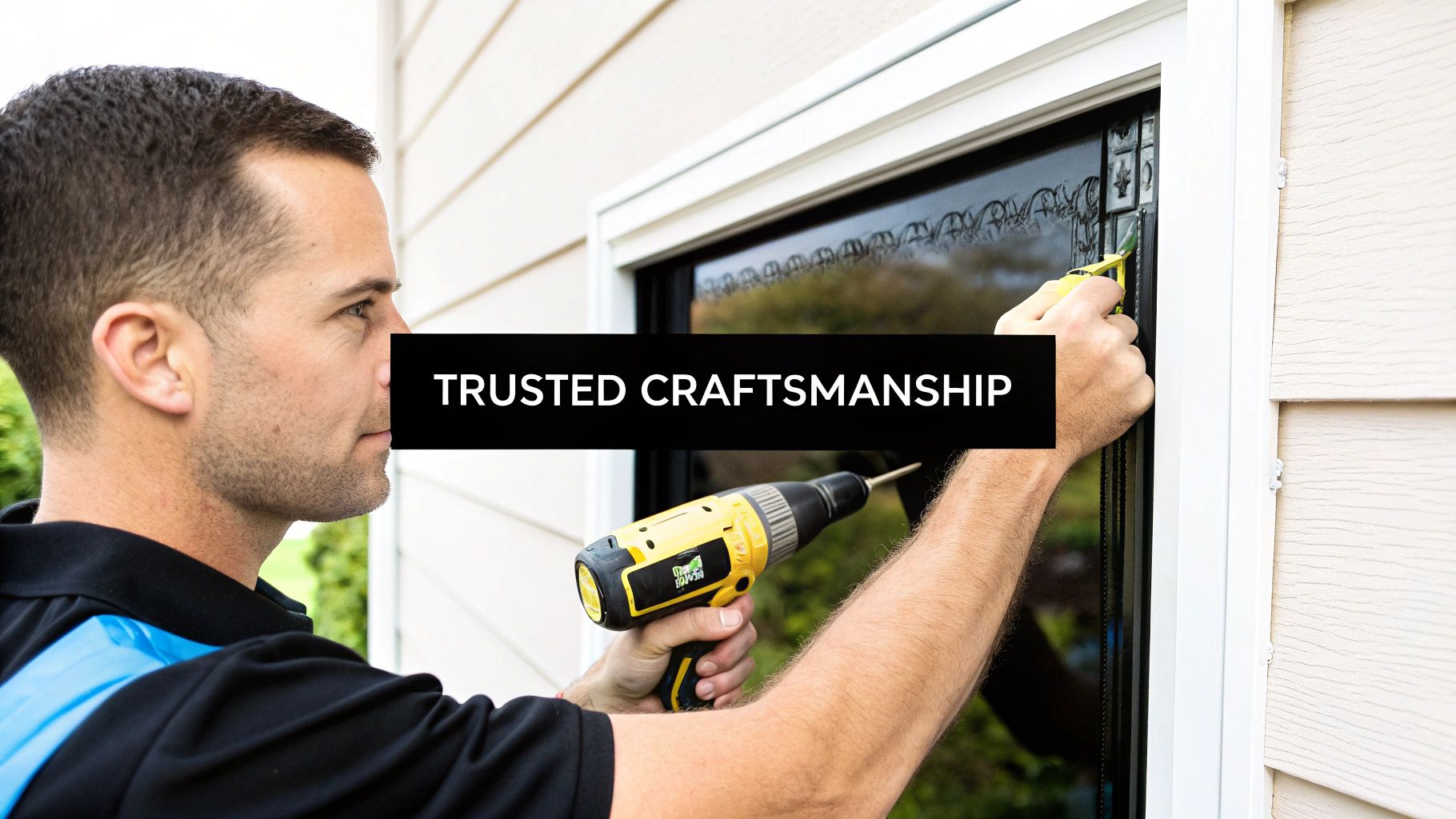
Choosing the best window screens is about more than just picking a type of mesh; it’s about the quality of the installation holding it all together. A professional job ensures every component works in harmony, turning a simple screen into a durable, long-lasting investment. At Rescreen Rescue, that commitment to true craftsmanship is at the core of everything we do.
Our approach is simple: do it right the first time with the best materials available. Think of it like building a house. A weak foundation or cheap nails will eventually undermine the entire structure, no matter how great the design is. In the same way, even the toughest screen mesh will fail if it's held by inferior fasteners or isn't installed with precision.
This is where experience makes all the difference. With over 20 years of serving the Tampa Bay community, we’ve seen firsthand what holds up and what falls apart in our unique coastal climate.
Our Commitment To Superior Materials
The difference between a screen that lasts five years and one that lasts fifteen often comes down to the smallest details you can’t even see. We refuse to cut corners, which is why we insist on using components specifically designed for Florida's harsh, corrosive environment.
A perfect example is our exclusive use of marine-grade, corrosion-resistant fasteners. Standard screws from a big-box store will start to rust almost immediately in our salty, humid air. Before you know it, you’ve got ugly orange stains running down your enclosure and, worse, a compromised structure. Our fasteners are engineered to resist that rust, keeping your enclosure strong and looking pristine for years.
At Rescreen Rescue, our philosophy is straightforward: quality materials are not an upgrade; they are the standard. This commitment ensures your investment is protected and your outdoor space remains beautiful and secure.
This dedication extends to every single material we use, from the highest-grade screen mesh to the most durable spline. We believe a superior installation is the only way to provide real, long-term value to our customers, eliminating the need for frustrating and frequent repairs down the road.
A Local, Family-Owned Legacy
As a woman- and family-owned business, we aren't just a company; we are your neighbors. For over two decades, we've been proudly serving communities across Tampa Bay, from St. Petersburg to Clearwater. Our reputation is built on trust, and we earn it with every single project we complete.
Our core values are simple but non-negotiable:
- Punctuality: We respect your time. When we schedule a job, we show up on time and ready to work.
- Transparency: You'll get clear, honest communication from start to finish. No hidden fees or surprise charges.
- Cleanliness: We treat your property with the same respect we treat our own. Every job site is left spotless, so all you have to do is enjoy your new screens.
These principles have helped us earn hundreds of 5-star Google reviews and build lasting relationships with homeowners all over the area.
The demand for high-quality, durable screening has grown significantly. The global window coverings market is projected to expand from $34.50 billion in 2023 to $60.16 billion by 2030. Events like Hurricane Ian, which damaged screens on over 300,000 structures, underscore the critical need for resilient installations that can withstand Florida's weather. Our method of using premium materials like marine-grade fasteners can extend the lifespan of your enclosure by up to 50%, drastically reducing the need for repeat service calls. You can learn more about the growing demand for quality window coverings and see why quality matters.
When you choose Rescreen Rescue, you aren’t just hiring a contractor. You’re partnering with a dedicated local team that stands behind its work and is committed to your complete satisfaction.
Your Next Steps To A Perfect Screen Enclosure
You've done the homework and now you know what it takes to pick the best window screens for your home—balancing durability, visibility, and protection. The only thing left is to bring that vision to life. Moving forward is all about pairing your newfound knowledge with expert craftsmanship to build an enclosure that actually lasts.
The most important takeaway here is that a great screen solution is a two-part equation: the right material for your lifestyle plus a professional installation that can handle Florida’s demanding climate. That combination is what ensures your lanai or pool cage will provide years of enjoyment, free from bugs and weather worries. At Rescreen Rescue, we make getting there simple and totally pressure-free.
Taking The Final Step
Getting started is easier than you might think. We know your time is valuable, which is why we've made our process flexible and convenient.
- Complimentary Estimates: We give you a no-obligation quote so you can see the costs upfront. No surprises.
- Text-Friendly Scheduling: Just shoot us a text to book an appointment that fits your busy schedule.
- Expert Guidance: Our team is here to answer any last-minute questions and help you lock in the perfect screen choice for your property.
A beautiful, functional screen enclosure is one of the best investments you can make in your Florida home. It enhances your lifestyle, increases your property value, and provides a bug-free sanctuary for you and your family.
Once your new screens are up, keeping them in top shape is the key to making them last. A little maintenance goes a long way in making sure they look great and perform well for years. For some practical advice, check out our guide on how to clean lanai screens for some simple, effective tips.
Let us help you take that final step toward a beautiful outdoor space. Contact Rescreen Rescue today, and let's get started.
Your Top Questions About Florida Screen Enclosures, Answered
If you're a homeowner in the Tampa Bay area, you know our lanais, pool cages, and porches are more than just add-ons—they're a way of life. But our unique climate raises a lot of questions about how to best care for them. We hear the same great questions from homeowners all the time, so we've put together the answers right here.
This isn't just about screen repair; it's about making a smart, lasting investment in your outdoor living space. Let’s clear up some of the most common uncertainties, from how long your screens should last to what a rescreening job actually looks like.
How Long Do Screen Enclosures Really Last In Florida?
This is the big one, and the answer comes down to one thing: the quality of the materials. That standard, contractor-grade fiberglass mesh that likely came with your house? You can expect it to last only 3-5 years under the relentless Florida sun before it gets brittle and starts to look like Swiss cheese.
But you don't have to settle for that. When you upgrade to higher-quality materials like a durable Super Screen or other specialty meshes, you’re looking at a completely different timeline. These premium options are built to stand up to our UV rays and wild weather, lasting 10-15 years or even more. It's a much smarter long-term investment.
Can't I Just Replace The One Torn Panel?
You absolutely can, but we often advise against it. Think of it like this: if one tire on your car is bald, the others probably aren't far behind. The same logic applies to your screens. When one panel fails from age and sun exposure, it's a warning sign that the rest are on borrowed time.
Patching one panel at a time often leads to what we call the "domino effect"—you'll be calling for another repair in a few months, and then another. A full rescreen tackles the problem all at once, giving you uniform strength and appearance across the entire enclosure. In the long run, it's almost always the more economical choice.
What Should I Expect During A Full Rescreening Process?
We’ve got our process down to a science, making it completely smooth and hassle-free for you. When our team shows up, here’s how it unfolds:
- The Teardown: First things first, we meticulously remove all the old, worn-out screen and the rubber spline holding it in place. We get every last bit out of every single panel.
- The Installation: This is where the magic happens. We install your brand-new screen mesh, pulling each panel perfectly taut. The goal is that clean, drum-tight finish that looks amazing and holds up to the wind.
- Hardware Audit: A great screen job is ruined by rusty hardware. We'll inspect your door hardware and all the fasteners, replacing them with marine-grade components where needed to stop rust in its tracks.
- The Vanishing Act: Our job isn't done until your yard is spotless. We pack up and haul away every scrap of old material, leaving you with nothing but a beautiful, refreshed enclosure ready to be enjoyed.
The secret to a long-lasting screen isn't just the material—it's the tension. A screen installed too loose will sag and flap in the wind, while one that's too tight is prone to tearing. Getting that tension just right is an art, and it's why having a professional handle the job is so critical to protecting your investment.
Ready to reclaim your beautiful, bug-free outdoor space? The expert team at Rescreen Rescue is here to help you choose and install the perfect screens for your home. Give us a call or reach out online for a free, no-pressure estimate.