

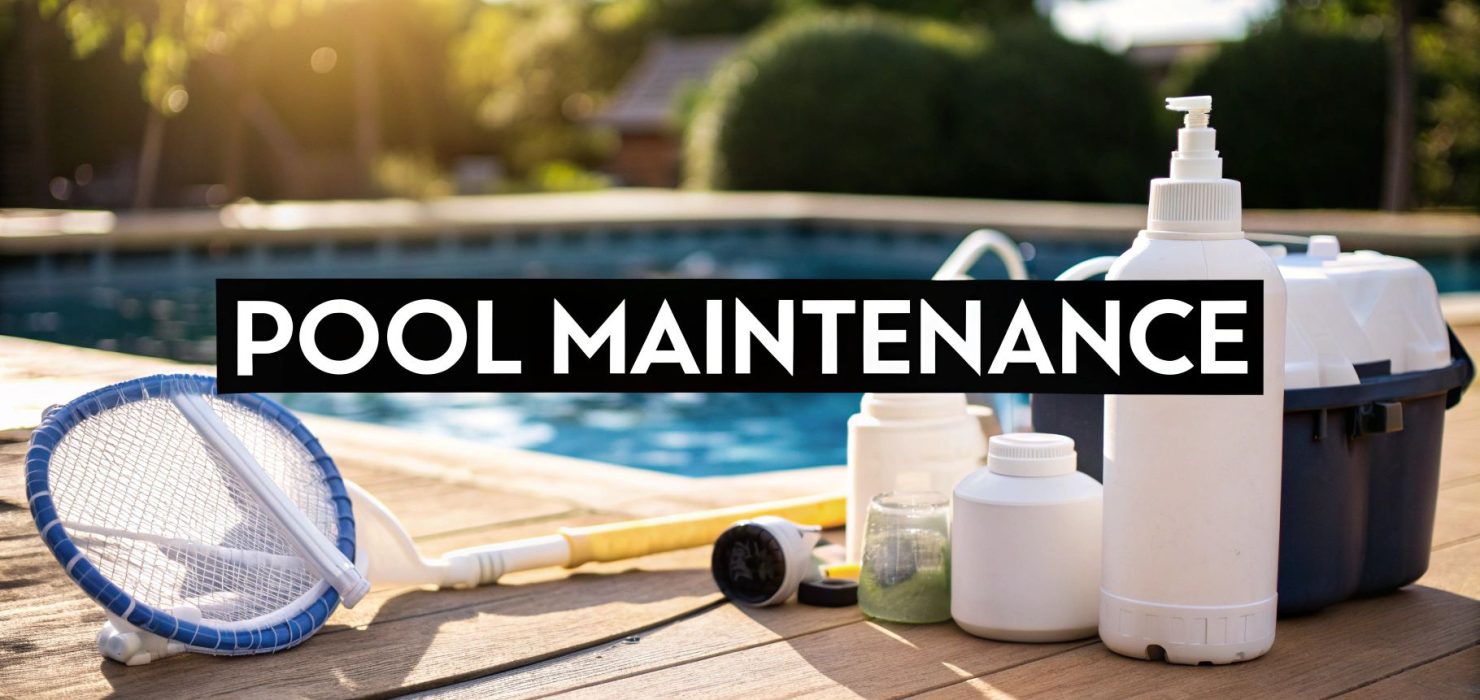
So, what's the real number when it comes to keeping a pool in Florida? On average, you can expect to spend somewhere between $100 to $300 a month. That adds up to an annual cost of roughly $950 to $1,800.
This range covers your typical chemicals, cleaning, and maybe some professional help, but the final bill really depends on what’s going on in your own backyard oasis.
The Real Cost Of Florida Pool Maintenance At A Glance
Having a pool in the Sunshine State is the dream, right? But to keep that dream from turning into a financial headache, it helps to know what you’re getting into. The best way to think about your pool budget is like maintaining a car. Some costs are predictable and routine, like buying gas (your weekly chemicals), while others are less frequent but hit a little harder, like getting new tires (a pump repair).
The bottom line is that pool maintenance is a year-round commitment. The costs cover everything from keeping the water safe and sparkling to running the pump, topping off evaporated water, and handling inevitable repairs. Here in the Tampa Bay area, where pools are practically a standard feature, these numbers become a part of everyday life.
Setting A Realistic Budget
To get a true feel for the average cost of maintaining a pool, it helps to see where the money goes. We'll get into the nitty-gritty of each category later, but this snapshot will give you a clear starting point.
Here are the big three factors that will swing your final costs one way or the other:
- The size and type of your pool: It's simple math—a bigger, concrete pool is almost always going to demand more time and money than a smaller fiberglass one.
- Your local climate: Florida's signature heat and pop-up thunderstorms mean you'll use more chemicals and run your pump longer than someone in a milder state.
- Your maintenance approach: Are you the hands-on, DIY type who doesn't mind scrubbing and testing, or do you prefer to hand it all off to a professional service?
A well-maintained screen enclosure is your secret weapon against rising costs. By keeping leaves, pollen, and other debris out of the water, it lightens the load on your filter, slashes your chemical needs, and cuts your cleaning time way down.
Think of it as the first line of defense for your budget. By keeping your enclosure in good shape, you prevent small issues from snowballing into major expenses. You can learn more about maintaining your pool enclosure in Tampa to make sure it keeps saving you money year after year. Those small, consistent efforts are what truly keep your pool a pristine escape instead of a financial drain.
Estimated Annual Pool Maintenance Costs At A Glance
To help you visualize your annual budget, we've broken down the typical expenses a Florida pool owner can expect. Remember, these are estimates—your actual costs will vary based on your pool's size, usage, and whether you hire a pro.
Here is a breakdown of common expense categories and their average annual cost ranges:
- Chemicals & Supplies: $400 – $700
- Professional Service: $1,200 – $3,600
- Repairs & Equipment: $250 – $1,000+
- Electricity (Pump): $300 – $600
- Water (Top-offs): $50 – $150
This list gives you a solid framework for planning. Whether you tackle it all yourself or bring in an expert, having these numbers in mind is the first step toward stress-free pool ownership.
Deconstructing Your Annual Pool Maintenance Bill
To really get a handle on what it costs to maintain a pool, you have to know where every single dollar is going. It's a lot like mastering the art of understanding electricity bills—once you see the breakdown, you have clarity and control. Your total pool expenses are really built on four distinct pillars that every pool owner, especially here in Florida, needs to manage.
Think of it like budgeting for a car. You have your predictable costs, like gas (chemicals and electricity), and then you have the less frequent but critical expenses like new tires or a brake job (repairs). Each pillar represents a different piece of the pool care puzzle.
This visual gives you a quick snapshot of the typical monthly and annual cost ranges Florida homeowners can expect for their pool upkeep.

As you can see, that consistent monthly spending quickly adds up to a significant annual investment. This is why it’s so important to budget for both the routine stuff and the long-term expenses.
The Four Pillars Of Pool Expenses
When you get a quote from a pro or start adding up your own receipts, you’ll see that the costs fall neatly into these main categories. Understanding them one by one is the first step toward finding smart ways to save.
- Chemicals: This is the constant battle to keep your water balanced, safe, and free of algae. The intense Florida sun is notorious for burning through chlorine fast, making this a non-stop expense.
- Utilities: Your pool pump is one of the hardest-working appliances you own. Its energy consumption is a major line item on your monthly electric bill.
- Labor and Cleaning: This pillar covers the actual physical work—skimming leaves, brushing the walls, and vacuuming the floor. You either pay for it with your own time and the cost of tools, or you pay a professional for the convenience.
- Repairs: Sooner or later, something will break. This category covers everything from patching a small leak to replacing a pricey pump motor or filter system.
Each of these pillars contributes to the bigger financial picture. And if you ignore one, like putting off a small repair, it often makes the others more expensive. For instance, an inefficient system will jack up your chemical and utility usage.
A Closer Look At National Averages
While Florida’s climate definitely has its own challenges, it helps to see how our local costs stack up against the national view. Across the country, total annual costs for a residential in-ground pool can average between $3,000 to $6,000. That’s a hefty number.
This total is driven by chemicals ($600-$1,200), electricity for equipment ($400-$1,000), professional services ($1,200-$2,400), and the inevitable repairs ($300-$800). These figures line up with what experts see on the ground, where the day-to-day costs of cleaning, filtration, and chemical balancing add up to a few hundred dollars every month.
By breaking down your bill into these four pillars, you turn one big, intimidating number into a set of manageable parts. This approach empowers you to see exactly where your money is going and focus your savings efforts where they’ll have the biggest impact.
Knowing where your money is flowing is crucial. A sudden spike in your utility bill, for example, could be a red flag for an aging, inefficient pump long before it actually dies. Spotting that early gives you time to plan for a replacement instead of being forced into an emergency purchase. It's about shifting from reactive spending to smart, strategic financial management.
How Pool Type And Size Dictate Your Expenses
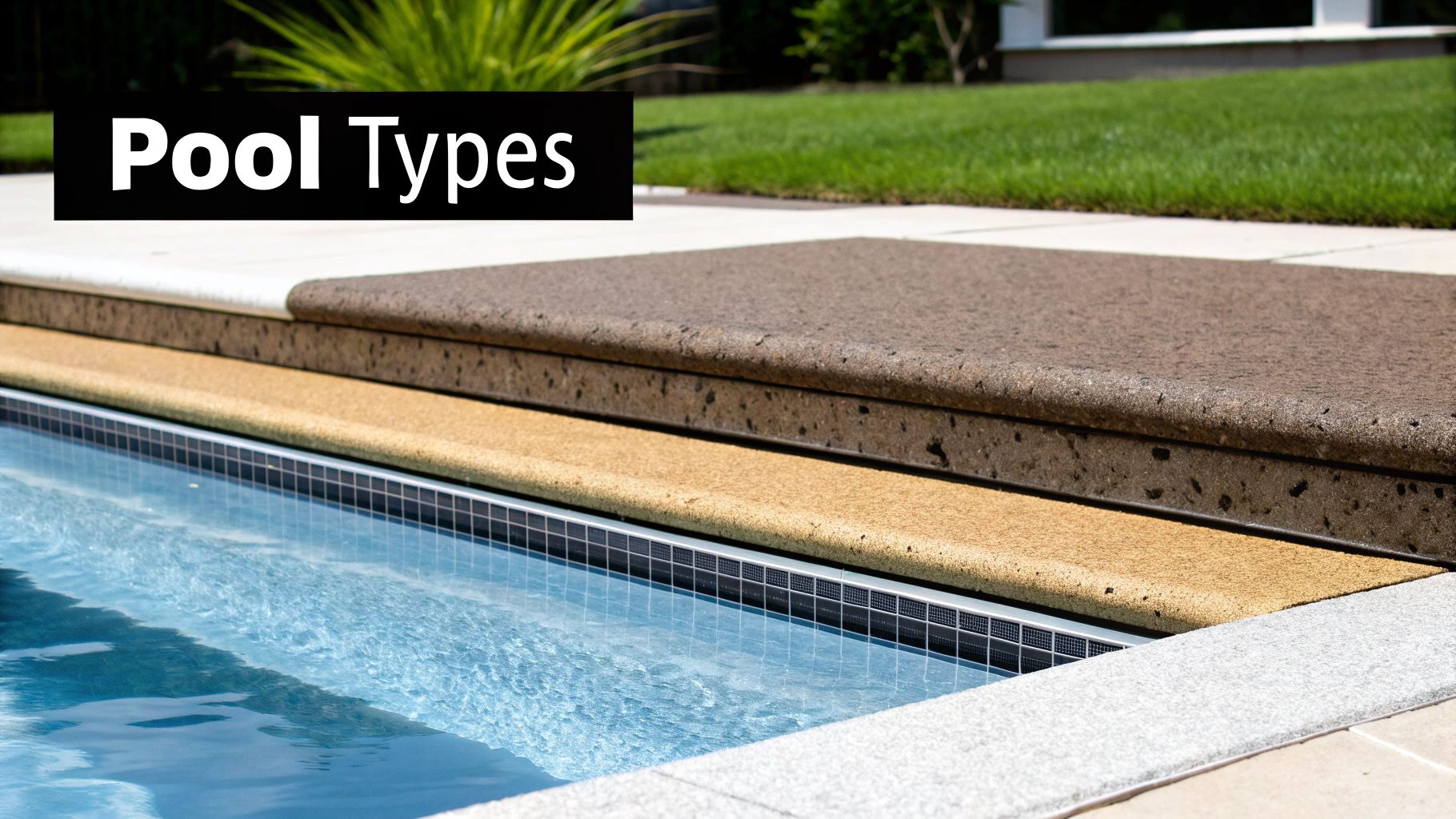
When it comes to figuring out the cost of pool maintenance, one of the biggest missteps homeowners make is treating all pools the same. The reality is, your pool’s construction material and its sheer size are two of the most powerful forces driving your annual budget.
It’s a lot like choosing flooring for your home. Some materials look incredible but demand constant, specialized care, while others are built to be sleek, tough, and easy to live with.
The surface of your pool directly impacts everything from daily chemical use to major long-term repair bills. The three main types of in-ground pools—concrete (also known as gunite), vinyl liner, and fiberglass—each come with a completely different financial roadmap. Understanding these differences is the first step to accurately predicting your future costs.
The Financial Impact Of Different Pool Surfaces
Your pool’s surface isn't just for looks; it’s an active player in your water's chemistry. A porous, rough surface behaves very differently than a smooth, non-porous one, creating a ripple effect that shows up on your maintenance bill.
- Concrete (Gunite) Pools: These are the heavyweights, costing the most to maintain over their lifetime. The plaster finish is porous, which means it’s a perfect breeding ground for algae. This forces you to use more chemicals and brush more aggressively to keep it clean.
- Vinyl Liner Pools: Sitting in the middle of the cost spectrum, vinyl liners have a smoother surface that is less prone to algae. The trade-off? The liner itself can be torn and will need a full replacement every 5 to 10 years, which is a significant one-time expense.
- Fiberglass Pools: These are the undisputed champions of low maintenance. Their smooth, non-porous gelcoat surface is incredibly resistant to algae growth. That translates to way less money spent on chemicals and less time spent cleaning.
The numbers really tell the story here. Maintenance costs can vary wildly by type, with fiberglass pools costing as little as $375 per year. Vinyl liner pools jump up to around $1,335 annually, while concrete pools can demand an average of $2,750 per year simply because of their demanding upkeep. You can learn more about how different pool types stack up in our guide comparing above-ground pools vs in-ground pools.
To make it even clearer, let's break down the annual costs side-by-side.
Annual Maintenance Cost Comparison By Pool Type
Here is a comparison of average annual maintenance costs and the key factors driving those expenses for each pool type:
Fiberglass
- Average Annual Cost: $375
- Key Drivers: Minimal chemicals, low electricity use, no liner replacement or resurfacing needs.
Vinyl Liner
- Average Annual Cost: $1,335
- Key Drivers: Moderate chemical use, liner replacement every 5-10 years.
Concrete (Gunite)
- Average Annual Cost: $2,750
- Key Drivers: High chemical use, frequent acid washing, and costly resurfacing every 10-15 years.
As you can see, the material you choose at the very beginning sets the stage for decades of maintenance expenses.
Why Concrete Pools Cost The Most
The steep maintenance cost of a concrete pool really boils down to its porous nature. That rough plaster surface acts like a sponge for contaminants and creates the perfect little hiding spots for algae spores. As a result, you're always fighting an uphill battle to keep the water chemistry balanced.
Beyond the daily chemical struggle, concrete pools require major, expensive interventions over time. An acid wash, which costs between $300 and $1,000, is needed every 3 to 5 years just to strip away stains and algae buildup.
But the biggest hit to your wallet is resurfacing. This has to be done every 10 to 15 years and can cost anywhere from $8,000 to $10,000 or more.
The takeaway is simple: the initial construction material of your pool sets a baseline for your future financial commitment. A smooth fiberglass shell minimizes chemical warfare and eliminates the need for costly resurfacing, making it the most budget-friendly option in the long run.
How Pool Size Scales Your Expenses
This might seem obvious, but it's a crucial point: the bigger the pool, the bigger the bill. A larger volume of water simply requires more chemicals to stay balanced, a more powerful pump running longer hours to circulate it, and more time and effort to clean.
Think of it this way: a small "spool" or cocktail pool might only need a gallon of liquid chlorine a week. A large family-sized pool, on the other hand, could easily burn through two or three gallons in the same period, especially during a hot Florida summer. This principle applies to everything.
- A small 14×28 ft pool might cost $600-$1,100 per year to maintain.
- A medium 16×32 ft pool typically runs $700-$1,200 annually.
- A large pool can easily climb past these figures.
Every extra square foot of surface area and every additional gallon of water adds directly to your chemical, electricity, and labor costs. In short, size is a direct multiplier for your entire maintenance budget.
Choosing Your Path: DIY Care Versus Professional Service
Every pool owner eventually hits a fork in the road, a decision that directly shapes their budget and their weekends: should you handle the maintenance yourself, or hire a professional? This isn't really a "right vs. wrong" choice. It’s all about what fits your lifestyle, your wallet, and how willing you are to get your hands dirty.
Think of it like cooking at home versus dining out. The Do-It-Yourself (DIY) route is your home-cooked meal; it’s almost always cheaper dollar-for-dollar, but you have to buy the ingredients, learn the recipe, and put in the time. Hiring a pro is like going to a great restaurant—you pay a premium for convenience, expertise, and getting your precious time back. Both paths lead to a sparkling clean pool, but the journey and the costs are completely different.
The DIY Approach: What It Really Takes
Taking on pool care yourself can be incredibly rewarding. You get total control over your pool's health and you'll save a good chunk of change on labor. But let's be clear: it's a commitment that goes far beyond skimming a few leaves. It demands consistency, a bit of learning, and an upfront investment in the right tools.
A typical weekly DIY checklist involves a few non-negotiable tasks:
- Water Testing: Using a quality test kit to check pH, chlorine, and alkalinity levels.
- Chemical Balancing: Carefully adding chemicals like chlorine, soda ash, or muriatic acid to keep the water safe and crystal clear.
- Skimming and Brushing: Getting surface debris out and scrubbing the pool walls and steps to stop algae before it starts.
- Cleaning Baskets: Emptying the skimmer and pump baskets to keep water flowing properly.
- Vacuuming: Cleaning the pool floor, either the old-fashioned way or with an automatic cleaner.
The biggest savings with DIY comes from knocking out that $100 to $300 monthly service fee. You'll still need to budget for chemicals and supplies, of course, which can run anywhere from $400 to $700 a year. But the real non-financial cost is your time—plan on spending at least one to two hours every week on these chores.
The Professional Service Advantage
For a lot of Florida homeowners, the sheer convenience of hiring a professional pool service is worth every penny. This option is a lifesaver for people with packed schedules, those who travel a lot, or anyone who’d rather leave the tricky science of water chemistry to an expert. A reliable pro brings experience, efficiency, and commercial-grade gear to the job.
Opting for a professional service transforms pool ownership from a weekly chore into a pure source of relaxation. You're not just paying for cleaning; you're investing in peace of mind and the assurance that your pool is consistently safe, balanced, and ready for enjoyment.
A standard weekly or bi-weekly service package here in the Tampa Bay area will typically cover all the DIY tasks mentioned above. The technicians handle everything from testing and chemical balancing to brushing, skimming, and equipment checks. This doesn't just free up your time; it can also prevent expensive problems by spotting potential issues, like a failing pump seal, before they turn into major repairs.
While professional help is an added expense, it gives you a predictable, fixed cost for your monthly budget, which makes financial planning a lot easier. Understanding all the potential expenses of upkeep, like the average pool screen repair cost, helps you build a complete and realistic maintenance budget from the start.
Proven Strategies To Lower Your Pool Maintenance Costs
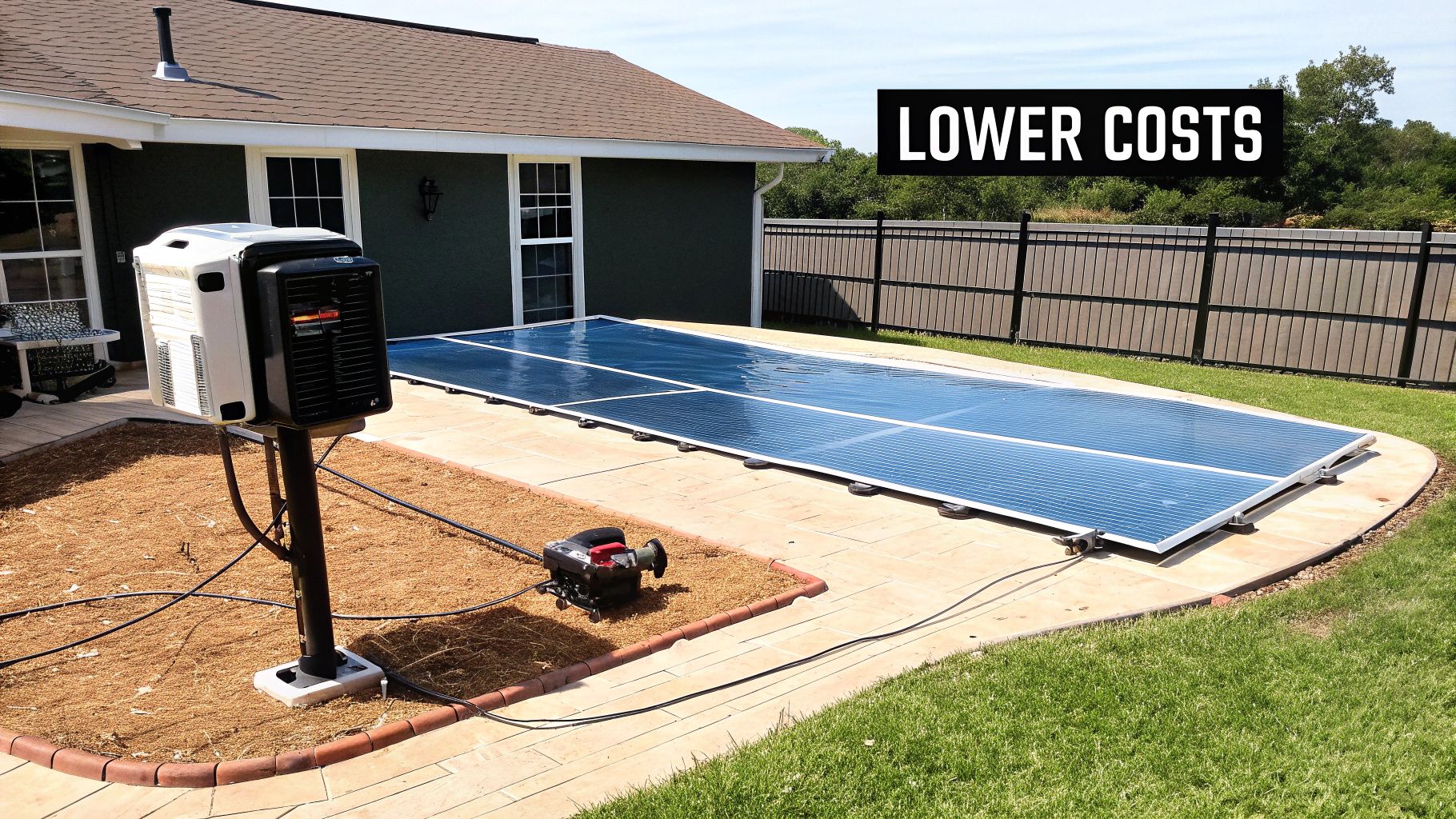
While the numbers can feel a bit intimidating, there are plenty of practical ways to bring your pool maintenance costs back down to earth without sacrificing that crystal-clear water. The secret is to stop reacting to problems and start managing your pool proactively. A few small, consistent efforts are your best defense against the huge, unexpected bills that can throw a wrench in your budget.
Think of it as preventative care for your home's best feature. By putting a little time into smart upgrades and regular check-ins, you can seriously cut down on what you spend on chemicals, energy, and even professional help. These strategies get to the root of high costs, leading to real, sustainable savings year after year.
Master Your Energy And Water Consumption
Two of the biggest—and most controllable—expenses in your pool budget are electricity and water. Your pool pump is a serious energy hog, often running for hours every single day, while Florida's sun constantly causes evaporation that drains your water and chemicals. Targeting these two areas will give you the biggest bang for your buck.
A few smart tweaks can lead to some pretty significant savings:
- Install a Variable-Speed Pump (VSP): This is, without a doubt, the single best way to slash your pool's energy bill. Unlike old-school single-speed pumps that run at full throttle all the time, a VSP can be set to run at lower speeds for longer. This simple change can cut your electricity use by as much as 90%.
- Use a Solar Cover: A humble solar cover is a triple-threat for savings. It dramatically cuts down on water evaporation, so you're not constantly topping off the pool. It also traps heat, lowering your heating costs, and it keeps UV rays from breaking down your expensive chemicals.
- Optimize Your Pump's Run Time: So many pool owners run their pumps way longer than they need to. The goal is just to turn over your pool's entire water volume once a day. Talk to a pool pro or use an online calculator to figure out the sweet spot for your specific setup.
The Ultimate Debris Defense: A Screen Enclosure
One of the most effective long-term strategies for lowering maintenance costs is investing in a high-quality screen enclosure. Its main job is to act as a physical barrier, which creates a massive ripple effect that benefits your entire pool care routine and budget. When your pool is protected, the workload on everything else is lightened.
It’s simple, really. A well-maintained screen enclosure drastically reduces the amount of leaves, pollen, grass clippings, and bugs that get into your pool. This preventative measure directly impacts your bottom line in several key ways.
A pristine screen enclosure is more than just a convenience; it's an active cost-saving tool. By keeping your pool cleaner naturally, it reduces chemical demand, eases the strain on your filter system, and gives you back countless hours you would have spent skimming and vacuuming.
The benefits are all connected. With less organic debris rotting in the water, your chlorine isn’t working overtime to sanitize it, which means you buy and use fewer chemicals. Your pump and filter don't have to work as hard or be cleaned as often, which extends their lifespan and lowers energy use. For homeowners ready to maximize these benefits, understanding the ins and outs of rescreening a pool enclosure is the perfect first step toward a lower-maintenance lifestyle.
Simple Habits For Big Savings
Beyond the big upgrades, simple, consistent habits can make a huge difference. Regular check-ups allow you to spot small issues before they snowball into costly emergency repairs that nobody wants to deal with.
Try working these easy checks into your weekly routine:
- Check Your Water Level: Keeping the water about halfway up the skimmer opening is crucial. If it drops too low, the pump can run dry, which can burn out the motor in just a few minutes.
- Test Your Water Weekly: Don't wait until the water is cloudy or turning green. Consistent testing and making small chemical adjustments is far cheaper than having to shock the pool to fix a major algae bloom.
- Clean Your Baskets: Make a habit of emptying the skimmer and pump baskets. When they get clogged with debris, they restrict water flow, forcing your pump to work harder and driving up your energy bill.
Building Your Personal Pool Maintenance Budget
So, how do you turn all this information into a real-world financial plan? The final step is creating a personalized budget that takes the mystery out of pool ownership, transforming vague estimates into a clear, actionable roadmap. This is how you anticipate expenses, dodge surprises, and keep your backyard oasis a source of joy, not financial stress.
The goal here is to separate your predictable, recurring costs from the ones that can sneak up on you. It's a lot like budgeting for your household: your mortgage is a fixed cost you can count on, while your grocery bill can fluctuate. Applying that same logic to your pool gives you complete control.
Step 1: Pin Down Your Fixed Costs
Fixed costs are the reliable, recurring expenses you can pretty much set your watch to every month or year. These are the easiest part of the budget because they rarely change. For most of us here in Florida, these expenses are the foundation of our annual pool spending.
Start by listing out these core items:
- Professional Pool Service: If you hire a company, this will be your biggest fixed cost. A typical weekly service in the Tampa Bay area runs from $100 to $300 per month.
- Basic Chemical Supply (DIY): If you're handling the pool yourself, figure out your average monthly spend on the essentials like chlorine, shock, and testing strips.
- Annual Opening/Closing Costs: This is less common in Florida since we swim year-round, but if you do use a service for seasonal tune-ups, be sure to include that annual fee here.
Step 2: Estimate Your Variable Costs
Variable costs are the expenses that shift with the weather, how much you use the pool, and any unexpected curveballs. These require a bit more guesswork, but planning for them is what makes a budget truly realistic. This is where you prepare for the "what-ifs" of pool ownership.
Your list of variable costs should include:
- Extra Chemicals: Budget a little extra for algaecides after a heavy summer rain or clarifiers if you're planning a big pool party.
- Utility Spikes: Your electricity bill is naturally going to climb in the summer when the pump is working overtime to keep the water clear.
- Replacement Parts: Think about the small things that wear out over time—skimmer baskets, O-rings, or that vacuum hose that finally gives up.
- Repairs: This is the most important variable to plan for. You absolutely need to set aside a contingency fund for potential headaches like a leaky pipe or a pump motor on its last legs.
A budget isn't just about tracking what you've already spent; it's about proactively setting money aside for what's coming. A smart budget always includes a dedicated "repair fund" so an unexpected issue doesn't derail your finances.
A Sample Budget For A Tampa Bay Pool
Let's pull this all together with a sample annual budget for a mid-sized, professionally serviced pool right here in the Tampa area. You can use this as a tangible framework to adapt for your own situation. A solid financial plan is just as crucial as the physical upkeep—much like knowing the potential pool cage restoration cost helps you prepare for long-term care.
Example Annual Budget Breakdown
- Professional Service: $150/month x 12 = $1,800
- Increased Summer Utilities: Figuring on $50 extra per month for 5 months = $250
- Minor Supplies & Parts: A yearly allowance for new nets, brushes, etc. = $150
- Repair Contingency Fund: Setting aside a healthy $500 for those just-in-case moments.
Total Estimated Annual Budget: $2,700
That breaks down to just $225 per month. When you plan this way, you stop reacting to bills and start confidently managing your investment.
Common Questions About Florida Pool Costs
Owning a pool is a fantastic part of the Florida lifestyle, but it's natural to have questions about the costs involved. Let's tackle some of the most common ones we hear from homeowners to give you a clearer picture of what to expect.
Is A Saltwater Pool Cheaper To Maintain Than A Chlorine Pool?
This is a classic debate. While a saltwater system costs more to install upfront, it saves you money on chlorine because it generates its own. Think of it as a little chlorine factory right in your backyard.
However, the savings aren't always as clear-cut as they seem. You'll still need to buy other chemicals to balance the pH and alkalinity. Plus, salt can be corrosive over time, potentially leading to different kinds of repair costs for your equipment, ladders, or even concrete decking. When you add it all up over a year, the total maintenance costs for both systems often end up being surprisingly close.
How Does The Florida Climate Affect Pool Maintenance Costs?
Florida's climate is amazing for swimming but tough on pools. The constant sunshine, high heat, and heavy rains all work together to drive up your maintenance bills.
The intense UV rays literally burn off chlorine, meaning you have to add it far more often than someone up north. That warmth also creates the perfect environment for algae to bloom, which means—you guessed it—more chemicals are needed to keep the water clear. Then, just when you get everything perfectly balanced, a classic Florida downpour comes along and dilutes it all, forcing you to start over. It's this combination that makes chemical and electricity costs for Florida pools higher than in other regions.
"A properly maintained exterior screen enclosure is one of the smartest investments for reducing long-term pool costs. It acts as a barrier, blocking leaves, pollen, and other debris from entering the water."
This simple shield creates a domino effect of savings that directly lowers your monthly expenses.
Can A Good Pool Screen Enclosure Really Save Me Money?
Absolutely. A screen enclosure is your pool's first line of defense against the debris that drives up costs. When you block leaves, twigs, and pollen from getting into the water, a few great things happen.
First, your pump and filter don't have to work nearly as hard, which saves electricity. Second, you spend way less time scooping and vacuuming. Finally, you use fewer chemicals because there's less organic gunk for the chlorine to sanitize. Keeping your exterior screens in good shape isn't just about looks—it's an active way to slash your overall pool maintenance budget. Think of it as a proactive investment that pays you back every single month.
A durable, well-maintained screen enclosure is your first line of defense against high pool maintenance costs. For expert screen repair and rescreening services that protect your pool and your budget, trust the professionals at Rescreen Rescue. Visit us online to get your free estimate today.