

Your pool enclosure is so much more than a simple barrier; it’s a core part of the Florida lifestyle. It’s what keeps the bugs out and lets the good times in. But when it starts to show its age, you need to know whether you’re looking at a quick weekend fix or something that needs a professional’s touch. This guide will help you spot the critical signs that it’s time to call in an expert for pool cage repair.
How To Tell If Your Pool Cage Needs Professional Repair
It's amazing how quickly we can get used to the slow creep of wear and tear on a pool cage. That one small tear in a screen panel or a little discoloration on the frame doesn’t seem like a big deal. The problem is, these seemingly minor issues are often symptoms of bigger, underlying problems that can lead to some seriously expensive damage if you ignore them.
Learning to spot these warning signs early is the key. You can get ahead of the problem before it compromises your entire enclosure.
Look Beyond The Obvious Screen Tears
A ripped screen is easy to spot, but a real inspection means looking closer at the bones of the structure—the parts holding it all together.
Start with the aluminum frame. Go run your hand along a few of the beams. Does it come away with a chalky, powdery film? That’s oxidation. It’s a tell-tale sign that the protective finish is failing, leaving the raw aluminum exposed and vulnerable to corrosion.
Next, get up close with the fasteners—all the little screws and bolts at every joint. Do you see any rust, discoloration, or are some missing entirely? Rusted fasteners are a massive red flag. That corrosion doesn’t just look bad; it actively weakens the metal, threatening the structural integrity of the whole enclosure. That’s a serious risk, especially when the next big storm rolls through.
"Rusty screws aren’t just an eyesore—they’re a structural risk. What starts as a few discolored screws can turn into an expensive repair or a complete rebuild if not addressed promptly."
Identifying Structural And Environmental Damage
Now, take a few steps back and look at the big picture. Eyeball the overall shape of your cage. Do any of the beams look bent, bowed, or like they’re sagging? This is often the aftermath of a storm or just the sheer weight of Florida's heavy seasonal rains. Even a slight bend creates a weak point that puts stress on the entire system.
Here are a few other subtle but crucial signs to keep an eye out for:
- Sagging or Misaligned Doors: If your pool cage door sticks, scrapes the ground, or just won’t close right, it’s a strong hint that the whole frame has shifted or settled.
- Algae or Mildew Streaks: See any green or black streaks, especially around the joints? That can point to poor drainage or constant moisture, which is basically an invitation for corrosion to set in.
- Loose or Wobbly Connections: Gently give a few different sections of the frame a push. If you feel any significant wobble, it means the fasteners are loose and need to be dealt with right away. You can find more details in our guide on common screen issues and solutions.
This simple decision tree can help you figure out if your problem is a DIY job or one for the pros.
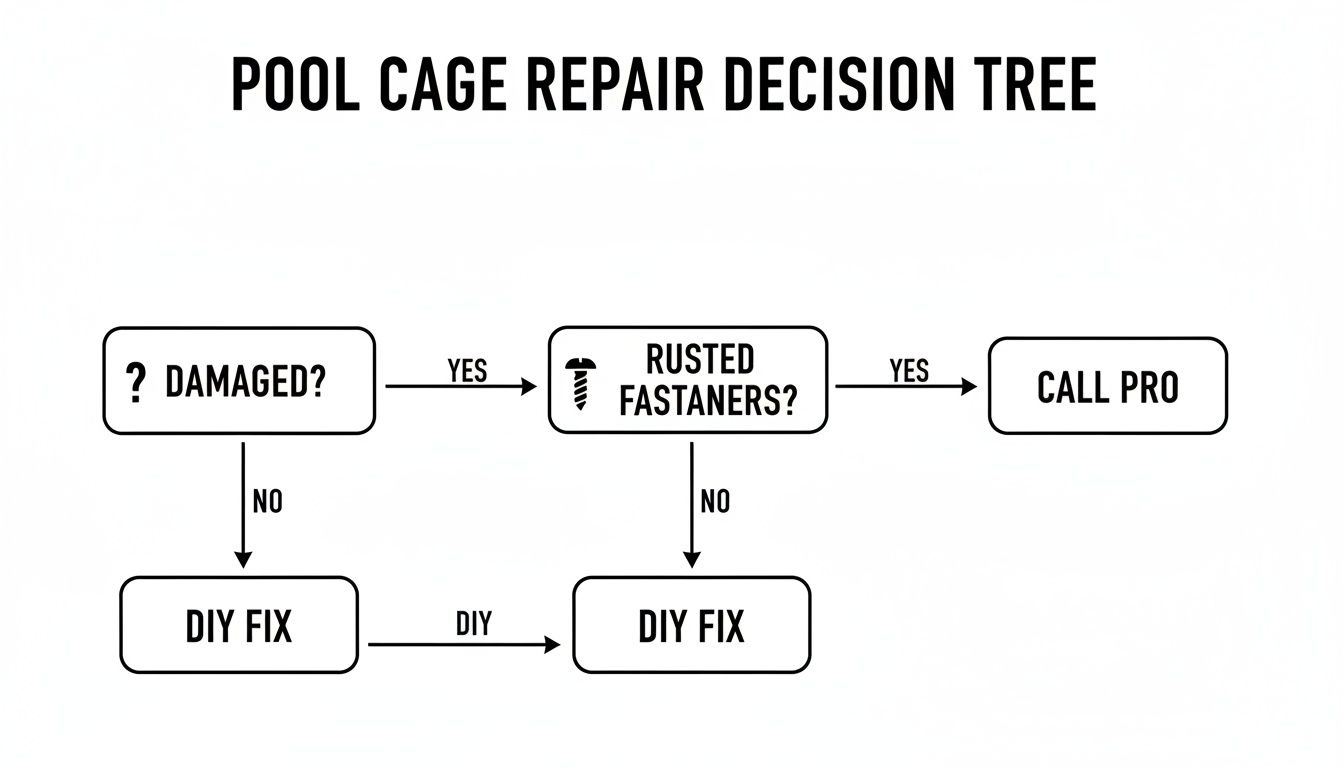
As you can see, things like rusted fasteners are a clear sign you need an expert to ensure the repair is safe and built to last. With the U.S. swimming pool industry continuing to grow, the demand for quality maintenance is higher than ever. Right now, average screen repair jobs are costing homeowners around $922, making it well worth your time to catch problems early.
Choosing The Right Local Pool Screen Repair Company
Once you realize you need a professional to handle your pool cage repair, the next big step is finding the right local company. This usually starts with learning how to find a contractor online and then doing your homework to make sure you hire a crew that’s both skilled and dependable.
Sifting through contractors can feel like a job in itself, but a few key checks will quickly separate the real pros from the rest. This isn’t just about getting a good price; it's about protecting your home and making a smart investment for the long haul.
Verify License And Insurance First
Before you even start talking about the job specifics, your very first question should be about their license and insurance. Here in Florida, this is an absolute must. A valid contractor's license shows they’ve met the state’s standards for competence and are operating legally.
Even more critical is their insurance. It’s your safety net. General liability coverage will handle any accidental damage to your property during the repair, and workers' compensation means you won’t be held liable if one of their crew members gets hurt on your property. If a company can’t show you proof of both, walk away.
Sift Through Online Reviews The Smart Way
Online reviews are a goldmine of information, but you have to know how to read them. Don't just glance at the star rating. Dive into the actual comments to look for patterns—good or bad—that reveal how a company really operates.
- Punctuality: Do people consistently mention the crew showing up on time?
- Cleanliness: Are reviewers praising the team for leaving the job site spotless?
- Communication: Do comments point to clear and timely updates from both the office and the on-site technicians?
A company with steady positive feedback in these areas is likely to deliver a better overall experience. It shows they respect your time and your home, which is just as important as the technical work itself.
A strong warranty is a company's promise to stand behind their work. It signifies confidence in both the materials they use and the skill of their technicians, giving you crucial peace of mind.
Request A Portfolio Of Local Work
A picture really is worth a thousand words, especially when you’re talking about craftsmanship. Ask any potential contractor for a portfolio of their recent, local projects. This lets you see the real quality of their work, not just a curated gallery of their "greatest hits" on a website.
For extra due diligence, ask if they can provide addresses of a few completed jobs in your area. A quick drive-by to see how their work holds up over time is an excellent way to gauge the durability of their materials and installation. To get a better sense of what goes into a quality job, you can learn more about professional screen enclosure repair standards.
Assess Their Professionalism And Warranty
Finally, pay attention to their communication style from your very first call or email. A professional company will respond promptly, provide a clear and detailed estimate, and answer all your questions without making you feel pressured. They should be able to explain the entire scope of work in plain English.
Just as important is the warranty. A reputable company will always offer a solid warranty covering both their labor and the materials they use. This isn't just a nice-to-have; it's a critical sign that they're confident in their work and committed to your satisfaction long after they've packed up their tools.
What To Expect For Pool Enclosure Repair Costs
Let's talk numbers. Budgeting for a pool cage repair can feel a bit like guesswork, but it doesn't have to be. Once you understand what drives the final price, you can look at quotes with confidence and know exactly what you're paying for. The total cost isn't just pulled out of thin air; it’s based on a few key variables.
The biggest factor is, unsurprisingly, the size of your enclosure—more space means more materials and more time on the job. The screen material you pick also plays a huge role. Standard fiberglass is the baseline, but specialty options like pet-resistant screens or ultra-clear "better view" screens will cost a bit more. Finally, any structural damage to the aluminum frame or tricky site access can add to the final invoice.
Common Repair Cost Ranges
So, what should you actually expect to see on a quote here in the Tampa Bay area? Here are a few ballpark figures for common jobs to give you a realistic starting point.
- Single Panel Replacement: If you just have a couple of torn panels from a stray golf ball or a fallen branch, you're likely looking at $75 to $200 per panel. The price depends on how big the panel is and the screen material you choose.
- Full Cage Rescreening: For an average-sized cage, a complete rescreening typically falls between $1,500 and $4,000. If more than a third of your panels are shot, this is often the most cost-effective route.
- Hardware Replacement: Switching out all those rusty, old fasteners for new corrosion-resistant screws is a smart move. This job usually costs between $500 and $1,500 and is a critical investment in your cage's long-term stability.
A well-maintained pool enclosure is more than just a nice feature; it's a real asset. Local real estate agents will tell you that a clean, functional cage can boost a home's sale price by 5-10%, especially in competitive, pool-centric markets like ours.
To help you budget, we've put together a quick breakdown of typical costs for various repair services you might need.
Typical Pool Cage Repair Costs In The Tampa Bay Area
This list provides a snapshot of what you can generally expect to pay for common pool enclosure repairs in our local market.
- Single Screen Panel Repair: Average cost is $75 – $200 per panel, influenced by panel size, screen material, and accessibility.
- Full Enclosure Rescreening: Typically ranges from $1,500 – $4,000+, depending on total square footage, number of panels, and screen type.
- Fastener/Hardware Replacement: Usually costs $500 – $1,500, based on the size of the enclosure and the type of screws used.
- Structural Aluminum Repair: Can cost $300 – $1,000+, depending on the extent of the damage.
- Gutter & Downspout Repair: Averages $150 – $500, influenced by the length of the gutter and number of leaks.
- Pool Cage Painting: Costs around $1.50 – $2.50 per sq. ft., depending on the prep work required and paint quality.
Remember, these are just averages. The best way to get a firm number is to have a professional come out and assess the specific needs of your enclosure.
Understanding Price Differences In Florida
It’s always helpful to see how local pricing stacks up. The data shows that staying on top of maintenance is a smart financial decision, with the average repair in Florida costing around $922. Here in Tampa, a service like aluminum pool cage painting averages about $875, which is significantly more affordable than in Jacksonville ($1,550) or Miami ($1,325). This just goes to show that you can get competitive, fair quotes from reliable local companies. You can dive deeper into the numbers by reading about the factors influencing pool cage restoration cost.
While it can be tempting to jump on the lowest bid you get, those ultra-low quotes often come with compromises—think subpar materials or rushed work that won't last. A good, transparent estimate will break everything down so you know exactly what you're getting for your money: a professional, durable repair that stands the test of time. For a broader look at costs, check out this informative Angi article on national and regional prices.
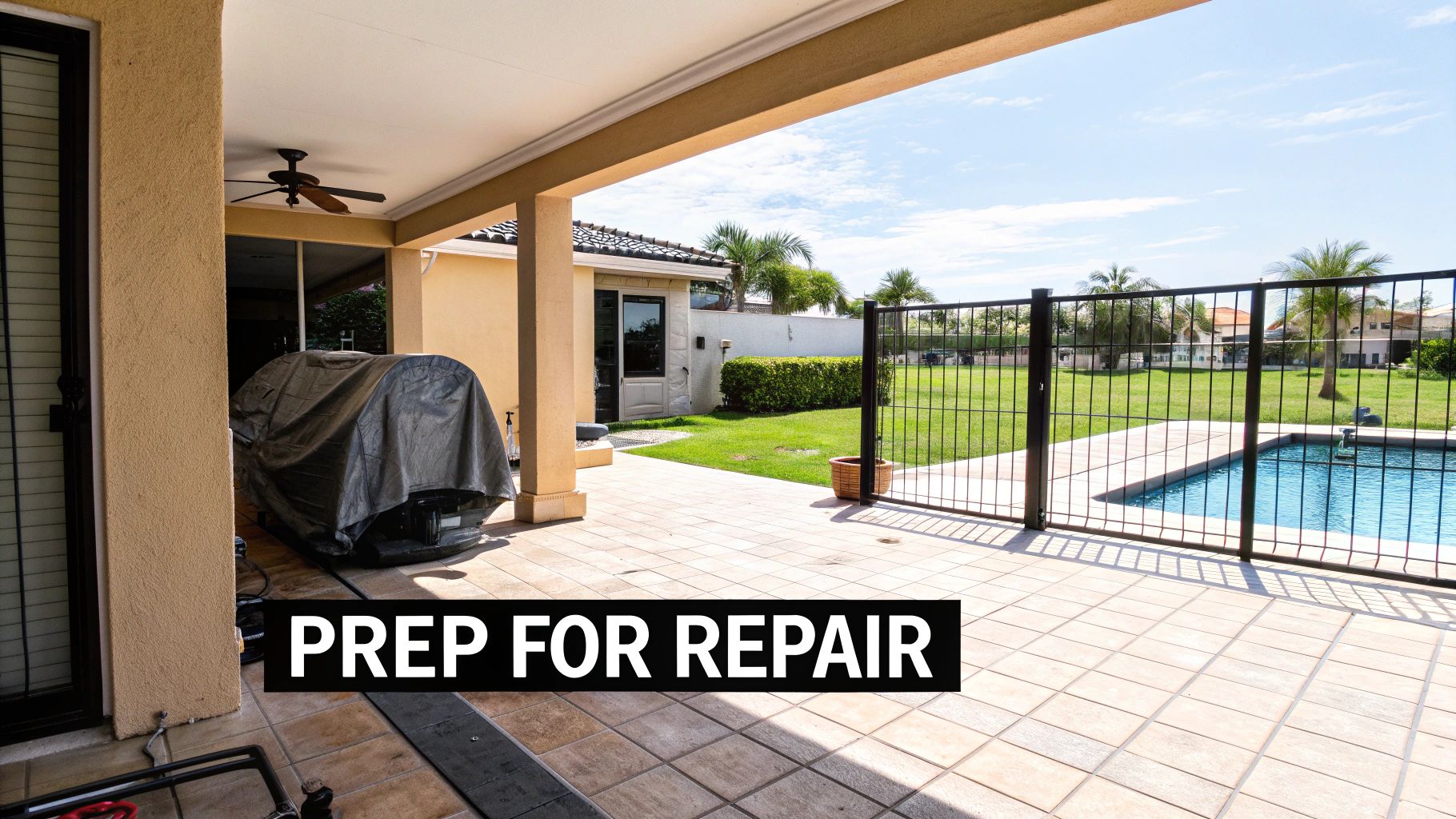
Getting Your Space Ready For The Repair Crew
A little prep work before the repair team shows up can make a world of difference. When your lanai is clear and accessible, the crew can get straight to work, which makes the whole process faster, safer, and more efficient. Think of it as setting the stage for a flawless repair.
This isn't just about being polite—it’s a practical step that protects your furniture, plants, and other belongings from getting accidentally damaged. A cluttered workspace is a recipe for delays and potential trip hazards for the technicians.
Create a Clear and Safe Workspace
The single most helpful thing you can do is completely clear the deck inside and around the pool cage. The crew needs a wide-open area to maneuver their ladders, tools, and massive rolls of new screen. Trying to work around a patio set is like navigating an obstacle course.
Before they arrive, find a safe spot for everything, moving it well away from the work zone.
- Patio Furniture: This includes your tables, chairs, loungers, and umbrellas.
- Grills and Smokers: These are often bulky and can get in the way.
- Potted Plants and Planters: You'll want to protect these from foot traffic and falling debris.
- Pool Toys, Floats, and Cleaning Equipment: Anything left on the deck should be stored.
Taking the time to do this ahead of schedule means nothing gets scratched, broken, or covered in old screening material and dust.
A clean, open workspace is the single biggest factor you can control to help the repair day go smoothly. It allows technicians to focus entirely on the quality of their work without distractions or safety concerns.
Address Access and Special Considerations
Beyond just moving the furniture, think about the crew's path to the enclosure. Unlocking any side gates ahead of time is a small touch that prevents delays right at the start and helps the team bring in their equipment without any hassle.
It's also a great idea to keep any pets safely inside for the day. This protects them from the work zone and prevents any accidental escapes while gates are open.
Finally, if you have delicate landscaping, sprinkler heads, or anything else near the base of the enclosure, just point it out to the crew leader when they arrive. Good communication ensures they know to take extra care around those specific spots. For an even more detailed walkthrough, you can learn more about how to prepare your enclosure for rescreening in our dedicated guide.
Maintaining Your Repaired Pool Enclosure For The Long Haul
You've just invested in a professional repair, and your pool cage looks fantastic. Now what? The smartest thing you can do is get into a simple upkeep routine to protect that investment and keep it looking great for years to come. Think of it as preventative care for your favorite outdoor space.
A little consistent maintenance helps you sidestep future repair calls and squeeze every last bit of life out of your enclosure.
This proactive approach makes a lot of sense, especially when you consider the numbers. The global swimming pool enclosure market is booming and expected to hit $2.5 billion by 2032. With average repairs here in Florida hovering around $922 and a full rescreen costing up to $6,300, a few minutes of maintenance now is a wise move to safeguard against much bigger bills later. You can dig into the numbers yourself by checking out the full market report.
Establish A Simple Cleaning Routine
One of the easiest things you can do is just keep it clean. Florida’s constant mix of pollen, dust, and humidity can quickly cake onto your screens and aluminum frame, leading to a grimy buildup of dirt and mildew. A gentle cleaning schedule stops this grime in its tracks before it can cause permanent discoloration or damage.
Just aim to give your enclosure a light wash every few months.
- Gentle Rinsing: Start with a garden hose on a low-pressure setting to wash away all the loose dirt and yellow pollen.
- Soft Brushing: For stubborn spots, grab a soft-bristled brush and use a mild mix of soap and water. Stay away from harsh chemicals or abrasive scrubbers—they can strip the screen’s protective coating right off.
- Thorough Rinse: Always finish by rinsing everything down to get rid of any soap residue.
This simple process doesn't just keep your view crystal clear; it also prevents mildew from getting a foothold and degrading the screen material over time.
Catching a tiny tear or a single corroded fastener early is the difference between a quick, inexpensive fix and a major structural repair down the road. Regular visual inspections are your first line of defense.
Conduct Regular Visual Inspections
About once a season, take a slow walk around your enclosure with one goal: spot small problems before they balloon into big ones.
Look closely at the fasteners connecting the frame. Are there any signs of rust or corrosion? These are the weak points that can compromise the frame’s integrity.
Next, scan each screen panel for tiny rips or holes that might have popped up. Fixing a small tear is a simple job, but if you ignore it, that tear will grow and you'll be looking at a full panel replacement. For a deeper dive, check out our guide on maintaining your pool enclosure in Tampa.
Finally, look up and around the cage. Keep tree branches and shrubs trimmed back so they aren't constantly rubbing against the screens or becoming a hazard during the next storm. A little bit of landscaping foresight really does go a long way.
Your Top Pool Cage Repair Questions, Answered
When you start Googling "pool cage repair near me," a lot of questions pop up. It can feel like a big project, but getting a handle on the basics will help you make a smart call for your home. Here are some straightforward answers to the questions we hear most often from homeowners just like you.
How Long Does a Typical Pool Cage Repair Take?
The honest answer? It really depends on the job. No two repairs are exactly alike, and the time it takes can swing pretty wildly from one project to another.
If you're just dealing with a single, straightforward screen panel replacement, a pro can usually knock that out in less than an hour. It's a quick fix for isolated damage, like from a stray golf ball or a fallen branch.
But if you're looking at a full rescreen of an average-sized enclosure, that’s a bigger commitment. Plan on that taking a full day, and sometimes it might even spill over into a second day if the cage has a complex design or multiple levels.
For a complete cage restoration—we're talking stripping it down, painting the aluminum frame, swapping out every single piece of old hardware, and then rescreening—you’ll need to set aside several days. This isn't something you can rush. Proper drying time between paint coats is critical for a finish that will last. Any contractor worth their salt will give you a clear, detailed timeline right in their quote.
Is It Better to Repair a Few Panels or Rescreen the Whole Cage?
This is the classic dilemma, and the right move really boils down to the age and overall health of your screens. You're basically weighing a quick fix against a long-term solution.
If you’ve only got a couple of tears from a recent storm and the rest of your screen is still flexible and in good shape, just repairing those individual panels is your most budget-friendly option. No sense in replacing what isn’t broken.
However, if your screens are getting up there in age—say, over 10 years old—and are starting to feel brittle, look faded, or have a bunch of tiny holes, a full rescreen is the smarter play. Patching up old, weak screens is just putting a band-aid on the problem. You'll likely find yourself calling for another repair in a few months when a different old panel decides to give up. Rescreening the entire cage gives you a fresh start with a uniform, durable barrier and a whole lot of peace of mind.
The choice between a spot repair and a full rescreen often comes down to the screen's age. If your screens are pushing the end of their typical 10-12 year lifespan, investing in a full rescreen stops the frustrating cycle of calling for one small repair after another.
For a deeper dive into common issues and what to look for, check out these expert screen enclosure repair tips.
What Is the Best Screen Material for My Pool Enclosure?
There’s no single "best" screen—it all comes down to your priorities, your lifestyle, and your budget. It’s all about finding the right fit for your home.
Here are the most popular choices we see homeowners making:
- Standard Fiberglass Screen: This is the industry workhorse for a reason. It strikes a fantastic balance between durability, clear visibility, and affordability, making it a solid all-around choice.
- Pet-Resistant Screen: If you share your home with furry friends, this tougher, vinyl-coated polyester screen is a game-changer. It's built to stand up to claws and paws, saving you from constant patch jobs.
- "Better View" Screen: Got a great view of the water, a golf course, or a nature preserve? This screen is woven with finer, thinner strands to feel almost invisible, maximizing your view without letting in the bugs.
A good repair company won't just sell you one option. They’ll walk you through the pros and cons of each, helping you pick the perfect material for your family.
Can a Rusted Pool Cage Be Restored?
Yes, absolutely! In the vast majority of cases, a rusted pool cage can be professionally restored to look brand new again. This can save you a ton of money compared to the cost of a full replacement. A complete teardown is usually only needed when there's severe, deep corrosion that has weakened the actual aluminum structure.
The restoration process is pretty intensive. It starts with stripping away all the old, flaking paint and sanding down any surface rust. Critically, all the old steel screws get replaced with durable, corrosion-resistant fasteners—this is key to preventing future rust. Once the frame is prepped, it gets a fresh coat of high-quality paint, sealing the aluminum and bringing it back to life. It’s a process that can easily add years to your enclosure’s life for a fraction of the cost of starting over.
Ready to get your pool cage back in pristine condition? The experienced team at Rescreen Rescue offers fast, reliable, and fairly priced solutions for everything from minor screen tears to complete restorations. We are a woman- and family-owned business dedicated to quality craftsmanship and outstanding customer service. Contact us today for your free, no-obligation estimate at https://rescreenrescue.com.