


When your pool enclosure's screens start looking more like Swiss cheese than a protective barrier, the first question that pops into your head is always, "How much is this going to cost me?" In the Tampa Bay area, the cost to rescreen a pool enclosure can swing from just a few hundred dollars for a couple of torn panels to several thousand for a complete overhaul, all depending on the size and shape of your cage.
Your Quick Guide To Pool Enclosure Rescreening Costs
Getting a handle on the potential investment is the first step toward getting your outdoor oasis back in shape. A full rescreen is a significant home improvement project, so knowing the typical price points helps you plan without any sticker shock. Think of these numbers as a solid starting point for building your budget.
Of course, these are just ballpark figures based on standard jobs. Every pool cage has its own quirks, and the final price tag will hinge on a few key factors we'll get into later.
Setting A Realistic Budget
To give you a clearer picture, let's break down the expected costs by the size of the enclosure. It's the total screen area—every wall panel and roof panel—that really determines the amount of material and labor needed, not just the square footage of your patio.
Here's a quick look at what most homeowners in our area can expect to invest in a full rescreening project.
Estimated Pool Rescreening Costs By Enclosure Size
Here is a snapshot of typical price ranges for full rescreening projects, based on the total square footage of the screen area that needs to be replaced.
- Small (Lanai/Patio Cage): $1,050 – $1,350
- Medium (Standard Pool Cage): $4,200 – $5,400
- Large (Two-Story/Expansive): $7,000 – $9,000+
These numbers give you a solid foundation for what to expect. Keep in mind that unique layouts or specialty screens can adjust these figures.
Looking at the bigger picture, the national average cost to fully rescreen a standard 600-square-foot pool enclosure hovers around $4,800. This breaks down to about $7 to $9 per square foot, a price that includes both the screen material and the professional labor to install it. If you're curious about the specifics, you can learn more about how pool enclosure repair costs are calculated.
Just remember, these are general estimates. Your final quote will be shaped by specific variables—things like screen type, frame condition, and hardware—which we'll explore next.
For instance, choosing a durable pet screen over standard fiberglass mesh will nudge the price up. Same goes for needing to replace rusty screws or repair a bent frame section. This guide will walk you through all of it, so you'll know exactly what to look for in any quote you get.
Breaking Down The Numbers In Your Quote
When a rescreening estimate lands in your inbox, that final number isn't just a total—it's the story of the materials, labor, and specific details needed to do the job right. Understanding these pieces helps you see the true value you're getting and ensures there are no surprises down the road. A professional quote should be a transparent map of the entire project.
Think of it this way: the two main pillars of any rescreening project are materials and labor. It's like baking a cake. The materials are your high-quality ingredients, and the labor is the skill of the baker who knows exactly how to combine them for a perfect result. You really can't have one without the other.
The Cost Of High-Quality Materials
The screen mesh itself will be the biggest line item under materials. The choice you make here directly impacts both the upfront cost and how long your enclosure will last. Most people go with a standard fiberglass screen, which is a solid, budget-friendly option that offers good visibility and holds up for about five to seven years in the Florida sun.
However, upgrading to a premium screen can be a really smart investment. Here’s a quick comparison:
- Pet Screen: This is a heavy-duty, vinyl-coated polyester mesh built to handle claws and paws. It costs a bit more, but it saves you from the headache of constant patching if you have active pets.
- Super Screen: Known for its incredible strength and longevity, this screen often comes with a better warranty and can easily last over a decade. Over time, it can actually be the more cost-effective choice.
Beyond the mesh, the hardware is another critical material cost. Here in Florida, with all our humidity, standard fasteners will rust out in no time, leaving ugly stains on your frame and weakening the connections.
One of the clearest signs of a quality job is when a contractor replaces all the old, rusted screws with new, corrosion-resistant hardware. It’s a small detail that adds tremendous life and structural integrity to your enclosure.
The Value Of Professional Labor
Labor costs aren't just for paying someone to show up; you're investing in experience, safety, and efficiency. The cost to rescreen a pool enclosure is heavily weighted by the skill it takes to do the work correctly. A seasoned crew knows the art of getting the screen tension just right—tight enough to look sharp and withstand wind, but not so tight that it strains the aluminum frame.
The work involves much more than just rolling in new screen. Professional labor covers:
- Careful Removal: Methodically taking out all the old screen and spline without damaging the aluminum structure.
- Surface Prep: Cleaning out the frame channels so the new spline can grip securely for a tight, lasting hold.
- Expert Installation: Installing each new panel with the proper tension and precision.
- Safety First: Using the right gear like ladders and scaffolding to work safely at heights, protecting both the crew and your property.
An experienced team can finish a full rescreen far more quickly and cleanly than a DIY attempt, saving you a ton of time and frustration. They have the specialized tools and know-how to handle tricky roof angles or any unexpected frame issues that pop up. The whole process is pretty involved; you can learn more about what is involved with rescreening a pool cage.
Uncovering Potential Add-On Costs
Finally, a good quote will account for any necessary extras. These aren't "hidden fees" but rather essential services needed to guarantee a durable, long-lasting result. The most common add-on is frame repair. If a technician finds bent or corroded aluminum beams during their inspection, those have to be fixed before the new screen can be installed properly.
Likewise, replacing worn-out door hardware or adding new door kits falls into this category. It's always more efficient and cost-effective to tackle these issues during the rescreening process, which brings your entire enclosure back to like-new condition all at once. A trustworthy contractor will always point these things out and clearly explain why they’re recommending the additional work.
Key Factors That Influence Your Rescreening Price
The final number on your rescreening quote is never just pulled out of thin air. Several key variables come together to determine the total investment, which is why the cost to rescreen a pool enclosure can vary so much from one house to the next. Once you understand these factors, you can see exactly where your money is going and make smarter choices for your budget.
Think of it like getting a quote to paint your house. A simple, single-story ranch is going to be a much different job than a three-story Victorian loaded with intricate trim. In the same way, a basic ground-level lanai will have a different price point than a towering two-story pool cage with a complex roof design. Every element adds another layer of material, labor, and complexity to the project.
Size And Height Of The Enclosure
The most straightforward factor driving your cost is the sheer size of the job. A bigger pool cage simply requires more screen, more spline to hold it in place, and more hours of labor to get it all done. It’s a simple equation: the total square footage of all the screen panels—both on the walls and the roof—is the biggest driver of your base price.
But height plays an equally critical role. A two-story enclosure brings a whole set of challenges to the table that a standard-height cage just doesn't have.
- Specialized Equipment: Technicians can't just use a standard ladder. They need scaffolding or other specialized lift equipment to safely reach those upper panels, which adds to the setup time and overall cost.
- Increased Labor: Working high off the ground is more physically demanding and takes more time and care, which naturally gets reflected in the labor costs.
- Added Complexity: Taller enclosures often have more complex angles and roof lines, requiring much greater precision to make sure every single panel has perfect, drum-tight tension.
Because of these things, a taller cage will always cost more per square foot to rescreen than a lower one, even if they have the exact same footprint on the ground.
Choice Of Screen Material
The type of screen mesh you choose is another major player in the final price. While standard fiberglass screen is the most common and budget-friendly option, it’s far from your only choice. Upgrading to a premium material will increase the initial cost, but it often pays for itself with far better durability and a much longer lifespan. For a deep dive into your options, check out our guide on handling all kinds of screen enclosure repairs.
Investing in a higher-grade screen like Super Screen or Pet Screen can more than double the life of your enclosure, saving you from another full rescreening expense just a few years down the road.
Condition Of The Aluminum Frame
Before a single inch of new screen goes up, any good professional will thoroughly inspect the aluminum structure of your pool cage. If the frame has bent sections from storm damage or corroded spots from rust, those issues absolutely have to be fixed first. Trying to install new screen on a weak or damaged frame is like putting a brand-new roof on a house with a cracked foundation—it’s just not going to hold up.
Repairing or replacing damaged aluminum beams is an additional cost, but it's non-negotiable for the structural integrity and long-term health of your enclosure.
Hardware And Fasteners
Those little screws holding your enclosure together might not seem like a big deal, but they are absolutely vital. Here in Florida’s humid, salty air, standard steel fasteners will rust in a heartbeat, leaving ugly orange streaks running down your frame and weakening critical connection points.
A quality rescreening job almost always includes replacing all the old, rusty fasteners with new, corrosion-resistant ones. This adds a bit to the material cost, but it’s one of the best investments you can make for the life of your enclosure.
For commercial properties or homeowners getting ready to sell, these details matter a lot. In fact, for larger patio enclosures, full repairs can range from $1,500 to $4,500, and two-story designs can add another 20-30% to the cost because of the need for scaffolding. A fresh, professional rescreen can even boost a home's sale price by 2-5% in competitive markets because it signals low future maintenance to potential buyers. You can find more insights on how these factors impact project costs on Angi.com.
Comparing Screen Types To Fit Your Budget And Lifestyle
Choosing the right screen for your pool enclosure is one of the biggest decisions you'll make in this process. It's a classic balancing act between your upfront budget and how long you want the new screens to last. Think of it like buying tires for your car: you can get a standard, affordable set that does the job, or you can invest in a high-performance model built for longevity and tough conditions.
The final cost to rescreen pool enclosure projects is heavily influenced by this choice. Each material brings something different to the table, from strength and lifespan to special features. Whether you just need to keep the bugs out or you need a fortress to fend off pets and Florida storms, there’s a screen out there for you.
The Budget-Friendly Baseline: Standard Fiberglass
Standard fiberglass screen is what you’ll find on most pool enclosures, and for good reason. It's the most affordable choice, gives you great visibility and airflow, and does an excellent job keeping insects out. This makes it the go-to baseline for homeowners who want a fresh, clean look without a huge investment.
But that lower cost comes with a trade-off. In the relentless Florida sun and humidity, standard fiberglass typically lasts between five and seven years before it gets brittle and starts to tear. It’s a solid, reliable option, just be ready for a shorter replacement cycle compared to the premium stuff.
The Pet-Owner's Essential: Phifer Pet Screen
Got dogs or cats who treat your enclosure like their personal jungle gym? Phifer Pet Screen is a non-negotiable upgrade. This stuff is made from a tough, vinyl-coated polyester that’s engineered to be seven times stronger than standard fiberglass. It stands up to claws, paws, and leaning, saving you from the constant headache of patching little holes.
Yes, it costs more upfront, but the peace of mind and the money you'll save on constant repairs make it a fantastic investment for any pet owner. Its heavy-duty build also holds up better against stray golf balls or falling branches. The right material makes all the difference, which is why we've detailed more on choosing the best screen for a porch in a separate guide.
This infographic breaks down how the three main factors—enclosure size, screen type, and frame condition—stack up to determine your final cost.
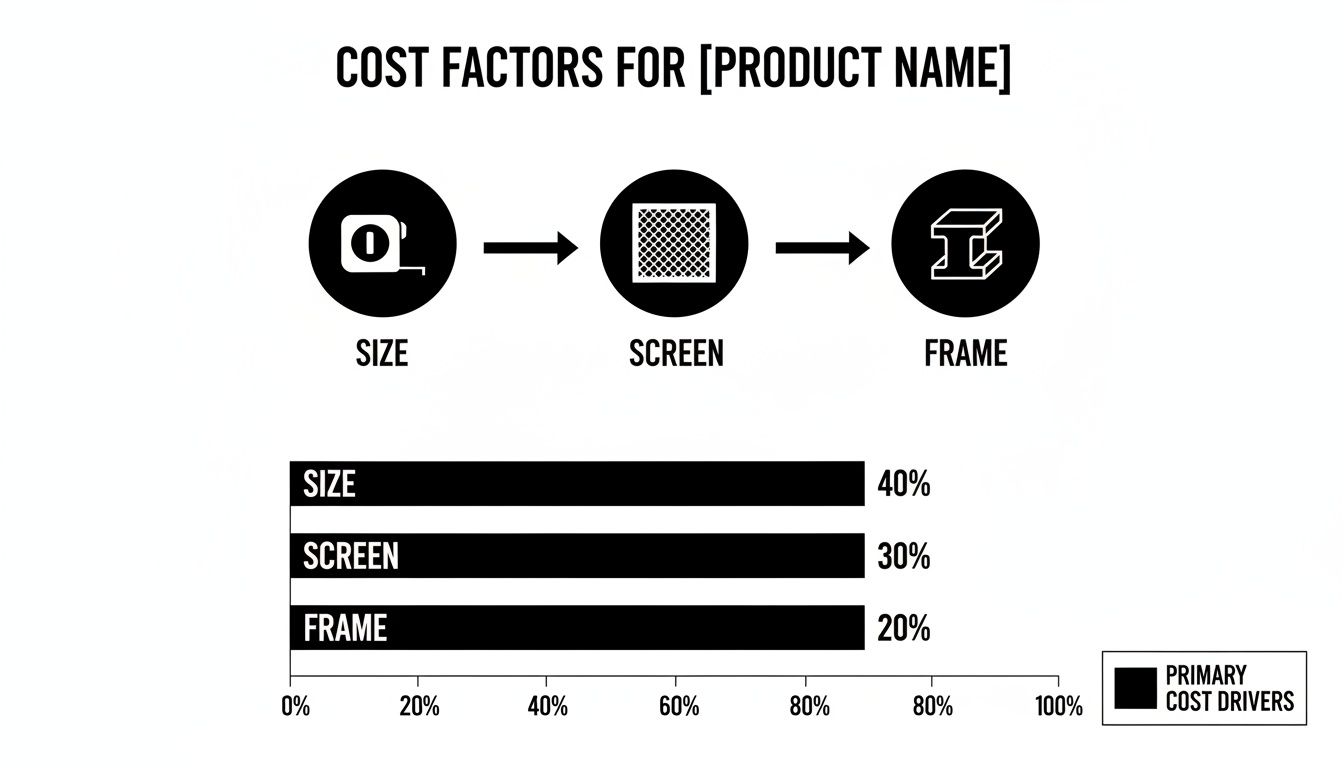
As you can see, the screen material you pick is a huge piece of the puzzle, affecting both what you pay today and the value you get down the road.
The Durability Champion: Super Screen
For homeowners who want the absolute best in strength and longevity, Super Screen is the undisputed champ. This material was engineered for maximum durability, offering incredible tear resistance and UV protection that helps it outlast everything else on the market. It’s so tough, it often comes with a 10-year manufacturer's warranty.
Super Screen is perfect for homes in high-wind areas, on golf courses, or for anyone who just wants to "set it and forget it" for the next decade or more. The higher initial cost is easily offset by its incredible lifespan, often making it the smartest financial choice in the long run.
For more specialized needs, you can also look into solar or privacy screens. Solar screens are great for blocking extra UV rays to keep your patio cooler, while privacy screens offer more seclusion. Beyond just screens, you might also consider how different types of outdoor shades can add comfort to other parts of your backyard.
Pool Screen Material Comparison
Here’s a simple breakdown to help you compare your options at a glance:
- Standard Fiberglass: Costs $1.50 – $2.50 per sq. ft., has an expected lifespan of 5-7 years, and is best for budget-conscious projects, good visibility, and basic insect protection.
- Phifer Pet Screen: Costs $2.00 – $3.00 per sq. ft., has an expected lifespan of 10-15 years, and is ideal for homes with pets, children, or those located near golf courses.
- Super Screen: Costs $2.25 – $3.25 per sq. ft., has an expected lifespan of 10-15+ years, and is the top choice for maximum durability, high-wind areas, and long-term, low-maintenance value.
While premium screens like Phifer Pet Screen and Super Screen have a higher upfront cost, their extended lifespans of 10 to 15 years provide significant long-term savings and fewer headaches. When you compare that to the $15,000+ cost of a brand new enclosure, a quality rescreen offers savings of up to 85% and is one of the smartest upgrades you can make to your home.
DIY vs. Professional Rescreening: A Cost and Safety Analysis
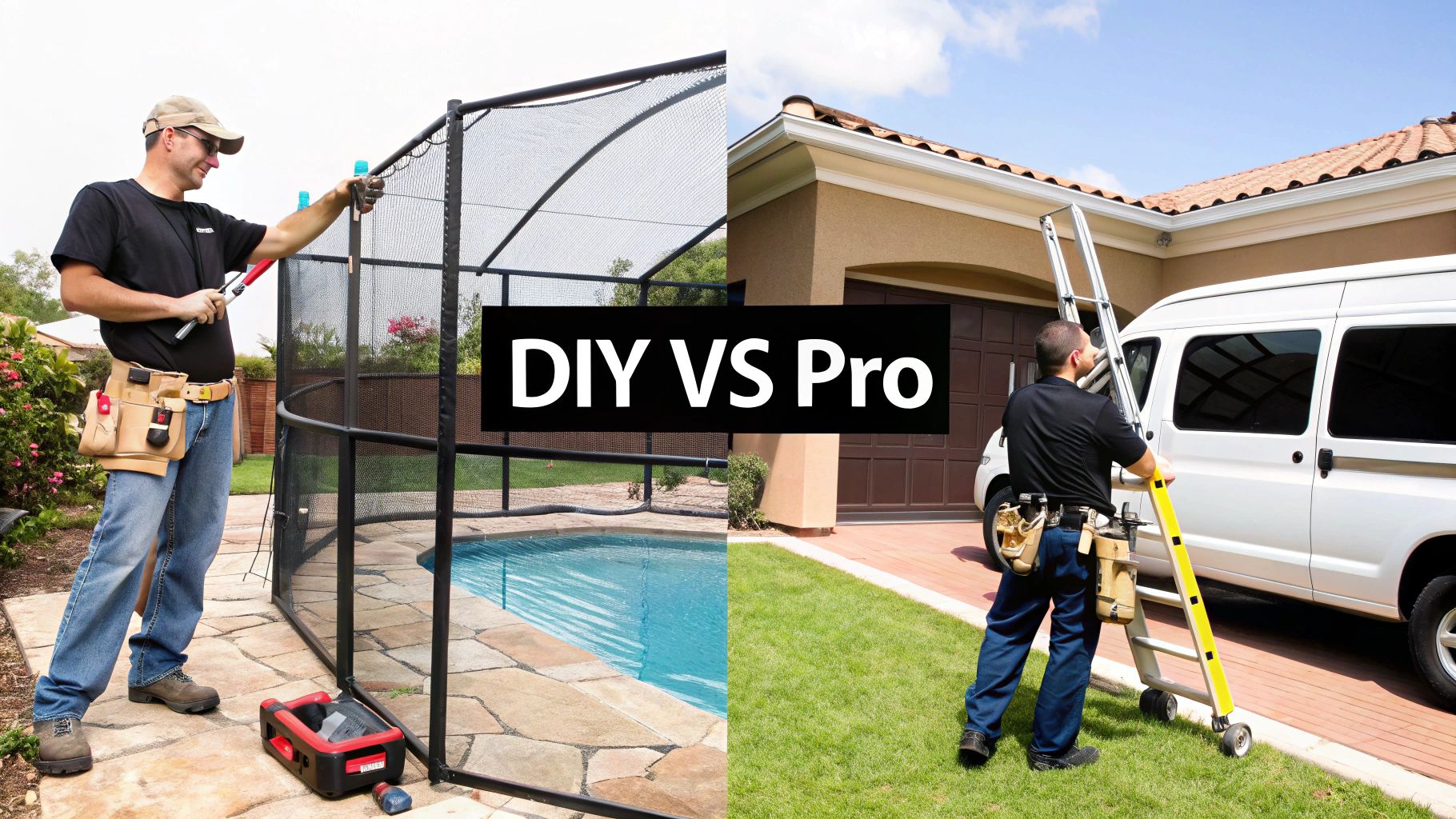
It's tempting for a lot of homeowners to try and tackle a full rescreen themselves, hoping to trim down the cost to rescreen a pool enclosure. On paper, the logic makes sense: why pay for labor when you can just buy the materials? But this is one of those projects where hidden costs and big-time headaches can pop up, wiping out any savings you thought you had.
Before you find yourself teetering on a wobbly ladder on a hot Florida weekend, let's break down the real costs and risks. This isn't like patching a single small rip. A full rescreen is a massive undertaking. While fixing a couple of minor holes is a totally manageable task for exterior screens, a complete overhaul is a different beast entirely. You can see the difference in scope by learning how to repair window screen holes.
The True Cost of a DIY Project
The first reality check for most DIYers is the price tag on materials and tools. Professionals buy their supplies in bulk at wholesale prices, but you'll be paying full retail for every single item.
And those costs add up way faster than you'd expect. You're going to need:
- Bulk Screen Rolls: Buying enough screen for an entire cage is a big purchase. One wrong measurement, and you've got a very expensive, very useless roll of screen on your hands.
- Spline and a Spline Roller: You’ll need hundreds of feet of the exact right diameter spline, plus a quality roller tool to install it without causing damage.
- Specialized Tools: Beyond the basics like utility knives and pliers, you might find you need other specific tools to get the job done right.
- Safety Equipment: For a two-story enclosure, you absolutely must rent scaffolding or use extremely tall, stable ladders. This adds another serious expense to your budget and, more importantly, a huge safety risk.
Once you total all that up, the savings compared to a professional quote might not look nearly as good. And that's before you even put a price on your own time.
The Hidden Risks: Sagging Screens and Safety
Money aside, the biggest challenge of a DIY rescreen is getting that tight, professional-looking finish. The number one giveaway of an amateur job is a screen that sags, wrinkles, or looks loose. Professionals have spent years perfecting the technique to get that drum-tight tension, a skill that's much, much harder to learn on the fly than it appears.
A poorly installed screen doesn't just look sloppy. It will flap and billow in the wind, putting constant stress on the spline and the aluminum frame. This leads to early failure, meaning you'll be right back up on that ladder redoing the work you just finished.
Then there's the biggest issue of all: safety. Working high up on a ladder or scaffolding to reach the roof panels of a pool cage is genuinely dangerous, especially if you don't have the right training and safety gear. One slip can lead to a devastating fall, turning a "money-saving" project into a life-altering medical emergency. That risk alone is why most homeowners decide some jobs are better left to the insured and experienced pros.
The Professional Advantage: Expertise and Efficiency
Hiring a professional team might feel like a bigger expense at first, but what you're really paying for goes way beyond labor. You're investing in experience, speed, and total peace of mind.
A pro crew brings some key advantages you just can't replicate:
- Guaranteed Quality: They have the right tools and the right touch to make sure every single panel is perfectly tensioned for a flawless, long-lasting finish.
- Safety and Insurance: Professionals are fully licensed and insured. If an accident happens on your property, you're completely protected from liability.
- Speed and Convenience: An experienced team can knock out a full rescreening job in a tiny fraction of the time it would take a homeowner. You get your pool area back faster, without losing multiple weekends to the project.
- Workmanship Warranty: Reputable companies always stand by their work. You get a warranty that guarantees the quality of the installation—something you definitely don't get when you do it yourself.
Ready for a Clear and Accurate Rescreening Quote?
By now, you’ve got a solid handle on what goes into the cost to rescreen a pool enclosure. The final step is moving from those ballpark numbers to a precise, custom quote for your project. Think of it less as a repair and more as an investment in reclaiming your outdoor oasis for years to come.
Choosing the right crew for the job is everything. You need a team that’s transparent, committed to quality, and reliable—no surprises, no shortcuts. As a woman- and family-owned business with over 20 years of experience serving the Tampa Bay area, we’ve built our reputation on doing things the right way.
Your Trusted Local Screening Experts
We get it—your home is your biggest investment. That’s why we treat every job, from a single panel fix to a full rescreen, with the care and professionalism it deserves. Our goal is simple: deliver a finished product that not only looks incredible but is built tough enough for Florida’s weather.
A no-obligation estimate is more than just a price; it’s the beginning of a conversation. It’s an opportunity for you to ask questions, understand the scope of work, and feel confident in the team you’re hiring.
We’re proud to serve homeowners all across the region, from the beautiful shores of St. Petersburg to the vibrant communities in Clearwater and beyond. We invite you to see for yourself what a difference professional craftsmanship and genuine customer service can make. As you're planning your outdoor budget, you might also find other free tools helpful, like a landscaping cost estimator.
Ready to take the next step? Contact us today for your free, no-obligation estimate. Discover why hundreds of your neighbors trust Rescreen Rescue for all their screening needs. To learn more about what to expect when hiring a pro, check out our guide on finding screen enclosure repair near me.
Got Questions About Rescreening Costs? We’ve Got Answers.
Even after breaking down the numbers, you probably still have a few questions rolling around. That’s completely normal. The cost to rescreen a pool enclosure isn't just about the final price tag; it's about understanding the timing, what's included, and the best approach for your specific home.
Let's tackle some of the most common questions we hear from homeowners right here in the Tampa Bay area. Getting these answers upfront helps set the right expectations and ensures you're making a smart, long-term investment.
How Often Should I Expect To Rescreen My Pool Enclosure?
This is a big one, and the answer really comes down to our unique Florida climate. For a standard fiberglass screen, you can realistically expect it to last somewhere between 7 to 10 years. The combination of relentless sun, high humidity, and the occasional tropical storm works together to make the material brittle and prone to tearing over time.
But if you’re looking for a longer-term solution, upgrading to a premium material like Super Screen can make a huge difference. These high-durability screens often last 10 to 15 years—sometimes even longer. They're a fantastic choice for homeowners who'd rather not think about rescreening again for a good long while.
Does A Full Rescreen Include New Hardware?
A quality, professional rescreening job should always include the option to replace the hardware. While your contractor might list it as a separate line item on the quote, any reputable pro will inspect your fasteners and strongly recommend replacing them if they show any signs of rust or corrosion.
Using new, corrosion-resistant fasteners is one of the most critical steps in ensuring the longevity and structural integrity of your enclosure. Old, rusted screws don't just look bad—they can fail, leading to loose panels and ugly rust stains running down your aluminum frame. Don't skip this step.
Is It Better To Do A Partial Or Full Rescreen?
This really depends on the overall condition of your enclosure and your budget. A partial rescreen—say, replacing just the roof panels or a single wall that took a hit from a fallen branch—is a great fix if the rest of your screens are still in solid shape. It solves the immediate problem without the expense of a complete overhaul.
However, if you're seeing multiple panels that are faded, brittle, or have small tears, a full rescreen is almost always the more cost-effective choice in the long run. When you do the entire job at once, you get a clean, uniform look and completely reset the clock on your enclosure's lifespan. It saves you from the headache and cost of calling a repair crew back out in another year or two when the next set of panels gives out.
Ready to get a clear, no-hassle quote for your project? The team at Rescreen Rescue has over 20 years of experience providing reliable, high-quality screening solutions across the Tampa Bay area. Contact us today for your free, no-obligation estimate and discover the difference professional craftsmanship makes. Learn more at https://rescreenrescue.com.