


Your pool cage is so much more than a luxury item—it’s a core part of the Florida lifestyle. It’s your personal, bug-free oasis and an extra layer of safety for your family. But when damage strikes, a quick and professional pool cage repair isn't just a good idea; it's essential for protecting your investment and keeping your outdoor space usable. Ignoring a small rip or a few rusty screws can quickly snowball into much bigger, more expensive problems down the road.
Your Essential Guide To Pool Cage Repair
A well-maintained pool enclosure is your first line of defense against Florida’s notorious pests, unpredictable weather, and intense UV rays. Think of it as a protective bubble, letting you enjoy your lanai or pool area without constantly swatting away mosquitoes or fishing out leaves. But over time, the combined forces of sun, wind, and rain take their toll on even the toughest structures.
This guide will walk you through everything you need to know about pool cage repair. We’ll look at the common culprits behind a damaged enclosure, from storm debris and relentless sun exposure to simple wear and tear. Understanding what causes the damage is the first step toward keeping your outdoor living area safe and beautiful.
Why Timely Repairs Matter
It’s tempting to put off small repairs, but addressing issues as they pop up is crucial. A small tear in one screen panel can easily get caught by the wind and expand, creating an open invitation for insects. Likewise, a few rusty screws might seem harmless, but they can compromise the structural integrity of the whole cage, making it a liability in the next big storm.
Prompt repairs ensure:
- Pest Prevention: A sealed enclosure is the only way to keep out mosquitoes, no-see-ums, and other critters.
- Structural Safety: Fixing weak points prevents a catastrophic failure during the high winds of a summer storm.
- Property Value: A clean, intact pool cage is a huge plus for curb appeal and protects your home's value.
- Continued Enjoyment: You can get back to relaxing and entertaining without worrying about debris falling in the pool or bugs ruining the party.
Understanding The Costs Involved
For most homeowners, the first question is always about the cost. Here in the bustling Tampa Bay area, where a pool enclosure is practically a necessity, pool cage repair is a critical service. According to recent industry data, the average cost to repair a pool screen enclosure is around $922. Of course, prices can range from $297 for minor fixes to $1,586 for more extensive damage, depending heavily on the size of your enclosure and the materials needed.
At Rescreen Rescue, we believe in being completely upfront. We provide free, detailed estimates so you know exactly what to expect before any work begins. Our pricing is always fair and competitive—no surprises.
As a family-owned business with over two decades of hands-on experience in St. Petersburg, Clearwater, and Tampa, we’ve pretty much seen it all. Our expertise covers everything from a simple screen patch to a full-blown restoration. Whether you have a small lanai or a massive, complex enclosure, we have the skills to get the job done right. You can learn more about the differences and benefits of a screened lanai enclosure in our detailed article.
How To Spot The Signs Your Pool Cage Needs Repair
A big tear in a screen panel is impossible to miss, but most of the serious problems with a pool enclosure start small. Think of your pool cage like your car—it usually gives you subtle warning signs long before a major breakdown. Learning to read those clues is the key to catching problems early and avoiding a massive, expensive pool cage repair.
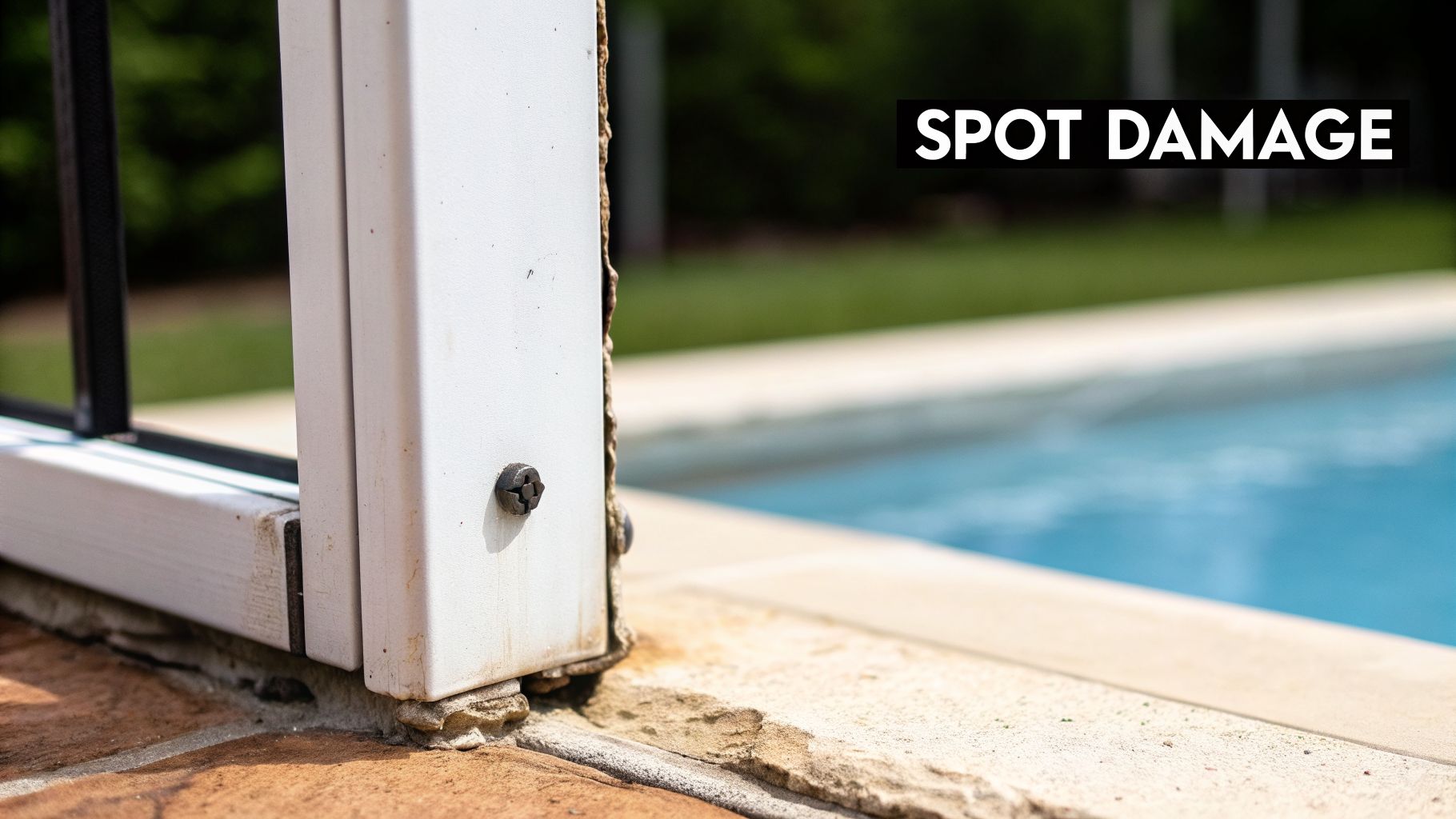
Beyond the obvious holes, you really need to look closer at both the screen and the aluminum structure itself. A healthy enclosure should feel taut, look clean, and be completely secure. Anything less could point to an underlying issue that needs attention.
Issues With The Screens And Spline
The screen is the most visible part of your enclosure, but its condition tells a story that goes way beyond simple rips. You'll want to pay close attention to how the screens sit inside the aluminum frame, as this reveals a lot about the health of the spline holding them in.
Look for these specific screen-related problems:
- Flapping or Loose Screens: If a screen panel is flapping around in the breeze, it's not because the screen stretched out. That’s a classic sign that the rubber spline tucked into the frame's groove has gotten old, dried out, and lost its grip.
- Faded or Brittle Screens: Does your screen look more chalky, grey, or even silvery instead of a deep, rich black? Florida's intense UV rays are notorious for breaking down screen material over time, making it brittle and ready to tear from the slightest impact.
- Green or Black Growth: Spotting algae or mold on your screens is more than just an eyesore. It’s a sign that moisture is sticking around too long, which can speed up the decay of both the screen and the aluminum frame it’s attached to.
Structural and Hardware Red Flags
While screen issues are a nuisance, problems with the aluminum frame and its hardware are far more serious. The entire structural integrity of your enclosure depends on these parts. A single failure here can compromise the safety and storm-readiness of your whole outdoor space.
A single rusted screw might seem like no big deal, but it's often the first domino to fall. Corrosion spreads, weakening the connection point and potentially staining your aluminum frame or pool deck with ugly orange streaks.
Keep an eye out for these critical structural warning signs:
- Rusted or Missing Fasteners: Take a minute to carefully inspect the screws at all the connection points. Any sign of rust—from orange streaks to fully corroded heads—means that fastener’s strength is shot. This is especially true for the screws at the base of the cage, where they get the most exposure to water.
- Chalky White Residue on Aluminum: Run your hand along the frame. If it comes away with a white, chalky powder, you're seeing oxidation. This process is literally eating away at the metal's protective coating, leaving the raw aluminum exposed and vulnerable to pitting and decay.
- Sagging Beams or Roof Panels: Look up at your enclosure's roof. Do any of the long support beams look like they’re bowing or sagging? This is a serious red flag that points to a potential structural failure and needs an immediate professional look.
- Wobbly or Misaligned Doors: Your enclosure door should open and shut smoothly without sticking or scraping. If it feels loose, is a pain to latch, or you can see gaps around it, that’s not just an annoyance—it's a weak point in your cage's structure.
Catching these signs early can make all the difference. For a deeper dive into keeping your enclosure in top shape, you might find our guide on screen enclosures repair helpful. Taking just a few minutes to inspect your cage every couple of months is one of the smartest ways to protect your investment.
What Are Your Pool Cage Repair Options?
When you spot a problem with your pool cage, it’s easy to jump to the worst-case scenario. But here's the good news: not every issue means you need a brand-new enclosure. A professional pool cage repair company has a whole menu of services, each one designed to fix a specific problem—from a single torn panel to widespread, age-related wear.
Knowing what’s available helps you make a smart decision that protects your investment and gets your outdoor oasis back in shape.
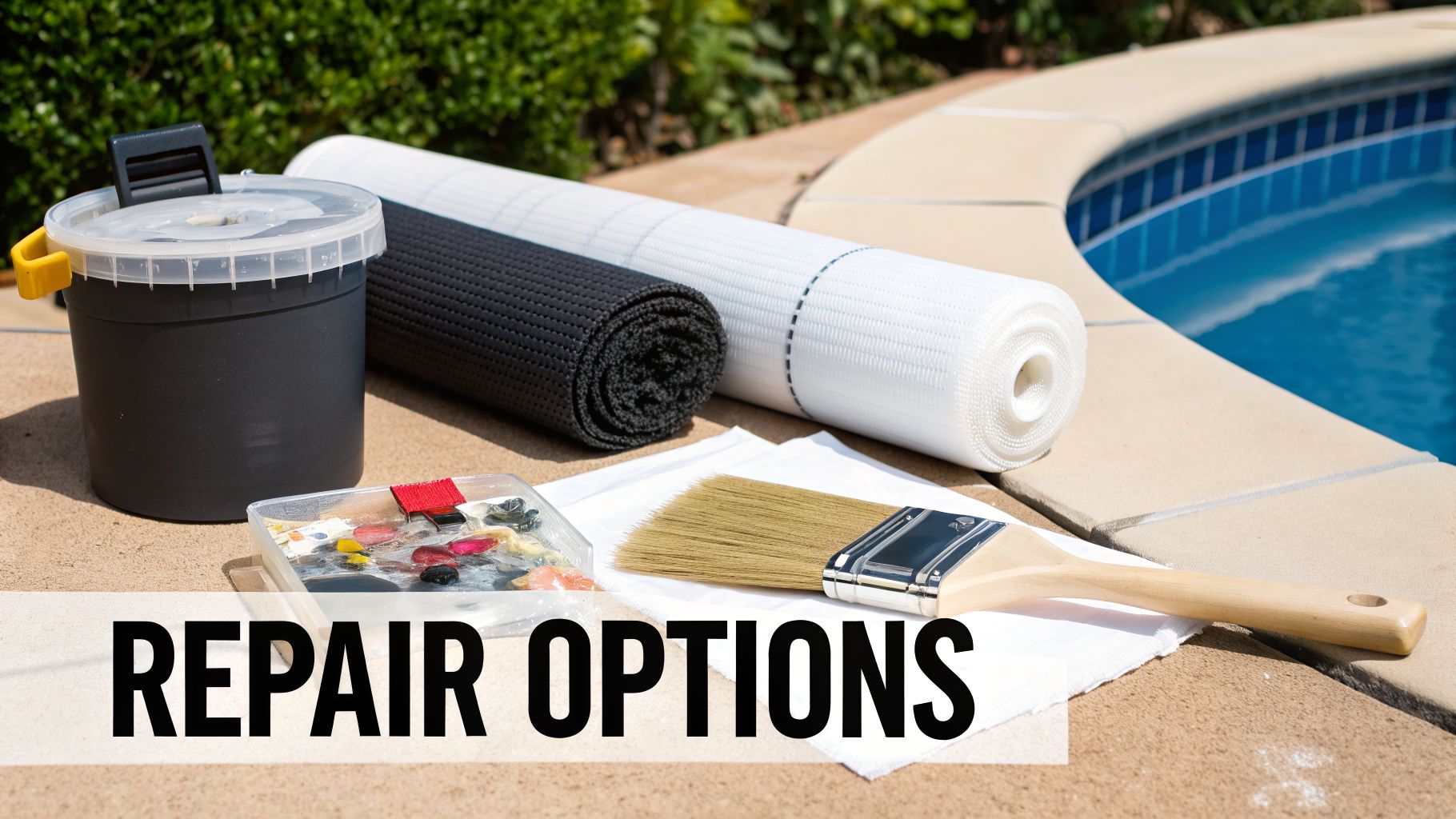
The right fix always depends on the symptoms. A small hole from a stray golf ball is a completely different ballgame than dealing with brittle, sun-bleached screens across the entire structure. Let's walk through the most common professional services you'll encounter.
To make it easier to see what service fits what problem, here's a quick overview.
Pool Cage Repair Services At A Glance
Screen Patching
- Problem Solved: Small, isolated holes or tears in a single panel.
- Best For: Newer screens (under 5-7 years old) with minimal, localized damage.
Full Rescreening
- Problem Solved: Widespread tears, brittle mesh, fading, or sagging across the entire cage.
- Best For: Older enclosures (8+ years) or when more than 30% of panels are damaged.
Hardware Replacement
- Problem Solved: Rusty, corroded, or missing screws and bolts.
- Best For: Any cage with visible rust, especially as a preventative measure before storm season.
Structural Frame Repair
- Problem Solved: Bent, broken, or damaged aluminum beams.
- Best For: Cages damaged by fallen tree limbs, major impacts, or severe storm winds.
Cage Painting & Restoration
- Problem Solved: Faded, chalky, or chipping paint on the aluminum frame.
- Best For: Structurally sound cages that look dated and need a cosmetic and protective refresh.
Each of these services plays a unique role in keeping your pool enclosure safe, functional, and looking great for years to come.
Screen Patching Versus Full Rescreening
Damaged screens are, without a doubt, the most common issue we see. The big question is always whether to patch it or replace it all. The answer really comes down to the age and health of your screen material.
Think of it like repairing a tire. You can easily plug a single nail hole. But if the tire is old, cracking, and bald, a single plug is just a temporary fix for a much bigger, inevitable problem.
-
Screen Patching: This is the perfect fix for isolated damage on a screen that's still in good shape. If a fallen branch pokes a hole in one or two panels, we can cut out the damaged piece and install a new section of screen, blending it in seamlessly. It's fast, effective, and budget-friendly.
-
Full Rescreening: This is the best long-term value when your screens are getting old, brittle, faded, or have tears popping up everywhere. We remove every bit of the old screen and spline, then install brand-new, high-quality materials on the entire enclosure. It's a total refresh. You can find out more about what is involved with rescreening a pool cage in our in-depth guide.
The Critical Role of Hardware Replacement
The screws, bolts, and anchors holding your pool cage together are the unsung heroes of its structural integrity. Here in Florida, the humid, salty air is brutal on standard steel fasteners. Rust isn't just ugly—it's a serious threat.
Rusty fasteners are a ticking time bomb. A single corroded screw loses its grip and strength, creating a weak point that can fail under the high wind loads of a summer storm. This is why we only use corrosion-resistant hardware built for our coastal climate.
Swapping out old, rusted hardware is one of the most important parts of any lasting repair. We replace those weak fasteners with high-grade, coated, or stainless steel options designed to fight off corrosion. It's a simple, preventative step that can save your entire enclosure from catastrophic failure down the road.
Structural Frame Repair
Sometimes, the damage goes deeper than the screens and screws. A heavy tree limb or the punishing winds from a hurricane can bend or even break the aluminum beams that form the skeleton of your pool cage. This isn't just a cosmetic issue; it's a major safety hazard that needs immediate professional help.
Our technicians have the specialized tools and training to safely handle these repairs. We'll carefully assess the damage and either reinforce the bent sections or replace the compromised beams entirely, restoring your cage's structural integrity back to its original strength.
Cage Restoration And Painting
After years under the relentless Florida sun, your pool cage's paint job will inevitably start to fade, chip, and get that chalky, oxidized look. This doesn't just look bad; it leaves the aluminum underneath exposed and vulnerable to corrosion.
A full cage restoration is like hitting the reset button. The process involves:
- A thorough pressure washing of the entire frame to strip away dirt, mildew, and old, oxidized paint.
- Replacing every single old and rusty fastener with new, corrosion-resistant hardware.
- Applying a fresh, even coat of premium paint formulated specifically for outdoor aluminum structures.
This service does so much more than make your cage look brand new. It adds a tough, protective barrier that shields the metal from the elements, dramatically extending its lifespan and giving your home's curb appeal a serious boost.
Deciding Between DIY And Professional Repair
When you spot a tear in a screen panel or notice a loose bolt on your pool cage, the urge to grab a toolkit and fix it yourself is completely understandable. A small patch seems like a quick weekend task, right? For a tiny, simple fix, sometimes a DIY approach can work out just fine.
But the line between a minor patch-up and a job that’s complex—and even a little dangerous—is much finer than most homeowners think. Trying to tackle a bigger pool cage repair without the right tools and experience often creates more headaches than it solves. It’s one thing to fix a small hole at eye level; it's another thing entirely to replace a huge top panel while you're balancing on a ladder over your pool.
The Hidden Complexities Of DIY Repairs
That five-minute tutorial video on YouTube rarely shows the whole story. What looks simple on screen often hides a dozen small but absolutely critical steps. The single biggest pitfall we see with DIY attempts is getting the screen tension right.
Without a professional-grade screen roller and the muscle memory that comes from doing this day in and day out, it's incredibly easy to end up with screens that are too loose and saggy. Or, you might pull them so tight they strain the aluminum frame, eventually ripping or damaging the spline channel itself.
Beyond just wrestling with the screen, there are some serious safety risks to think about:
- Working at Heights: Most significant repairs mean getting up on tall ladders, often on a wet or uneven pool deck. Without the proper safety gear and training, the risk of a bad fall is very real.
- Specialized Tools: A perfect, professional finish requires more than a screwdriver and some spare screen. Pros use specialized spline rollers, tensioning tools, and equipment built to handle massive rolls of screen safely and efficiently.
- Structural Knowledge: The moment you touch the aluminum frame, you’re dealing with the structural integrity of your entire enclosure. An incorrect cut or a poorly fastened beam can weaken the whole cage, turning it into a major liability when the next big storm rolls through.
The Value Of Professional Craftsmanship
Hiring a licensed and insured professional team gives you something a DIY project never can: total peace of mind. You’re not just paying someone to fix a screen; you're investing in safety, efficiency, and a guaranteed quality result. Our crew shows up with everything needed to do the job right the first time, from high-grade materials to the proper safety equipment.
A professional repair is about more than just fixing the obvious problem. It's about ensuring the long-term durability and safety of your enclosure, backed by a warranty that protects your investment. A DIY mistake, on the other hand, can cost you far more in follow-up repairs than hiring an expert from the start.
Ultimately, calling in a pro delivers lasting value. We can spot underlying issues you might miss, like the first signs of rust on fasteners or a slight sag in a support beam that could become a bigger problem later. This proactive approach saves you from future headaches and ensures your entire pool cage is sound.
For a deeper look at what a full-scale project entails, check out our guide to help you decide if you want to rescreen your pool enclosure. Remember, the true cost of a DIY attempt isn't just the materials—it's the risk to your safety and the potential for causing even more expensive damage down the road.
What To Expect From Our Repair Process
We believe a professional pool cage repair should be a smooth, transparent, and totally stress-free experience. When you choose Rescreen Rescue, you’re not just hiring a crew to fix a problem; you’re partnering with a team that respects your time, your property, and your peace of mind. To take the guesswork out of it, we want to walk you through exactly what our process looks like, from your first call to the final, satisfying handshake.
It all starts the moment you reach out. We keep it simple with a text-friendly scheduling system to book your free, no-strings-attached estimate. You won’t get any high-pressure sales tactics from us—just an honest assessment and a clear, detailed quote so you can make the right decision for your home.
Meticulous Preparation And Site Protection
Before a single tool comes out, our top priority is protecting your property. Our experienced team shows up on time and ready to work, taking great care to safeguard your pool, deck, and the surrounding landscaping. We get it—your backyard is your sanctuary, and we treat it with the respect it deserves from start to finish.
This prep phase means covering your pool surface and any deck furniture to keep them completely free of debris. We’ll also set up our materials in a designated spot to keep the work area organized and safe. This careful setup ensures the whole process is efficient and contained, causing minimal disruption to your daily life.
To help visualize the decision-making process, here’s a guide many homeowners find useful when weighing their options.
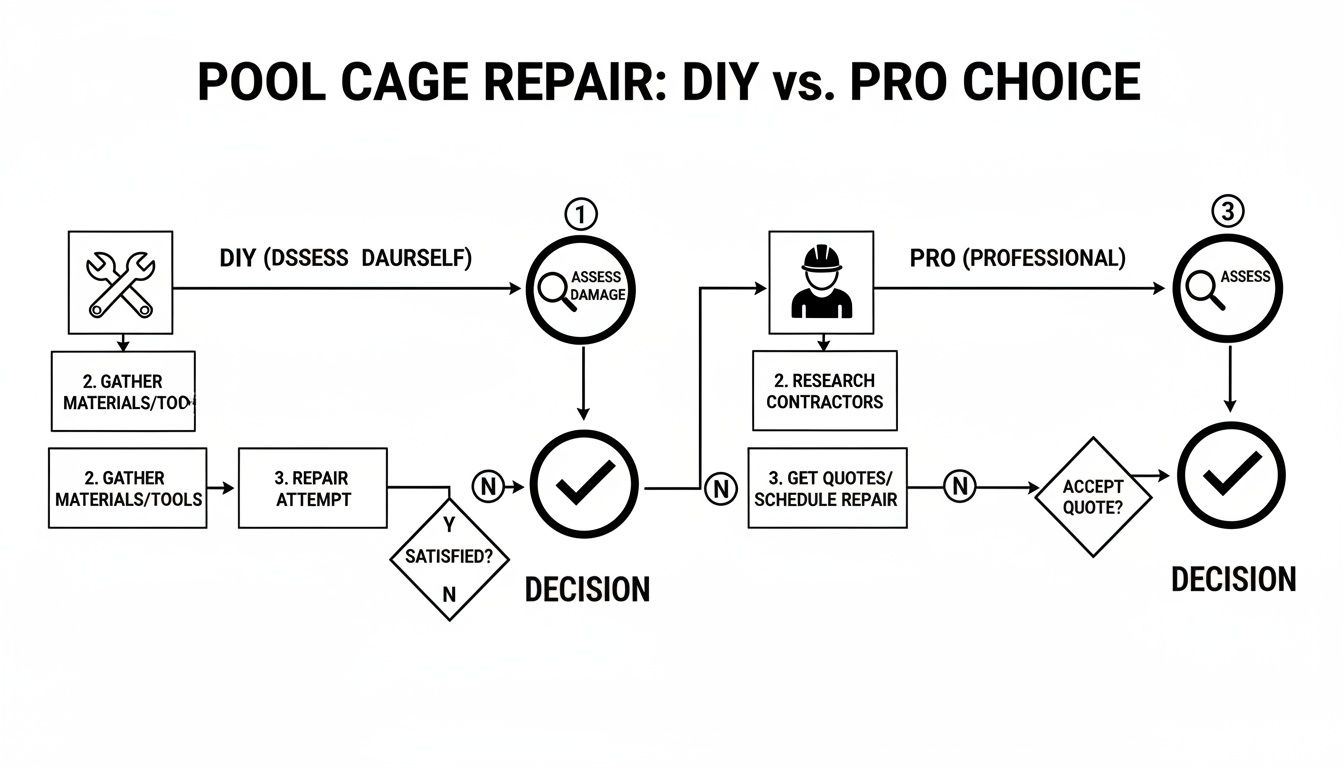
As the flowchart shows, while a small DIY patch might seem tempting, going with a pro becomes the clear choice for ensuring safety, quality, and results that actually last.
The Repair And Cleanup Phase
Whether we’re doing a full rescreen, swapping out rusty hardware, or performing a structural fix, our crew works with precision and focus. We only use high-quality materials specifically designed to stand up to the harsh Florida climate, which means your repair is truly built to last. Our technicians stick to strict safety standards and work efficiently to get the job done right and on schedule.
The value of maintaining these structures is huge. In fact, the pool cleaning and maintenance services market is expected to grow to $36.09 billion by 2029, driven by new construction and a greater focus on home wellness. Repairs are a massive part of this industry, covering everything from simple screen fixes to the serious structural damage Florida weather can inflict on pool cages. You can read more about the growth of the pool maintenance market on ResearchAndMarkets.com.
Our promise is simple: we leave your space cleaner than we found it. This isn't just a talking point; it’s a core part of our process and a commitment that’s consistently highlighted in our hundreds of 5-star customer reviews.
Once the repair itself is done, our job still isn't finished. We follow up with a thorough cleanup, making sure every last bit of old screen, discarded spline, and stray fasteners is gone. The final impression is just as important as the first, so we make sure your patio and pool area are spotless and ready for you to enjoy the second we leave.
Before we pack up, we'll do a final walk-through with you to inspect our work, answer any last-minute questions, and make absolutely certain you are 100% satisfied.
Your Pool Cage Repair Questions Answered
Deciding to fix up your pool cage is a smart investment, but it almost always comes with a few questions. From budgeting to what to expect on repair day, homeowners want to feel confident they're making the right call. We've been doing this across Tampa Bay for a long time, so we've heard just about every question there is. Here are the most common ones, with clear, straightforward answers.
Our goal is to get rid of any guesswork. We believe a well-informed customer is a happy customer, and this section is all about tackling the big questions—cost, how long things will last, and the logistics of the repair itself.
How Much Does Pool Cage Repair Cost In The Tampa Bay Area?
This is always the first question, and the honest-to-goodness answer is: it depends. The final price tag is shaped by a few key things, which means every project has a unique cost. No two pool cages are exactly alike, and neither are their repair needs.
Here's what really moves the needle on a quote:
- Size of the Enclosure: It’s simple math—a bigger cage needs more materials and more man-hours, whether we're rescreening the whole thing or just painting it.
- Extent of the Damage: Swapping out a few torn screen panels is a world away from repairing bent structural beams or doing a complete rescreen.
- Choice of Materials: The type of screen you pick plays a huge role. Standard screens are easy on the wallet, but premium options like pet-resistant or super-strong screens cost more upfront for a reason—they're built to last.
Because every job is different, we always provide a free, no-obligation estimate. One of our techs will come out, give your pool cage a thorough once-over, and give you a precise and totally transparent quote for your specific situation. No hidden fees, no surprises. Just an honest price for quality work. If you want to dive deeper, you can check out our guide on pool screen repair costs.
How Long Will A Repaired Cage Or New Screens Last?
This is another big one, and for good reason. How long your new screens will hold up really depends on two things: the quality of the material and how much of a beating it takes from the Florida elements—that intense sun, constant humidity, and salty coastal air.
Think of it like buying tires. You can get a standard, all-season tire that does a decent job for a good while. Or, you can invest in a premium, high-performance tire built to handle extreme conditions for much, much longer. It's the same idea with screen materials.
A standard-grade screen will typically give you a solid 7 to 10 years of life. But if you step up to a higher-end, more durable option, you could easily see that stretch to 15 years or more, thanks to better resistance against UV rays and tearing.
Here at Rescreen Rescue, we don't mess around with cheap materials. We only use high-quality screens and parts engineered specifically for our demanding climate. On top of that, we back our work with a solid warranty, so you know your investment is protected and built to last.
Do I Need To Be Home For The Entire Repair?
We get it—your time is valuable, and taking a whole day off work isn't always in the cards. We pride ourselves on being flexible and making the process as convenient as possible for you.
Generally, we just ask that you're around for two key moments:
- At the Start: It’s great if you can be there when our crew arrives. We'll do a quick walk-through, confirm all the job details, and answer any last-minute questions you have.
- At the End: We also recommend being there for the final inspection. This is your chance to look over the finished work with our team leader and make sure you're 100% satisfied with everything.
But for the hours in between? Not at all. As long as our professional, trustworthy team can get to the enclosure, an external power outlet, and a water spigot, we can get the job done efficiently while you're at work or running errands. We're fully licensed and insured, and we treat your property with the utmost respect, whether you're home or not.
Will The Repair Process Leave My Patio And Pool A Mess?
Absolutely not. We're firm believers that the cleanup is just as important as the repair itself. We’ve all heard horror stories about contractors who vanish, leaving a disaster behind. That's just not how we work. We treat your home like it's our own, and our customers often mention in reviews how clean we leave their property.
Our team has a strict cleanup protocol we follow on every single job. This includes:
- Protecting Your Property: Before we even start, we make sure your pool and deck are covered and protected from debris.
- Containing Old Materials: As we pull out old screens, spline, and fasteners, they go straight into containers. Nothing gets scattered across your yard or dropped in your pool.
- Thorough Final Sweep: Once the repair is done, we do a full, detailed cleanup of the entire area. We don't leave until every last scrap of material is gone.
Our promise is simple: we'll leave your space spotless—probably even cleaner than when we arrived. We take a ton of pride in our workmanship and professionalism, and that includes leaving you with nothing to do but relax and enjoy your beautifully repaired pool cage.
When you're ready for a hassle-free, professional pool cage repair experience, trust the experts at Rescreen Rescue. Contact us today for your free, no-obligation estimate and see why homeowners across Tampa Bay trust us with their outdoor spaces.